Connect with us

News

Plateau Assembly Moves to End Female Disinheritance as Stakeholders Back Women’s Inheritance Bill

info

Published

on

Download (1)
Stakeholders across government, judiciary, security agencies, traditional institutions, and civil society organizations have thrown their weight behind a proposed law seeking to protect the inheritance rights of women and girls in Plateau State, describing the bill as timely, transformative, and critical to ending decades of gender-based discrimination.

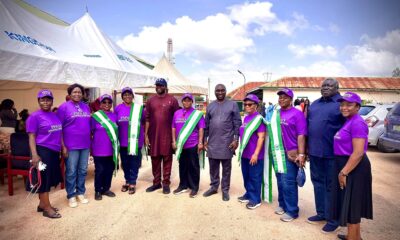
The endorsement came during a public hearing organized by the Plateau State House of Assembly on Tuesday, April 14, 2026, on a bill aimed at regulating and protecting the rights of women and girls to inherit properties, benefits, and privileges from deceased husbands and parents.

The joint hearing, chaired by the Chairman of the House Committee on Judiciary Matters, Hon. Kalamu Idris Gyang, and Chairman of the House Committee on Women Affairs, Hon. Sylvester Wallangko, brought together a wide range of stakeholders who made submissions in support of the bill, alongside recommendations for strengthening its provisions.

Hon. Gyang, in his welcome address, emphasized the urgency of the legislation, noting that cultural practices have long deprived women of inheritance rights.

“This bill is for the people of Plateau State… we are very determined to make sure that this bill sees the light of the day,” he said.

He added:

“Women contribute significantly to family wealth and development, yet traditions deprive them of inheritance. This law will correct that imbalance and promote societal growth.”

Co-chairman, Hon. Sylvester Wallangko, described the bill as a solution to long-standing societal issues.

“This particular bill will solve a lot of issues that have bedevilled our society… by the time it is enacted, it will be binding on all of us,” he stated.

Government Officials & Traditional Leadership

Esther Simi Dusu, Special Adviser on Social Welfare to the Governor, described the bill as a pathway to empowerment.

“This bill is a form of emancipation… it will enable women to access opportunities and express their God-given potential,” she said.

Commissioner for Lands, Barr. Peter Nyam Gai, highlighted existing policy alignment with the bill.

“This is one of the best laws ever passed… it will address imbalances and injustice and is already aligned with national policy on women’s property ownership,” he noted.

Representing the Gbong Gwom Jos, HRH Paul Tadi Tor raised concerns about customary land.

“We must clearly define the types of property… especially inherited family land versus personally acquired property,” he advised.

Plateau State Ministry of Justice & Judiciary

Itse Izang, Esq., Deputy Director, Legal Drafting, Ministry of Justice, described the bill as necessary and timely.

“This bill is not only desirable but necessary… it is a transformative step toward justice and equality,” she said.

Laval Suleiman, Esq., Acting Chief Registrar, Sharia Court of Appeal, emphasized constitutional considerations.

“Islamic personal law must be clearly accommodated… especially regarding inheritance and jurisdiction,” he noted.

Barr. Sondo S. Fromber of the Plateau State Judiciary raised interpretative concerns.

“Definitions such as ‘widow’ and ‘child’ must be clearly stated to avoid conflict and confusion in implementation,” he said.

Leah Dagung Hassan, Chairperson of the Nigerian Bar Association, Jos Branch, stressed the economic importance of the bill.

“If a woman is empowered, the family is empowered… and the society is liberated from poverty,” she said.

Barr. Ismail Lawal of the Public Complaints Commission provided detailed technical recommendations.

“This bill is courageous and necessary… but must be strengthened to ensure it is operationally effective and legally precise,” he stated.

Security & Law Enforcement

DSP Christiana Samuel of the Nigeria Police Force pledged enforcement.

“Once this law is passed, we will ensure it is enforced… it is a welcome development,” she said.

ASC Cyrus David Nanle of the NSCDC highlighted practical challenges and social realities.

“If men can inherit, women should too… fairness must prevail in inheritance matters,” he noted.

Community & Civil Society Organizations

Barr. Olivia Dazyem, Chairperson of the Plateau State Gender and Equal Opportunities Commission, described the bill as historic.

“This bill is about justice, equity, and ensuring no woman is denied her rightful place in the family,” she said.

She added:

“We have seen widows thrown out and impoverished… this law will change that narrative.”

Uko Pincuma of the National Human Rights Commission emphasized human rights implications.

“The right to inherit is fundamental… this bill will strengthen economic security and gender equality,” he stated.

Mankus N. Fyakti, Chairperson of FIDA Plateau, backed strong enforcement.

“We support both ADR and strict penalties… this law will protect women, daughters, and families,” she said.

Amb. Mercy Dung Silas, representing wives of council chairmen, urged public support.

“Protecting women’s inheritance rights does not take away from men… it strengthens families,” she said.

Dahiru Babale Ibrahim of JNI noted alignment with Islamic principles.

“Inheritance is already provided for in Islam… we are in full support of this development,” he stated.

Danjuma Dickson Auta of PIDAN admitted initial resistance but endorsed the bill.

“This bill is long overdue… education has helped us understand its importance,” he said.

Celina N. Ali of NCWS described it as overdue justice.

“Women have been suppressed for decades… now we are standing for our rights,” she said.

A representative of the Norwegian Refugee Council emphasized awareness.

“Inheritance is a right… and awareness must reach every community,” the representative said.

Ayuku Pwaspo, Chairperson of the NUJ Plateau State Council, highlighted the media’s role.

“A strong legal framework will empower accountability and protect victims from silent suffering,” she said.

Delivering closing remarks, Hon. Adamu Aliyu assured stakeholders of swift legislative action.

“Within four weeks, this bill will see the light of the day… all contributions will be harmonized to produce a strong law,” he said.

The proposed law, widely supported across sectors, is expected to mark a significant turning point in addressing gender inequality in inheritance practices and strengthening social justice in Plateau State.

Continue Reading
Click to comment

Leave a Reply

Your email address will not be published. Required fields are marked *

News

NiRA deploys DNSSEC to secure Nigeria’s .ng domain against cyber threats – Technology Times

info

Published

on

By

1776377747 admin ajax.png

The development was announced today at a media advocacy and capacity-building workshop hosted by NiRA in Lagos, themed “The Role of Media in Advancing Nigeria’s Digital Identity,” where stakeholders highlighted the importance of securing the country’s digital namespace amid rising cybersecurity risks.


According to NiRA, the DNSSEC signing marks the culmination of over a decade of work by the domain name manager, which began preparatory efforts in 2011 through stakeholder engagement, technical training and ecosystem readiness initiatives. With the signing of the .ng zone, Nigeria’s country code top-level domain is now secured using cryptographic validation mechanisms designed to protect users from malicious redirection and data manipulation.

DNSSEC: Strengthening Nigeria’s internet backbone

According to NiRA, the DNSSEC signing marks the culmination of over a decade of work by the domain name manager, which began preparatory efforts in 2011 through stakeholder engagement, technical training and ecosystem readiness initiatives. With the signing of the .ng zone, Nigeria’s country code top-level domain is now secured using cryptographic validation mechanisms designed to protect users from malicious redirection and data manipulation.

DNSSEC addresses longstanding vulnerabilities in the Domain Name System (DNS), the core internet protocol responsible for translating human-readable domain names into machine-readable IP addresses. Without these security extensions, DNS queries can be intercepted or altered, exposing users to risks such as phishing attacks and redirection to fraudulent websites.

By introducing cryptographic keys that digitally sign DNS records, DNSSEC ensures that users are connected to authentic destinations. The system allows DNS servers not only to resolve domain names but also to verify that the data originates from a trusted source and has not been tampered with during transmission.

According to him, the adoption of DNSSEC positions Nigeria among countries implementing advanced internet security standards, including Sweden, United States, China and United Kingdom.

NiRA positions .ng domain for global trust standards

Speaking at the unveiling, Adesola Akinsanya, President of NiRA, describes the deployment as a milestone in Nigeria’s digital evolution, noting that the achievement reflects years of collaboration across the internet ecosystem.

According to him, the adoption of DNSSEC positions Nigeria among countries implementing advanced internet security standards, including Sweden, United States, China and United Kingdom.

“With the signing of DNSSEC, Nigeria has taken a bold step forward. We are proud to join other forward-looking countries across Africa that have embraced this critical security standard,” he says.

The NiRA President sees the DNSSEC as more than a technical upgrade, describing it as a trust framework that reinforces confidence in Nigeria’s digital identity.

“DNSSEC is not just a technical upgrade; it is a trust framework that shows users that when they access a .ng domain, they are connecting to authentic and secure digital destinations,” he adds.

He also acknowledges contributions from technical partners, policymakers and the broader internet community, noting that the rollout reflects a coordinated effort to strengthen Nigeria’s digital infrastructure.

How DNSSEC works to secure internet traffic

Providing further technical insight, Ahmad Mukoshy, a member of NiRA’s Executive Board, explains the operational framework of DNS and how DNSSEC enhances its security.

He notes that when a user enters a web address, the request is processed through a resolver, which queries the root zone before directing the request to the appropriate authority responsible for the domain. Authoritative name servers then provide the necessary records that guide users to the correct destination.

He explains that the traditional DNS model relies heavily on trust, making it susceptible to manipulation by threat actors. DNSSEC introduces a verification layer by digitally signing DNS records, allowing systems to validate the authenticity of responses.

“DNSSEC serves as a critical safeguard against manipulation. All records are secured using cryptographic keys, ensuring that users receive authentic responses from legitimate sources,” he says.

The deployment of DNSSEC is expected to enhance trust in Nigeria’s internet ecosystem, particularly for businesses, government platforms and digital services that rely on secure domain name resolution.

As cyber threats become more sophisticated, securing foundational internet infrastructure such as DNS is increasingly seen as essential to protecting users, safeguarding data and maintaining confidence in online services.

For NiRA, the initiative aligns with its broader objective of promoting a secure, trusted and globally competitive .ng domain, while supporting Nigeria’s ambitions to strengthen its digital economy.

The DNSSEC rollout also underscores the growing role of infrastructure-level security in national digital strategies, as countries move to reinforce resilience against cyber risks that can undermine digital transformation efforts.

With the signing of DNSSEC, Nigeria is advancing efforts to build a more secure and reliable internet environment, positioning its domain ecosystem to meet the demands of a rapidly evolving digital landscape.

Stay ahead with real-time reports, breaking news, and exclusive insights delivered directly to your phone. Don’t settle for outdated information. Join TECHNOLOGYTIMES NEWS on WhatsApp for 24/7 updates.

Join Our Whatsapp Channel

Continue Reading

Business

UTME 2026 Begins Nationwide as Over 2.2 Million Candidates Participate

info

Published

on

By

1776376720 images 2.jpeg

The 2026 Unified Tertiary Matriculation Examination (UTME) has officially commenced today across Nigeria, with more than 2.2 million candidates taking part in the nationwide assessment exercise.

The examination, conducted by the Joint Admissions and Matriculation Board (JAMB), began on Thursday April 16, at accredited Computer-Based Test (CBT) centres nationwide, as candidates sat for their scheduled sessions under strict supervision and updated examination guidelines.

JAMB disclosed that 2,243,816 candidates enrolled for this year’s examination, marking a 10.5 per cent rise compared to the 2.03 million candidates recorded in 2025.

To strengthen the credibility of the process, the board has introduced biometric authentication and live monitoring technology throughout the examination period.

According to JAMB, any candidate whose biometric data fails verification will be rescheduled for another date at designated centres.

Candidates were also instructed to print their examination notification slips from the official JAMB portal to confirm their exam dates, venue, and time, and to report at their centres at least one hour before their allotted session.

State-by-state registration data released by the board showed that Lagos State recorded the highest number of applicants with 381,814 candidates.

It was followed by Ogun with 137,156, Oyo with 122,662, Kaduna with 103,498, and the Federal Capital Territory with 102,961.

The post UTME 2026 Begins Nationwide as Over 2.2 Million Candidates Participate appeared first on Business Today NG.

Continue Reading

Trending