Business
NDLEA Secures 974 Drug Convictions in Three Months as 11 Drug Kingpins Receive 254 Years’ Jail Term



BY SUNDAY SAMUEL—The National Drug Law Enforcement Agency (NDLEA) has recorded a major enforcement milestone, securing 974 convictions for drug-related offences across Nigeria within the first quarter of 2026. The convictions, achieved between January and March, reflect an intensified nationwide crackdown on drug trafficking networks and their collaborators.
No fewer than 974 offenders have been convicted and sentenced to various jail terms including 11 drug kingpins who bagged 254 years imprisonment in the first quarter of 2026 as the National Drug Law Enforcement Agency (NDLEA) ramped up the arrest, prosecution and forfeiture of the assets of drug traffickers and their collaborators across the country.
Among the 974 drug traffickers convicted between January and March, 899 of them are male and 75 females, while a further breakdown of the conviction figure shows that 265 were secured in January, 316 in February and 393 in March.
Top on the list of the 11 drug kingpins who were successfully prosecuted and convicted within the period include a notorious Italy-based 42-year-old businessman, Adegbite Solomon (a.k.a Obama) who was arraigned on 15-count charge before Justice Musa Kakaki of the Federal High Court Lagos in suit number: FHC/L/851C/2025. Delivering his ruling on the matter on 18th March, Justice Kakaki convicted the repeat offender on all 15 counts and sentenced him to a total of 130 years in prison.
Specifically, Justice Kakaki sentenced Adegbite to 15 years’ imprisonment on count 1; 15 years on count 2; 15 years on count 3; 15 years on count 4; 15 years on count 5; 15 years on count 6; 10 years on count 7; four years on count 8; four years on count 9; four years on count 10; four years on count 11; four years on count 12; and 10 years on count 15. While the prison sentence is to run concurrently, the trial judge also ordered the revocation of the convict’s pharmacy license and the forfeiture of two branches of his pharmacy store as well as the forfeiture of funds in his three bank accounts to the Federal Government, among others.
Another top drug kingpin sentenced to long years in prison in the first quarter of the year is 32-year-old Ridwan Animashaun who was arraigned by NDLEA before Justice Nkenoye Evelyn Maha of the Federal High Court, Ibadan, Oyo state in charge number: FHC/IB/97C/2025. In her judgment delivered on 26th February 2026, Justice Maha convicted and sentenced Animashaun to 25 calendar years for drug trafficking.
The convict was first convicted and sentenced to one year imprisonment for a similar offence on 15th July 2022 by Justice Uche Agomoh of the Federal High Court following his arrest by NDLEA along Lagos/Ibadan expressway on 27th March 2022.
Two other convicts who bagged long years imprisonment are: Rauf Asogba, 28, and Seun Olaniyi, 24, who were convicted and sentenced to 17 years in jail each by Justice Abiodun Jordan Adeyemi of the Federal High Court Abeokuta, Ogun state on 28th January 2026 after NDLEA arrested and charged them to court for trafficking 1,779 kilograms of skunk in suit number: FHC/AB/160C/2025.
Another set of two convicts got 15 years imprisonment each. They are: 54-year-old Jonathan Nuhu (a.k.a Doctor) who was convicted by Justice Mohammed Nasir Yunusa of the Federal High Court, Kano, Kano state on 17th March 2026 following his arraignment by NDLEA in charge: FHC/KN/CR/96/2023, and 40-year-old Idris Yusuf who was sentenced on 31st March 2026 by Justice Fatima Murtala Nyako of the Federal High Court, Damaturu, Yobe in suit number FHC/CR/6/21, in addition to another eight years sentence for a similar case brought against Yusuf by NDLEA in charge number FHC/CR/DM/16/24.
Other convicts who got seven years imprisonment each for drug trafficking offences in parts of the country include: Godday Obizuo in FHC/AK/64C/2024; Asabe Abubakar in FHC/BAU/CR/16/2026; Godwin Peter, Asuquo Christian and Olabode Sunday in FHC/AD/CR/66/2024.
In his reaction to the conviction of the drug offenders, Chairman/Chief Executive Officer of NDLEA, Brig. Gen. Mohamed Buba Marwa (Rtd) described the sentencing of the 11 drug kingpins to a combined 254 years in prison as a watershed moment in the country’s war against substance abuse and illicit drug trafficking.
He noted that the conviction of 974 offenders between January and March 2026 sends an unambiguous message that Nigeria is no longer a safe haven for those who trade in human lives and derive pleasure in destroying the lives of the nation’s youth.
According to him, “Securing 974 convictions in just three months is a testament to the relentless spirit of our officers and the thinning patience of the Nigerian state toward drug merchants. To the 11 kingpins who thought they were untouchable, their 254-year collective residency in correctional centres is a firm reminder that the long arm of the law has finally caught up with their greed.”
Marwa commended the Judiciary for the accelerated hearing of the cases, noting that swift justice is the most potent deterrent. To officers, men and women of the Agency, he said
“Your bravery in the face of danger is yielding fruit. We will continue to prioritize your welfare and provide the tools needed to stay ahead of these criminal syndicates.”
He urged Nigerians to remain vigilant, adding that “these victories belong to the citizens who provide the intelligence that fuels our operations.”
The post NDLEA Secures 974 Drug Convictions in Three Months as 11 Drug Kingpins Receive 254 Years’ Jail Term appeared first on Business Today NG.
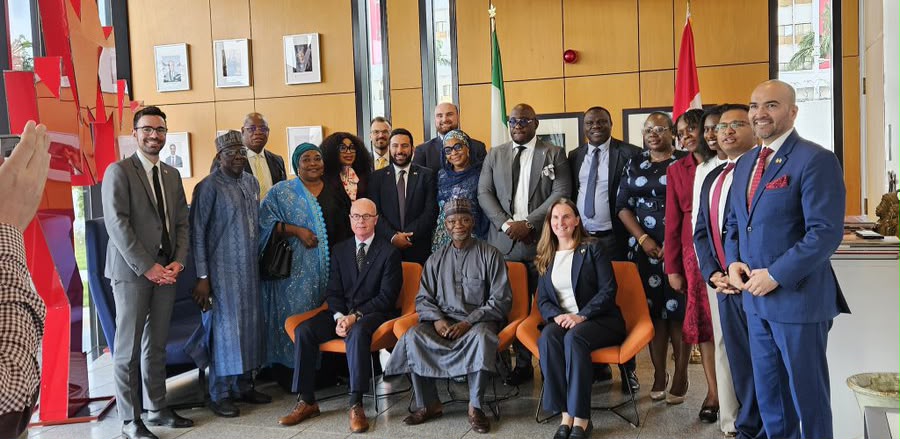

Nigeria and Canada have expanded their bilateral air transport framework, paving the way for scheduled direct air services between the two countries and creating new opportunities for passenger and cargo operations.
The agreement, signed on Thursday in Abuja, provides for multiple airlines from both countries to operate scheduled services and establishes capacity for passenger and cargo flights.
It also provides for up to 14 weekly passenger flights and 10 weekly all-cargo flights for designated airlines from each country.
The agreement is expected to improve air connectivity between Nigeria and Canada while supporting trade, tourism, education, investment and stronger people-to-people relations.
The Minister of Aviation and Aerospace Development, Festus Keyamo, was represented at the signing by the Director of Air Transport Management in the ministry, Mohammed Ahmed Tijjani.

Mr Tijjani signed the agreement with Canada’s Chief Air Negotiator for Global Affairs Canada, Shendra Melia, at the Canadian High Commission in Abuja.
The signing followed a technical review session in which officials from both countries examined the existing bilateral air services framework and agreed to expand it.

Shift towards direct connectivity
The new arrangement represents a significant expansion of the aviation relationship between Nigeria and Canada.
The two countries first negotiated an air transport agreement in 2014, but the framework was initially limited to code-sharing arrangements rather than direct scheduled flights.
The agreement was formally signed in March 2025, providing a framework for airlines to market services operated by partner carriers.
The latest expansion changes that framework by allowing designated airlines from both countries to operate scheduled services directly between Nigeria and Canada.
The agreement, therefore, provides the legal basis for airlines to pursue direct operations, although the signing itself does not mean such flights will begin immediately.
Airlines would still need to be designated by their respective governments and meet applicable regulatory, operational and commercial requirements before commencing services.
More opportunities for passengers and cargo
For travellers, direct scheduled services could reduce the need for connecting flights through third countries and make journeys between Nigeria and Canada more convenient.
The development could be particularly significant for Nigerians travelling to Canada for education, business, tourism and family visits, as well as Canadians travelling to Nigeria for business and other purposes.
As of 31 March 2026, more than 25,000 Nigerians held valid Canadian study permits, according to the information provided by the Federal Government, highlighting the importance of the education link between the two countries.
The agreement also provides a greater scope for cargo operations.
Under the expanded framework, designated airlines can operate up to 10 weekly all-cargo services, while fifth-freedom traffic rights have been granted for cargo operations.
Fifth-freedom rights allow an airline to carry traffic between two foreign countries as part of a service that originates from or terminates in the airline’s home country.
The provision could create additional options for moving goods through the two countries and strengthen commercial links between Nigerian and Canadian businesses.
Wider economic ties
The expanded aviation agreement comes as Nigeria and Canada seek to deepen economic relations beyond air travel.
Improved connectivity can support tourism, facilitate business travel, encourage investment and make it easier for people and goods to move between the two markets.
The Nigerian delegation at the signing included the Director of Air Transport Management, Mr Tijjani; the Director of Legal Services, Jummai Yahaya; and the Director of Air Transport Regulation at the Nigeria Civil Aviation Authority, Olayinka Babaoye-Iriobe.
The Canadian delegation was led by Ms Melia and included officials from Global Affairs Canada and Transport Canada.
READ ALSO: FG approves New York, Dubai, Canada routes for United Nigeria Airlines — Keyamo
The expanded framework gives airlines from both countries greater room to compete, as each country can designate multiple carriers rather than restricting scheduled operations to a single airline.
For Nigeria, the development also fits into the Federal Government’s wider effort to expand international air connectivity and secure new routes that can support tourism, trade and investment.
The agreement now provides the framework for airlines on both sides to pursue direct scheduled services, potentially bringing an end to years of reliance on connecting routes for travellers moving between Nigeria and Canada.
Discover more from Premium Times Nigeria
Subscribe to get the latest posts sent to your email.
-

 Entertainment4 days ago
Big Chinni Thrills Audience as NASCO Cornflakes Powers Mr & Miss UNIJOS 2026
-
News4 days ago
The fourth edition of Jasper Fiton Football Tournament Begins in Bokkos, Unites 45 Teams for Peace and Talent Discovery
-
News17 hours ago
Governor Mutfwang Begins Strategic Assessment to Restore Plateau’s Heritage, Boost Tourism
-
News3 days ago
Grassrunner’s Godwin Raphael Itotomi Completes Move to French Club Stade de Reims