Business
Nigeria to Expand Digital Access With New Fibre Infrastructure Push — NCC

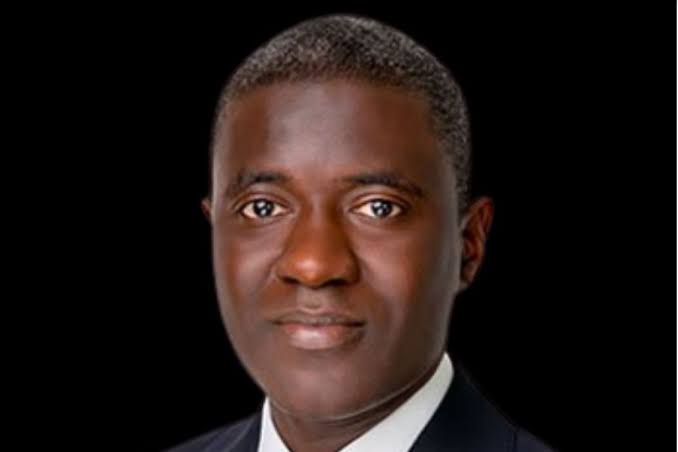

BY MADUEKE OBIWANNE-(ABUJA)—The Nigerian Communications Commission (NCC) has reaffirmed its commitment to expanding digital connectivity across the country, stressing that stronger fibre optic infrastructure remains critical to improving broadband penetration and bridging the digital divide.
The Commission said the renewed push forms part of broader efforts to accelerate digital transformation, drive economic growth, and ensure improved access to essential services such as education, healthcare, agriculture, and public service delivery nationwide.
Speaking at a Strategic Fibre Optics Training Workshop held in Abuja, the Executive Vice Chairman of the Commission, Dr Aminu Maida, said robust partnerships and technical expertise are essential to achieving nationwide digital progress.
Maida, whose remarks were delivered by Abraham Oshadami, noted that a properly regulated and durable fibre optic network is fundamental to the country’s digital development goals.
He explained that the workshop, themed “Strategic Fibre Optics Infrastructure Deployment and Regulatory Management,” comes at a crucial period as Nigeria steps up efforts to close the digital connectivity gap.
According to him, expanding fibre infrastructure remains a major driver of economic development and improved service delivery.
“As a country determined to boost broadband coverage, we recognise that strategic fibre rollout is vital for economic advancement, financial inclusion, education, healthcare, agriculture, and effective public service delivery,” he said.
Maida further disclosed that the Federal Government, through Project BRIDGE — Building Resilient Digital Infrastructure for Growth — under the Federal Ministry of Communications, Innovation and Digital Economy, is set to install an additional 90,000 kilometres of fibre optic cables across the country.
He said the initiative is designed to improve connectivity in all 774 Local Government Areas, with the aim of widening digital access and inclusion nationwide.
Despite the ambitious expansion plan, Maida acknowledged several obstacles, including expensive Right of Way (RoW) fees, administrative bottlenecks at state levels, and acts of infrastructure vandalism.
He, however, said the Commission is working closely with regulatory agencies, state authorities, and security institutions to tackle these issues.
According to him, 13 states have already removed RoW charges following the Commission’s engagement efforts, a development expected to encourage more investment from telecommunications companies.
The NCC chief also referred to a 2024 presidential directive, coordinated with the Office of the National Security Adviser, which classified telecom infrastructure as Critical National Information Infrastructure (CNII) to strengthen its protection.
Maida stressed that cooperation and capacity building remain key pillars of the Commission’s regulatory agenda.
He expressed confidence that the five-day training workshop, organised by the International Telecommunication Union (ITU) in collaboration with the Digital Bridge Institute and backed by the European Union, would enhance regulatory performance and support faster fibre deployment across Nigeria.
Also speaking at the event, Inga Stefanowicz, Head of Section for Green and Digital Economy at the EU Delegation, said the European Union’s global strategy places strong emphasis on investments in digital infrastructure, energy, transportation, healthcare, and education across Africa.
She added that the EU Digital Economy Package for Nigeria, launched in 2022, has committed €820 million, including €160 million in grants, to support digital skills development, innovation centres, and public digital infrastructure, with particular focus on fibre network expansion.
The post Nigeria to Expand Digital Access With New Fibre Infrastructure Push — NCC appeared first on Business Today NG.

The Central Bank of The Gambia ordered all commercial banks operating in the country to dismiss non-Gambian employees.
In a letter dated 19 September, the central bank asked commercial banks to phase out non-citizens who are not on approved expatriate quotas by the end of the year.
The letter, signed by the bank’s Second Deputy Governor, Ousman Mendy, was addressed to managing directors of all banks operating in the country, including Nigerian subsidiaries such as First Bank, Zenith, Access, Eco, and the Guaranty Trust Bank.
The regulator also directed that the non-citizens dismissed should be replaced with qualified Gambians.
It directed banks to put clear succession plans in place quickly and transfer skills. It also asked banks to keep operations running smoothly during the transition.
According to the letter, the decision followed a meeting between the central bank and bank managing directors in August, during which they discussed concerns about the employment of non-Gambian workers in the banking sector.


The CBG said a recent industry study it conducted found that banks employ a large number of foreigners.
It added that, in addition to recruiting expatriate workers, some banks allegedly violated provisions of The Gambia’s Labour Act 2023 and Guideline 9 on expatriate staff.
ALSO READ: Access Bank’s Euromoney wins signal new era of regional banking leadership
These provisions identify the circumstances under which expatriate workers can be employed and the quotas permissible.
“A recent industry study conducted by the Bank revealed that a relatively high number of non-Gambians are employed by banks, in addition to recognised expatriate staff.
“This is in violation of the provisions of the Labour Act 2023 and also not in line with guideline 9 on expatriate staff,” the letter read.
The regulator further urged banks to adhere to the country’s laws and strictly follow the central bank’s guidelines.
“You are hereby directed to ensure full compliance with the law and strict compliance with CBG’s guidelines,” it stated.
Discover more from Premium Times Nigeria
Subscribe to get the latest posts sent to your email.
-

 Featured1 day ago
PLATEAU STATE: IS THERE PEACE, OR ONLY THE ABSENCE OF VIOLENCE?
-
News2 days ago
Plateau Killings: Rotjimwa Yilyok Urges Security Agencies to Intensify Action
-
News2 days ago
Former Archbishop of Canterbury Justin Welby Calls for Peace, Protection of Communities During Plateau Visit
-
Business2 days ago
General Business to Drive 72% of Mutual Benefits Assurance’s Projected ₦96.82bn GWP