News
Lagos health agencies ready to contain Ebola, Sanwo-Olu says

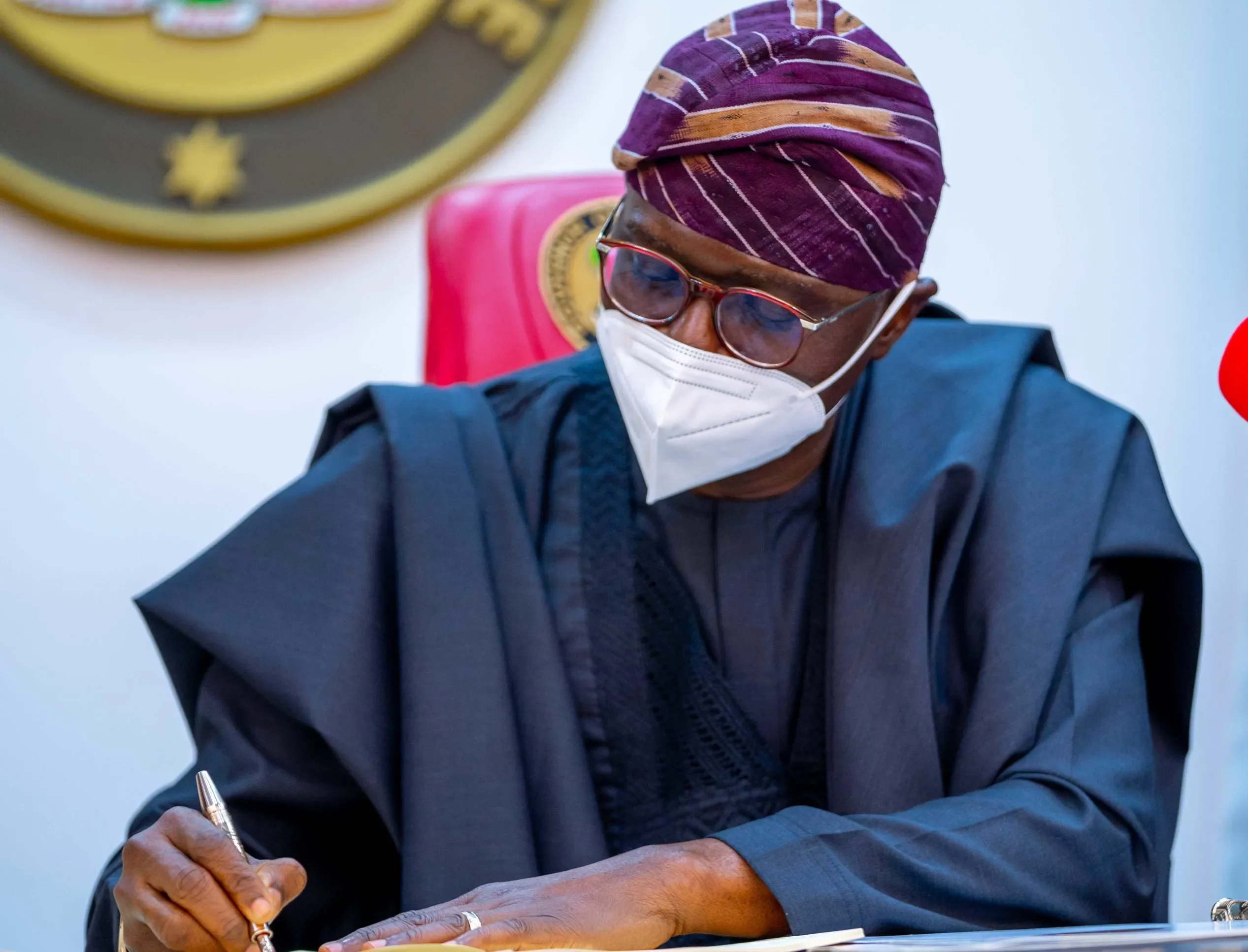
The Lagos State government says it is fully prepared to contain any case of the Bundibugyo strain of the Ebola virus as soon as it is detected in the state to prevent it from spreading.
Special Adviser to Governor Babajide Sanwo-Olu on media and publicity, Gboyega Akosile, disclosed this to the Peoples Gazette, on Friday, while reacting to the inclusion of Lagos by the Nigeria Centre for Disease Control and Prevention (NCDC), among other states, on high Ebola preparedness alert.
Although no confirmed case of Ebola virus has been recorded in Nigeria, the NCDC director-general, Jide Idris, in a statement on Thursday, listed Lagos, FCT, Rivers, Kano, Enugu, Borno, Akwa Ibom, Cross River, Taraba, and Adamawa, as high-risk states, due to international airports, porous borders, and active trade or travel routes.
Mr Idris also identified Ogun, Nasarawa, Kaduna, Plateau, Kogi, Niger, Jigawa, Katsina, Bauchi, Ebonyi, Abia, and Bayelsa as moderate-risk states requiring sustained preparedness efforts against possible Ebola importation and transmission threats.
Mr Akosile said that while it is not the duty of the state government, the Sanwo-Olu administration is in contact with the federal government to prevent any possible entry of the virus into the country, while health agencies in the state have already been mobilised in readiness for any eventuality.
He said, “In terms of readiness for any form of eventualities, Lagos State has demonstrated that it is ready to tackle issues like this. We demonstrated this and tackled it head on, during the administration of Babatunde Fashola. We also demonstrated it when Covid-19 struck during our administration of Babajide Sanwo-Olu.
“The institutional experience, operational capability and capacity are there for us in Lagos, it’s just for us to activate it. I can guarantee that the health family, the first responders, are warming up, in case there’s any form of entry. We pray the entry will be controlled and curtailed by the appropriate authorities, but be rest assured that Lagos State, will respond as always, to any form of strain coming into our dear state.
“The state government is always in communication and partnership with the federal on several issues, not only on Ebola or other health related issues. Lagos State is seriously monitoring the situation.”
Asked if isolation centers are already in place at the borders and the airport in the state, Mr Akosike said, “Isolation centers are not places you can keep forever because they are not regular hospitals but the institutional knowledge is there for us in Lagos and it is for us, a plug and play situation.
“As we speak, there are meetings going on and people gearing up, especially LASEMA, LASAMBUS, in case we have any entry into the state. I also know that the federal government is working very hard to ensure we don’t have such issue in Nigeria.”
He urged Nigerians to remain vigilant and promptly report any suspected health matters to the appropriate agencies.
Meanwhile, the Commissioner for health, Akin Abayomi, did not respond to enquiries by The Gazette seeking comment.
The World Health Organization (WHO), on May 17, declared the Ebola disease caused by the Bundibugyo virus in the Democratic Republic of the Congo and Uganda as a public health emergency of international concern (PHEIC).
According to the international health body, while the new deadly Ebola strain has no approved cure or vaccine, the outbreak does not meet the criteria of pandemic emergency as defined by the International Health Regulations.






The African Action Congress, AAC, presidential candidate, Omoyele Sowore, has blasted President Bola Tinubu and the All Progressives Congress, APC, over what he described as a fake show of support in Kaduna during the APC campaign flag-off.
In a post on his verified X handle on Saturday, Sowore said the APC and Tinubu want Nigerians to mistake a packed stadium for nationwide support.
According to him, the Ranchers Bees Stadium in Kaduna holds just 5,000 people, adding that supporters were transported in from across Nigeria to fill it.
"You packed 5000 people in Kaduna and called it nationwide support? The APC and the Tinubu government want Nigerians to mistake a 'packed' stadium for nationwide support.
"Ranchers Bees Stadium in Kaduna holds just 5,000 people, even at that, supporters were transported in from across Nigeria to fill it," Sowore said.
The human rights activist stressed that President Tinubu will still lose the 2027 presidential election despite the alleged staged crowd.
"In 2027, President Bola Tinubu will still lose the election," he added.
You packed 5000 people in Kaduna, called it nationwide support – Sowore mocks Tinubu, APC
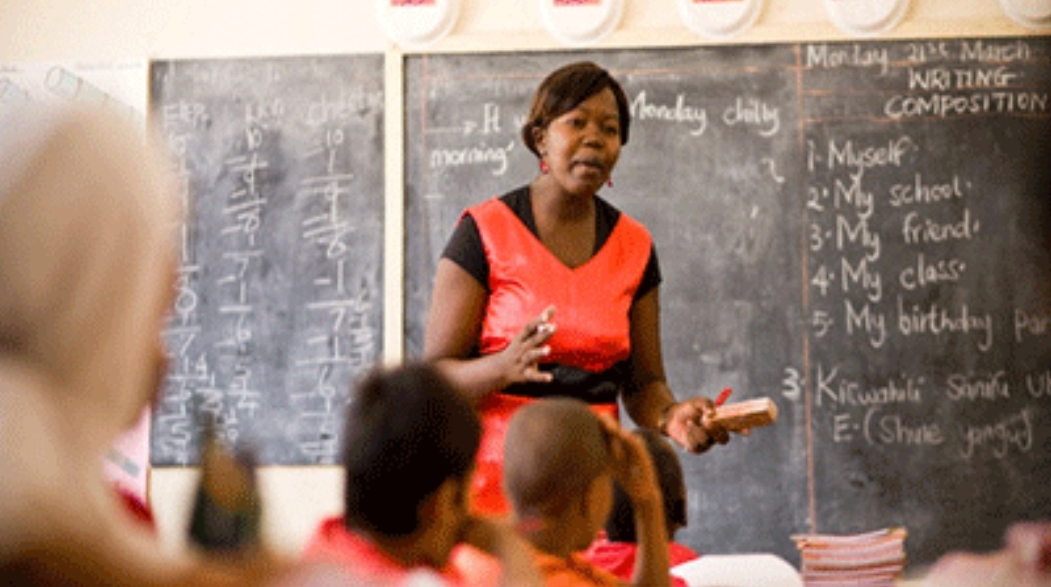
Do More Initiative, a non-governmental organisation (NGO), has called on the federal government to review the educational curriculum to address unemployment in Nigeria.
Deborah Mshelia, the executive director of the NGO, made the call at an event it organised on Saturday in Jos, tagged “The Upcycle Exhibition”.
Ms Mshelia, an architect, said that such a move would not only create employment opportunities for young people but also boost the nation’s revenue.
The executive director, who said that most developed countries relied on skills and technology to boost their economies, added that the needed reform of Nigeria’s education curriculum would align with current realities.
She particularly said that Nigeria’s education system should be geared towards producing critical thinkers, job creators and problem solvers.
“I think our educational curriculum at all levels should be reviewed to meet current realities.
“I am blessed because in school of architecture, we weren’t just taught how to construct buildings, but how to think. I have been able to apply that principle to many other things.
“And I think that’s the way our education system should go. The system should produce people that can critically think and solve problems using local solutions.
“The curriculum should focus on skill acquisition; let’s see young people doing things with their hands and using their talents to create jobs at all levels,” she said.
Ms Mshelia also called on parents to encourage their wards to acquire other skills in addition to Western education.
“Parents need to seriously support their children to acquire other skills.
“Gone are the days when we think that our children are too weak to go and learn carpentry. This is why we are practically losing our local crafts in Nigeria.
“These same crafts are what other countries are exporting and boosting their economy through foreign exchange,” she said.
On the exhibition, Ms Mshelia said that her organisation, under the “School to Stuff” project, had trained and supported 10 young people to turn waste into wealth.
The executive director, who said that 20 applicants had initially been selected for the project, regretted that only 10 eventually turned up and participated.
“Waste management in Nigeria is a huge problem, and that’s why we trained these 10 young people and supported them to create wealth from the waste in their environment.
“We simply supported them to use their creativity to turn waste into wealth; that way, we are also solving the problem of unemployment and underemployment in Nigeria,” she said.
Ms Mshelia, who advised Nigerians to put their ingenuity to good use, also called on young people to shun all forms of social vices and be good ambassadors of Nigeria.
She, however, advised the government to initiate policies and programmes that would enable young people to put their skills to proper use.
(NAN)
-

 News2 days ago
Obi, Kwankwaso to hold Middle Belt Youth, Village Hall Meeting in Jos
-
News4 days ago
Blacksmith hits unicorn valuation after Sequoia leads Series C
-
News3 days ago
Handball President Jibril Saidu Ojih Explains Reasons Behind Introduction Of Transfer Fees For Nigerian Players
-
Entertainment3 days ago
FOGMMON PLATEAU CONGRATULATES EJIDIKE UGOCHUKWU (𝙈𝙞𝙣𝙨𝙩𝙧𝙚𝙡 𝙅𝙞𝙙) ON HIS APPOINTMENT AS NATIONAL PRESIDENT