Connect with us

News

Town Planners Urge Urgent Action To Save Abuja’s Green Areas 

info

Published

on

IMG 20260819 WA00542.jpg

By Jumoke Olaitan/ Angela Atabo

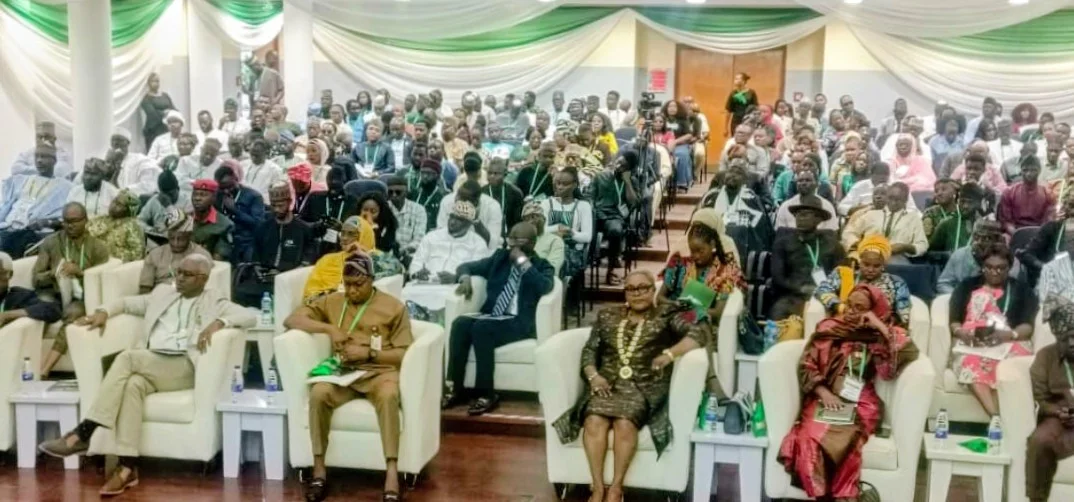
‎Nigerian Institute of Town Planners (NITP), Federal Capital Territory (FCT) Chapter has called for urgent action to halt the loss of green spaces in the FCT and enforce strict adherence to the Abuja Master Plan.

NITP Chairman in the FCT, Ms Queen Phillips, raised the alarm in Abuja on Wednesday, during the 2026 Town Planners Day, with the theme, “From Garden City to Concrete Jungle: Planning Livable Communities”.

Philips explained that the theme responds to growing public outrage over non-adherence to planning standards and the steady disappearance of green areas.

She noted that the event offered a platform for stakeholders to examine challenges confronting sustainable development in the FCT and craft practical solutions to preserve its environmental assets.

”The theme is therefore both timely and compelling, providing an opportunity for stakeholders to reflect on the challenges confronting the sustainable development of the FCT.”

“It will also help to collectively examine practical solutions for preserving its environmental assets and ensuring the creation of livable communities.

”The FCT Chapter of the institute has, at various times, demonstrated its commitment to addressing these concerns,” she said.

Phillips said that the chapter routinely sets up committees to investigate planning challenges triggered by intense development pressure.

She added that reports from the committees were forwarded to the national body for action, while observed infractions are reported to the Town Planners Registration Council of Nigeria (TOPREC).

She stressed that professional standards, ethical practice, and regulatory compliance remain non-negotiable for orderly development.

‎Ms Zaliha’u Ahmed, who chaired the event, reminded participants that the Abuja Master Plan was originally designed around a “garden city” concept, where nature and infrastructure coexist through sound land use and high quality of life.

However, she expressed deep concern over the conversion of public and institutional lands into private developments.

Ahmed cited specific violations, including the widespread felling of mature trees, the redesign of lands surrounding Jabi Lake Park, the conversion of a district hospital site for residential use, and illegal commercial activities taking over walkways and buffer zones.

She warned that these departures threaten the city’s identity and core plan, urging professional bodies to publish evidence-based positions on major violations, protect whistleblowers who refuse improper directives, and sanction members who facilitate illegal approvals.

Delivering the keynote address, Prof. Laraba Rikko of the University of Jos described Abuja’s shift toward a “concrete jungle” as an experiential crisis in urban planning.

Rikko acknowledged public skepticism regarding whether town planners even exist in the city, attributing this perception to a lack of visible planning impacts and urged professionals to demonstrate greater integrity and diligence.

”The theme reflects the tension between visionary planning and uncontrolled urban expansion, institutional intentions and implementation realities, as well as sustainable development and political, economic and demographic pressures,” she said.

Rikko reiterated that Abuja was explicitly conceived as a planned capital to prevent the chaotic growth seen in organic cities, with green belts, parks, and natural landscapes.

This, she said, serves as vital ecological infrastructure to absorb rainfall, regulate temperature, and mitigate climate risks.

Lamenting that these features were continually fragmented, degraded, or reallocated, Rikko pointed to unapproved building plans, weak enforcement, political interference, corruption, and a breakdown of professional ethics as core drivers of the decay.

She challenged built-environment professionals to take full accountability, emphasising that every official signature and approval either protects or undermines the capital city. (NAN)

Edited by Philip Yatai ‎

Continue Reading
Click to comment

Leave a Reply

Your email address will not be published. Required fields are marked *

News

Tinubu doesn’t believe in one Nigeria but I do – Peter Obi

info

Published

on

By

The Nigeria Democratic Congress, NDC, presidential candidate, Peter Obi, has insisted that President Bola Tinubu does not believe in one Nigeria despite occupying the highest political seat in the country.

Obi recalled how Tinubu once said that he doesn’t believe in the unity of the country.

Recall that Tinubu in an interview with ThisDay in April 1997, said, “I don’t believe in one Nigeria.”

During the military regime, Tinubu was an active member of the National Democratic Coalition, NADECO, a prominent pro-democracy group.

Recommended

The group which was formed in on May 15, 1994, fought against military dictatorship and ensured the restoration of civilian rule.

Upon the return of civilian rule in 1999, Tinubu became the governor of Lagos State.

Speaking on Arise Television on Thursday, Obi said: “Today we have a President who said he doesn’t believe in one Nigeria but he is sitting as the President. I believe in Nigeria. Yes Tinubu said he doesn’t believe in one Nigeria but I believe in one Nigeria, I’m committed to it and I want that unity.

“This is him saying it, I didn’t say that but you can’t hold what happened when I was barely three or four years old against me, it’s in the past and there are other things that happened subsequently.”

Continue Reading

News

Plateau Diphtheria death toll hits 27 as 303 cases recorded

info

Published

on

By

Diphtheria 3.jpeg

The Plateau State Government has disclosed that the death toll from the diphtheria outbreak in the state has risen to 27, while 303 cases have been recorded so far.

The state’s Chief Epidemiologist, Dr Maren Damulak, who disclosed the figures while briefing newsmen in Jos on Thursday, said the previous death toll was 23 but had risen to 27 following the deaths of two parents on Wednesday.

He added that the number of suspected cases had also risen sharply from about 149 to 303, with Jos North Local Government Area, particularly the Rikkos community, identified as the most affected area.

“As of today, the cases have increased from 149 to 303. The death toll has also increased from 23 to 27. Jos North has the highest number of cases. 99% of the cases are in Jos North,” Damulak said.

Recommended

He emphasised that most of those affected were people who had not received the diphtheria vaccine, particularly children whose parents did not take advantage of the government’s free vaccination window.

He, however, assured that the state government was doing everything possible to contain the outbreak, including the temporary closure of all primary and secondary schools following the detection of suspected cases in Jos North, Jos South, Bassa and Wase Local Government Areas.

The measure, Damulak said, was aimed at reducing transmission among students and school staff while health authorities strengthen surveillance and response activities.

“In Jos North, the local government council has deployed additional logistics, including motorcycles, to enhance contact tracing, field surveillance and community outreach, while Governor Caleb Manasseh Mutfwang has directed the immediate mobilisation of drugs and other medical commodities to health facilities to combat the disease,” he added.

Continue Reading

Trending