Connect with us

Business

Investors Are Seeking To Refund And Toll President Tinubu’s Legacy Projects – Umahi

info

Published

on

IMG 20260515 WA0022.jpg

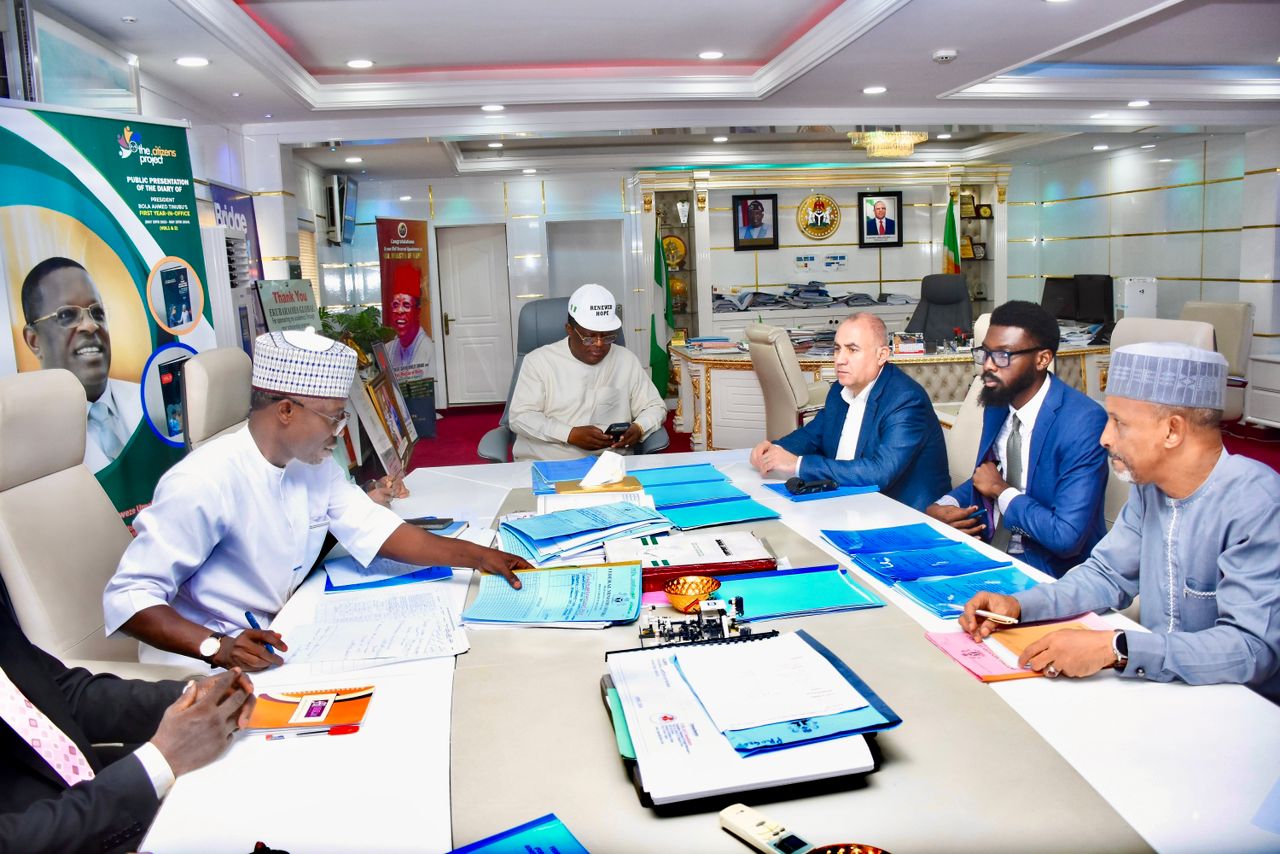
The Federal Ministry of Works witnessed another major milestone on Wednesday and Thursday, May 13 and 14, as the Federal Government signed Memoranda of Understanding and contract agreements for eight major road projects across the country.

The signing ceremony, which took place at the Ministry’s Headquarters in Mabushi, Abuja, brought together government officials, contractors and stakeholders in what was described as another bold step in President Bola Ahmed Tinubu’s drive to modernize Nigeria’s road infrastructure and strengthen the economy through strategic investments.

This was made known by Francis Nwaze, FIPMD
Senior Special Assistant to the Honourable Minister of Works (Media) .

Speaking during the ceremony, the Minister of Works, Senator Engr. David Umahi, CON, described the projects as part of the growing legacy of President Tinubu’s administration.

“Today is another event that adds to the great work that President Bola Tinubu is doing,” Umahi said.

The Minister revealed that the Federal Government has already procured the first 123 kilometres single carriageway of the Calabar-Ebonyi-Abuja Super Highway, stretching from Calabar through Ebonyi State to the Benue border. According to him, the newly signed section covers another 173 kilometres through Benue, Kogi and Nasarawa States, ending at the Oweto Bridge.

He further disclosed that government would soon procure the second carriageway of about 300 kilometres from Ndibe Beach to Oweto in Nasarawa State.

Umahi said the project would significantly reduce travel time between the South East and Abuja while boosting economic activities in the region.

“I want to say this without any apology the SouthEast People will reciprocate what the President has done for the people. What happened in 2023 was an accident of history and in 2027, we will show our appreciation,” he stated.

“I was a governor, I was a deputy governor and we never witnessed federal government projects in SouthEast but today, we may not be the first, or the second or the third but definitely, we are not the last.”

“So, we are very proud of what the president is doing in the entire SouthEast and I pledge on behalf of the entire SouthEast that we are going to reciprocate because with this project, any part of the SouthEast you are, you will be in Abuja in 3 to 4 hours. And this is a plus to our commercial activities.”

The Minister noted that five companies competed for the project before Infouest emerged successful, adding that the same transparent procurement process was adopted for the Sokoto-Badagry Super Highway project.

Umahi also spoke on the progress of the Lagos-Calabar Coastal Highway, saying the project had moved from skepticism to national admiration.

“When we started the coastal highway, 750km, people did not believe that it would be a reality. And some that knew that it would be a reality, out of envy and jealousy, started to criticize the project,” he said.

“But today, the entire country is waving their flags for President Bola Tinubu because that project is a beauty to behold. It is an economic catalyst for the nation, Nigeria.”

According to him, by November, motorists will be able to travel from Ahmadu Bello Way in Lagos through Sections One, Two and part of Section Four to Ondo State on completed portions of the road.

He added that Sections 3A and 3B in Cross River and Akwa Ibom States are ongoing, while Section Five covering 165.6 kilometres has also commenced.

Describing the coastal highway as more than a road project, Umahi said it was a long-term national investment designed to last for decades.

“This is not just a road project. I have always said that this is an investment that the President is doing, and this is a road that is going to last for another hundred years with no maintenance,” he said.

He commended HITEC Construction Company for what he described as speed, capacity and commitment to delivery, noting that the company has built a reputation for constructing up to one kilometre of road per day.

Umahi also explained that the cost of the projects include extensive drainage systems, reinforced pavement, concrete works and other durable engineering components.

“And for those who are asking us about cost per kilometer, we will be talking now at an average cost per kilometer, which is about N7.5b for a standard carriageway,” he explained.

“But this one is even with a lot of road architecture. You see the concrete poles, the drainage, the culverts, the reinforcement, the pavement. So it is not just a road. This is an investment.”

The Minister further revealed that investors are already showing strong interest in the completed sections of the Lagos-Calabar Coastal Highway.

“Just like in section one that we finished in Lagos, a lot of investors are begging to be given that section for them to toll and then give back our money even before they start tolling,” Umahi disclosed.

“So it is an investment, and it is only a person like President Bola Tinubu that can do this.”

On the Sokoto-Badagry Super Highway, Umahi said Section IV covering the Oyo axis spans 360 kilometres, explaining that the project demonstrates government’s determination to spread development across all geopolitical zones.

“The President is President for the entire country. His four legacy projects are dotted throughout the six geopolitical zones,” he said.

He also highlighted progress on the Akwanga-Jos-Bauchi-Gombe-Biu-Maiduguri Road project, explaining that President Tinubu insisted on changing the original asphalt design to concrete pavement to guarantee durability.

“The President said, ‘No, we want to do concrete road so that when we build it, it will last for a hundred years,’” Umahi stated.

The Minister said the Federal Government would provide 30 percent counterpart funding for the projects, while 70 percent would be sourced through loans. He added that tolling and strategic land acquisition along the roads would ensure long-term returns on investment.

“We neither review timing nor rates. The moment we sign, as we have signed now, that is the end of the matter,”.

The four major legacy project sections signed include:

1. Calabar-Ebonyi-Abuja Superhighway, Section II: Ebonyi State Border – Benue – Kogi – Nasarawa States
2. Sokoto-Badagry Superhighway, Section IV: Oyo State
3. Lagos-Calabar Coastal Highway, Section V: Akwa Ibom State
4. Dualisation of Akwanga-Jos-Bauchi-Gombe-Biu-Maiduguri Road, Section II: Gombe – Biu

Other projects signed on Thursday, May 14, include:

1. Reconstruction of Mando (Kaduna) – Birnin Gwari Road in Kaduna State by Messrs J. Patel and Sons Nigeria Limited
2. Dualisation of Ibadan–Ijebu Ode Road in Oyo and Ogun States by Messrs JRB Construction Company Limited
3. Construction of Osogbo–Ikirun–Akoda Road in Osun State by Messrs Truecrete Solutions Limited
4. Construction of Osogbo–Iwo–Ibadan Road in Osun and Oyo States by Messrs Peculiar Ultimate Concerns Limited

Earlier in his remarks, the Permanent Secretary of the Ministry, Mr. Rafiu Olarinre Adeladan, described the signing ceremony as the successful conclusion of the procurement process and the formal commencement of project implementation.

Responding on behalf of the contractors, the Chief Executive Officer of HITEC Construction Company, Dany Abboud, assured the Federal Government of timely delivery and quality execution.

“Our commitment is always on the table. We are committed to delivering those jobs before the thirty-six months that were awarded.

“We commit to delivering a standard even better than what we have done on Coastal Highway Section One.” Abboud said.

Continue Reading
Click to comment

Leave a Reply

Your email address will not be published. Required fields are marked *

Business

Dangote refinery raises processing capacity to 700,000 barrels per day

info

Published

on

By

Dangote Refinery 2 1024x831 1 e1778177983979.jpg

MTN ADVERT

Dangote Petroleum Refinery and Petrochemicals says it has increased its crude oil processing capacity to 700,000 barrels per day (bpd), surpassing its installed nameplate capacity of 650,000 bpd following a performance assessment by its process licensors.

The development marks a significant operational milestone for the refinery, which is widely regarded as the world’s largest single-train petroleum refining facility.

In a statement shared with PREMIUM TIMES on Thursday by the Group Chief Branding and Communications Officer of Dangote Group, Anthony Chiejina, the company explained that the increase demonstrates the refinery’s ability to process additional feedstock while optimising performance across its production units.

In his remark, Vice President, Oil and Gas at Dangote Industries Limited, Devakumar Edwin, said the refinery’s latest output increase forms part of a broader expansion strategy aimed at scaling capacity to 1.4 million bpd within the next 30 months.

Mr Edwin said the proposed expansion could position the facility among the largest refining complexes globally, while strengthening Nigeria’s drive for energy self-sufficiency.

PT WHATSAPP CHANNEL

“The refinery’s growth trajectory reflects a deliberate move toward continental and global refining dominance, not just domestic supply sufficiency,” he said.

The announcement of reaching 70, 000 capacity comes a few days after the refinery chief executive disclosed that the production target of 70,000 barrels per day would be reached by 2028.

On Tuesday, the refinery CEO, David Bird, while speaking during the S&P Global Energy Middle East Petroleum and Gas Conference in London, said the refinery is currently operating at full nameplate capacity and is planning what he described as a “ruthless replication” strategy to expand output.

“We will bring 700,000 barrels per day of fully complex refining capacity on stream by the end of 2028,” he said, adding that long-lead equipment has already been procured while construction contracts are being awarded.

He added that the group could eventually increase refining capacity to 2.1 million bpd, supported by plans for another refinery in East Africa, positioning the company as a major player in global crude and refined product markets.

“Nigeria has gone from fuel scarcity to absolute fuel abundance since the Dangote refinery came online,” Mr Bird said.

According to Kpler data cited last month, the Dangote Petroleum Refinery exported an estimated 57 million barrels of jet fuel between April 2024 and April 2026.

The data showed exports rose from about 20,000 barrels per day in April 2024 to around 65,000 barrels per day by the end of that year before peaking at approximately 160,000 barrels per day during the review period.

The figures highlight the growing role of refined petroleum exports in Nigeria’s energy sector, particularly aviation fuel, as the country seeks to strengthen domestic refining capacity and reduce dependence on imported products.

Expansion plans and export ambitions

Owned by industrialist Aliko Dangote, the refinery commenced fuel production in 2024 and has since expanded output to include petrol, diesel, aviation fuel, and other refined petroleum products.

The company said the facility now supplies both domestic and international markets, exporting refined products to several African countries and to European destinations, including the United Kingdom, France, Spain, Italy, and the Netherlands.

It also said refined products from the facility have reached markets in the United States, while jet fuel exports have extended to Saudi Arabia.

Dangote Industries argued that the refinery has increasingly played a stabilising role in regional fuel markets amid supply disruptions linked to geopolitical tensions in the Middle East, with more African countries turning to the facility for energy security.

Growing global footprint

The refinery’s rising output has further strengthened its position in global fuel markets.

The company noted that the facility emerged as the world’s largest exporter of jet fuel in April, citing data from S&P Global Commodities.

Industry analysts say the refinery’s operations have already contributed to reducing Nigeria’s reliance on imported petroleum products, easing pressure on foreign exchange demand and improving local fuel availability.

READ ALSO: Dangote refinery can supply Jet Fuel Globally — Official

As production volumes increase, the refinery has also attracted stronger engagement from international crude suppliers and commodity traders, sourcing feedstock from both domestic and foreign producers to sustain rising throughput.

Dangote Industries said the planned expansion to 1.4 million bpd by 2028 is expected to generate broader economic benefits, including job creation, increased industrial activity and improved trade balances.

The refinery also expects to deepen downstream industrialisation through increased supply of liquefied petroleum gas (LPG), polypropylene and other industrial feedstocks used in manufacturing.

Plans also include production of Linear Alkylbenzene (LAB), a key raw material used in detergent manufacturing, as part of efforts to expand the country’s petrochemical value chain.


Continue Reading

Business

NERC to set net billing regulations, boost renewable energy

info

Published

on

By

NERC 2.jpg

MTN ADVERT

The Nigerian Electricity Regulatory Commission (NERC) will kick off the Net Billing Regulations 2026 to strengthen energy security and expand renewable energy nationwide.

The commission announced its plan in a public notice on Wednesday, addressed to electricity consumers, distribution companies, renewable energy developers, commercial and industrial customers, and the general public.

According to NERC, the regulations establish a framework that enables eligible electricity customers, referred to as “prosumers,” to generate electricity primarily through renewable energy sources such as solar photovoltaic systems for their own consumption while exporting excess electricity to distribution networks under a net billing arrangement.

“The Nigerian Electricity Regulatory Commission (NERC) hereby notifies electricity consumers, distribution companies, renewable energy developers, commercial and industrial customers, and the general public of the commencement of the Net Billing Regulations 2026.”

NERC further stated that the new framework is designed to promote the adoption of renewable energy technologies, enhance energy security, and reliability for electricity consumers.

PT WHATSAPP CHANNEL

Similarly, the regulators explained that the move was aimed at encouraging private sector participation in distributed electricity generation, supporting efforts to reduce greenhouse gas emissions and facilitate efficient integration of renewable energy systems into distribution networks.

Eligibility requirements:

To participate in the net billing scheme, the commission explained that customers must be connected to the network of a licensed electricity distribution company.

Moreover, the customers must install renewable energy systems that comply with technical standards and regulatory requirements; deploy renewable energy systems with installed capacities ranging from a minimum of 50 kilowatt peak (kWp) to a maximum of 1.5 megawatt peak (MWp).

Besides, the customers are also required to obtain approval from the relevant distribution company and execute a Net Billing Agreement and register with NERC.

The commission said interested customers are expected to apply through their distribution companies for technical feasibility assessments before approval.

“Upon approval and execution of a Net Billing Agreement, the applicant shall register with NERC in accordance with the provisions of the Regulations.”

READ ALSO: NERC approves special compensation for Band A customers affected by power shortfalls

Metering/compensation

NERC said approved participants would be provided with bidirectional net meters to measure electricity imported from and exported to distribution networks.

The commission added that surplus electricity exported to the grid would attract credits based on export tariffs approved under the regulations.

The move comes amid increasing interest in decentralised power generation and rising adoption of solar energy solutions among households and businesses seeking alternatives to unreliable grid supply.


Continue Reading

Trending