News
Karate Federation President Chukwudi Dimkpa Seeks God’s Protection For Team Nigeria’s Athletes At 2026 Commonwealth Games


The President of Karate Federation of Nigeria (KFN), Engineer Chukwudi Elekwachi Dimkpa has added a spiritual angle to Nigeria’s pursuit of medals at the 2026 Commonwealth Games in Glasgow, Scotland, as the recently confirmed top shot prayed for God’s protection over the country’s athletes.
Sports247 reports that, while acknowledging that Team Nigeria had solid preparations heading into the Games and the contingent is saturated with immense talents, Dimkpa reasoned that they still need the hand of God and His guidance during their various events at Glasgow 2026.
Dimkpa also commended director-general of the National Sports Commission (NSC), Honouurable Bukola Olopade, for his commitment to the welfare of Nigeria’s athletes and praised the officials for working tirelessly to ensure the team got all necessary technical, medical and logistical support.
The KFN president added that, though karate is not featuring at the Glasgow Games, the federation stands firmly behind Team Nigeria and fully supports the country’s representatives, who he believes will return home with many medals that would inspire the next generation of athletes.
He asserted, “I have no doubt that our athletes possess the talent, discipline, determination and resilient Nigerian spirit of ‘never say never’ to win gold medals and secure several podium finishes for our country. My prayers are with every athlete and official for God’s protection throughout the Games.”




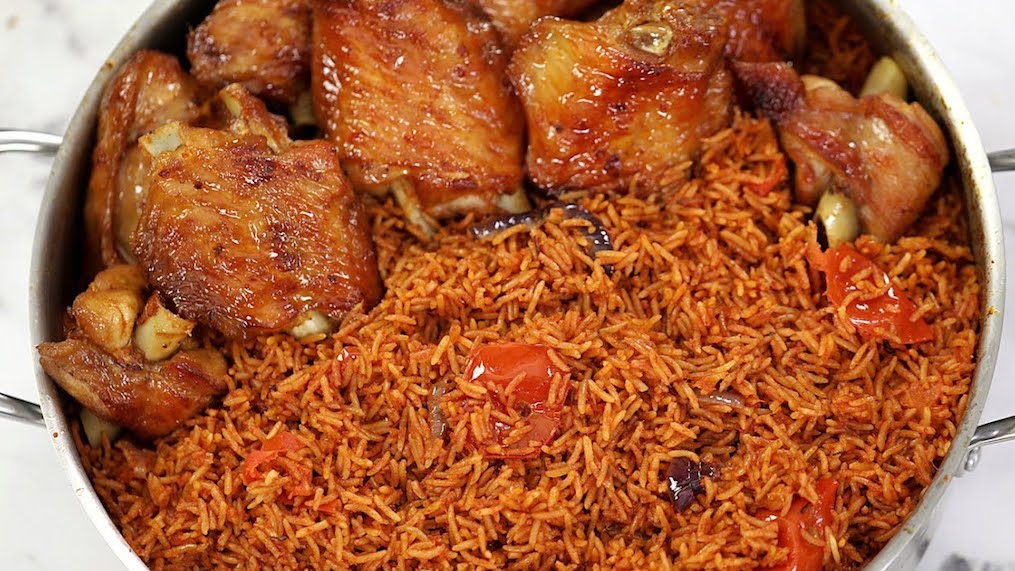
The cost of cooking a pot of jollof rice in Nigeria fell by 11.5 per cent between June and September 2026, driven largely by declining prices of chicken, beef and vegetable oil as the main harvest reached markets, according to a report by SBM Intelligence.
The National Average Jollof Index dropped from N29,578 in June to N26,178 in September, marking the largest quarterly decline since the geopolitical research and strategic communications firm began tracking the cost in July 2016.
In its third-quarter 2026 report, titled ‘The Pot Cools, but Not Everywhere’, SBM Intelligence said the decline was concentrated in protein and oil prices, while rice prices remained largely unchanged.
SBM’s index prices the ingredients for one pot of jollof rice in fixed quantities across 13 Nigerian markets in the country’s six geopolitical zones.
The quantities include rice, chicken, tomatoes, vegetable oil, red pepper, tinned tomatoes, onions, beef, salt, curry, thyme and seasonings.
“Chicken and beef together account for N13,800 of the fall,” the report said, noting that protein had been the dominant driver of rising jollof rice costs in its second-quarter report.


The report attributed the sharpest decline to the period between June and July, when the index fell by N2,312, coinciding with the arrival of the main harvest in markets. Prices were relatively stable in August before falling further by N984 in September.
The movement was consistent with inflation data according to the National Bureau of Statistics (NBS), as food inflation eased to 19.57 per cent in August from 20.31 per cent in July, its first decline in six months. Headline inflation also fell to 15.39 per cent in August.
The report said vegetable oil prices fell in nine of the 13 Nigerian markets monitored, with the largest decline recorded in Lagos, where the price of 90 centilitres dropped from N5,000 to N3,000.
“Oil and protein together account for more than half the national decline,” the report said.
Price fall drivers
However, the report cautioned that the decline was uneven across the country, with Lagos and Ibadan accounting for much of the reduction.
Nine of the 13 markets recorded declines of less than 10 per cent, while two barely moved.
Port Harcourt was the only market where the cost of preparing a pot of jollof rice increased, rising from N31,200 in June to N32,000 in September, a 2.6 per cent increase.
SBM Intelligence linked the increase to flooding in Port Harcourt and Obio/Akpor in late September, which disrupted conditions in the city while other parts of the country benefited from the harvest.
The report also identified a recording error in Ibadan’s Bodija and Dugbe markets, where curry and thyme prices had been recorded at about N3,500 each between January and June before dropping to N650 each from July.
It said the apparent reduction in the spice prices was a unit-related error rather than a genuine market movement, meaning the reported 21.3 per cent decline in the cost of jollof rice in the two markets overstated the actual price reduction.
Despite the quarterly relief, the cost of preparing a pot of jollof rice remained 5.8 per cent higher than in September 2025 and 540 per cent above the July 2016 level.
The report also noted that rice prices contributed little to the latest decline, with the staple’s combined price movement across the 13 markets amounting to just N50.
“This clearly shows a point the index has made for years: the Jollof Index is not a rice-price measure. Everything but the grain sets the cost of the pot,” it said.
Regional breakdown
The South-South remained Nigeria’s most expensive region for preparing jollof rice, with Calabar Municipal closing September at N34,600 and Bayside Mbakpa at N34,500. Both markets recorded declines of just N150 from June.
READ ALSO: Knorr marks World Jollof Day 2026 with one-of-a-kind “TurnUpForJollof” Celebration
In contrast, the Southwest recorded some of the steepest reductions. Prices in Lagos’s Trade Fair and Balogun markets fell from N34,700 in June to N22,350 in September, a 35.6 per cent decline.
In the Southeast, the cost fell by 5.3 per cent in Onitsha to N21,350 and by 3.2 per cent in Awka to the same amount.
SBM Intelligence said household responses also suggested that consumers were adjusting their food choices as prices changed.
One respondent in Kumbotso, Kano State, who had stopped buying chicken, resumed buying one chicken a week after the price of a kilogram fell from N7,000 to N4,500.
Another respondent in Gwale said the price of a cup of pepper fell from N2,500 to N1,400 the previous year, making it possible to resume cooking stew daily.
The report, however, warned that one quarter of falling prices had not reversed the longer-term increase in food costs, with the national index still substantially above its level a year earlier.
Discover more from Premium Times Nigeria
Subscribe to get the latest posts sent to your email.

-

 News3 days ago
Euromatch NPFL: Matchday 9 results
-
News3 days ago
No agenda, no rush, no leaving San Francisco: Benchmark’s partners on investing in a frenzied market
-
News2 days ago
Amazon to fund 12 small nuclear reactors at former Indiana coal plant
-
News4 days ago
Meta removes language that raised scraping and AI training concerns