Health
Gov. Mutfwang Commissions ₦2bn Diagnostic Lab, Pediatric Ward at Plateau Specialist Hospital


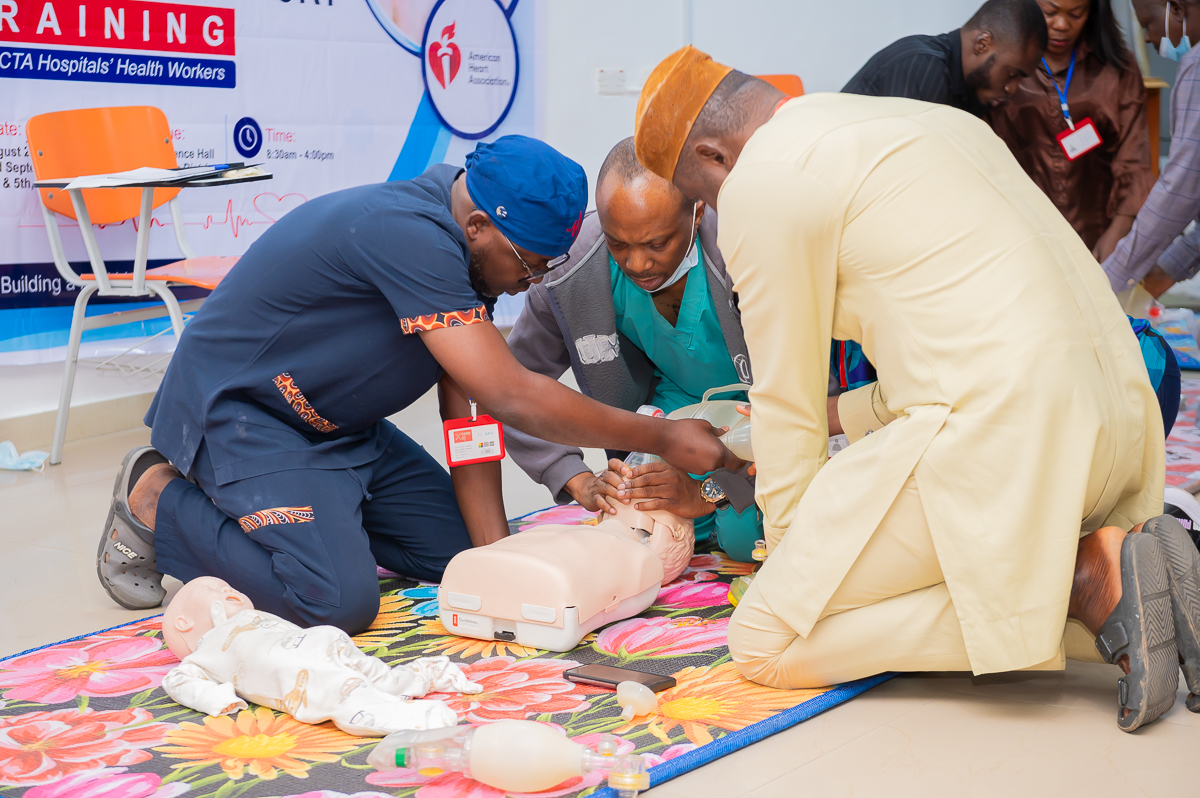

The Federal Capital Territory Administration (FCTA) has commenced Basic Life Support (BLS) training for health workers in seven public hospitals, as part of efforts to strengthen emergency response and reduce preventable deaths in the territory.
This was disclosed in a statement issued on Saturday.
The four-day American Heart Association (AHA)- certified training is being held at the Conference Hall of Asokoro District Hospital, Abuja, following the National Council on Health’s approval to implement the National BLS Training Programme nationwide.
Health workers from Asokoro, Maitama, Wuse, Gwarinpa, Kuje, Kubwa and Nyanya hospitals are participating in the training.
The programme is designed to equip health workers with the skills required to respond quickly to medical emergencies and provide basic life-saving care while patients await further medical intervention.

FCTA plans Code Blue, teams
The Mandate Secretary, Health Services and Environment Secretariat (HSES), Dolapo Fasawe, while declaring the training open, said the programme would strengthen emergency services in FCT hospitals and help reduce avoidable deaths.
Ms Fasawe said the FCTA was also working towards establishing Code Blue teams across hospitals in the territory to ensure that patients requiring urgent attention receive prompt care.
“Our goal is to record success stories from ‘no pulse to resuscitation consistently’. When people know that they can receive timely and proper emergency care in our hospitals, it will also build their confidence and trust in government hospitals to respond swiftly and manage their loved ones,” she said.
She said the training would also help health workers remain up to date with global practices in emergency care.
According to her, participants would be expected to share the knowledge they acquire with their colleagues and the public to support the National Community cardiopulmonary resuscitation (CPR) Initiative.
Ms Fasawe added that the training would be extended to other hospitals in the FCT, with the necessary basic equipment and other requirements provided to strengthen emergency response and patient care.
Training to include bleeding control
The training coordinator, Rosemary Nwokorie, a consultant anaesthetist, said the exercise was being conducted in batches.
She said the first batch was scheduled for 21 and 22 August, while the second batch would be held on 4 and 5 September.
The training also includes a Stop the Bleeding course, which teaches participants how to control severe bleeding in trauma patients before definitive medical care is provided.
Onyedika Okoye, a trauma surgeon at the Trauma Centre, National Hospital, Abuja, leads the team of instructors.
READ ALSO: Stakeholders seek more health workers to boost routine immunisation in three northern states
Participants will undergo an assessment at the end of the training, with certificates to be awarded to those who meet the required standard.
‘Timely intervention can mean the difference between life and death’
The Medical Director of Asokoro District Hospital, Oluseyi Ashaolu, described the training as necessary and timely, saying it would help health workers keep pace with developments in emergency care.
Mr Ashaolu said the knowledge and skills acquired would help curb avoidable deaths, particularly in situations where immediate and appropriate intervention could determine whether a patient survives.
The FCTA said the programme was part of its broader efforts to improve emergency care and ensure that health workers are adequately prepared to respond when patients require immediate attention.
Discover more from Premium Times Nigeria
Subscribe to get the latest posts sent to your email.

Pregnancy often comes with questions about what women can and cannot safely do, particularly when it comes to sexual activity.
For some couples, pregnancy may create fears that sex could harm the baby or trigger complications. Others may assume that once a woman becomes pregnant, all forms of sexual activity should stop.
But medical guidance suggests that pregnancy itself is not a reason to stop having sex.
The American College of Obstetricians and Gynaecologists (ACOG) says most sexual activity is safe for women with healthy pregnancies, noting that the amniotic sac and strong muscles of the uterus protect the developing baby.
However, that reassurance does not apply to every pregnancy. Certain complications can make sexual activity unsafe or require a woman to avoid it on the advice of her healthcare provider.
To provide more insight into sexual activity during pregnancy and the precautions women should take, PREMIUM TIMES spoke with Halimat Jimoh, a nurse and midwife, who explained the circumstances that can make sex unsafe, the risks of STIs and why some precautions are necessary even during oral sex.
When sex may not be advisable
Ms Jimoh explained that in an uncomplicated pregnancy, the developing baby is protected inside the uterus by the uterus, amniotic fluid and cervix.
However, she said certain pregnancy complications can change the advice given to a woman.
These may include unexplained vaginal bleeding, placenta previa or other placental problems, leaking of amniotic fluid, some cervical conditions and concerns about preterm labour.
She said this means pregnancy should not be viewed as a blanket reason to stop having sex. Rather, a woman’s individual pregnancy and any complications she may have should determine what is considered safe.
“Pregnancy itself is not a reason to stop having sex; it is certain pregnancy complications or medical concerns that may make avoiding sex necessary,” she explained.
Oral sex is generally safe, but not risk-free
While vaginal intercourse is often the focus of discussions about sex during pregnancy, oral sex is another form of sexual activity that couples may have questions about.
Ms Jimoh said oral sex is generally considered safe during an uncomplicated pregnancy, but certain precautions are necessary.
One of them is that a partner should not blow air directly into the vagina.
Although extremely rare, forcing air into the vagina has been associated with air embolism, a potentially life-threatening condition in which an air bubble enters a blood vessel and interferes with blood flow.
More importantly, oral sex does not eliminate the risk of sexually transmitted infections.
The National Health Service (NHS) states that infections, including herpes, gonorrhoea, syphilis, chlamydia, HIV and hepatitis, can be transmitted through oral sex. The risk can increase when either partner has sores or cuts around the mouth, genitals or anus.
This means that the absence of vaginal penetration does not automatically make oral sex risk-free.
And for pregnant women, an STI acquired through sexual contact can have implications beyond the mother.
Pregnancy does not protect women from STIs
According to Ms Jimoh, pregnancy does not protect a woman from contracting an STI.
An infection acquired during pregnancy can affect the mother and, depending on the infection, may also affect the developing baby.
Syphilis is one example.
The World Health Organisation (WHO) estimates that about eight million adults aged 15 to 49 acquired syphilis in 2022.
The organisation says untreated, late-treated or inadequately treated syphilis during pregnancy can result in adverse birth outcomes in an estimated 50 to 80 per cent of cases, depending on the stage of the infection.
The infection can pass from a pregnant woman to her baby through the placenta and may result in stillbirth, neonatal death, premature birth, low birth weight or congenital syphilis.
WHO also stresses that early testing and treatment during pregnancy can prevent these outcomes.
Ms Jimoh said pregnant women should therefore not wait until after delivery before seeking care for a suspected STI.
“Many STIs can be treated or effectively managed, and early testing, diagnosis and appropriate treatment during pregnancy can help protect both the mother and baby,” she said.
Herpes requires particular attention
Among the infections requiring particular attention during pregnancy is genital herpes, particularly because of the risk of transmission to the baby around the time of delivery.
Ms Jimoh explained that genital herpes can be transmitted from a mother to her baby during childbirth.
The risk is particularly concerning when a woman develops genital herpes for the first time towards the end of pregnancy, as she may not yet have developed sufficient antibodies to help protect the baby.
The Centres for Disease Control and Prevention (CDC) estimates that the risk of transmitting herpes to a newborn is between 30 and 50 per cent when a woman acquires genital herpes near the time of delivery.
This compares with a risk of less than one per cent among women with recurrent herpes or those who acquired the infection during the first half of pregnancy.
The CDC recommends that pregnant women with genital herpes inform their healthcare providers. Antiviral medication may be prescribed towards the end of pregnancy to reduce the likelihood of an outbreak around delivery, while a caesarean delivery may be recommended when genital lesions or symptoms are present at the onset of labour.
READ ALSO: Pregnant woman allegedly dies at Ondo fake medical facility
But herpes is not always accompanied by visible symptoms.
Ms Jimoh noted that the infection can sometimes be transmitted even when there are no obvious sores or other symptoms.
She, therefore, advised pregnant women and their partners not to dismiss unexplained sores, blisters or lesions around the mouth or genitals.
This is particularly relevant to oral sex because oral herpes, commonly associated with cold sores, can be transmitted through oral sexual contact.
When should sexual activity be avoided?
The presence of sores is not the only reason a pregnant woman may need to pause sexual activity.
According to Ms Jimoh, women experiencing unexplained vaginal bleeding, leaking of amniotic fluid, known or suspected STI exposure, unexplained sores or lesions, unusual discharge, pain or fever should seek medical advice.
Women who have already been advised to avoid sex because of a pregnancy complication should also not assume that oral sex is automatically safe.
Instead, Ms Jimoh said they should ask their healthcare provider which forms of sexual activity are appropriate for their specific condition.
Vaginal bleeding during pregnancy, in particular, should not simply be dismissed as a normal consequence of sex.
For pregnant women, regular antenatal care, early testing where necessary and prompt medical attention when unusual symptoms occur can help identify and manage potential risks early.
The message, Ms Jimoh stressed, is therefore not that pregnant women must stop being sexually active, but that they should understand their individual circumstances and seek professional advice whenever complications, warning signs or concerns about infection arise.
Discover more from Premium Times Nigeria
Subscribe to get the latest posts sent to your email.
-

 News2 days ago
Gagdi Appreciates Appointment as Deputy Director, Security and Intelligence of 2027 Presidential Campaign Council
-
News4 days ago
Tesla, Uber, and Waymo all get the OK to operate thousands of robotaxis in Nevada
-
News4 days ago
Taraba South: Ashumate Unveils Legislative Agenda
-
Health4 days ago
Ebola: DRC gets 70,000 Ervebo vaccine doses as Bundibugyo outbreak worsens