News
Google turns Chrome into an AI coworker for the workplace

As part of its slate of Google Cloud Next announcements on Wednesday, the company shared plans to bring “auto browse” agentic capabilities to Chrome users in the enterprise, along with enhanced security measures.
With auto browse, Chrome users can take advantage of Gemini to understand the live context in their open browser tabs, and then use the AI to handle various tasks like booking travel, inputting data, scheduling meetings, and others related to web-based work.

Google suggests the tool could be used for things like inputting information in the company’s preferred CRM system based on content in a Google Doc, comparing vendor pricing across tabs, summarizing a candidate’s portfolio before an interview, pulling key data from a competitor’s product page, and more.
The company notes that its workflows will still require a “human in the loop,” meaning that the user will have to manually review and confirm the AI’s input before any final action takes place.
However, the idea is to help speed up these types of more tedious tasks to free up people to focus on what Google refers to as more “strategic work.”

This is the larger promise from AI advocates: that you’ll get your time back by using this new technology. But in practice, studies have shown that AI isn’t reducing work – it’s intensifying it. It remains to be seen how this will play out at the enterprise level as AI becomes a standard part of the workflow. Presumably, that could mean managers will expect that people can get more tasks done in less time.
Google says the new feature will initially be available to Workspace users in the U.S., as a part of Google’s push to infuse its AI into one of its most-used apps in the workplace, the web browser nearly everyone uses. It can be enabled via a policy, and Google states that an organization’s prompts won’t be used to train its AI models. (A disclosure that is increasingly necessary these days, given that Meta is even using its own employees’ keystrokes to train its AI).
Like the consumer-facing version of the feature, Workspace users will be able to save their most common workflows for later use. These “Skills,” as they’re called, can be pulled up by either typing a forward slash (” / “) or by clicking the plus sign to access the needed Skill.
In addition to the infusion of AI into Chrome, Google is touting its ability to detect unsanctioned AI tools in the workplace via Chrome Enterprise Premium. Now, it’s expanding those capabilities to help IT teams look for compromised browser extensions or other AI services — specifically “anomalous agent activity.”
Google is correct to position this as a security feature, but it has another advantage, too. The tech giant is essentially leveraging corporate IT to shut down any other AI agents that could be taking root in the enterprise world organically. Years ago, this was how many web services first established themselves in the workplace, amid an employee-driven “Enterprise 2.0” rush to adopt new technology like cloud storage, collaborative docs, or file sharing.
This new feature, which Google somewhat ominously dubs “Shadow IT risk detection,” will give IT teams visibility into the usage of both sanctioned and unsanctioned Gen AI and SaaS sites across their organization.

IT teams will also receive a “Gemini Summary” of the Chrome Enterprise release notes and other AI-powered suggestions. This will surface critical changes, new policies, and upcoming deprecations, along with recommendations about things like configuring new settings or reviewing managed browsers.
The company also announced an expanded partnership with Okta to secure the agentic workplace with added features to reduce session hijacking and other protections. It’s also upgrading its security controls for extensions and introducing Microsoft Information Protection (MIP) Integration to help organizations enforce consistent security policies.
When you purchase through links in our articles, we may earn a small commission. This doesn’t affect our editorial independence.
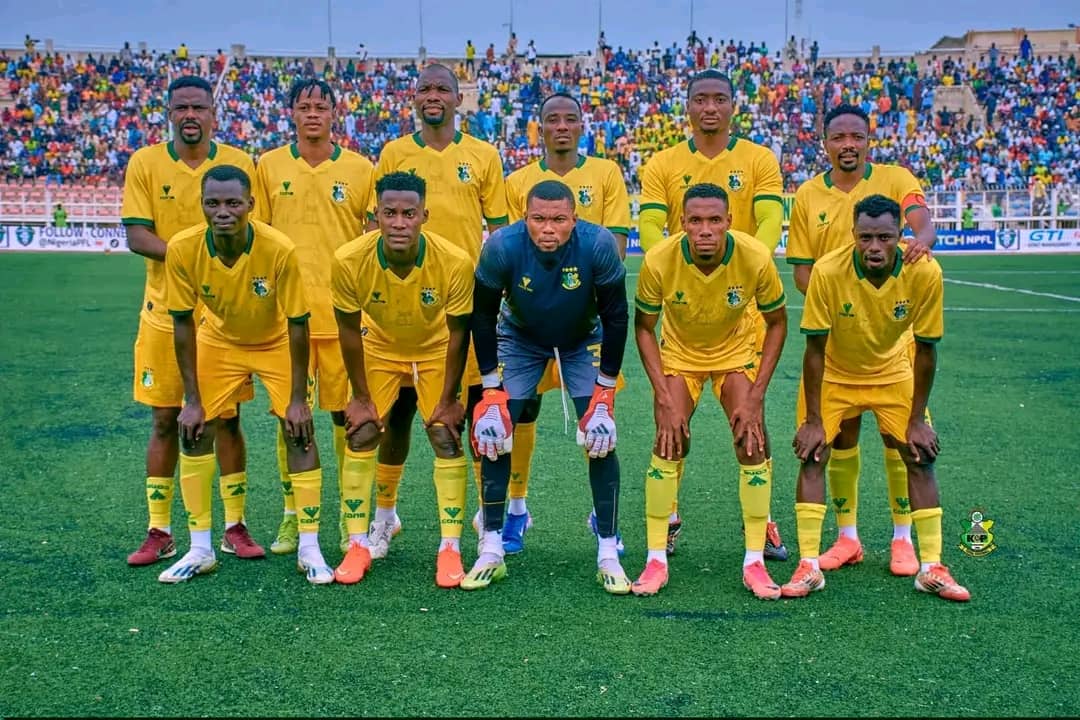
Kano Pillars and Sporting Lagos played out a 1-1 draw in an entertaining EuroMatch Nigeria Premier Football League Matchday 7 encounter in Kano, with both sides settling for a point after a closely contested battle.
Sports247 reports that the result means the Mai Su Gida have now followed up their previous goalless draw against Enyimba with another stalemate, while Sporting Lagos also recorded their second consecutive draw after being held to a barren 0-0 draw by Ikorodu City in the Lagos Derby.
Kano Pillars started the encounter with the intention of making home advantage count, but Sporting Lagos remained organised and disciplined as both teams searched for an opening.
The breakthrough finally arrived deep into first-half stoppage time when Valentine Ugwu put Sporting Lagos ahead in the 45+2nd minute, giving the visitors a valuable lead heading into the interval.
Kano Pillars responded strongly after the restart and quickly found a way back into the contest.
The hosts were rewarded in the 48th minute when Abdullahi Musa drew Kano Pillars level, finishing off a move created by veteran midfielder Rabiu Ali, whose assist once again underlined his influence in the Pillars midfield.
With the score level at 1-1, both sides pushed for a decisive second goal, but neither could find the breakthrough during the remainder of the encounter.
Kano Pillars will take encouragement from their ability to recover from going behind, while Sporting Lagos will also be satisfied with securing a point away from home after surrendering their lead.
For the Mai Su Gida, the draw represents another opportunity gained but also another two points dropped from a winning position, as they continue their campaign in search of consistency.
Sporting Lagos, meanwhile, remain unbeaten across their recent fixtures but will be looking to convert their promising performances into maximum points as the season progresses.
The 1-1 result leaves both teams with plenty to build on, particularly in attack, as they prepare for their next assignments in the EuroMatch NPFL.
With the league campaign continuing to gather momentum, Kano Pillars and Sporting Lagos will now turn their attention to their upcoming fixtures, hoping to turn future draws into victories.
-

 News3 days ago
PLASU Opens Doors to Global Investors at 2nd Inaugural Lecture
-
Health2 days ago
Plateau: Medical Women Association of Nigeria Marks Older Persons Day with Free Outreach
-
News3 days ago
Plateau Specialist Hospital Celebrates Nigeria at 66, Salutes Mutfwang’s Health Initiatives
-
News3 days ago
Nigeria At 66: Rotjimwa Yilyok Salutes President Tinubu, APC Leadership and Plateau Government