News
From Wasted Billions to National Rebirth: NBC Unveils Bold Plan to Rescue Nigerian Broadcasting



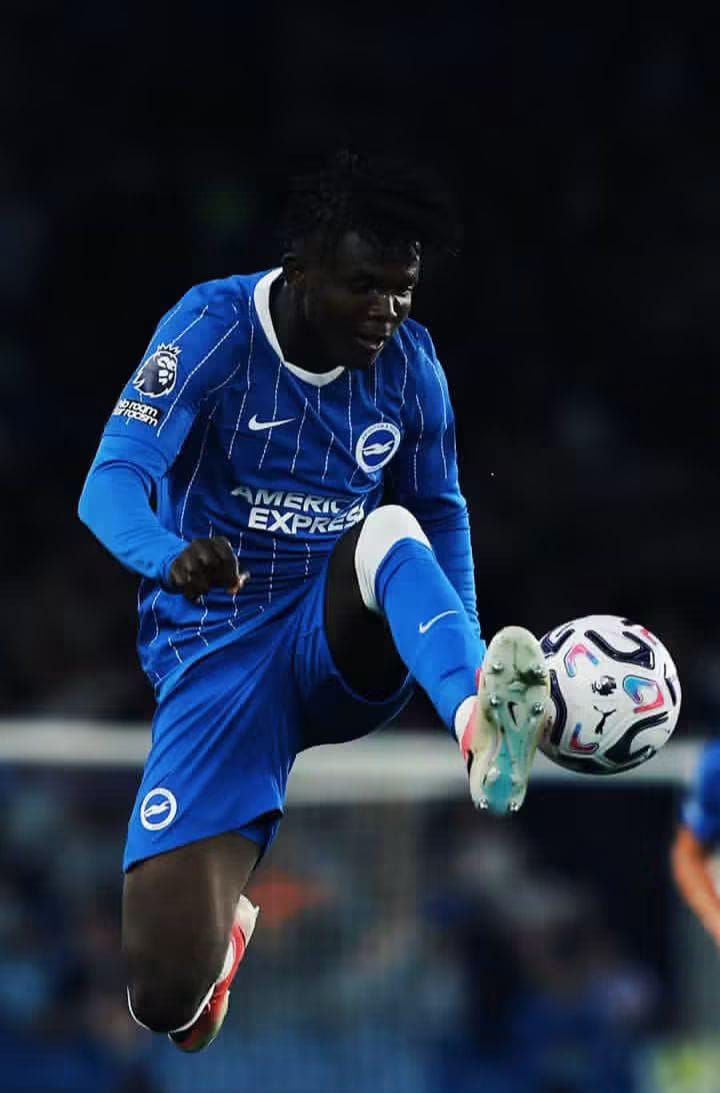
Nigerian youngster Zadok Yohanna made another appearance for Brighton & Hove Albion as the Premier League side secured a convincing 4-0 victory over Norwegian club Tromsø IL in the UEFA Conference League qualifying round.
The highly-rated Nigerian prospect was introduced in the 66th minute, giving him another opportunity to experience European football at senior level.
Read Also: Zadok Yohanna Makes UEFA Conference League Debut for Brighton in Norway | Sports247 Nigeria
The appearance marked Yohanna’s second UEFA Conference League qualifying-round outing for the Seagulls as he continues to gain valuable experience around Brighton’s first team.
Brighton produced a dominant display against Tromsø, scoring four goals to complete a comprehensive victory and secure their place in the 2026/27 UEFA Conference League league phase.
For Yohanna, the latest appearance represents another important milestone in what has been an encouraging rise through European football.
The Nigerian youngster has continued to attract attention with his development, and opportunities such as this are providing him with valuable exposure to the demands and intensity of senior European competition.
Speaking after the match, Yohanna reflected on the experience:
“Every opportunity to play at this level means a lot to me. I’m learning every time I step onto the pitch, and being part of a European campaign with Brighton is something I’m really grateful for. I’ll keep working hard and be ready whenever the team needs me.”
With Brighton now through to the league phase, Yohanna could have further opportunities to gain European experience as the competition progresses.
For the young Nigerian, the journey continues to move in the right direction—from promising prospect to gaining valuable senior exposure on the European stage.


FTSE Russell has confirmed, in a market notice published on Thursday, that Nigeria’s reclassification from Unclassified to Frontier Market status will proceed effective from the open of trading on 21 September.
The decision marks Nigeria’s return to the global Frontier Market universe and represents an important milestone for the country’s capital market.
The announcement follows a process that began in October 2025, when FTSE Russell placed Nigeria on its Watch List for potential reclassification, following improvements in foreign exchange liquidity, capital repatriation and market accessibility.
In April 2026, FTSE Russell subsequently announced Nigeria’s return to Frontier Market status, with an effective date of 21 September.
Following Nigeria’s transition from a T+2 to T+1 settlement cycle on 1 June, FTSE Russell undertook an additional assessment after market participants raised concerns that the new settlement framework could effectively result in a de facto prefunding requirement for international institutional investors.

The review led to an extensive period of engagement between NGX Group, the Securities and Exchange Commission (SEC), FTSE Russell and international market participants.
In its reaction, NGX Group said its delegation engaged directly with global custodians and institutional investors in July. The discussions provided an opportunity for NGX Group to present evidence on the operation of the T+1 settlement cycle, address questions raised by international investors and custodians, and outline ongoing efforts to ensure that Nigeria’s market infrastructure remains aligned with evolving international best practice.
Following the assessment, FTSE Russell, supported by feedback from the FTSE Equity Country Classification Advisory Committee, confirmed that “no material settlement, operational or funding issues had been observed since the implementation of the T+1 settlement cycle”. On this basis, the FTSE Russell Index Governance Board confirmed that Nigeria’s reclassification will proceed as scheduled from the market open on Monday, 21 September 2026.
The announcement comes amid broader efforts to strengthen the Nigerian capital market and position it as an increasingly important engine of investment and economic growth.
On 6 August, the NGX Group Board met with President Bola Ahmed Tinubu at the Presidential Villa in Abuja to brief him on developments and reforms across the Nigerian capital market and discuss the market’s role in mobilising long-term capital to support Nigeria’s economic transformation agenda.
The engagement underscored the importance of continued collaboration between government and the capital-market ecosystem in creating an enabling environment for investment, capital formation and sustainable economic growth.
Nigeria’s return to Frontier Market status provides further international recognition of the progress being made across the market and creates a platform for the next phase of its development.
Commenting on the development, Temi Popoola, Group Managing Director/Chief Executive Officer, NGX Group, said, “This is an important moment for Nigeria’s capital market. But the real significance of returning to Frontier Market status is the opportunity it creates for the next phase of our market’s development.
We have to turn greater international visibility into broader participation, deeper liquidity and more capital for Nigerian businesses. Our ambition is to build a market that is increasingly competitive globally and more relevant to Nigeria’s economic growth. We are encouraged by the continued support of the Federal Government and the commitment of stakeholders across the market as we work towards that ambition.”
The next milestone will be the publication of the FTSE Frontier Index Series annual indicative review files for September 2026, which will reflect Nigeria’s reclassification and are scheduled to begin publication on Wednesday, 2 September 2026. The reclassification will take effect from the market open on Monday, 21 September 2026.
Nigeria’s return to Frontier Market status is expected to enhance the visibility of Nigerian equities within the global investment community and create further opportunities to broaden engagement with international institutional investors and deepen participation in the Nigerian market.
The development follows S&P Dow Jones Indices’ placement of Nigeria on its Watch List for potential reclassification to Frontier Market status as part of its 2027 Country Classification Annual Review, providing a further indication of growing international attention to improvements in Nigeria’s market accessibility.
NGX Group reaffirms its commitment to continued collaboration with the Federal Government, SEC, market operators, investors, global index providers and other stakeholders to strengthen Nigeria’s position within the international financial ecosystem and ensure that the capital market plays an increasingly important role in sustainable economic growth and capital formation.
Discover more from Premium Times Nigeria
Subscribe to get the latest posts sent to your email.
-

 News3 days ago
Coaches Need To Apply Data Analytics Of Players For Accurate Development Information – Hakeem Busari
-
Business3 days ago
AXA Mansard Health Takes World Hepatitis Day Campaign to Bariga with Free Screenings and Community Relief
-
Business3 days ago
COP17: Africa must connect science to action to tackle land degradation — Expert
-
News4 days ago
Trump bought SpaceX shares two weeks after blockbuster IPO