Business
FG Commissions Senator George Akume Auditorium in Jos, Strengthens North Central’s Trade Infrastructure


The Secretary to the Government of the Federation (SGF), Senator Dr. George Akume, has been honoured with the naming of a newly constructed international conference hall after him in Jos, Plateau State.
The state-of-the-art facility, known as the Senator George Akume Auditorium, is located within the North Central Zonal Coordinating Office of the Nigerian Shippers’ Council. It was commissioned by the National Chairman of the All Progressives Congress (APC), Professor Nentawe Goshen Yilwada, who was represented by the party’s Deputy National Chairman (South), Chief Emma Eneukwu.
Speaking at the event, Professor Yilwada described the project as a visible outcome of President Bola Ahmed Tinubu’s Renewed Hope Agenda, which continues to deliver federal presence and development across all regions of the country.

He commended President Tinubu for his inclusive leadership, noting that both Senator Akume’s appointment as SGF and his own emergence as APC National Chairman underscore the North Central region’s growing strategic importance to Nigeria’s unity and economic growth.
“This auditorium named in honour of Senator George Akume is a fitting tribute to his lifelong dedication to public service and regional empowerment,” Yilwada said. “It stands as a symbol of partnership between government, industry, and the people — showing how purposeful leadership can deliver projects that outlive administrations.”

Yilwada also lauded the Minister of Marine and Blue Economy, Adegboyega Oyetola, CON, for expanding the frontiers of the blue economy, and the Executive Secretary of the Nigerian Shippers’ Council, Dr. Akutah Pius Ukeyima, for his visionary leadership.
In his remarks, Senator Akume expressed gratitude for the recognition, describing it as an unexpected honour for his years of service to Nigeria.
“When I was Governor of Benue State for eight years, I never named anything after myself. This came as a surprise, and I receive it with gratitude and humility,” he said.
The SGF emphasized that infrastructure remains a crucial driver of national growth, adding that the Tinubu administration is committed to improving trade and logistics systems to promote economic diversification.
“Infrastructure development is a national priority, not a choice,” Akume stated. “We must continue to build systems that promote ease of doing business, reduce logistics costs, and open new frontiers for trade and investment.”
Delivering the goodwill message of the Minister of Marine and Blue Economy, Permanent Secretary Oloruntola Olufemi praised Senator Akume’s integrity and the Shippers’ Council’s dedication to national development, noting that the project aligns with the president’s vision for inclusive economic growth.
Other dignitaries at the event included Senator Sani Musa, Hon. Abdulsamad Dasuki, and Elder Yahaya Kwande, who all described the project as a major boost to the North Central’s logistics and commerce landscape.

Representing the Plateau State Governor, Deputy Governor Ngo Josephine Piyo congratulated the Shippers’ Council for the achievement and assured of the state government’s partnership to ensure the facility supports local trade and employment.
Earlier, Dr. Akutah Pius Ukeyima, Executive Secretary of the Nigerian Shippers’ Council, reaffirmed the agency’s commitment to President Tinubu’s blue economy agenda, thanking stakeholders for their collaboration and calling for sustained partnerships to strengthen Nigeria’s export systems.
Traditional leaders and community representatives, including envoys from the Gbong Gwom Jos, also sent goodwill messages applauding the federal government’s focus on inland shipping and commerce in Plateau State.
The commissioning of the Senator George Akume Auditorium marks a key milestone in Nigeria’s drive for inclusive infrastructure development, regional trade integration, and the advancement of the blue economy under the Renewed Hope Agenda.







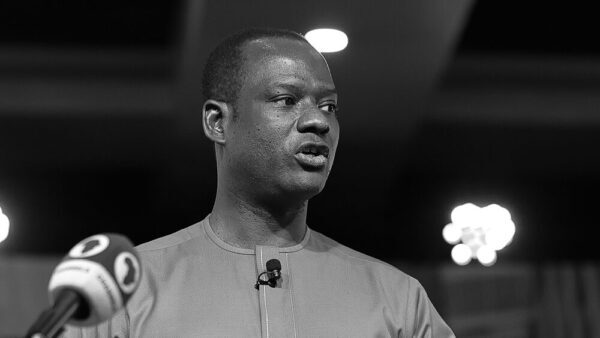
Nigeria’s Finance Minister and the Coordinating Minister of the Economy, Taiwo Oyedele, on Wednesday said the country is fortunate to have President Bola Tinubu at the helm of affairs at a time of economic challenges and global uncertainty.
Mr Oyedele made the remark on Wednesday on the sidelines of the World Bank/International Monetary Fund (IMF) meetings in Bangkok, Thailand, where he praised the president for his willingness to implement difficult economic reforms and his understanding of economic and monetary policy issues.
“I say to myself every time that Nigeria is lucky to have a leader like Mr President,” the minister said.
“A leader that says ‘I’ll do the right thing, even when it’s not popular’. There are so very few of them, and our president is not saying it; he’s doing it, he’s doing it even with pre-election (concerns),” he added.
Since assuming office in May 2023, the Tinubu administration has introduced a series of economic reforms, the impact of which international institutions like the World Bank and the IMF have acknowledged
The reforms include the removal of costly petrol subsidies, which had been a major drain on public finance for years, the unification of the foreign exchange rates and the sharp devaluation of the naira to attract foreign capital.


Although abolishing fuel subsidies has boosted government revenue and is seen as an investor-friendly move, it has triggered a cost-of-living crisis and spurred inflationary pressures.
Reforms in the foreign exchange market have helped increase accretion to external reserves, which stood at $55.1 billion as of 9 October, its peak level in over 18 years.
The banking sector also underwent a recapitalisation exercise that ended in March and helped Nigerian banks raise N4.7 trillion in new capital.
According to the Central Bank of Nigeria, the recapitalisation strengthened banks’ capital adequacy ratios, keeping the sector above international Basel benchmarks.
Mr Oyedele said President Tinubu possesses two attributes uncommon among leaders, notably those of democratic governments.
READ ALSO: AFC appoints Cardoso as board chairman
The first is his willingness to do what he considers right, even when the decision is unpopular or politically difficult.
“I remember at least three issues that were discussed with him recently, and on my own I would offer to say ‘maybe we wait until after the election’. And his question is always, ‘Is it the right thing to do?’ Yes, yes, it is. Why do we have to wait?” Mr Oyedele said.
“Number two attribute is that our President gets it. It’s not easy to understand issues to do with the economy, finance, monetary policy, like respect for the independence of the monetary authority. For Mr President, it’s 100 per cent,” he added.
The minister added that the president’s position on such matters has made it unnecessary for officials to discuss the issue with him repeatedly.
“We don’t even talk about it. So, I feel like we are so blessed, we cannot afford to wait even one minute,” he said.
Discover more from Premium Times Nigeria
Subscribe to get the latest posts sent to your email.
-

 News3 days ago
Meta releases its first frontier model, Muse Wonder
-
News3 days ago
EuroMatch NPFL: ‘We Never Gave Up!’ — Fidelis Ilechukwu Hails Rangers’ Fighting Spirit, Reacts to Two Penalties Against Barau FC
-
Health3 days ago
Kwara public hospitals introduce digital medical records
-
Health2 days ago
AMR: Livestock uses more antibiotics than human health sector