Business
Customs announces lower tariffs on imported vehicles, sets ₦11tn revenue goal










The Centre for the Promotion of Private Enterprise (CPPE) has said the United States’ decision to impose a 12.5 per cent tariff on imports from Nigeria is unlikely to have a significant impact on Nigeria’s economy.
The think tank disclosed this in a statement by its Chief Executive Officer, Muda Yusuf, on Sunday, citing the dominance of tariff-exempt petroleum exports and the relatively small share of Nigerian exports destined for the US.
On Friday, the United States announced a plan to impose a 12.5 per cent tariff on imports from Nigeria.
The US government said the decision is part of a new trade measure targeting countries that have failed to prohibit the importation of goods produced with forced labour.
CPPE said the tariff is part of a broader policy shift by the United States aimed at protecting domestic industries and strengthening manufacturing competitiveness.

According to the think tank, the new tariff regime is a continuation of the reciprocal tariff policy introduced under US President Donald Trump, though it is now implemented under a different legal framework.
“CPPE’s assessment is that the new tariff regime represents a continuation of the Trump administration’s reciprocal tariff policy, albeit under a different legal framework.
“Following the judicial invalidation of the earlier reciprocal tariffs, the current measures appear to have been restructured under Section 301 of the U.S. Trade Act, with allegations relating to forced labour providing the statutory basis for their implementation,” CPPE said.
It added that although the legal basis has changed, the policy objective remains to essentially protect US domestic industries, strengthen American manufacturing competitiveness and advance broader US trade and economic interests.
Impact on Nigeria
The body said the direct economic implications for Nigeria would be limited because most of the country’s exports to the United States are petroleum products, which are exempt from the tariffs.
“Nigeria’s exports to the United States are heavily concentrated in crude oil, liquefied natural gas and other petroleum products, which account for more than 80 per cent of Nigeria’s merchandise exports to the US.
“These products have been exempted from the tariff measures, leaving the bulk of Nigeria’s exports unaffected,” the agency said.
CPPE also stated that the United States is not Nigeria’s largest export destination, noting that Nigeria’s first-quarter 2026 merchandise trade data showed that exports to the US accounted for only 5.56 per cent of total exports valued at about N21.6 trillion.
By comparison, India accounted for 13.09 per cent of Nigeria’s exports during the period, followed by France with 9.29 per cent, the Netherlands with 9.22 per cent and Spain with 7.68 per cent, placing the United States as the country’s fifth-largest export market.
ALSO READ: US tariff hike could hurt Nigeria’s export earnings, industrial growth – MAN
According to CPPE, these trade patterns reduce Nigeria’s exposure to the new tariff measures, noting that they will only have modest impacts on Nigeria’s export earnings, foreign exchange receipts and macroeconomic performance.
“While some non-oil exporters, particularly in agriculture and manufacturing, may experience reduced competitiveness in the U.S. market, the overall impact on Nigeria’s export earnings, foreign exchange receipts and macroeconomic performance is expected to be modest,” the body said.
The group added that the development reflects a broader shift in global trade towards protectionism and greater use of trade policy to advance domestic economic objectives.
Solution
CPPE urged Nigeria to accelerate export diversification, improve manufacturing competitiveness, deepen domestic value addition and maximise opportunities under the African Continental Free Trade Area.
It also called on the government to strengthen labour standards, improve supply chain transparency and engage the United States through diplomatic and trade channels to minimise the impact of the measures on affected exporters.
CPPE said the greater challenge for Nigeria lies in navigating an increasingly fragmented and protectionist global trading environment, rather than immediate export challenges.
“Overall, while the new US tariffs have generated understandable concern, their direct economic implications for Nigeria should not be overstated.
“The greater challenge lies not in the immediate loss of export opportunities, but in navigating an increasingly fragmented and protectionist global trading environment,” the think tank said.
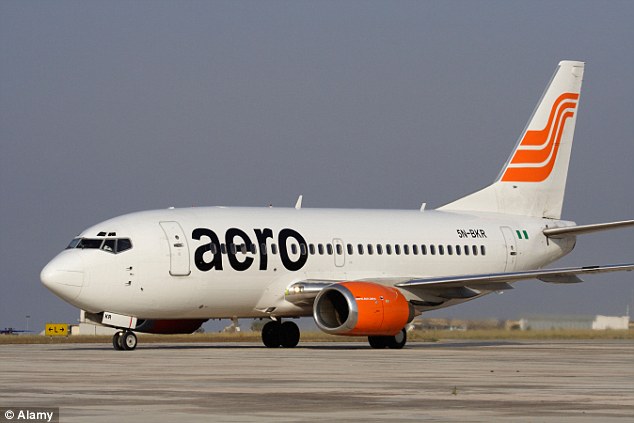
An Aero Contractors flight travelling from Lagos to Abuja on Saturday morning returned to its departure airport after the crew reported a technical issue while the aircraft was airborne.
The aircraft, which departed Lagos at about 7:30 a.m., had travelled part of the route mid air before the flight crew decided to discontinue the journey and return to Lagos as a precautionary safety measure.
Passengers were safely evacuated after the aircraft landed, and no injuries were reported.
A passenger aboard the flight told PREMIUM TIMES that the cabin became unusually hot while the aircraft was in the air, causing anxiety among passengers.
According to the passenger, the crew informed those on board that the aircraft had developed a technical problem and would return to Lagos but did not disclose the exact nature of the fault.
“There was a lot of panic because people did not know exactly what had happened. We were only told there was a technical problem and that we had to return to Lagos,” the passenger said.
As of 10:10 a.m., the affected passengers had begun boarding another Aero Contractors aircraft to continue their journey to Abuja, according to one of the passengers who spoke with PREMIUM TIMES.
PREMIUM TIMES contacted Aero Contractors for comments on the incident, including the nature of the reported technical issue, the reason for the aircraft’s return to Lagos and the arrangements made for affected passengers.
However, the airline had yet to respond as of the time this report was filed.
Recent incidents
Saturday’s occurrence comes about two months after a Max Air flight from Abuja to Katsina made an emergency return to the Nnamdi Azikiwe International Airport shortly after take-off following a reported technical fault.
As previously reported by PREMIUM TIMES, passengers on the May 2026 flight recounted hearing loud banging sounds from the aircraft before it reportedly lost altitude briefly and struggled to stabilise, prompting the pilot to return to Abuja as a safety precaution. The aircraft landed safely, and no injuries were reported.
READ ALSO: Benin runway excursion not crash or emergency landing Enugu Air CEO
The Aero Contractors incident also comes amid increased public attention to airline operations following Thursday’s runway excursion involving an Enugu Air Embraer E170 at Benin Airport.
Although all 63 passengers and five crew members escaped unhurt, the occurrence disrupted flight operations after the runway was temporarily closed, forcing Air Peace and United Nigeria Airlines to suspend flights to and from Benin while aircraft recovery and safety assessments were carried out.
While the circumstances surrounding the Aero Contractors, Max Air and Enugu Air incidents differ, they have renewed attention on operational reliability and safety across Nigeria’s aviation sector.
-

 Business2 days ago
Lingzhi Global Champions Coffee Culture at Jos Awareness Campaign
-
 Health2 days ago
Kano Renews Commitment to Eliminating Mother-to-Child Transmission of HIV, Hepatitis B, Syphilis
-
News18 hours ago
Monday.com is the latest tech company to blame AI for layoffs — here are 20 others
-
News2 days ago
2027: North-East Leaders Endorse Tinubu, Pledge Bloc Votes