Education
CRADI trains stakeholders, media professionals in Jos on climate adaptation and conflict mitigation


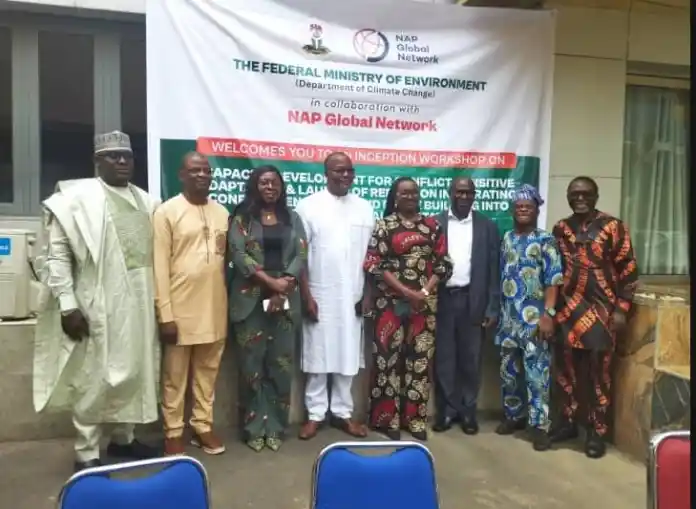
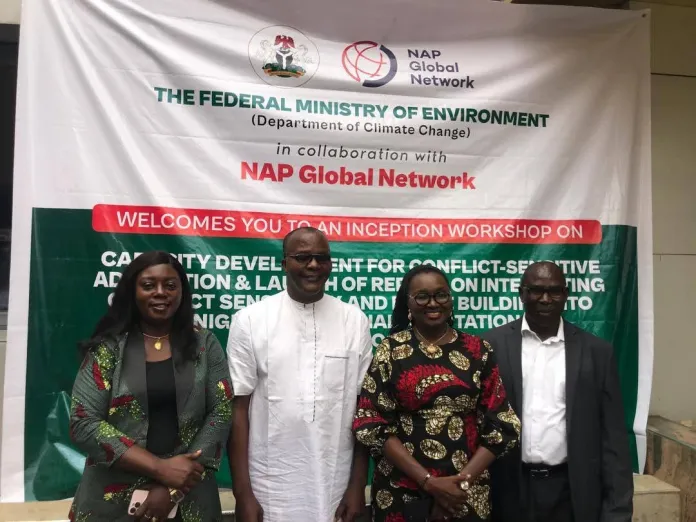
Stakeholders, media professionals, and development practitioners convened on March 24, 2026, at the Jos Business School for a pivotal training on climate resilience communication.
The event, held under the BRIDGE Project (Building Resilient Communities: Integrated Climate Adaptation and Conflict Mitigation in Nigeria’s Middle-Belt Region), marks a major step toward improving how climate issues are communicated at the grassroots level.
Delivering the welcome address, Project Manager Emelis Samuel Adide described the training as the result of months of collaboration since August 2025. Now in its final commissioning phase, the project represents a journey of dialogue, strategy, and shared learning.
He highlighted the project’s unique approach, which explores the intersection of journalism, music, and climate change, while stressing the need to connect global climate discussions to local realities.
“We aim to equip participants with the tools to translate climate science into accessible narratives and promote non-conflict-sensitive approaches in their work,” he said.
The training, facilitated by Kassim Khalid, featured practical sessions designed to deepen participants’ understanding of climate issues and strengthen their reporting skills.


Grounding Climate Change in Local Reality
Participants examined the impact of climate change across Nigeria’s Middle Belt, focusing on key challenges such as flooding, displacement, and resource-based conflicts. The session helped bridge the gap between global climate conversations and everyday community experiences.
Improving Climate Communication
A major focus of the training was simplifying complex climate concepts. Participants were taught how to communicate with clarity, accuracy, and inclusivity—ensuring that messages resonate with ordinary people.
Promoting Conflict-Sensitive Reporting
Given the region’s fragile dynamics, the training emphasized ethical journalism using “Do No Harm” principles. Media practitioners were encouraged to report responsibly without escalating tensions.
Combating Misinformation
With misinformation on the rise, participants were introduced to verification tools and techniques to ensure accurate reporting—an essential skill in today’s fast-paced media environment.
Leveraging Indigenous Knowledge
The training also underscored the importance of indigenous knowledge systems, encouraging participants to incorporate local experiences and traditional practices into climate storytelling.
Hands-On Learning: Crafting Flood Warnings
One of the most engaging sessions was a group exercise where participants developed simple flood warning messages.
Divided into teams, they tackled real challenges—such as public distrust and misinterpretation of official alerts—by answering key questions:
- Who needs to hear the message?
- What language will they understand?
- What actions should they take immediately?
The exercise sparked creativity and collaboration, producing tailored messages for farmers, women, the elderly, and young people.
A Call to Action
In his closing remarks, Adide commended participants and partners for their dedication and urged them to apply the knowledge gained.
“Tell stories that inform, empower, and build resilience within communities,” he said.
As climate change continues to reshape livelihoods across Nigeria’s Middle Belt, the media’s role is becoming increasingly vital—not just as reporters, but as educators and bridge-builders between science and society.
The BRIDGE Project reinforces a critical message: resilience is not only about infrastructure or policy—it is also about communication, trust, and empowering communities with the right information.

The debate competition, held on Monday at the PSIRS Headquarters in Jos, featured four schools drawn from public and private institutions across the state. Participating schools included Government Secondary School Anglo-Jos, Government Secondary School Kufang, Airforce Military School, and St. Augustine College.
Students engaged in intellectually stimulating debates on key issues related to taxation and national development.
One of the debate topics focused on “The Equity of Universal Participation,” with participants debating the motion that the 2025 tax reform exempting low-income earners from Pay-As-You-Earn (PAYE) violates the canon of equity by creating a social contract where only a minority funds the state government.


Another motion debated was “Tax Evasion vs Corruption,” where teams argued whether tax evasion poses a greater threat to national development than corruption.
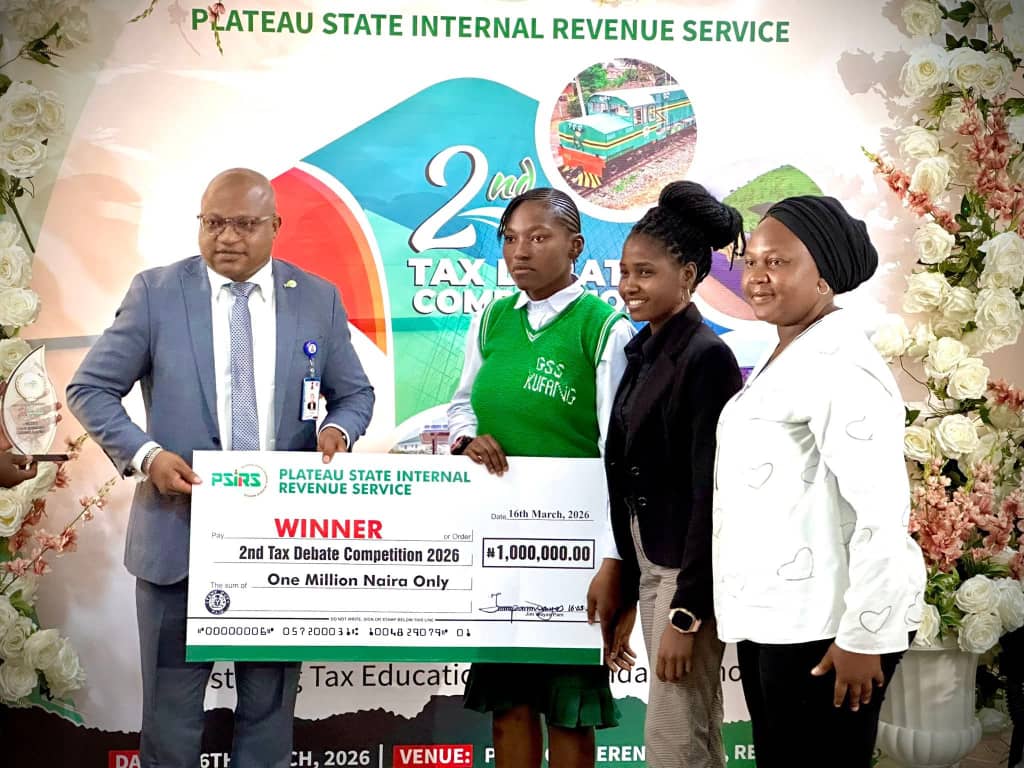
At the end of the competition, GSS Kufang emerged winner in the government schools category while St. Augustine College topped the non-government schools category. Airforce Military School and Government Secondary School Anglo-Jos finished as runners-up.
Announcing the results, the Desk Officer for Debate and Quiz at the Plateau State Ministry of Education, Job Chundusu, commended the students for their impressive performances and encouraged debate coaches to pay closer attention to debate rules, particularly on points of information and engagement techniques.
Following the announcement, the Chairman of the Plateau State Internal Revenue Service, Jim Pam Wayas, presented cash prizes of ₦1 million each to the winning schools, while the runners-up received ₦500,000 each. Gift items were also distributed


-

 News3 days ago
Gunmen Abduct ECWA Board Chairman in Jos as Insecurity Worsens
-
News14 hours ago
Troops arrest three suspected terrorists, seize AK-47 in Benue
-
News12 hours ago
NPFL: Plateau United must target positive results in remaining fixtures – Ogunbote
-
Entertainment8 hours ago
Omah Lay Hints at Return to Christianity After Practising Islam