News
“When Youths Are Engaged, Society Is Safer” — Says Kemi Nshe at 2025 Shendam Hike

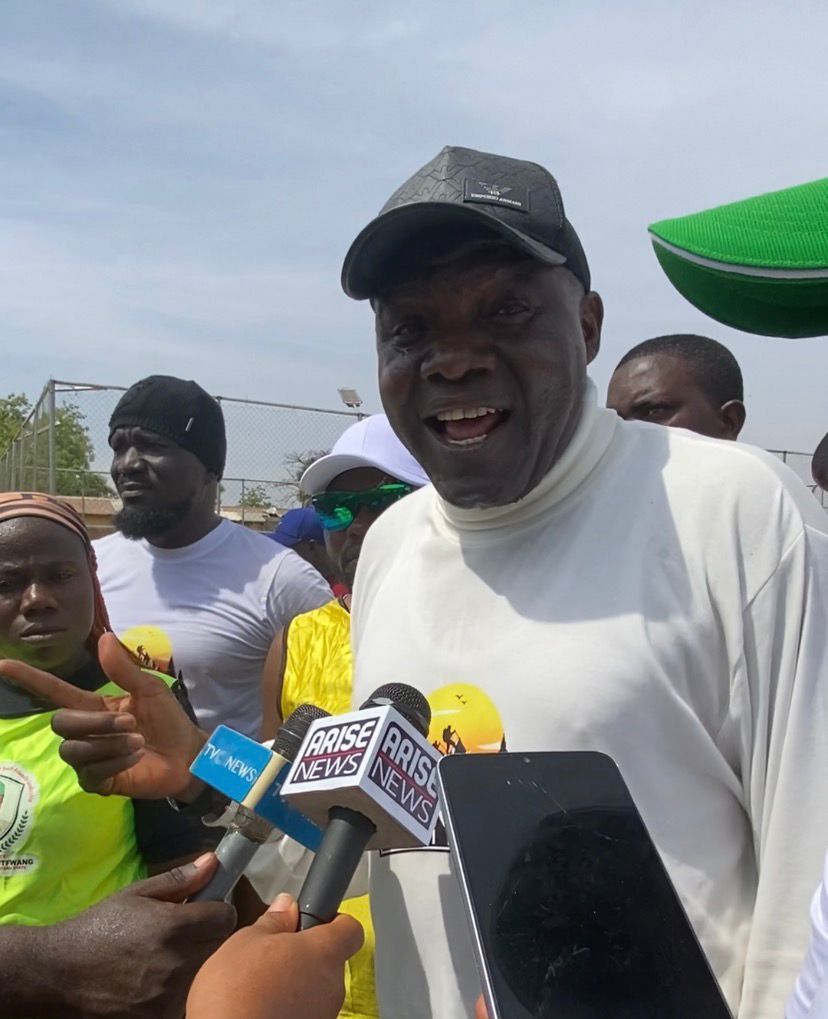
Shendam Local Government Area on Saturday, December 27, 2025, showcased its growing investment in youth development with a guided tour of the nearly completed Shendam Sports Centre, an initiative aimed at engaging young people productively and strengthening social cohesion. The tour formed part of activities marking the 2025 Shendam Hike and Sports programme, which also featured a hike to Jalbang Mountain and drew participants from across Plateau State, Nigeria, and the diaspora.

The hike, held at Jalbang Mountain, attracted a diverse mix of youths, sports enthusiasts, bikers, community leaders, corps members, and visitors from countries including Italy, Spain, Switzerland, and Syria, underscoring the tourism potential of Shendam and Plateau State at large.

Speaking during the event, the Executive Chairman of Shendam Local Government Area, Hon. Dr. Kemi Nicholas Nshe, said the programme was deliberately designed to promote unity, peaceful coexistence, and tourism, while keeping young people positively engaged.
According to him, the gathering went beyond politics and was focused on building bridges across communities and cultures. He noted that the presence of visitors from different parts of Nigeria and outside the country showed that Shendam was gradually positioning itself as a hub for tourism and social interaction.
He explained that engaging youths through sports, hiking, and recreational activities was a deliberate strategy to curb crime and social vices. “When youths are engaged, society is safer,” Nshe said, adding that idle youths often form the bulk of those found in police stations, courts, and correctional centres.


The chairman highlighted ongoing investments in sports infrastructure, including the Shendam Sports Centre and the Shendam Mini Stadium, which he said he conceived and initiated. He disclosed that the mini stadium project, initially estimated at about ₦150 million and now valued at over ₦200 million due to inflation, would cost several billions if undertaken today. He expressed optimism that both facilities would be completed before the end of the following year and equipped with modern features such as synthetic turf.

Earlier, Hon. Musa Ibrahim Ashoms, Plateau State Commissioner for Youth and Sports Development, described the 2025 Shendam Hike as historic and praised the Shendam Local Government chairman for what he called purpose-driven leadership.
Ashoms said the programme was not just a Shendam event but a Plateau-wide initiative, given the wide participation of youths from different backgrounds. He stressed that such activities provided a healthy outlet for young people to channel their energy, especially during the Yuletide season.
He also revealed that Plateau State had previously lacked key sports infrastructure, noting that during the Nigeria University Games Association (NUGA), swimming events had to be held in Abuja due to the absence of an Olympic-size swimming pool on the Plateau. He expressed confidence that the emerging facilities in Shendam would soon produce medal-winning athletes for the state.

The commissioner commended the sports complex, which he said includes facilities for football, volleyball, basketball, lawn tennis, swimming, and recreational spaces like the Love Garden. According to him, the development would not only attract sporting activities but also boost tourism, employment, and youth engagement.
Ashoms added that Plateau State Governor, Barr. Caleb Manasseh Mutfwang, was pleased with such grassroots initiatives, describing them as practical examples of governance that unite people and deliver visible dividends of democracy.
On the broader political climate, Ashoms said 2026 would be a memorable year for Plateau State, expressing optimism that the state would reap increased dividends of democracy through improved governance and alignment with the federal centre. He stressed that the focus was development-driven and not personal or partisan.

Also speaking, Hon. Ziphion Terkop Chrysanthus Bala, Plateau State Director of Liaison, Ministries, Departments and Agencies, and Security Agencies, Abuja, said the hike was symbolic, coming during the Christmas season, which he described as a season of love, unity, and sharing.
He urged Plateau residents to remain calm amid evolving political dynamics, noting that politics should be seen as a means to deliver dividends of democracy rather than a source of division. On calls for him to contest for higher office, Bala said he remained open to serving wherever his people required, stressing his loyalty to the leadership of Governor Mutfwang.

Participants at the event also shared positive experiences. Ibrahim Mangset, a participant from Mangu, said the presence of foreigners and Nigerians from different regions showed that Plateau State remained a home of peace and tourism, contrary to negative perceptions. He commended the Shendam Local Government chairman for bringing youths together in the interest of peace and unity.

A Nigerian-based Syrian biker, Omar Da-homs, described the Shendam Bike and Hike and the Bitgamai Festival as some of his highlights in Nigeria. He said the activities promoted health, bonding, exercise, and cultural exchange, adding that he brought friends from Abuja and other places to experience a different side of Plateau State.

Another participant, Goeboro Gift Naanpoe, said the hike was enjoyable and beneficial for physical fitness, noting that it also provided an opportunity for people to reconnect annually. She expressed gratitude to the Shendam Local Government leadership and prayed for the continuity of such initiatives.

Similarly, Bawa Justina said the hike allowed her to explore parts of Shendam she had never visited before, make new friends, and appreciate the unifying power of sports and outdoor activities. She praised the chairman for sustaining the programme and called for its continuation.

The event concluded with a tour of the nearly completed Shendam Sports Centre, where stakeholders reiterated that sustained youth engagement through sports, tourism, and recreation remains a vital tool for peacebuilding, development, and social cohesion in Plateau State and beyond.





Malnutrition admissions at 10 health facilities supported by the International Committee of the Red Cross (ICRC) in north-eastern Nigeria rose 18 per cent in the first nine months of 2026.
The facilities recorded nearly 20,000 admissions between January and September, up from about 17,000 in the same period of 2025, the ICRC said in a statement on Thursday.
The figures cover six health centres and four hospitals. Young children, pregnant women and breastfeeding mothers were among those most affected.
Mubi in Adamawa State saw the sharpest rise, from about 4,600 admissions in the first nine months of 2025 to approximately 5,700 this year, an increase of nearly 24 per cent.
The latest numbers follow earlier ICRC warnings about rising demand for nutritional treatment in conflict-affected areas.
In October 2024, the organisation reported a 24 per cent increase in severe acute malnutrition admissions between the third quarters of 2023 and 2024, from 6,824 to 8,470.


Admissions of children under five with severe acute malnutrition and medical complications also rose from 1,212 to 1,691 in the same period.
These figures cover different reporting periods and patient categories and cannot establish a continuous three-year trend.
They do, however, show repeated increases in demand for nutritional treatment.
Mothers struggle
At the Mubi Stabilisation Centre, Zulaihatu Mohammed brought her six-month-old daughter, Huseina, one of her twins, for nutritional support.
“When I gave birth to them, this one was tiny,” she told the ICRC. “I came today for the routine collection of children’s food. She is not feeling well. Since I gave birth to her, she has been unwell.”
Armed violence, climate shocks and economic pressures have disrupted livelihoods and limited access to food.
According to the ICRC’s video report, farmer Saminu Ijaduwa cultivates a small plot near his home because explosive devices have made more distant fields dangerous.
“Due to the conflict, going one kilometre out of town to farm could be highly risky. You might not return!” he said in the ICRC report.
Restrictions on farming and disrupted markets have made it harder for families to produce or buy enough food, particularly affecting young children and pregnant and breastfeeding women.
Humanitarian response
In a March 2026 report, the ICRC said more than 36,000 people received treatment for severe acute malnutrition at its supported facilities in Borno, Adamawa and Yobe states during 2025.
The total included more than 16,000 children under five and more than 19,000 pregnant and breastfeeding women.
The organisation also provided cash assistance to more than 17,000 vulnerable families during the 2025 lean season.
Those annual treatment figures are not directly comparable with the new nine-month admission totals.
The ICRC said it is working with the Nigerian Red Cross Society to support 15 primary healthcare centres and four hospitals and to assist more than 200 communities with malnutrition treatment and food-security programmes.
Interventions include supplying farmers with seeds adapted to drought and flooding, promoting crop diversification and teaching mothers to prepare nutritious meals from local ingredients.
One such mixture of sorghum, millet, soybeans, groundnuts and moringa, known as Tom Brown, has helped more than 13,000 young children recover from moderate acute malnutrition, according to the ICRC. Mothers are also taught how to prepare it at home.
READ ALSO: Over 87,000 children treated for malnutrition in Katsina in eight months – MSF
Wider food insecurity
The rise in admissions comes as the Food and Agriculture Organisation (FAO) and the World Food Programme (WFP) identify Nigeria among the world’s hunger hotspots of highest concern in their June to November 2026 outlook.
Citing United Nations analysis, the ICRC said more than 34 million people in Nigeria were expected to face insufficient access to food in 2026, the highest figure in six years.
In the North-east, prolonged conflict continues to restrict access to farmland and undermine household livelihoods, according to the ICRC.
Discover more from Premium Times Nigeria
Subscribe to get the latest posts sent to your email.

The spokesman of the African Democratic Congress, ADC, Bolaji Abdullahi, has accused the All Progressives Congress, APC, of ruining the lives of Nigerians with its policies.
Responding, APC spokesman, Felix Morka, accused former Vice President Atiku Abubakar, of contributing to the country’s economic problems.
The two spoke during an appearance on News Central’s Breakfast Central on Thursday, where they assessed the performance of the APC government ahead of the 2027 general election.
Abdullahi said the Tinubu administration’s policies have worsened the living conditions of Nigerians and asked the government to admit its failings and change course.
He likened the administration’s approach to trying to fix a pothole but destroying the entire road in the process.
“What they tried to do in the last three is like trying to fill a pothole, and in the process they end up leaving the economy in a ditch,” Abdullahi said.
The ADC spokesman said government policies should be judged by how they affect the lives of Nigerians, not by what government claims about them.
“There is nothing wrong in admitting that your prescription or your solution has not worked,” he said.
Morka, however, dismissed Abdullahi’s criticism, saying Atiku Abubakar, the ADC’s presidential hopeful, contributed to Nigeria’s economic problems.
He accused Atiku of poor leadership and said his time in office contributed to the country’s economic decline.
“Let me make clear that my good friend speaks for a candidate who is easily the most critical actor in the economic sabotage of this country,” Morka said.
He also said the former vice president left a poor record in office and alleged that the government he served wasted $16bn meant for power projects.
According to him, the APC government is now trying to fix problems created by previous administrations, including the one Atiku was part of.
According to him, Atiku “left a sordid record of performance; destroyed Nigeria’s national assets; created the economic void that governments since then have been trying to fill; squandered 16 billion US dollars meant to provide electricity.”
-

 News3 days ago
Meta releases its first frontier model, Muse Wonder
-
Health3 days ago
Kwara public hospitals introduce digital medical records
-
News3 days ago
EuroMatch NPFL: ‘We Never Gave Up!’ — Fidelis Ilechukwu Hails Rangers’ Fighting Spirit, Reacts to Two Penalties Against Barau FC
-
News4 days ago
Will the HomeView be Apple’s first smart home success?