Connect with us

News

College Staff, JUPTI, Protest Provost Re-Appointment In Plateau

editor

Published

on

Provost re appointment

Provost re-appointment inflames protest in Plateau College of Health Technology, Pankshin.

Protesting workers of the Plateau State College of Health Technology, Pankshin, under the auspices of the Joint Union of Plateau State Owned Tertiary Institutions (JUPTI), have kicked against the re-appointment of Dr. Prince Francis Isah Fwangje as Provost of the College to serve for another four-year term.

Making their position known in an interview with newsmen shortly after their meeting with the State Commissioner for Higher Education, Professor Bernard Matur, which also had in attendance all union members, at the College Multi-purpose Hall, the Chairman of the joint union, Comrade Gokir Fwenshinen Ayuba said their decision was based on the several complaints against the Provost whose first tenure has just expired.

According to him, some of the complaints against Dr. Fwangje include lack of judicious use of the funds, as there are not enough lecture halls while facilities in the College are not also encouraging, despite the increase in school fees and other sources of revenue, pointing out also that he hardly comes to the office.

Comrade Gokir Fwenshinen averred that they were also against the appointment of a Provost from outside the College as it was not in conformity with the guidelines for making such appointments which is a case of depriving members of the academia within the system who are not only qualified but capable of occupying such positions.

The joint union Chairman maintained that the Governing Council of the College was not also in support of the re-appointment of the Provost, adding that even though the Hon Commissioner pleaded with the unions to accept the decision of the state government in good faith as the appointment had already been made, but they rejected his plea, which subsequently resulted into some members chanting, ‘ Fwangje must go’ Fwangje must go’ Fwanje must go’, after the meeting.

He, therefore assured that they will still repeat their submission to the Plateau State government with the necessary documents to substantiate the allegations against the Provost, with a view to defending their position on the matter.


Continue Reading
Click to comment

Leave a Reply

Your email address will not be published. Required fields are marked *

News

NISER,​‌‌⁠‍​​‍⁠⁠‍‌⁠‍⁠‌​​⁠‌​ IWMI Seek Urgent Reforms To Fix Nigeria’s Agricultural System

info

Published

on

IMG 20261106 WA00111.webp

By Suleiman Shehu

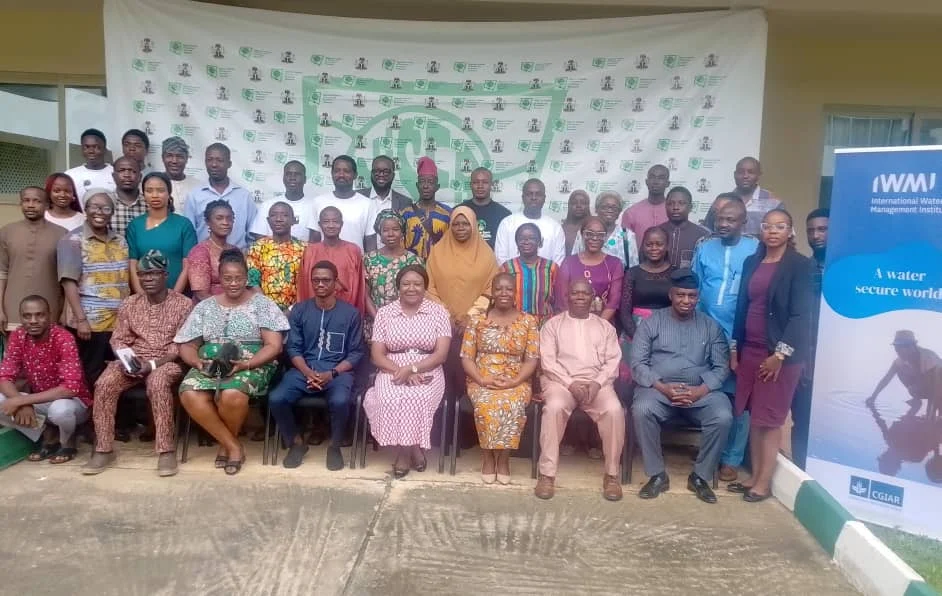
The Nigerian Institute of Social and Economic Research (NISER) and the International Water Management Institute (IWMI) say Nigeria must urgently reform its agriculture to boost productivity and tackle food crises.

The institutions made the call at a stakeholders’ seminar and validation roundtable in Ibadan on Thursday.

The seminar, themed “Strengthening Nigeria’s Agrifood Knowledge and Innovation System for Demand-Driving Scaling (AKIS-DS), was organised by NISER in collaboration with IWMI.

It was organised under the CGIAR’s Scaling for Impact program.

The News Agency of Nigeria (NAN) reports that the AKIS-DS initiative seeks to understand how Nigeria’s agricultural knowledge and innovation system works.

This includes the roles and relationships among research institutions, extension and advisory services, government agencies, private sector and farmer organisations.

NISER Director-General (DG), Prof. Antonia Simbine, said Nigeria’s persistent food inflation and rising food insecurity show the need to reform agricultural knowledge and innovation systems.

Simbine said it was unacceptable that Nigeria’s agriculture continues to face high food inflation and insecurity.

According to her, the sector contributes approximately 28 per cent of Gross Domestic Product (GDP) and employs 50 per cent to 70 per cent of the rural workforce.

Simbine emphasised that Nigeria’s food crises should not be exclusively attributed to prevailing conflicts and global developments, saying longstanding structural weaknesses in the agricultural sector also contribute significantly.

She said the predominance of smallholder farmers cultivating less than two hectares, heavy dependence on rain-fed agriculture, outdated farming technologies and post-harvest losses were among the factors undermining food production.

The DG also identified climate change and insecurity across major food-producing communities as critical challenges confronting the agricultural sector.

She was concerned that insecurity had disrupted farming activities and forced many rural residents to abandon their communities in states such as Plateau and Benue, recognised for their agricultural contributions.

Simbine called for improved agricultural research, modernisation of fertiliser practices, sustainable land management, mechanisation and infrastructural investment to boost productivity.

She emphasised the need to accelerate the adoption of climate-smart and digital agricultural technologies, reminding research institutions of their responsibility to generate relevant innovations and ensure they reach smallholder farmers.

The IWMI Country Focal Point in Nigeria, Dr Charity Osei-Amponsah, said developing agricultural technologies alone without effective mechanisms to ensure innovations reach the intended beneficiaries was inadequate.

Osei-Amponsah said agricultural technologies must reach the right users, particularly smallholder farmers, and be adopted and used effectively to improve productivity and access to markets and finance.

She further stressed the importance of replicating successful innovations across different farming communities and states to expand their impact.

Osei-Amponsah maintained that stronger collaboration among agricultural stakeholders, improved knowledge-sharing mechanisms and institutional reforms were necessary to ensure research findings translated into practical benefits for farmers.

In his presentation, IWMI intern, Mr Mubaraq Owolabi, identified the need to strengthen connections among research institutions, extension services, farmers and financial institutions.

Owolabi further said that ensuring a monitoring and evaluation system would strengthen Nigeria’s agricultural innovation.

“Strengthening these institutional linkages and promoting effective coordination among stakeholders are essential to ensuring that agricultural research translates into practical benefits for farmers in Nigeria,” he said. (NAN)

Edited by Moses Solanke

Continue Reading

News

2027: ‘Will he cancel South-South Commission’ – Oshiomhole questions what Peter Obi will do differently

info

Published

on

Oshiomhole (2)

Edo North Senator, Adams Oshiomhole, has questioned what the Nigerian Democratic Congress, NDC, presidential candidate, Peter Obi, will do differently from what President Bola Tinubu will do for the people of Akwa Ibom State.

Speaking at the All Progressives Congress, APC, presidential campaign rally in Uyo on Friday, Oshiomhole asked if Obi would cancel the South-South Development Commission.

He said the commission was created by President Bola Tinubu to bring development to the South-South, adding that it is for Akwa Ibom, Cross River, Rivers, Bayelsa, Delta and Edo States

According to him, Tinubu did not just create the commission on paper but also funded it, adding that thousands of children from poor homes in Akwa Ibom are in university because of the student loan.

"When Peter Obi comes, ask him, will you cancel the South-South Development Commission? Ask him, will you keep it or will you cancel it? If he says he will cancel it, you will know he came to deceive you.

"Ask him, will you bring back multiple exchange rates where only the connected get dollars cheap? If Peter Obi could not fix Anambra State in eight years, how can he look you korokoro in the eye and say he will do it in four years? He just wants turn-by-turn democracy,” Oshiomhole claimed.

2027: ‘Will he cancel South-South Commission’ – Oshiomhole questions what Peter Obi will do differently

Continue Reading

Trending