Connect with us

News

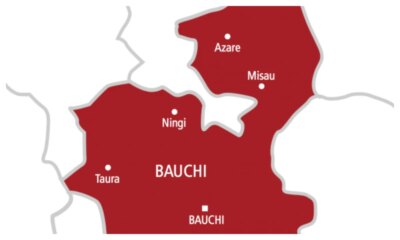
Army Court Martial Sentences Soldier to Death by Hanging for Murder of Bauchi Tricycle Rider

editor

Published

on

Nigerian Army Court Sentences Soldier to Death BY HANGING

A Nigerian Army General Court Martial sitting at Maxwell Khobe Cantonment, Jos, has sentenced Private Lukman Musa to death by hanging for the murder of a tricycle rider, Mr. Abdulrahman Isa, in Azare town, Bauchi State.

The verdict was delivered on Thursday, September 18, 2025, by Brigadier General Liafis Bello, President of the 3 Division General Court Martial, after the court found Musa guilty of culpable homicide and unlawful possession of ammunition.

According to evidence presented during trial, Musa, with the help of an accomplice identified as Mr. Oba, lured Isa into his residence under the pretext of assisting him to move personal belongings. He then struck the victim on the head with a wooden object before strangling him to death. The body was stuffed into a sack and dumped between Shira and Yala villages, while his tricycle was later sold.

The court also established that Musa was unlawfully in possession of 34 rounds of 7.62mm special ammunition.

For culpable homicide, contrary to Section 220 of the Penal Code and punishable under Section 221, Musa was sentenced to death by hanging. On the charge of unlawful possession of ammunition, contrary to Section 8(1) of the Firearms Act, he received two years’ imprisonment. He was also dismissed from the Nigerian Army with ignominy.

Brig Gen Bello condemned Musa’s conduct as “barbaric and heartless,” describing it as a betrayal of the Army’s constitutional duty to protect citizens.

“You mercilessly metamorphosed from a defender of citizens to a killer. Your action is an embarrassment and disgrace to the Nigerian Army,” he declared.

Speaking after the judgment, Major Aminu Mairuwa, Acting Deputy Director of Legal Services, 3 Division, said the ruling reflects the Army’s commitment to discipline and accountability.

“This judgment signifies the Nigerian Army’s resolve to ensure that no personnel operates outside the law or laid down standard operating procedures,” Mairuwa said.

Relatives of the deceased welcomed the ruling. Anas Isa, elder brother of the victim, described the outcome as justice finally served.

“We are very happy with what the court has done. We never believed justice would be served this way, but today we are grateful,” he said.

The trial was convened under the authority of Major General Folunsho Oyinlola, General Officer Commanding 3 Division and Commander of Operation Enduring Peace, as part of efforts to uphold discipline and restore public trust in the Nigerian Army.

Continue Reading
Click to comment

Leave a Reply

Your email address will not be published. Required fields are marked *

News

‘We Dug Deep for Nigeria’ — Woman of the Match Mitchelle Alozie Hails Super Falcons’ Heroic Zambia Victory

info

Published

on

By

Alozie.jpg

Super Falcons defender Mitchelle Alozie has hailed Nigeria’s fighting spirit after the defending champions secured a hard-fought 1-0 victory over Zambia, admitting the players had to dig deep to protect their slender advantage after being reduced to 10 women.

READ ALSO: ‘We’ll Keep Fighting Until We Lift the Trophy’ — Glory Ogbonna Rallies Super Falcons After Zambia Triumph

Alozie, who was named Woman of the Match following her outstanding display, played a pivotal role as the Super Falcons bounced back from their opening defeat to Malawi to revive their 2026 Women’s Africa Cup of Nations (WAFCON) campaign.

Speaking after the match, the defender described the contest as one of the toughest the team has faced, praising Zambia for their quality and relentless attacking threat.

“It was a very exhausting game. Zambia have quality players, and they made life very difficult for us, but we stayed together, defended as a team and fought until the final whistle,” Alozie said.

The Super Falcons survived sustained second-half pressure despite playing with 10 players following Tosin Demehin’s first-half dismissal, with Alozie producing a commanding performance at the heart of Nigeria’s defensive effort.

The defender also appealed to supporters to remain patient and continue backing the team despite its mixed start to the tournament.

“We understand why the fans are concerned because it wasn’t the start we wanted, but we ask them to keep supporting us. We’ll continue responding positively to every challenge that comes our way,” she added.

Alozie also dismissed suggestions that criticism on social media has affected the squad, insisting the players have instead used the platforms to strengthen their bond off the pitch.

“Social media isn’t a distraction for us. It’s actually one of the ways we connect, build team chemistry and keep everyone together,” she explained.

Nigeria’s victory over Zambia has put the 10-time African champions back in control of their qualification hopes ahead of their final Group C fixture against Egypt on Wednesday, where a positive result would seal a place in the quarter-finals and keep alive their pursuit of a record-extending 11th WAFCON title.

Continue Reading

Business

CPPE urges CBN to rethink development finance, says real sector faces N50tn funding gap

info

Published

on

By

468939862 570688608903404 8583644854384931658 n.jpg

MTN ADVERT

The Centre for the Promotion of Private Enterprise (CPPE) has urged the federal government and the Central Bank of Nigeria (CBN) to overhaul the country’s development finance framework, warning that Nigeria’s productive sectors face a financing shortfall of more than N50 trillion.

In a policy brief released on Sunday and signed by CPPE’s CEO, Muda Yusuf, the advocacy group argued that the country’s current financial system cannot provide the affordable, long-term funding needed by manufacturers, farmers, agribusinesses, exporters, and micro, small, and medium-sized enterprises (MSMEs).

CBN had earlier curtailed its development finance interventions to concentrate on its primary mandate of ensuring price and monetary stability.

The organisation, CPPE, said the financing constraints stem from structural market failures rather than a shortage of liquidity, citing high lending rates, short loan tenors, stringent collateral requirements, limited risk appetite among lenders and inadequate patient capital.

“CPPE estimates a conservative current real-sector financing gap of over N50 trillion when account is taken of unmet financing needs across manufacturing, agriculture, agribusiness, MSMEs, supply chains and export-oriented enterprises,” CPPE stated.

PT WHATSAPP CHANNEL

According to the group, agriculture contributes more than one-fifth of Nigeria’s Gross Domestic Product (GDP) but has historically received less than five per cent of total banking sector credit, while manufacturers require medium- and long-term financing to invest in machinery, technology, factory expansion, energy infrastructure and export development.

It argued that such investments cannot be financed sustainably through short-term commercial bank loans offered at prevailing interest rates.

Financing constraints

CPPE said the current monetary policy stance has further widened the financing gap, noting that the CBN’s benchmark Monetary Policy Rate (MPR) of 26.5 per cent and the Cash Reserve Requirement (CRR) of 45 per cent for deposit money banks have pushed commercial lending rates beyond levels that many productive investments can support.

While acknowledging that the CBN’s monetary tightening has improved policy credibility, exchange-rate stability and inflation management, the organisation said monetary stability should ultimately support economic growth rather than constrain productive investment.

“Price stability and development finance should not be treated as mutually exclusive objectives. In an economy characterised by deep financing gaps, market failures and severe supply-side constraints, monetary stability must be complemented by carefully targeted, transparently governed and non-inflationary development finance interventions to support manufacturing, agriculture, agribusiness and other strategic productive sectors,” CPPE said.

It added that Nigeria faces the difficult task of maintaining restrictive monetary conditions to contain inflation while ensuring businesses have access to affordable, long-term capital needed to expand production and create jobs.

“The answer is not indiscriminate monetary expansion. It is a carefully designed development-finance framework targeted at identifiable market failures and structured to preserve monetary-policy credibility,” CPPE said.

Drive industrialisation

The organisation argued that expecting conventional commercial banks to finance Nigeria’s industrialisation and agricultural transformation is unrealistic because banks largely mobilise short-term deposits, whereas productive sectors require financing extending over five to ten years or longer.

It also identified information asymmetry, heavy dependence on landed property as collateral, and sovereign borrowing as key factors discouraging lending to productive businesses.

“Commercial credit decisions, driven primarily by risk-adjusted private returns, tend to underfund productive sectors relative to their broader economic and social value.

This represents a classic market failure and provides a compelling economic justification for well-targeted development finance interventions,” it stated.

Reform

Although CPPE acknowledged governance shortcomings associated with previous CBN intervention programmes, including weak loan recovery, political interference, beneficiary selection challenges, and quasi-fiscal risks, it said those weaknesses justify reforms rather than abandoning development finance altogether.

“These shortcomings provide a compelling case for reform, not retreat. Implementation failures should not be confused with the absence of genuine market failures in Nigeria’s financial system,” the organisation said.

It proposed replacing direct intervention lending with a modern framework that is market-driven, transparent and anchored on risk-sharing.

Under the proposed model, the CBN would serve mainly as a catalyst, refinancer and risk-sharing institution, while development finance institutions and commercial lenders would retain responsibility for loan appraisal, disbursement and recovery.

READ ALSO: US 12.5% tariff unlikely to hurt Nigeria – CPPE

Recommendations

CPPE called on the government and the apex bank to strengthen the country’s development finance architecture by reconsidering the retreat from development finance and refraining from returning to discretionary intervention lending.

It also advised the apex bank to recapitalise and strengthen the Bank of Industry and the Bank of Agriculture to serve as the main channels for long-term financing.

CPPE urged the regulator to expand partial credit guarantees and risk-sharing schemes for manufacturing, agriculture, exports and MSMEs, while also creating specialised long-term refinancing windows for manufacturing and agricultural value chains.

It also asked the government to expand supply-chain financing, warehouse receipt systems, receivables financing, and movable collateral frameworks, and to improve credit information systems and technology-driven risk assessment.

The advocacy group urged the government to mobilise pension, insurance and capital market funds for productive, long-term investments and to reduce government borrowing that crowds out private-sector credit.

It added that the government should strengthen governance, transparency, loan recovery and independent performance evaluation.

Inflation control

CPPE also argued that properly designed development finance is compatible with the CBN’s price stability objective because much of Nigeria’s inflation is driven by structural supply constraints rather than excess demand.

“The critical distinction is between financing consumption, which principally expands demand, and financing productive capacity, which expands supply,” it stated.

The organisation said financing investments in agriculture, manufacturing, energy, storage and logistics would increase productive capacity and help moderate inflation over time.


Discover more from Premium Times Nigeria

Subscribe to get the latest posts sent to your email.

Continue Reading

Trending