Connect with us

News

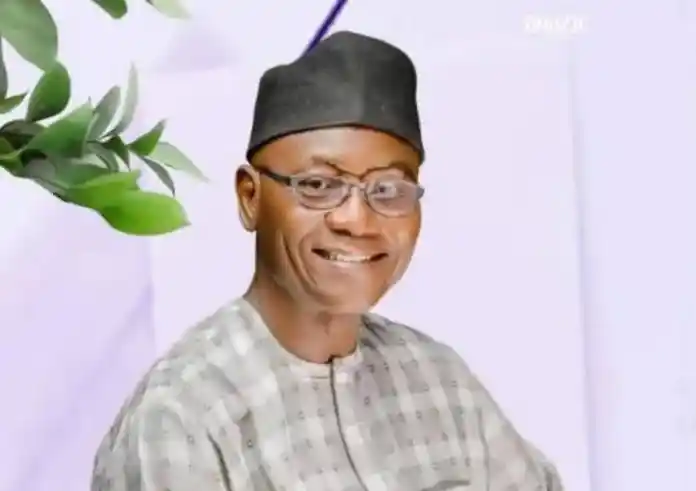
Backing Competence: Prof. D.D.D. Sheni Recommended for Plateau Ministerial Slot

editor

Published

on

Prof. Doknan Decent Danjuma Sheni ,Ministerial Position

Following the recent leadership reshuffle in the All Progressives Congress (APC), the Concerned Arewa Youths in Home and Diaspora have called on President Bola Ahmed Tinubu to consider Professor Doknan Decent Danjuma Sheni for the ministerial slot representing Plateau State.

This appeal comes after Dr. Nenawe Yilwatda, Minister of Humanitarian Affairs and Poverty Reduction, was elected by the APC National Executive Committee (NEC) to replace former National Chairman Abdullahi Ganduje, who resigned due to health concerns.

In a statement jointly signed by representatives from the North-West, North-East, and North-Central regions, the youth group described Prof. Sheni as a “renowned academic, innovator, and humanitarian,” whose decades-long service in education and leadership qualifies him for a ministerial position.

Why Prof. DDD Sheni Deserves a Ministerial Role

With a proven track record of leadership, innovation, and dedication to public service, Prof. Sheni is an exceptional candidate for a ministerial position. His achievements in academia, education, and humanitarian work make him a valuable asset to any government. As a distinguished academic and leader, Prof. Sheni has demonstrated remarkable expertise and dedication to public service, making him an excellent fit for a ministerial role.

Profile – Prof. Doknan Decent Danjuma Sheni

Prof. Sheni is a renowned Nigerian scholar, academia, and educationist with a strong background in optometry. As the former Vice Chancellor of Plateau State University, Bokkos, he transformed the institution, ensuring accreditation of all courses and promoting staff welfare. Prof. Sheni’s commitment to human capital development led to collaborations with world-class universities, enabling Plateau State indigenes to obtain PhDs and Master’s degrees. Prof. Sheni is also an inventor with a patent, showcasing his innovative spirit and contribution to scientific advancements.

Who is Prof. DDD Sheni?

Prof. Sheni is a member of the All Progressives Congress (APC) and a grassroots mobilizer, known for his dedication to the party’s ideals. He is also a member of the North Central Peoples Forum, Plateau Elders Forum, and Northern Elders Forum, showcasing his commitment to regional and national development. Additionally, he holds the prestigious title of Garkuwan Matasan Arewa, a Chieftaincy title that reflects his influence and leadership in the Arewa community. With international work experience in Saudi Arabia and South Africa, Prof. Sheni brings a wealth of global knowledge and expertise to the table.

Why Prof. DDD Sheni is a Valuable Asset

With over 45 years of experience in lecturing at the university level, Prof. Sheni has established himself as a leading figure in academia. His achievements include:

Academic Achievements: Prof. Sheni is a Fellow of the American Academy of Optometry, South African Optometric Association, and Nigerian Optometric Association. He has published several refereed papers in international journals and authored books on clinical optometry and binocular vision.
Leadership Experience: Prof. Sheni served as Vice Chancellor of Plateau State University, Bokkos, and Chairman of the Committee of Vice Chancellors of State-owned Universities. He was also President of the World Council of Optometry and Association of African Optometric Educators.
Humanitarian Work: Prof. Sheni is the founder of the Decent Danjuma Foundation, which focuses on empowering widows and promoting community development.

Awards and Recognitions

Prof. Sheni’s contributions to academia, leadership, and humanitarian work have earned him numerous recognitions, including:

Officer of the Order of the Niger (OON): Awarded by President Muhammadu Buhari for his contributions to education and public service.
International Optometrist of the Year: Awarded by the World Council of Optometry for his outstanding contributions to optometry.
Africa’s Patriotic Personality of the Year: Awarded by the League of African Development Students for his dedication to nation-building and human capital development.

A Strong Case for Prof. DDD Sheni’s Ministerial Appointment

Given his impressive background and achievements, we believe that Prof. Doknan Decent Danjuma Sheni is an excellent fit for the Plateau State ministerial position. His leadership experience, academic expertise, and commitment to humanitarian work make him a valuable asset to any government. We humbly request that President Bola Ahmed Tinubu considers Prof. Sheni’s candidacy for this role, leveraging his skills and expertise to drive policy and development in Plateau State.

Conclusion

The Concerned Arewa Youths in Home and Diaspora strongly believe that Prof. DDD Sheni has the potential to make a positive impact in the government. We urge President Tinubu to consider his candidacy for the Plateau State ministerial position, recognizing his exceptional leadership qualities and dedication to public service.

Signatories:
1. Faisal Zubairu – Representing North-West
2. Aishattu Abubakar – Representing North-East
3. Olamilekan Tunde Ajayi – Representing North-Central
For Concerned Arewa Youths From 19 Northern States, Region and in Diaspora

Continue Reading
Click to comment

Leave a Reply

Your email address will not be published. Required fields are marked *

Business

FG advocates local cocoa processing to end raw bean export

info

Published

on

By

Cocoa.jpg

MTN ADVERT

President Bola Tinubu has declared that Nigeria must move away from exporting raw cocoa beans and focus on processing the commodity locally to capture more value from the global chocolate market.

The president, represented by the Minister of Agriculture and Food Security, Abubakar Kyari, stated this on Tuesday at the Cocoa Value Addition Summit 2026 in Abuja.

The summit, themed “From Bean to Brand: The Bean in My Hand, The Brand in Our Future,” brought together government officials, cocoa-producing countries, investors, development partners, and industry stakeholders to discuss strategies for expanding cocoa processing and manufacturing across Africa.

President Tinubu said Nigeria could no longer rely on exporting raw agricultural commodities while other countries generated most of the profits from processing, branding and manufacturing finished products.

“Nigeria will no longer export raw beans while importing finished value. We will grind our beans at home, we will press our butter at home, we will make our chocolate at home, brand it at home, and sell it to the world on our own terms,” he said.

PT WHATSAPP CHANNEL

He said more than 300,000 Nigerian farming households cultivate cocoa on over 1.4 million hectares, making Nigeria one of the world’s leading cocoa producers with about six to seven per cent of global output.

According to him, cocoa generated more than N3 trillion in export earnings during the recent surge in global prices, but exporting raw beans meant Nigeria captured only a fraction of the industry’s economic value.

The president cited ongoing investments in local processing, including a 70,000-metric-tonne cocoa processing facility under construction in Sagamu, Ogun State, and said Nigeria’s annual cocoa grinding capacity has exceeded 120,000 metric tonnes.

Industrial policy

The Minister of State for Industry, John Owan Enoh, said the initiative aligns with Nigeria’s industrial policy, which seeks to reduce dependence on raw commodity exports and expand domestic manufacturing.

“We are not interested in exporting anonymous sacks anymore. We are interested in exporting value. If Nigeria truly wants to build a one-trillion-dollar economy, it cannot continue exporting raw materials while other countries earn the real wealth from processing and branding them,” he said.

Mr Enoh also disclosed that Nigeria is working with Ghana, Côte d’Ivoire and Cameroon to establish an African cocoa alliance aimed at strengthening the continent’s bargaining power in the global cocoa market.

According to him, the proposed alliance would coordinate policies on cocoa processing, value addition and trade among countries that account for the bulk of global cocoa production.

BOI pledges financing

The Managing Director of the Bank of Industry (BOI), Olasupo Olusi, said the bank is prepared to provide long-term financing to support investments across the cocoa value chain.

He disclosed that the bank disbursed more than N164 billion to over 3,500 agro-processing and food businesses in 2025 and recently secured a €60 million credit facility from the European Investment Bank to support cocoa processing projects.

“Our goal is to finance everything from nurseries and cooperatives to grinding plants, ingredient factories, packaging lines and chocolate manufacturers,” Mr Olusi said.

Also speaking, the Chief Executive of the Ghana Cocoa Board, Ransford Abbey, called for closer cooperation among Africa’s leading cocoa-producing countries, noting that although the continent produces between 75 and 77 per cent of the world’s cocoa, it earns less than 10 per cent of the value generated by the global chocolate industry.

“We do not need charity. We deserve equity. The time has come for Africa to process its own wealth, protect its farmers and negotiate with one voice in the global cocoa market,” he said.

READ ALSO: FG begins work on animal identification, traceability to boost export

The renewed push for local processing comes as Nigeria seeks to diversify export earnings away from crude oil and increase the contribution of agriculture to industrial growth. Although Africa produces about 70 per cent of the world’s cocoa, most of the value from chocolate manufacturing is captured in Europe and North America, where beans are processed into butter, powder and finished confectionery products.

For years, industry stakeholders have argued that expanding domestic processing would create jobs, increase foreign exchange earnings and strengthen Nigeria’s position in global agricultural value chains. Recent investments in cocoa processing facilities and financing initiatives are part of broader efforts to shift the country from exporting raw commodities to exporting higher-value manufactured products.

The summit ended with the adoption of the Cocoa Value Addition Accord and a proposed Abuja Declaration aimed at accelerating domestic cocoa processing, attracting investment, improving farmers’ incomes and deepening collaboration among Africa’s major cocoa-producing countries.


Continue Reading

News

Why Realta Fusion is building a fusion reactor at an old hot dog factory

info

Published

on

By

Realta fusion device.jpeg

Realta Fusion has spent the last two years looking for somewhere to build its research and development facility. In the end, it decided the old Oscar Meyer factory in Madison, Wisconsin.

“From sausages to fusion,” Kieran Furlong, co-founder and CEO of Realta Fusion, told TechCrunch with a chuckle. The new center, called Forge, will create its first plasma in 2029, he said. Realta recently showed that it could convert energy from fusion reactions directly into electricity, potentially easing the path to a commercial power plant.

The Oscar Meyer site’s ample power was attractive, as was its proximity to Realta’s existing headquarters in Madison. But what ultimately pushed the startup to stay was bipartisan support from the state’s government, including the governor and the legislature.

“Wisconsin really decided they want to throw their weight behind fusion,” Furlong said.

For the state, the timing could be fortuitous. Fusion power has been on an upswing as demand for electricity surges on the back of economy-wide electrification and proliferating AI data centers. This year alone, fusion power startups have raised over $1.5 billion.

Realta Fusion will receive estimated $55 million in incentives from the state of Wisconsin and the city of Madison. The startup also has deep roots in the city, having been spun out of an experiment at the University of Wisconsin-Madison. And the university graduates a number of talented plasma physicists annually, providing a deep pool of talent. Shine, another fusion company, is located in a nearby suburb.

Realta’s decision to stay in Wisconsin is also surprising given that most fusion startups have located themselves near a national laboratory or on one of the coasts. Another Wisconsin-grown fusion startup, Type One Energy, decamped to Tennessee in 2024.

Since then, Wisconsin has embraced fusion power. Republicans and Democrats supported a sales tax exemption for the fusion industry, which was signed into law in April. That one measure alone will save Realta an estimated $37.5 million, a significant chunk of the total $55 million package. The state is kicking in another $15 million in enterprise zone tax credits, while the city of Madison has offered $2.8 million in tax increment financing.

While other states might have pitched similar amounts, Furlong said that there were other, intangible benefits to remaining in Wisconsin.

“It’s also advantageous to be the state champion,” he said. “We get the attention of people who matter, who can help us, who want to see Realta succeed and want to see Wisconsin be a major hub for fusion.”

When you purchase through links in our articles, we may earn a small commission. This doesn’t affect our editorial independence.

Continue Reading

Trending