News
China Approves New Brain-Tech Devices in Growing Race With Elon Musk’s Neuralink


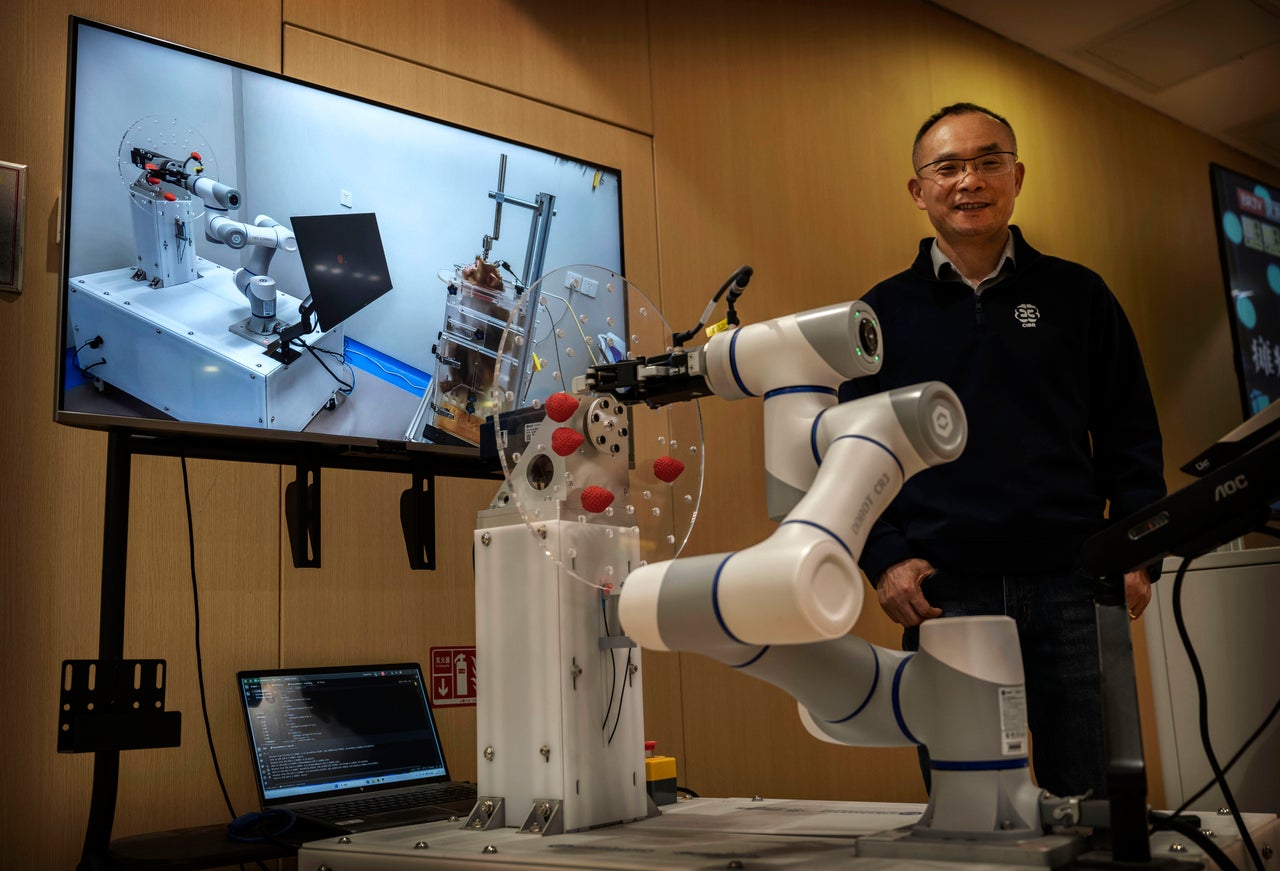
China has stepped up its race to develop brain-computer interface technology, approving a series of brain-related devices as it seeks to challenge Elon Musk’s Neuralink and establish itself as a global leader in the emerging field.
Chinese health regulators have approved several brain-technology products this year, allowing domestic companies to move beyond laboratory research and clinical trials into commercial applications.
Brain-computer interfaces, or BCIs, are technologies that translate electrical signals from the brain into commands that can control computers, robotic equipment and other devices. They are being developed for applications ranging from helping people with paralysis regain movement to diagnosing neurological and cognitive disorders.
One of China’s biggest breakthroughs came in March, when the National Medical Products Administration approved NEO, an implantable BCI developed by Shanghai-based Neuracle Technology.
The coin-sized device is designed for people with severe paralysis caused by cervical spinal cord injuries. It is implanted above the brain and captures neural signals generated when a patient attempts to move their hand.
Those signals are then decoded and used to control a pneumatic robotic glove, allowing patients to perform movements such as grasping objects, picking up items and drinking water.
The approval was significant because it was reported as the world’s first market authorisation for an invasive BCI medical device for commercial use.
China later reached another milestone in July when surgeons performed what was described as the world’s first commercial implantation of an approved invasive BCI. The procedure involved a patient who had lost hand mobility following a spinal cord injury.
Chinese authorities have also approved less-invasive brain technologies.
In August, the country’s regulator approved a device developed by Tianjin-based Tiankai Suishi Intelligent Technology. The system consists of a cap fitted with electrodes that can monitor electrical activity in the brain and assist doctors in assessing cognitive functions.
The company is also developing BCI systems aimed at supporting the early diagnosis of conditions linked to cognitive impairment, while seeking approval for technology related to depression diagnosis.
The developments form part of a broader Chinese government strategy to make BCI a major future industry. Beijing has identified the sector as a strategic area and wants China to have a leading position globally by 2030.
Chinese authorities have also introduced measures aimed at speeding up the approval and commercialisation of BCI products, while investment in the sector continues to increase.
The rapid progress has placed Chinese technology companies in direct competition with Neuralink, the California-based company founded by Musk.
Neuralink has been testing its brain implants in human patients, including people with paralysis. Its trials have demonstrated the ability of participants to control computers using neural signals, with the company also working toward controlling assistive robotic devices through brain activity.
While China has moved ahead in securing commercial approval for an invasive BCI, the two technologies are not identical. Neuralink’s implant uses electrodes that penetrate brain tissue, while China’s NEO device is positioned on the surface of the brain’s protective membrane, a design intended to reduce direct damage to brain tissue.
China’s progress therefore marks an important development in the growing global competition over brain-computer technology, an industry that could eventually transform how people with disabilities interact with computers, robotic devices and other technologies.








The management committee of Masjid Abdullahi Bin Zubbair in Madina Quarters, Bauchi State, has removed its Imam, Dahiru Abubakar.
The development followed allegations that he used sermons to campaign for President Bola Tinubu’s re-election in 2027.
This is even as the committee also rejected an alleged proposal by the Imam to rename the mosque after Tinubu.
According to Daily Trust, the Imam's removal was confirmed by Abubakar Jibrin, committee chairman.
Jibrin claimed that the Imam had repeatedly been warned against engaging in political activities within the mosque.
According to the report, the Imam had used sermons after obligatory prayers to defend Tinubu’s administration.
He was accused of telling worshippers that President Tinubu wasn't responsible for the country’s insecurity and deserved another term.
The committee decided to remove the Imam after he repeated the remarks following the early morning Subhi prayer on Sunday.
Jibrin said the committee’s concerns also included the Imam’s alleged practice of gathering people inside and in front of the mosque to discuss politics.
“We have warned him not once or twice but many times, but he didn’t heed our pleas,” Jibrin said. “We vehemently rejected the use of the mosque for political meetings.”
The Imam had also proposed to change the mosque’s name from Masjid Abdullahi Bin Zubbair to Masjid Imam Bola Ahmed Tinubu.
However, the committee rejected the proposal, insisting that the mosque belonged to the community and should retain its existing name.
Following the confirmation of an Ebola case in Abuja, some Nigerians on X have linked the development to the federal government’s plans for the 2027 general elections, questioning the timing of the outbreak and its handling of the case.
The comments include claims that the government could use the disease as a pretext to restrict movement, affect political gatherings or influence voter turnout ahead of the elections.
The federal government on Tuesday confirmed that a woman who recently arrived in Nigeria on an international flight from Uganda tested positive for Ebola and is receiving treatment in isolation at a private hospital in the Federal Capital Territory (FCT).
Authorities said 44 close contacts had been identified, including healthcare workers, patients, caregivers and travel contacts, and are being monitored as part of efforts to prevent further transmission.
The announcement has triggered scepticism among some Nigerians online, with some questioning whether the case could be connected to political activities ahead of the 2027 elections.
One X user, @xikonex, claimed that the government could impose movement restrictions after Christmas, alleging that such measures could prevent Nigerians from travelling to their polling areas.


“APC and Bola Tinubu are planning to use Ebola to restrict Nigerians’ movement immediately after Christmas,” the user wrote, alleging that the aim would be to prevent people from voting.
Another user, @funnycrown6, urged Nigerians to remain vigilant ahead of the elections, saying: “Nigeria’s health must never become a tool for political propaganda. Our lives are not campaign strategies.”
@AnthonyOnyeGuy also questioned the timing of the development, writing: “Conveniently happening 2 months to a general election.”
Another user, @Franeb, similarly alleged that the government could impose restrictions under the guise of containing Ebola, writing that “Bola Tinubu wants to lock down Nigeria in the name of Ebola.”
Comparing 2014 response
Some Nigerians also compared the current response with Nigeria’s handling of the 2014 Ebola outbreak, when Liberian-American Patrick Sawyer became the country’s index case after arriving in Lagos.
@N6oflife6 wrote that Nigerians knew the identity of the 2014 index case and the hospital where he was treated, but claimed that the government had provided less information about the current patient.
“Ebola has happened under BAT. Two days now we don’t even know the name of the patient or who they have contacted,” the user wrote.
Similarly, @firstladyship referenced Sawyer and the late physician Stella Adadevoh, who died after contracting Ebola while treating him, arguing that the current response has left room for “guesses” and “speculations”.
However, the federal government has assured that it is taking measures to contain the infection and prevent community transmission.
The Coordinating Minister of Health and Social Welfare, Muhammad Pate, said authorities are currently treating the case as an imported infection rather than community transmission. The 44 identified contacts are being monitored for at least three weeks, while public health teams continue to identify people who may have been exposed.
The World Health Organisation (WHO) has also urged Nigerians to remain calm, saying that one imported case does not by itself mean Nigeria is experiencing an Ebola outbreak.
WHO Regional Director for Africa, Mohamed Janabi, said the organisation is supporting Nigeria with case investigation, contact tracing, laboratory testing, infection prevention and control, and protection of health workers and communities.
Lawmakers demand action
Amid public concern, the House of Representatives on Wednesday urged the federal government to release outstanding funds appropriated for health agencies, citing the need to strengthen surveillance, contact tracing, and emergency response.
Lawmakers also raised concerns about infection prevention supplies, health-worker preparedness and emergency response capacity. The Senate separately called for the immediate release of emergency funds from the Service Wide Vote and urged stronger health screening at airports and other entry points.
Nigeria successfully contained its 2014 Ebola outbreak and was declared free of transmission by WHO on 20 October 2014, after 42 days without a new case. The outbreak recorded 20 cases, including 19 laboratory-confirmed cases and one probable case, with eight deaths.
Discover more from Premium Times Nigeria
Subscribe to get the latest posts sent to your email.
-

 News4 days ago
Euromatch NPFL: Matchday 9 results
-
News4 days ago
No agenda, no rush, no leaving San Francisco: Benchmark’s partners on investing in a frenzied market
-
News3 days ago
Amazon to fund 12 small nuclear reactors at former Indiana coal plant
-
News3 days ago
Mamdani says feds have abdicated on AI, urges New Yorkers to push back