News
Ted Cruz accuses Nigerian govt of creating enabling environment for terrorists
Published
5 months agoon
By
Preport
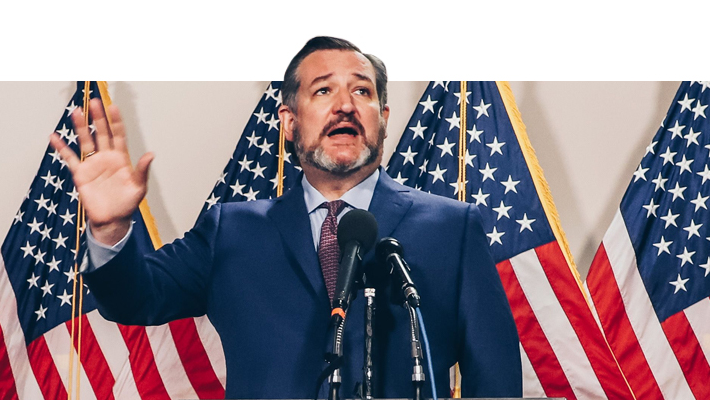
Ted Cruz, a U.S. senator and vocal voice in the campaign against “Christian genocide” in Nigeria, has reacted to the Palm Sunday attack on the Anguwan Rukuba community in Plateau State, accusing the Nigerian government of creating an enabling environment for terrorists.
“Another slaughter of Christians in Nigeria by jihadists, this time on Palm Sunday,” Mr Cruz said in an X post reacting to the attack, during which about 30 people died.
He added, “Nigerian government officials have created an environment in which Christians are routinely persecuted and slaughtered by imposing sharia law and looking the other way at violence.”
The lawmaker claimed on Monday that the U.S. government knows those behind terrorist activities in Nigeria and has the power to hold them accountable.
“Those officials should know that the U.S. knows who they are and has the tools to hold them accountable,” Mr Cruz said.
Presidential aides Bayo Onanuga and Daniel Bwala did not immediately respond to Peoples Gazette’s request on Mr Cruz’s allegations.
Governor Caleb Mutfwang of Plateau State visited Anguwan Rukuba on Monday to commiserate with families who lost loved ones in the attack. He promised that the government would fund the medical treatment of all those injured during the attack.
The Gazette on Tuesday reported that about 119 people have been killed in several coordinated attacks across Plateau State in the past 90 days.
Frequent attacks and a surging death toll have sparked reactions and public outrage from outside and within Nigeria, with many berating President Bola Tinubu’s government for failing in its core responsibility of protecting life and property.
Amnesty International on Tuesday said Mr Tinubu has continued to issue “turgid” press statements condemning violent attacks one after another without corresponding action to rein in rampaging bandits and terrorists.
It accused Mr Tinubu of “failing” to protect Nigerians in the wake of fresh violent attacks in Jos, pointing out that issuing “turgid statements” to console victims are not substitute for decisive action.
Meanwhile, Mr Tinubu, in a statement by his media aide, Bayo Onanuga, condemned the attack, assuring citizens that his government is procuring equipment to aid security agencies in combating insecurity.
You may like
Health
Donor cuts, govt inaction push HIV patients towards death, uncertainty in Rivers, Akwa Ibom (2)
Published
45 minutes agoon
August 20, 2026By
Preport
This is the second part of this report. Read the first part here.
Grace* never saw a state budget document, she never read a federal appropriation law or examined a budget implementation report.
She probably did not know that Nigeria’s HIV response was financed largely by international donors, or that governments at both the federal and state levels had, for years, pledged to assume greater responsibility for sustaining the programmes that kept people like her alive.
What she knew was simple: the community health worker who discreetly delivered her antiretroviral medicines stopped coming, the counselling sessions ended, and the confidential support that allowed her to avoid the crushing weight of stigma vanished.
Forced to collect her medication at a public treatment centre, Grace was recognised, felt exposed, and eventually withdrew from care.
Her experience raises the central question at the heart of this investigation.
As international donors began scaling back community HIV programmes, were governments, particularly in Rivers and Akwa Ibom, two of Nigeria’s highest HIV-burden states, prepared to fill the gap?
A PREMIUM TIMES investigation, based on official budget documents, budget implementation reports, government expenditure records and interviews with government officials, programme managers, health advocates and people living with HIV, found little evidence that they were.
Instead, the newspaper found a practice that raises troubling questions about responsibility and accountability.
Year after year, governments at both the state and federal levels approved budgets for HIV response. Each year, much of that money was not released.
The consequence is weakened health systems, interrupted community services, and patients who disappear from care without raising an alarm.
As donor support shrank, the expectation was that governments would step in and take ownership of the response.
However, PREMIUM TIMES did not see evidence that this happened in Rivers and Akwa Ibom. Instead, both states continued to make budgetary provisions for the HIV response while implementation lagged.
Budgets approved, funds withheld
Official budget documents and implementation reports reviewed by PREMIUM TIMES reveal a recurring pattern in both Akwa Ibom and Rivers states: governments consistently budgeted for HIV programmes, but the approved funds often failed to reach the agencies responsible for implementing them.
In Akwa Ibom, the State Agency for the Control of AIDS received capital allocations in every budget cycle reviewed by PREMIUM TIMES.
The agency was allocated capital budgets of N24.05 million in 2023, N10 million in 2024, N33 million in 2025 and N150 million in the 2026 budget.

The allocations covered activities central to HIV response, including the procurement of antiretroviral medicines, HIV rapid test kits, condoms and screening consumables.
On paper, the commitments suggested a government preparing to strengthen HIV services, although the approved funds were less than one per cent of the health sector’s total capital budget in each of the fiscal years reviewed by PREMIUM TIMES.
Conversely, budget performance reports reviewed by PREMIUM TIMES show that despite the budgetary allocations, the agency received no capital releases between 2023 and 2024.
The state has also not published the capital budget implementation report for 2025 or the first half of 2026, making it impossible for the public to independently determine whether subsequent releases were made and, if so, how the money was spent.
When contacted by PREMIUM TIMES, the Commissioner for Health, Ekem Emmanuel, said the agency received some support towards the end of 2025.
However, neither the commissioner nor the officials of the State Agency for the Control of AIDS provided documentary evidence of the amount released, the source of the funds, or the specific programmes financed.
However, the National Agency for the Control of AIDS (NACA), which conducts annual reviews of each state’s HIV investment through its state counterparts, told PREMIUM TIMES that Akwa Ibom had released only 1 per cent of its total 2024 and 2025 HIV appropriations.
Since the commissioner said funding was provided in 2025, the one per cent reported expenditure suggests that the oil-rich state spent no more than N330,000 out of its N33 million capital budget.
Across the border in Rivers State, PREMIUM TIMES found a similar pattern.
Official budget documents show that the state appropriated N180 million for HIV interventions in 2023 and another N230.66 million in 2024

The allocations covered procurement of HIV rapid test kits and consumables, community HIV counselling and testing, condom distribution and even the development of a state HIV anti-stigma law.
Yet the corresponding budget implementation reports
For 2025 and 2026, the Rivers State government has not published the approved fiscal documents necessary for independent scrutiny of HIV spending.
Repeated requests by PREMIUM TIMES seeking clarification from officials of the State Agency for the Control of AIDS yielded no explanation on whether subsequent releases had been made.
Interestingly, NACA told PREMIUM TIMES that Rivers State had zero release for HIV/AIDS during the period under review.
The findings indicate that while both states continued to budget for HIV response, they did not release the budgeted funds, at a time when international support was becoming increasingly uncertain.
Accountability beyond the budget books
The implications extend far beyond accounting records, as every unreleased allocation represents programmes that could not be implemented, outreach campaigns that never occurred, patients who were not traced after missing appointments and communities not reached with HIV testing and prevention services.
Uduak Nyaetok, the executive director of Milestone Initiative for Human Rights and Empowerment, an NGO that provides HIV response in the Niger Delta, told PREMIUM TIMES that HIV treatment does not begin with antiretroviral medicines.
Ms Nyaetok said it begins with prevention, especially by identifying people who do not know they are infected.
She noted that, “After testing, a good HIV response depends on counsellors who encourage frightened patients to start treatment.
“It relies on community workers who return to homes after appointments are missed and support groups that help people overcome stigma strong enough to keep them away from clinics.”
According to Ms Nyaetok, the withdrawal of donor-funded community services disrupted that chain of care.
Although some donor-supported HIV prevention activities, particularly case finding, have gradually resumed since June, she said the interruption exposed the consequences of governments failing to assume greater ownership of the HIV response.
“When the support was withdrawn, those who followed up on treatment were no longer there, and the viral suppression of the patients dropped. When they engage in risky behaviour, infections will definitely be high, and evidence abounds in data of new infections published.”
NACA agrees with her position. In response to a PREMIUM TIMES media enquiry, the AIDs agency said, “Programme data indicates that interventions implemented by the United States government-funded structures, particularly at the community level, experienced setbacks in coverage for case finding, pre-exposure prophylaxis uptake, and condom distribution.”
Ms Nyaetok argued that state governments must increase investment in community-based HIV services, especially in rural communities where many residents live far from health facilities.
For people like Grace*, the loss of community-based support was not simply the withdrawal of a donor-funded programme. It meant the disappearance of the very services that enabled them to remain in treatment, protect their privacy and live with dignity.
Federal spending tells similar story
The questions of accountability and responsibility are not confined to state governments. A PREMIUM TIMES review of federal financing trends between 2021 and 2026 also reveals a widening disconnect between budget approvals and actual spending.
In 2025, as uncertainty over international HIV funding intensified, the federal government approved N18.27 billion as capital expenditure for NACA, more than double the amount approved in 2024.

The increase suggested a recognition that domestic financing needed to grow as donor support became less certain.
Yet government expenditure records published on Govspend.ng, a portal that tracks and analyses federal government spending, showed that only 31.2 per cent of the approved capital allocation was cash-backed.
The following year, domestic investment weakened even further. Although the 2026 budget approved N13.97 billion as capital expenditure for NACA, government spending records show that only N36.68 million (0.3 per cent) of the approved allocation had been spent between January and May.
NACA told PREMIUM TIMES that the capital release had improved by June and that by mid-year, the agency had received 3.8 per cent of the approved allocation.
Even more disturbing was how the money was used between January and May. Of the amount expended, only N16.13 million went directly towards HIV response programmes, but only in Lagos State out of the 36 states of the federation.
By June, the agency said the total expenditure on the HIV response in Lagos had risen to N210 million. NACA, however, explained that the expenses were for two different constituency projects.

The remaining expenditure covered items such as cleaning services and staff welfare. N7.4 million was for the “Part payment for second quarter of cleaning service for NACA main building for November 2025 to January 2026,” while N13.12 million spent in April was for the supply of 364 bags of rice (25kg) and 152 cartons of vegetable oil for NACA staff.
Those figures raise difficult questions about Nigeria’s preparedness to sustain HIV services as international partners gradually reduce direct programme implementation.
The disconnect further threatens one of the foundations of global HIV control. The UNAIDS 95-95-95 targets require that 95 per cent of people living with HIV know their status, 95 per cent of those diagnosed receive sustained treatment, and 95 per cent of those receiving treatment achieve viral suppression. But meeting those targets requires far more than purchasing medicines.
“It demands sustained investment in community testing, patient follow-up, laboratory systems, adherence counselling and community support,” Ms Nyaetok said.
She said this is the very intervention that has suffered most from shrinking donor assistance.
For Grace’s* family, those gaps not filled by domestic financing led to a painful experience. They are pained that when the support system vanished, nobody replaced it quickly enough.
However, NACA told PREMIUM TIMES that they are on top of the response effort by improving on the National Domestic Resource Mobilisation and Sustainability Strategy (2021-2025), which sets out key objectives and innovative approaches to address the domestic resource gap for HIV prevention and treatment interventions.
It noted that the federal government had launched the HIV Trust Fund of Nigeria under the Nigeria Business Coalition Against AIDS, with N10.7 million mobilised in 2024.
NACA added “The Government of Nigeria recognises that the integration of HIV treatment and related health intervention into State Health insurance Schemes will ensure sustainability of funding for HIV treatment and prevention services. To facilitate this, NACA, the National Health Insurance Authority along with partners, developed the National Blueprint for Integration of HIV into State Health Insurance Schemes in 2020.
“Nigeria has moved towards sustainable domestic financing by leveraging financial protection schemes such as the Basic Health Care Provision Fund, State Health Insurance Schemes, and Private Health Insurance to avert out-of-pocket payments for PLHIV beneficiaries at the point of care.
“HIV testing is now included in benefit packages at the national and subnational levels, thus paving the way for the inclusion of ARV treatment in the near future. The benefits also cover baseline and treatment monitoring investigations and management of opportunistic infections. Efforts are ongoing to target the enrolment of PLHIV into financial protection schemes at the state level.”
NACA said that to address the funding gap, the federal government injected $200 million (about N260 billion) into the federal budget in 2025. However, as shown earlier, PREMIUM TIMES found that only N5.7 billion was spent by NACA.
Smaller epidemics, stronger investments
Perhaps one of the most thought-provoking findings of PREMIUM TIMES’ investigation is the contrast between Nigeria’s highest HIV-burden states and some of its lowest.
Rivers has the largest population of people living with HIV in Nigeria, while Akwa Ibom consistently ranks among the states with the highest burden. Conventional public health planning would suggest that both should rank among the country’s strongest domestic investors in HIV programmes.
However, financial records tell a different story. While Rivers and Akwa Ibom struggled to convert budget promises into actual spending, several states with significantly lower HIV burdens continued making measurable domestic investments.
In Kwara State, where an estimated 20,259 people are living with HIV, about one-eighth of Akwa Ibom’s burden, the government spent N608.63 million on HIV interventions in 2024, according to a budget implementation report reviewed by PREMIUM TIMES.
Between January and September 2025, the state released another N132.16 million as counterpart funding for Global Fund-supported HIV and malaria programmes.
Its 2026 budget goes even further, earmarking N8.29 billion for Global Fund-supported health interventions, including HIV, as part of efforts to strengthen domestic financing.
The contrast extends beyond Kwara. Zamfara, one of Nigeria’s lowest HIV-burden states, spent N3.42 million directly on HIV programmes in 2025, despite having an estimated 13,253 people living with HIV.
Yobe, which has the country’s lowest HIV burden, also recorded direct spending of N500,000 on HIV interventions in 2025.
The comparison is not intended to suggest that those states have solved their HIV financing challenges. However, it illustrates that domestic investment is possible even where the epidemic is far smaller.
That reality makes the experience in Rivers and Akwa Ibom more difficult to explain. Both states rank among Nigeria’s most economically strategic sub-national governments, benefiting from substantial oil revenues and historically receiving some of the country’s largest allocations from the Federation Account.
Akwa Ibom currently ranks as the country’s fourth-largest Federation Account Allocation Committee (FAAC) recipient. As PREMIUM TIMES reported earlier this year, Governor Umo Eno’s administration generated N2.53 trillion in revenue within its first 32 months in office.
Although Rivers State has not published its fiscal books since 2025, the oil-rich State ranks second among FAAC revenue earners in the country.
Regardless, interviews with health workers, advocates and people living with HIV show that as donor-funded programmes contracted, domestic financing failed to expand at the pace required to protect the gains made over two decades.
For people living with HIV, the difference between a budget approved in a government document and money released into the health system is measured in whether a counsellor notices when a patient misses an appointment, whether a community worker quietly delivers medicines to someone too afraid to be seen at an HIV clinic, whether a support group remains open for an adolescent struggling with stigma, or whether a newly infected person is diagnosed before unknowingly transmitting the virus to someone else.
Those are the investments that sustained Nigeria’s HIV response for years. They are also the investments that many patients and advocates told PREMIUM TIMES have steadily faded just as governments were expected to assume ownership of the response.
With the global target of ending AIDS as a public health threat by 2030 approaching, NACA insists that Nigeria is well-positioned to achieve the targets by 2030, but gives an important warning: “The risks that could hinder the attainment of the goals are related to funding instability from government and donor partners.”
Editor’s Note: * The names marked with asterisks have been changed to protect the privacy and identities of vulnerable individuals featured in this report.
This reporting was supported by the Centre for Journalism Innovation and Development (CJID).
Discover more from Premium Times Nigeria
Subscribe to get the latest posts sent to your email.
Business
INTERVIEW: How UNCCD, FAO, World Bank back Nigeria’s fight against drought, land degradation —Official
Published
1 hour agoon
August 20, 2026By
Preport
In this interview, Etim William, Director of the Desertification, Land Degradation and Drought Management Department of the Federal Ministry of Environment, the factors contributing to the degradation of Nigeria’s rangelands and how desertification, land degradation and drought are worsening farmer-herder conflicts and threatening food security across major agricultural hubs in the country.
Excerpt:
PT: What does your department do?
Mr William: Going by the name of the department — Desertification, Land Degradation and Drought Management — our mandate is to combat desertification, address land degradation by restoring degraded lands, and manage drought. Those are the mandates of the department.
PT: In commemoration of World Desertification and Drought Day, what does the ministry hope to achieve? What is the aim and objective of the event?
Mr William: Desertification, drought and land degradation are global menaces. There is hardly any country in the world that does not face land degradation. Desertification and drought also affect many countries. That is why the United Nations Convention to Combat Desertification (UNCCD), one of the Rio Conventions, was established to address desertification, land degradation, and drought.
Every year, the convention commemorates the fight against desertification and drought on June 17. The event seeks to raise public awareness of the impact of drought, land degradation, and desertification on humans, animals, and the environment. Life on land depends on the health of the land. From the land, we get food and natural resources. We have forests, vegetation, animals and genetic resources. So, if the land is degraded, you lose biodiversity and species, both flora and fauna. You lose ecosystems and genetic resources. Agricultural production will also decline because we do not farm in the air; we farm on land. That will inadvertently lead to food insecurity, hunger and poverty. It can also lead to migration because when land is degraded, people tend to leave their original communities in search of greener pastures. This creates competition for land resources, which can also result in conflicts, including farmer-herder conflicts.
This is because rangelands are no longer available in sufficient quantity; many have been degraded. Nobody seems to pay adequate attention to rangelands and their sustainable management. If the rangelands were available and sustainably managed, pastoralists would have less reason to take their herds through people’s farms.
PT: Do we have rangelands in Nigeria?
Mr William: Yes, we have rangelands.
PT: How many rangelands are there in Nigeria?
Mr William: I may not know the exact number. The Ministry of Livestock Development may have conducted an assessment of our rangelands, but I cannot tell you the exact number.
PT: What are rangelands?
Mr William: They are basically grasslands and shrublands. We have grasslands throughout the savanna, including the Guinea and Sudan Savannas.
PT: When you say some of these rangelands are degraded, what do you mean?
Mr William: They are overexploited. Sometimes people set them on fire. Most of them are being converted to croplands, and in the process of clearing the land, fire is used, which contributes to land degradation. Some are also converted to urban infrastructure and other uses.
PT: Are there gazetted rangelands in Nigeria?
Mr William: I think we have a few gazetted ones, but I am not in a position to provide details, as we do not have a direct mandate to manage rangelands. That should be the responsibility of the Ministry of Livestock Development. Our interest is that they are degraded landscapes and degraded ecosystems under the purview of the United Nations Convention to Combat Desertification, and Nigeria is a party to that convention.
PT: What is Nigeria’s commitment to the UNCCD as a signatory?
Mr William: Land degradation neutrality is one of our commitments. The convention focuses on restoring degraded lands, combating desertification and managing drought. All these issues — desertification, land degradation and drought — are closely connected to land. The UNCCD is the only convention that takes land as a critical factor in socioeconomic development. That is why degraded land needs to be restored.
PT: Under the convention, do we have specific targets that Nigeria wants to achieve?
Mr William: Yes. We have a land degradation neutrality target.
Land degradation neutrality is a programme designed by the UNCCD to address land degradation and achieve neutrality, as enshrined in Sustainable Development Goal 15.3.1. The target is to achieve land degradation neutrality.
PT: What does land degradation neutrality mean?
Mr William: Land degradation neutrality is a state or condition where there is no net degradation of land. It is essentially about achieving zero net land degradation. This means maintaining land cover, land productivity and soil organic matter in a productive condition. There should be no net loss in the fertility, productivity, amount or quality of land.
PT: You mentioned that some of our rangelands are degraded. I also understand that Nigeria used to have what were known as grazing routes. How is your department helping to address degradation along these corridors? Are there any breakthroughs you would like to share?
Mr William: Most of these rangelands are located in arid and semi-arid regions. These are areas where our activities are concentrated, particularly areas affected by desertification and drought. Most rangelands are affected by desertification, drought, and climate change. Our mandate to restore degraded lands, combat desertification and manage drought covers these areas. So, when we restore degraded lands, degraded rangelands are also restored. That is how we come in.
PT: How do you go about restoring these lands? Are there specific techniques or interventions?
Mr William: Of course. First, we carry out an assessment. We work with the states where the rangelands and desertification-affected areas are located. We have what is called the desertification frontline states. These are states heavily affected by desertification. There are 11 frontline states where desertification is more pronounced, and its impacts are more severe. They include Sokoto, Kebbi, Zamfara, Kano, Katsina, Jigawa, Adamawa and Taraba, among others.
PT: What are your activities across these states?
Mr William: Restoration. When we talk about restoration, we mean planting trees, sustainable management of the land and providing water facilities in areas affected by drought. We have a technique involving underground water storage systems. We install systems that collect rainwater during the rainy season and channel it into underground storage systems for use when the rains cease during the dry season. We also establish tree plantations using local varieties that can withstand drought and survive with insufficient rainfall. These are some of the things we do. We restore degraded and desertified landscapes and provide sources of water, including underground water systems. We also drill boreholes, including solar-powered boreholes. These interventions help to mitigate the impacts of desertification and drought while restoring degraded landscapes.
PT: In the course of doing this work, what are some of the challenges you face?
Mr William: The challenges in our case are enormous. One of the greatest is insecurity. These areas are affected by banditry, terrorism and kidnapping, so some areas are not accessible because they are high-risk areas in terms of security. Sometimes we cannot go to those areas. In areas we can reach, we sometimes find people vandalising the projects after we have established plantations. They steal solar pumps and solar panels and break the fences. We normally protect our plantations with wire fencing, but some people take cattle into the project sites, where they eat the seedlings. These are some of the challenges we are facing.
Another challenge is funding. The government has many things to address, and many sectors require subsidies and appropriations. What comes to us is just a pittance, so we have to make do with the limited funds available to us.
PT: How has collaboration with international partners such as the UNCCD and GIZ contributed to your work?
Mr William: Partnership has really enhanced our activities. At times, the UNCCD provides us with funding to implement specific projects. For example, before you can assess the extent of desertification and land degradation, you need data. The UNCCD helps us gather reliable data. The UNCCD has also supported our target-setting programme. The first phase of the target-setting process was supported by the UNCCD, during which we set a target of restoring about 10 million hectares of degraded land. There was a second phase of the target-setting process, which helped us to raise the target from 10 million hectares to about 19 million hectares.
The UNCCD has supported all these efforts. We also have other partners, including the World Bank-supported Agro-Climatic Resilience in Semi-Arid Landscapes (ACReSAL) project. The project seeks to address degraded landscapes in the semi-arid region, build resilience against climate change and support climate-smart agriculture. We also have the Food and Agriculture Organisation (FAO), which supported us through a project titled Action Against Desertification in the northern part of the country. Through that project, about 5,000 hectares of degraded land were restored. These forms of support have really helped us achieve some of our mandates.
Even today’s programme, which commemorates World Desertification and Drought Day, was supported by partners such as GIZ. We also received support from the Nigerian Bottling Company. These are some of the partnerships and support the ministry has enjoyed, which have enhanced our delivery.
PT: Looking ahead to the Conference of the Parties (COP), what is Nigeria pushing for? Is there an agenda the country is trying to achieve?
Mr Williams: One of the areas Nigeria will push during the COP is drought management.
Nigeria, alongside other African countries, seeks to advance a legally binding instrument on drought management. This is an African position, and Nigeria supports that position.
We are pushing to establish a legally binding instrument for drought management, essentially a drought protocol. That is one of the areas Nigeria will push for at the COP. Other areas include finance. We need to push for more financial support to meet our national needs and fund our National Adaptation Plan. Regarding land degradation, we need support and partners to help us achieve land degradation neutrality.
These are some of the issues we will push for.
PT: You mentioned finance. How much funding is Nigeria looking at, perhaps over the next five or 10 years, to boost efforts to address land degradation and desertification?
Mr Williams: The figure cannot be fixed or considered sacrosanct because things keep changing from time to time. We have inflation. Something you can do with ₦10 today may cost ₦20 tomorrow.
The fact remains that restoration requires a huge investment that no nation can undertake alone. We need support. We need to collaborate and partner with international organisations. We need their support.
PT: At the COP, how is Nigeria going to negotiate? Will Nigeria negotiate as part of the African bloc?
Mr William: Yes. We have the African Group of Negotiators. Whatever the African position is, Nigeria equally supports that position. We are not going to negotiate anything outside the position of the African group.
PT: You mentioned that about 50 per cent of our rangelands are degraded. How bad is the situation?
Mr William: It is very bad. If you listened to the Honourable Minister’s keynote address and the welcome address, it was reported that about 50 per cent of our rangelands are degraded.
PT: What do you think is causing the degradation of rangelands in Nigeria?
Mr William: There are numerous drivers. Climate change is one. Others include unsustainable use, overgrazing, deforestation, bush burning, competition for land resources and overpopulation. Poverty is also a factor. Land-use change is another. For example, converting rangelands to croplands or using them for infrastructure development contributes to degradation. Mining, including illegal mining, is another factor. There are numerous drivers.
PT: What would you like to see change, especially going into the COP, across some of these badly affected rangeland corridors?
Mr William: Just like the theme of this year’s World Desertification and Drought Day says, “Rangelands: Recognise, Respect, Restore,” we want more action. We want people to stop activities that degrade rangelands. We want people to understand the value of rangelands because, in fact, the issue of rangelands has not attracted sufficient attention.
Through today’s event, we are trying to create awareness about the value and importance of conserving our rangelands. It is not just about talking; we want action. We want attitudinal change. The government alone cannot do it. We want everyone to be involved, including pastoralists, communities, NGOs, private organisations, international communities and donor organisations. We want all of them to partner with the government to address the degradation of rangelands. By the time we achieve that goal, our food security will be strengthened, farmer-herder conflicts will be reduced, biodiversity will be replenished, and we will be able to mitigate the adverse effects of climate change.
Let me give you one example. The Northeast Trade Winds that blow from the Sahara Desert carry dust. We experience this phenomenon, which is often associated with the harmattan. It is also connected to degraded landscapes, rangelands, and forests. If our landscapes were well protected with vegetation and trees, the effects of climate events such as the harmattan would be reduced. If we had sufficient resilience, the impacts of climate change would be minimised. Those are the issues.
Discover more from Premium Times Nigeria
Subscribe to get the latest posts sent to your email.
Trending
-
News3 days ago
Gagdi Mourns Former Plateau Speaker Peter Azi, Describes Him as a Man of Humility and Kindness
-
Business22 hours ago
Plateau Strengthens Technical Education, Prepares NITT Centre for September Take-Off
-
Business4 days ago
NDLEA arrests India-bound Businessman with cocaine, recovers N3.6b Colos, codeine in Lagos
-
News4 days ago
Osun election: Tinubu congratulates Adeleke after victory