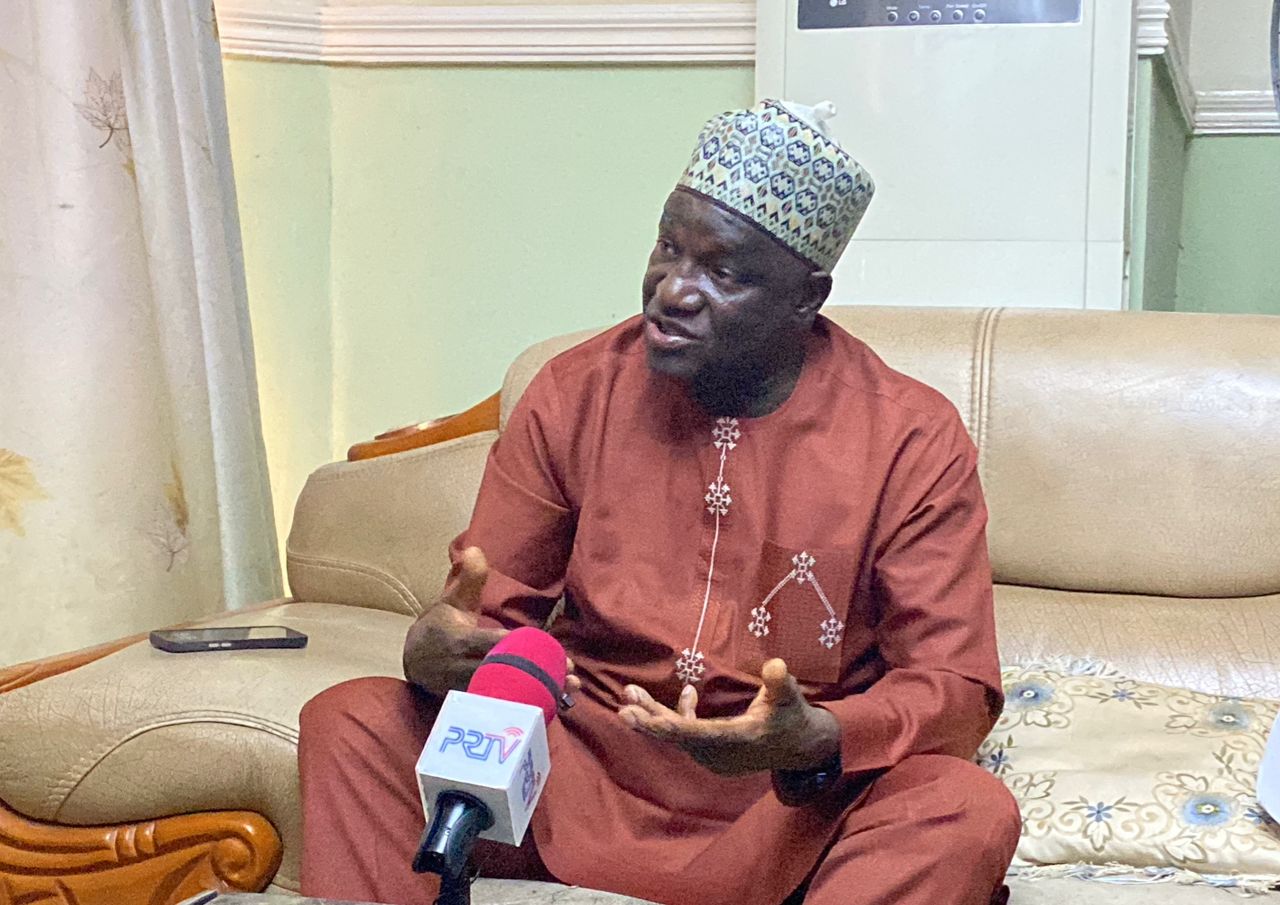
The Senator representing Plateau Central, Hon. Diket Plang, has addressed brewing controversies regarding the authorship of key developmental projects in his constituency. Speaking in a detailed interview, the lawmaker dismissed accusations of “taking credit for others’ work,” specifically regarding the Federal Medical Centre (FMC) Kanke establishment bill and the dualization of the Akwanga–Jos–Gombe Road.
Speaking during an interview, Plang explained in detail the legislative processes behind the two projects, stressing that his actions were transparent, documented and carried out in collaboration with other lawmakers and stakeholders.
FMC Kanke
Addressing claims surrounding the establishment of the Federal Medical Centre in Kanke, the senator clarified that the process of creating new federal medical centres is governed by existing laws, which require amendments rather than the introduction of entirely new standalone bills.
According to him, the law establishing federal medical centres already exists, and any new FMC must be accommodated through an amendment or repeal of the earlier law to allow for additional centres.
“Establishment bills can either be fresh bills or repealing bills. Since there is already a law establishing federal medical centres, what you do is repeal or amend that law to include new requests,” Plang explained.
He disclosed that several senators submitted requests for FMCs across the country, prompting the Senate leadership to consolidate them into a single amendment process rather than repealing the law repeatedly.
Plang stated that his own bill for FMC Kanke successfully passed second reading as the Federal Medical Centre Amendment Bill, 2025 (SB 728), sponsored by him and read on February 25, 2023.
“When it comes to records, the second reading is there. My name is attached as the sponsor. That bill has gone through the necessary stages. It is purely my bill,” he said.
He added that during the final legislative stage, the Senate opted to repeal and amend the law collectively to include all pending FMC requests nationwide, a move that should not erase individual sponsorships.
Plang appealed for support rather than skepticism, emphasizing the importance of an FMC in Kanke due to its strategic location and the healthcare needs of surrounding communities in Plateau and neighbouring states.
“A Federal Medical Centre is not just a general hospital. It is a tertiary health institution with consultants. For people in Kanke, Tafawa, Belewa, and even parts of Bauchi and Southern Plateau, this facility will go a long way in solving critical medical challenges,” he said.
He urged the public to verify claims through National Assembly records, noting that each FMC request has a clearly identified sponsor.
“If we did it, it should be acknowledged. If you check the records, you will see the names attached to each Federal Medical Centre. Mine is clearly there,” he stressed.
Akwanga–Jos–Gombe Road: How the Legacy Project Emerged
On the Akwanga–Jos–Gombe Road, Plang traced the project’s history back to 2018 under the administration of former President Muhammadu Buhari, when the dualisation of the road was approved alongside the Keffi–Akwanga–Makurdi Road.
He explained that the Akwanga–Jos–Gombe project, awarded at about $1 billion when the exchange rate stood at ₦333 to the dollar, later stalled after the contractor failed to meet funding conditions tied to a Chinese financing arrangement.
By the time he assumed office and investigated the matter at the Ministry of Works, Plang said the exchange rate had soared to about ₦1,500 per dollar, pushing the project cost to over ₦1.3 trillion—an amount he said was unrealistic within the ministry’s budget.
“It was impossible to take ₦1 trillion out of the Ministry of Works’ budget for one road, given competing national needs,” he noted.
As an alternative, the senator said he was advised to explore the Petroleum Tax Credit Scheme, under which projects could be funded by entities like the NNPC and recovered through tax exemptions.
Plang further explained that the road was not initially part of President Tinubu’s three flagship legacy road projects, prompting him to move a motion in the Senate urging the inclusion of the Akwanga–Jos–Gombe corridor to ensure equitable infrastructure development for the North-Central and North-East regions.
He revealed that although his motion was initially stepped down, it later merged with a similar motion sponsored by another senator, following standard legislative practice.
“I collapsed my motion into his so that we could carry the prayers together. One of the prayers was the inclusion of the Jos–Akwanga–Gombe Road as a legacy project, and it was approved by the Senate,” he said.
Plang stated that following Senate approval, a formal communication was sent to the Minister of Works, reflecting the collective resolution of the National Assembly.
He said the effort paid off, as the road now appears as the fourth item under President Tinubu’s legacy projects.
“I can say my own was taken. The other extensions were not. That is why today you see Akwanga–Jos–Gombe as part of the President’s legacy projects,” he said.
While defending his role, Plang was careful to acknowledge the contributions of Plateau State Governor, Barr. Caleb Mutfwang, whom he described as instrumental in lobbying the Ministry of Works.
“Anytime I went to the ministry, they would tell me the governor was there, pleading for the Jos road. I must thank the governor for his efforts,” he said.
He emphasized that legislative motions require sustained advocacy to succeed, noting that credit for the project should be shared among all stakeholders who spoke with one voice.
“The credit goes to all of us. If I move a motion and nobody supports it, it may not go anywhere,” he said.
Plang disclosed that the Minister of Works recently engaged the contractor following renewed discussions, assuring that the project would be awarded imminently.
He added that under the legacy project framework, the road would be expanded to six lanes—three on each side—rather than the initial dual carriage design.
Political Climate, APC and Inclusivity
On the current political climate, the senator expressed confidence in the All Progressives Congress (APC), describing the party as inclusive and capable of accommodating diverse interests.
He attributed the influx of politicians into the APC to what he called the inclusive leadership style of President Tinubu.
“This government has space for all of us. People are joining APC because of inclusivity,” he said.
Plang dismissed fears that post-primary grievances could fracture the party, expressing optimism that the APC would remain united ahead of the 2027 elections.
He urged political actors to prioritize service, unity and national interest over personal ambition, quoting the national anthem to emphasize brotherhood beyond ethnic, religious or political differences.
“Our prayer should be that Nigerians trust themselves more. Leadership should be about service to humanity. If we provide good governance, inclusivity and development, people will naturally believe in us,” he said.
The senator concluded by calling for cooperation across party lines and institutions, stating that sustainable development depends on collective effort rather than individual credit-taking.

Nigeria’s data protection regulator says it has launched an investigation into a suspected compromise of the country’s corporate registry systems, raising fresh concerns about the resilience of critical digital infrastructure underpinning business operations.
The Nigeria Data Protection Commission says it is probing an alleged data breach at the Corporate Affairs Commission, signalling what could be one of the most consequential cybersecurity incidents affecting Nigeria’s corporate database ecosystem.
In a statement issued on April 17, 2026, Babatunde Bamigboye, Head, Legal, Enforcement & Regulations at NDPC confirms that the agency has “initiated an investigation into the reported data breach at the Corporate Affairs Commission (CAC)” pursuant to Section 46(3) of the Nigeria Data Protection Act, 2023.
The data protection regulator says the probe is part of broader efforts to maintain confidence in Nigeria’s digital economy, stating that the investigation “underscores the importance of fostering trust in Nigeria’s economic environment.”
Dr Vincent Olatunji, National Commissioner/CEO, NDPC. Image credit: NDPC.
The Nigeria Data Protection Commission says it is probing an alleged data breach at the Corporate Affairs Commission, signalling what could be one of the most consequential cybersecurity incidents affecting Nigeria’s corporate database ecosystem.
NDPC flags sophisticated cyber threats
The Commission’s disclosure points to increasingly advanced cyber threats targeting national data systems, with the regulator warning that malicious actors are deploying complex methods to breach sensitive infrastructure.
According to the NDPC, “threat actors in the digital space have devised malicious methods of compromising the data security architecture of key databases,” adding that such attacks now involve “large-scale data exfiltration and cross-platform compromise across interconnected systems.”
This suggests that the alleged breach at CAC may not be an isolated incident but part of a broader pattern of coordinated cyber operations targeting critical data repositories across Nigeria.
The Commission stops short of detailing the scale or impact of the breach at CAC but indicates that the investigation will be comprehensive and technically rigorous.
The NDPC outlines a multi-layered investigative approach that will scrutinise key components of CAC’s data protection architecture.
It says the investigation will “cover the procedures and outcomes of Access Control Mechanisms, Data Privacy Impact Assessments, Vulnerability Assessment and Penetration Testing (VAPT), as well as due diligence on third-party data processors.”
This scope reflects a deep-dive into both internal controls and external dependencies, particularly the role of third-party processors, which are often a weak link in complex data ecosystems.
The Commission also signals that enforcement and remediation will be coordinated across institutions, noting that the National Commissioner/CEO, Vincent Olatunji, has “directed the Commission’s technical team to immediately interface with relevant authorities and pivotal organisations, with a view to reinforcing existing guardrails for the processing of personal data.”
Despite the seriousness of the probe, the NDPC seeks to reassure the public about the overall integrity of Nigeria’s data protection framework.
“The NDPC assures members of the general public that frameworks for data protection, in terms of technology and other requisite resources in Nigeria, remain fundamentally strong,” the Commission says.
It adds that this strength is “evident in the increasing rate of access to data-driven services,” suggesting that digital adoption trends remain robust despite emerging risks.
The regulator sees its intervention as part of ongoing efforts to sustain trust and investment, stating that its actions are “necessary regulatory actions geared towards sustaining public trust in these services and bolstering continuous investment in Nigeria’s digital economy.”
The CAC investigation follows closely on the heels of a broader regulatory advisory issued by the NDPC on Thursday, warning of escalating threats to Nigeria’s data security architecture.
In that advisory, the Commission states that its “technical assessment indicates that some shadowy threat actors have engaged in coordinated operations targeting financial systems and some key digital infrastructure in Nigeria.”
The language underscores a systemic risk environment in which multiple sectors, including financial services and government databases, are increasingly exposed to sophisticated cyber threats.
The NDPC highlights the advisory as a directive to all data controllers and processors, stating that it is issued “in response to the escalating threat to data security infrastructure.”
Presidential directive reinforces data protection urgency
The Commission anchors its advisory in national policy, referencing a directive by President Bola Ahmed Tinubu that elevates data governance as a strategic priority.
Quoting the President, the NDPC recalls the declaration that “Data is the new oil, its value increases the more it is refined and responsibly shared.”
The directive further mandates public sector compliance, with the President stating: “I therefore direct all Ministries, Extra-Ministerial Departments and Agencies to capture information rigorously and safeguard it under the Nigeria Data Protection Act 2023.”
This policy framing reinforces the significance of the CAC probe, positioning it within a broader national agenda to secure data as a critical economic asset.
In response to the heightened threat landscape, the NDPC is calling for immediate action across both public and private sector organisations.
The Commission “strongly advises that data controllers and processors (including MDAs) are to urgently step-up their technical and organisational measures to ensure the privacy of all Nigerians and other data subjects in line with the Nigeria Protection Act, 2023 (NDP Act).”
This directive signals a shift from advisory to expectation, with regulators emphasising proactive compliance rather than reactive remediation.
President Ahmed Tinubu. Image credit: State House.
The directive further mandates public sector compliance, with the President stating: “I therefore direct all Ministries, Extra-Ministerial Departments and Agencies to capture information rigorously and safeguard it under the Nigeria Data Protection Act 2023.”
Detailed compliance measures outlined
The NDPC provides an extensive checklist of measures that organisations are expected to implement to strengthen their data protection posture.
These include the “appointment of duly trained and certified Data Protection Officers” and the “development and effectual implementation of Privacy Policies and information security standards.”
Organisations are also required to undertake “Data Privacy Impact Assessments” and deploy “robust identity and access controls, including Multi-Factor Authentication (MFA).”
The Commission further emphasises modern security architectures, calling for the “implementation of zero-trust security architecture and network segmentation,” alongside “immediate remediation of identified system vulnerabilities and continuous patch management.”
Additional measures focus on securing digital infrastructure, including “cloud infrastructure, APIs, databases, and access credentials,” as well as implementing “real-time monitoring, logging, and threat detection mechanisms.”
The advisory also highlights the importance of cryptographic controls, recommending the “implementation of encryption, key management, and secure credential handling.”
To ensure system resilience, organisations are instructed to conduct “Vulnerability Assessment and Penetration Testing (VAPT) on critical systems” and maintain “regular backup, recovery, and resilience testing.”
The NDPC makes clear that compliance is not optional, warning that failure to implement required measures could attract legal consequences.
“Organisations that fail or neglect to implement appropriate measures as required under the Nigeria Data Protection Act, 2023 may incur legal liabilities,” the Commission states.
At the same time, it offers support for compliance efforts, noting that it “is prepared to provide requisite regulatory support to organisations in order to ensure adequate level of data privacy and protection.”
The regulator reiterates its institutional mandate, stating that it “remains committed to protecting personal data, strengthening institutional resilience, and ensuring compliance across all sectors.”
The convergence of the CAC investigation and the national advisory highlights a critical moment for Nigeria’s digital governance framework.
The alleged breach at the Corporate Affairs Commission is significant not only because of the volume and sensitivity of corporate data involved, but also because of its central role in Nigeria’s business ecosystem.
As the official repository of company registrations and corporate records, CAC’s database underpins business identity, compliance, and transactional trust across sectors.
A compromise of such infrastructure, if confirmed, could have ripple effects across:
* corporate governance systems
* financial services verification processes
* investor confidence
* regulatory compliance frameworks
Nigeria’s data protection regulator is investigating an alleged breach at CAC while warning of rising cyber threats targeting critical databases and infrastructure. Image credit: Image FX.
“Organisations that fail or neglect to implement appropriate measures as required under the Nigeria Data Protection Act, 2023 may incur legal liabilities,” the Commission states.
Data-driven economy faces trust test
The NDPC’s actions suggest that Nigeria’s transition to a data-driven economy is entering a phase where security and trust are becoming as critical as access and innovation.
While the Commission maintains that existing frameworks are “fundamentally strong,” the dual issuance of a breach investigation and a national advisory indicates that regulators are responding to heightened threat intensity and systemic exposure.
With the investigation underway, stakeholders across government and industry are likely to face increased scrutiny regarding their data governance practices.
The NDPC’s emphasis on areas such as:
* access control mechanisms
* third-party processor due diligence
* vulnerability testing
signals where regulatory focus will be concentrated in the coming months.
Organisations operating critical data systems may need to reassess their compliance posture in light of the Commission’s detailed advisory and enforcement stance.
Stay ahead with real-time reports, breaking news, and exclusive insights delivered directly to your phone. Don’t settle for outdated information. Join TECHNOLOGYTIMES NEWS on WhatsApp for 24/7 updates.
Political strategist and Group Chief Executive Officer of Global Investment and Trade Company, Baba Yusuf has warned that very soon bandits will be in the Nigerian Senate and the House of Reps.
Speaking on Arise News, Yusuf said Nigerians were now paying bandits taxes and going to them for mediation in the North.
He also mentioned that while Nigerians are dying in their numbers in attacks from bandits, politicians are playing politics with insecurities in the country, while the terrorists are daring the state and taunting Nigeria.
The security expert noted that these terrorists are killing soldiers, wearing the military uniform, and going for mediation with the government, then going home without consequences and even sending notices to the government.
He said, “We are there already. And why did I say so? First of all, I mentioned that performance is not measured by events, but by impacts and outcomes.
“If we look at the progression of insecurity in Nigeria in the past three and a half years, places that we never thought they would go to, they are in Niger, they are in Kwara progressing downwards into Nigeria.
“You see what they are doing. They come at will in Benue, in Plateau. Mr. President promised the widows, I mean the victims, in Plateau two weeks ago, ‘it will never happen again,’ these people had the audacity to make it happen again the next day.
“They are daring the state. They are taunting us. When they kill our soldiers, they wear the uniform of our military and armed forces and go to what is called a mediation arrangement with the government.
“This bandit wore the uniform of the Assistant Commissioner and came with his gun and went home without consequences. They are on social media. We know their handles. They don’t even care to cover their faces.
“They send notices, and they come on the day of the notice, and they execute. Now they are overrunning brigades, not brigades in urban areas, brigades in the theater of war, and they overrun the brigade. They kill our generals, like every other day, our colonels.
“The ruling party makes it look as if it’s no issue, and then the opposition uses it to posture while people are dying every day. This is an existential issue that we should take seriously across party lines. And we should deal with this otherwise, like I said earlier, it will still come down, you see, I said it in another sister station very soon, bandits will be in the Senate and the House of Reps, because Nigerians are paying them tax in the north.
“People are beginning to have confidence in them. They go to them for mediation. They go to them for protection. And we are saying we are making progress, and we are saying we should not talk about it.”