
Health
PT Health Watch: Why women face higher risk of thyroid disorders — Expert

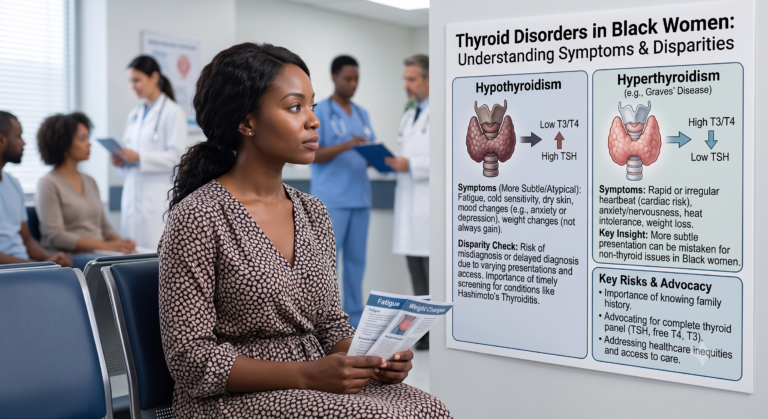

The thyroid gland, a small butterfly-shaped organ located at the front of the neck, plays a vital role in regulating metabolism, heart rate and body temperature.
Yet thyroid disorders often go undetected, especially among women, whose symptoms are frequently mistaken for stress, ageing or normal hormonal changes.
Speaking with PT Health Watch, reproductive endocrinologist Oladapo Ashiru said women are far more likely than men to develop thyroid disorders, citing Nigerian studies that reported female-to-male ratios ranging from 6.3:1 to as high as 98:1.
According to Mr Ashiru, recognising the warning signs early is important because untreated thyroid disorders can affect fertility, pregnancy and overall quality of life.
Symptoms often overlooked
Mr Ashiru explained that thyroid disorders generally occur in two forms: hypothyroidism, where the gland is underactive, and hyperthyroidism, where it is overactive.

An underactive thyroid commonly causes unexplained weight gain, sensitivity to cold and hair thinning, while an overactive thyroid may lead to unexplained weight loss, heat intolerance and a faster metabolism.
“If the thyroid is underactive, there will be increased weight or unexplained weight gain. If it is overactive, there will be unexplained weight loss. The person may feel too cold in a normal environment if it is underactive, or too hot in a cool environment if it is overactive,” he said.
Beyond these symptoms, women may experience irregular menstrual cycles, mood changes, anxiety, depression, constipation or frequent bowel movements.
Mr Ashiru, who is the Chairman and Chief Medical Director of Medical Art Centre, said women are also more likely to experience neck tightness caused by an enlarged thyroid gland, excessive tearing and persistent symptoms even after treatment.
By contrast, men more commonly present with heart palpitations.
He explained that because many thyroid symptoms resemble those associated with stress, menopause and other everyday conditions, thyroid disorders in women are often overlooked or diagnosed late.
Effects on fertility and pregnancy
Mr Ashiru said women between the ages of 30 and 49 face the highest risk of thyroid disorders, although younger women can also be affected.
He warned that untreated thyroid disease can interfere with ovulation, increase menstrual bleeding, raise the risk of miscarriage and contribute to complications after childbirth.
Women planning pregnancy, he advised, should consider thyroid screening to detect and treat any underlying condition before conception.
The endocrinologist also highlighted postpartum thyroiditis, an inflammation of the thyroid gland that can occur after childbirth.
According to him, new mothers should not dismiss persistent exhaustion as simply part of caring for a newborn, as it may signal an underlying thyroid disorder.
Screening and healthy habits
Mr Ashiru said thyroid disorders can be diagnosed through simple hormone tests available in many Nigerian hospitals and laboratories.
He recommended routine screening, particularly for women aged 35 years and above, pregnant women and people with a family history of thyroid disease.
Although some thyroid conditions are hereditary, he said healthy lifestyle habits may help support thyroid function.
These include getting adequate sleep, managing stress, eating a balanced diet with appropriate amounts of iodine and selenium-rich foods such as eggs, fish and beans, and engaging in regular physical activity.
He also encouraged stress management through family support, prayer and relaxation techniques, including deep-breathing exercises.
Some of his recommendations, including limiting processed foods, genetically modified foods and environmental toxins, reflect his clinical opinion on factors that may influence thyroid health.
READ ALSO: PT Health Watch: Persistent fatigue, weight changes may signal thyroid disorder Expert
Early diagnosis improves outcomes
Mr Ashiru said treatment depends on the type of thyroid disorder, with many patients responding well to thyroid hormone replacement therapy or other appropriate medications.
He stressed that early diagnosis remains the most effective way to prevent complications and improve quality of life.
Describing the thyroid as a vital organ, he said it regulates reproductive hormones and supports the proper functioning of the heart, skin and other body systems.
He also warned that exposure to environmental toxins may affect thyroid function and urged people to minimise avoidable environmental risks.







Nigeria’s first confirmed Ebola patient in more than a decade is believed to have contracted the virus while travelling in Uganda, although health authorities are yet to establish the source of her infection.
According to a report by Reuters, the Swiss Federal Department of Foreign Affairs told the newspaper in an emailed statement on Thursday that the patient, a Ugandan-born woman married to a Swiss diplomat based in Abuja, has been receiving treatment at a private clinic in the Nigerian capital for about a week.
According to Reuters, the statement said the woman was believed to have contracted the virus during a visit to Uganda about two weeks earlier. Her husband, who travelled with her, is in isolation but has not developed symptoms.
However, the World Health Organisation (WHO) and the Africa Centres for Disease Control and Prevention (Africa CDC) said they had not received verified information that the woman travelled to the Democratic Republic of the Congo (DRC), where the current Ebola outbreak began.
Conflicting travel accounts
According to Reuters, Ugandan authorities had earlier said the woman travelled to eastern DRC before transiting through Uganda.
However, Africa CDC official Wessam Mankoula said on Thursday that there was no validated information confirming that the patient had travelled to the DRC.

Mr Mankoula said Nigeria and Uganda were exchanging information to reconstruct her travel history and identify the possible source of infection.
WHO representative to Nigeria Pavel Ursu said the information received by the agency indicated that the woman had been in Uganda from 16 September and returned to Abuja on 3 October.
The WHO official said the information available to the agency did not establish that she had travelled outside Uganda.
Patrick Otim, a WHO emergency response manager, also said the source of the infection remained unknown as investigators worked to establish the patient’s movements before she became ill.
One area of investigation is the health facilities the woman visited in Abuja after developing symptoms and before she was hospitalised, including the possibility of exposure to other people during that period, he said.
Meanwhile, the Ugandan government said that the country had no active Ebola cases.
Uganda recorded 20 Ebola cases between May and June, most of them linked to infections imported from the DRC. The WHO declared the country’s outbreak over in August after 42 days without a new confirmed case.
Nigeria’s response
The uncertainty surrounding the woman’s travel history comes as Nigeria works to prevent further transmission following confirmation of the imported infection on 20 October.
As PREMIUM TIMES reported, the patient is a 42-year-old woman who lives in Abuja and recently travelled to Uganda. She developed symptoms on 6 October, three days after returning to Nigeria, and initially sought treatment at a private hospital, believing she had malaria.
She later visited another private hospital, where she was admitted on 11 October after her condition failed to improve. Her infection was subsequently confirmed through laboratory testing.
PREMIUM TIMES also reported that health authorities had identified 44 people who might have been exposed to the patient, including healthcare workers, patients, caregivers and travel contacts.
The government has begun contact tracing and is working with international partners to establish the woman’s movements and identify anyone who may have been exposed.
The WHO has urged Nigerians to remain calm, explaining that one confirmed imported case does not, by itself, mean the country is experiencing an Ebola ‘outbreak’. The agency is supporting Nigeria with case investigation, laboratory testing, contact tracing and infection prevention measures.
Regional outbreak
Nigeria’s case comes amid an Ebola outbreak that was declared in the DRC in May and has spread to other African countries, raising concerns about cross-border transmission.
The outbreak is caused by the Bundibugyo virus, a species of Ebola virus for which there is currently no licensed vaccine.
Kenya has also reported cases linked to the movement of the virus across borders, adding to concerns about the challenges of tracing infections among international travellers.
Ebola spreads through direct contact with the blood or other bodily fluids of an infected person, or with contaminated materials. Symptoms may include fever, headache, weakness, vomiting and diarrhoea.
Discover more from Premium Times Nigeria
Subscribe to get the latest posts sent to your email.

-

 News4 days ago
Amazon to fund 12 small nuclear reactors at former Indiana coal plant
-
News3 days ago
Mamdani says feds have abdicated on AI, urges New Yorkers to push back
-
News3 days ago
Meta’s Muse hits 10M U.S. downloads in 40 days, a milestone reached by only 11 other apps
-
Business2 days ago
How Your Side Hustle Income Ends Up in Your RSA


