
Business
PREMIUM TIMES, EnergyNet strengthen collaboration ahead of Nigeria NOW! Summit

Nigeria’s long-standing narrative of immense potential constrained by structural challenges may be entering a new phase of tangible economic delivery, as stakeholders prepare for the Nigeria NOW! summit, scheduled to hold in November 2026 in Abuja.
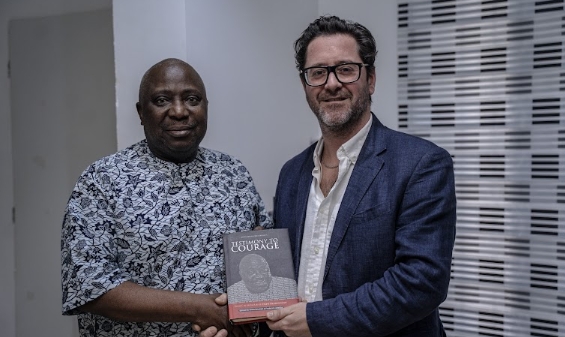
This was made known by Simon Gosling, EnergyNet’s managing director and the convener of the summit, during a consultative visit to PREMIUM TIMES on Wednesday.
The visit was part of pre-event engagements to explore collaboration opportunities with the leadership of Nigeria’s foremost newspaper, to discuss media partnerships and the role of journalism in shaping credible narratives around investment, transparency, and governance in Nigeria’s extractive and energy sectors.
The meeting highlighted the role of data-driven storytelling in bridging information gaps between policymakers, investors, and citizens.
Speaking about the summit, Mr Gosling said, for years, investor engagement with Nigeria has been characterised by caution, driven by concerns around foreign exchange volatility, regulatory uncertainty, contract breaches, policy flip-flops, and infrastructure gaps.
He said: “However, recent developments, including reforms in the foreign exchange regime, implementation of the Nigeria Tax Act 2025, and renewed momentum in gas infrastructure such as the AKK pipeline, point to a transition from policy intent to execution”.

He explained that the summit is designed to reframe global investor perception of Nigeria from a high-risk environment to a destination of verified opportunity, noting that the event is engineered to bridge this trust Gap.
“Unlike previous jamborees focused on Memorandums of Understanding, this launch event focuses on Final Investment Decisions (FIDs) and the showcasing of completed projects. The agenda is designed to move the conversation from “what we plan to do” to “what we have done and how you can plug in”, Mr Gosling said.
He said the high-level event will bring together key sectors, including power, petroleum, solid minerals, transport, agriculture, and infrastructure, while convening policymakers, regulators, investors, industry leaders, and development partners to showcase recent reforms and major infrastructure milestones.
Mr Gosling added that partnerships with local institutions remain critical to the success of the initiative, noting that the summit aims not only to attract investment but also to promote accountability, inclusivity, and sustainable development outcomes.

Also speaking on the collaboration, PREMIUM TIMES’ publisher, Dapo Olorunyomi, emphasised the need to build a strong media community of practice capable of amplifying critical issues across the key sectors.
He noted that a lack of technical capacity has historically hindered journalists from reporting on these complex industries with consequential depth.
Mr Olorunyomi stressed the importance of intensive capacity building to ensure that the Nigerian public and the global community are informed by knowledge-driven storytelling rather than anecdotal evidence.
Similarly, representatives of the Nigerian Indigenous Women in Mining and Natural Resources Organisation (NIWIMNRO), at the meeting, expressed appreciation to EnergyNet for its technical support in ensuring that the voices of women artisanal miners are reflected in broader investment conversations.
The organisation’s Executive Director, Felicia Dairo, commended EnergyNet for its commitment to advancing gender inclusion and supporting initiatives that empower women miners across Nigeria, noting that EnergyNet’s support began even at a time when NIWIMNRO was still developing its structure.
Mrs Dairo said NIWIMNRO looks forward to working more closely with the EnergyNet team to ensure the success of what is expected to be one of the biggest events in Nigeria’s history.
About Nigeria NOW!
The Nigeria NOW! summit is being convened against a backdrop of shifting global economic and energy dynamics. As traditional investment destinations experience slower growth, capital is increasingly seeking high-yield frontier markets.
With projected GDP growth of around 4.0 per cent and ongoing structural reforms, Nigeria is positioning itself as a competitive destination for such investments.
The November 2026 event will serve as a precursor to a larger global investors’ summit planned for 2027, where Nigeria aims to further consolidate its position in the global investment landscape.
READ ALSO: EnergyNet partners NIWIMNRO for Africa Energy Forum (AEF) Conference
The Nigeria NOW! platform is also aligned with regional integration efforts under the African Continental Free Trade Area (AfCFTA), with stakeholders highlighting Nigeria’s potential as a gateway for institutional capital into West Africa.

As preparations intensify, the organiser says the initiative’s success will depend on the country’s ability to translate reforms into measurable outcomes and sustain investor confidence.
With renewed momentum across policy, infrastructure, and stakeholder engagement, the Nigeria NOW! summit may mark a turning point in how Nigeria is perceived and how it performs on the global economic stage.
FCMB Group Plc reported pretax profit of N272.8 billion for the nine months ended 30 September, up 103 per cent from N134.5 billion a year earlier, driven by improved interest margins and a lower cost-to-income ratio.
Annualised return on average equity rose to 30.1 per cent from 22.4 per cent a year earlier, while annualised return on average assets rose to 3.9 per cent from 2.3 per cent.
Gross earnings for the same nine-month period rose 21 per cent from a year earlier to N1 trillion, while after-tax profit increased 85.7 per cent to N232.9 billion from N125.5 billion. Annualised earnings per share rose to N4.59, up 15 per cent from N3.99 for full-year 2025, despite the expanded share base post-recapitalisation.
The group’s unaudited results include the audited results of its Nigerian banking subsidiary – First City Monument Bank Limited.
Ladi Balogun, FCMB Group’s chief executive officer, said he expects fourth-quarter earnings to benefit from a seasonal increase in digital lending and payments and lower operating expenses after the group recognised the full 2026 Asset Management Corporation of Nigeria levy in the first nine months.
“With nine-month RoE at 30%, we expect full-year RoE to be materially above an earlier guidance of 25%, providing a strong foundation for further profitable growth and sustained shareholder value creation,” Mr Balogun said.

FCMB Group’s interest income rose 23.4 per cent, while interest expense fell 3 per cent as low-cost deposits made up a larger share of customer deposits. Net interest income rose 52.3 per cent to N534.2 billion from N350.8 billion a year earlier, and net interest margin rose to 12.3 per cent from 10.1 per cent. Operating expenses rose 12.5 per cent to N268.9 billion from N239 billion a year earlier, while the cost-to-income ratio fell to 43.5 per cent from 55.5 per cent.
The banking group’s pretax profit rose 94 per cent to N216.9 billion, accounting for 80 per cent of group pretax profit. Pretax profit from the non-banking businesses and holding company rose 147 per cent to N55.9 billion, accounting for the remaining 20 per cent. Revenue from digital payments, lending and wealth services rose to ₦142.5 billion from ₦113.6 billion a year earlier and accounted for 14.2 per cent of gross earnings.
The Group’s total assets rose 9.7 per cent from December 2025 to ₦8.37 trillion at the end of September 2026. Over the same period, loans and advances to customers fell 8.3 per cent from ₦2.37 trillion to ₦2.17 trillion. Corporate clients repaid loans as cash flows improved, and they accessed lower-cost funding by issuing commercial paper and bonds. Those repayments more than offset growth in the Group’s higher-yielding retail and SME loan portfolio originated through digital channels, which grew by more than 20 per cent to ₦315 billion.
Total customer deposits increased by 7.1 per cent as of September 30, 2026, from December 2025. Current and savings account balances grew 24.4 per cent to ₦3.60 trillion, while the share of low-cost deposits rose to 76 per cent from 65.4 per cent in December 2025.
READ ALSO: FG grants drug manufacturers N24bn tax waivers to boost local production
Group net impairment losses rose to ₦76.8 billion from ₦57.1 billion a year earlier, reflecting the Stage 2 clean-up undertaken in Q2. The group recorded a net impairment reversal of ₦9 billion in the third quarter. The Nigerian bank’s IFRS non-performing loan ratio rose to 6.4 per cent from 4.7 per cent in June 2026, reflecting a 13 per cent reduction in the Nigerian bank’s loan book in the third quarter and new Stage 3 classifications.
Total equity grew 47.8 per cent to ₦1.24 trillion at the end of September 2026 from ₦836.4 billion at the end of December 2025. Retained earnings and a first-quarter capital injection of about ₦227 billion supported the increase. The capital adequacy ratio stood at 24.6 per cent at the end of September, providing resources to support growth.
Assets under management increased by 23 per cent to₦2.1 trillion at the end of September 2026 from ₦1.7 trillion at the end of December 2025, supported by market share gains at FCMB Pensions and FCMB Asset Management.
Discover more from Premium Times Nigeria
Subscribe to get the latest posts sent to your email.
Business
LASU VC Commends Insurance Department for Strengthening Industry Ties as Veritas Kapital Rewards Top Graduate
-

 Business3 days ago
Elon Musk Launches X Money, Bringing Banking and Payments to Social Media Platform
-
News3 days ago
OPEP troops arrest 21-year-old suspected child trafficker, rescue five minors in Plateau
-
Health3 days ago
JUTH Student Nurse Anaesthetist Dies After Collapsing During Football Match in Jos
-
News3 days ago
Canadian Police Arrested ‘Lagos BigBoy’ Tosin Damilola Oyebade, 11 Others Over $4.5m Stolen Vehicle Network


