Health
Plateau State Welcomes Verification Team for NG-CARES Program Progress Assessment


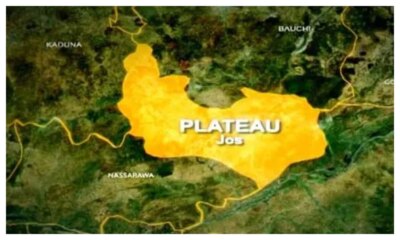
Plateau State recently hosted the Independent Verification Agents (IVA) as part of the ongoing Nigeria COVID-19 Action Recovery and Economic Stimulus (NG-CARES) program. This World Bank-supported initiative aims to mitigate the economic impact of the COVID-19 pandemic through targeted interventions.

During the visit, Mrs. Jane Dauda, team lead for the IVA, commended the NG-CARES team in Plateau State for their dedication and effective implementation of the program. She noted their ability to address gaps and implement corrective measures, ensuring the program’s success in driving economic recovery in the state.
Dr. Haggai Gutap, the technical administrative head of NG-CARES in Plateau State, provided an update on the program’s progress, emphasizing its impact on food security, small business recovery, and social protection.
The NG-CARES program, launched by the World Bank, focuses on cushioning the effects of the pandemic through three core components:
- Food Security: Support for farmers through enhanced access to farmlands and improved agricultural production.
- Small Business Recovery: Financial assistance and grants to small and medium enterprises (SMEs) to stimulate economic activity.
- Social Protection: Cash transfers and grants to vulnerable households to ensure basic consumption needs are met.
Dr. Gutap highlighted Plateau State’s outstanding performance in the previous three IVA assessments, earning over $34 million (₦26 billion) in reimbursements, which placed the state as the third-best performer in Nigeria.

The ongoing fourth IVA assessment is expected to further highlight the state’s accomplishments. Significant milestones achieved during this phase include:
- Support for SMEs: Over 7,000 small businesses received grants and assistance to aid recovery and growth.
- Infrastructure Development: Completion of 41 fadama roads and construction of bridges and culverts, improving access to farmlands and boosting agricultural productivity.
- Economic Growth: Grants provided to revitalize small businesses, driving employment and economic stability.
Dr. Gutap expressed optimism that the state’s continued efforts would yield even greater reimbursements and recognition, further enhancing food security, infrastructure, and job creation.
As NG-CARES 1.0 nears completion, plans are underway to transition to NG-CARES 2.0, which aims to build a more resilient economy. Key objectives of the next phase include:
- Developing sustainable solutions for food security, SME growth, and economic stability.
- Enhancing preparedness for crises such as floods, conflicts, and other disasters.
- Moving from emergency interventions to long-term, inclusive strategies that benefit a broader population.
Dr. Gutap emphasized the importance of proactive planning and strategic execution in NG-CARES 2.0 to ensure Plateau State remains resilient in the face of future challenges while fostering sustainable development.
The NG-CARES program continues to showcase the transformative impact of targeted, result-based interventions. Plateau State’s achievements highlight the importance of effective implementation, accountability, and collaboration among stakeholders.
As the state awaits the results of the fourth IVA, there is optimism that Plateau will continue to set an example for resilience and sustainable economic growth in Nigeria.
Plateau State remains at the forefront of driving economic recovery and development in the country.







Kenya has confirmed its first imported case of Ebola caused by the Bundibugyo virus, as the outbreak in the Democratic Republic of the Congo continues to spread across the region.
According to a statement published Tuesday by the World Health Organisation (WHO) Regional Office for Africa, the patient was a Kenyan citizen who had been living in the DRC and fell ill there.
The patient travelled by road to Kampala, Uganda, before flying to Nairobi, where the patient was isolated after developing symptoms. Samples tested positive for Bundibugyo virus at Kenya’s National Virology Reference Laboratory and the Kenya Medical Research Institute.
Despite supportive care, the patient died on the night of 5 October and was buried on Tuesday in line with Kenya’s Ebola safe and dignified burial protocol, according to WHO.
“The government of Kenya notified WHO of the case in line with the International Health Regulations (2005) on 6 October 2026,” it noted.
Kenya becomes fourth country affected
According to WHO, Kenya is the fourth country to confirm a case of Bundibugyo virus disease in the current outbreak.


The DRC continues to battle the largest outbreak, while Uganda, where the virus was first detected in 2007, ended its latest outbreak in August. France also reported a travel-related case in June.
WHO noted that most of the cases reported in Uganda were imported from the DRC, while a smaller number were locally acquired among contacts and health workers linked to imported cases.
In the DRC, the outbreak has continued to expand. As of 23 September, the country had recorded 7,890 confirmed cases and 3,799 deaths, giving a case fatality ratio of 48.1 per cent.
The outbreak had affected 63 health zones across seven provinces, with two of the latest affected areas bordering other countries. WHO said the expansion had increased the risk of cross-border transmission.
Kenya traces contacts
Following confirmation of the case, Kenyan health authorities have listed 28 contacts, including family members and health workers who cared for the patient.
They are also tracing 23 passengers and four crew members who were on the same flight as the patient.
WHO said Kenya had been on high alert since May, when Ebola outbreaks were declared in the DRC and Uganda.
As of Tuesday, Kenya had screened more than 652,000 travellers entering the country, tested 267 suspected samples and trained about 5,000 health workers on Ebola prevention and management.
WHO said it has also supplied about 1,000 Ebola tests and 1,000 personal protective equipment kits to high-risk counties in Kenya.
READ ALSO: DRC Ebola outbreak remains active as death toll reaches 3,779 – Africa CDC
Nigeria on high alert
Nigeria has also strengthened surveillance in response to the regional outbreak.
The Nigeria Centre for Disease Control and Prevention (NCDC) said in a public health advisory issued in September that the country was on high alert and had activated enhanced surveillance measures.
It introduced a health declaration system under which travellers from countries with active or relevant Ebola transmission may be required to complete a form before boarding.
The form requires travellers to provide information about their recent travel history, transit countries, destination in Nigeria and health status.
The NCDC said the measures are intended to strengthen surveillance and prevent the importation of Ebola into Nigeria.
Discover more from Premium Times Nigeria
Subscribe to get the latest posts sent to your email.
The development Research and Projects Centre (dRPC) has opened applications for a second round of its NGO Support Initiative (NSI), offering free executive training to Nigerian civil society organisations, foundations and other social-impact organisations.
The eight-week virtual programme, scheduled to run from 20 October to 19 December 2026, is designed to strengthen organisational management, resilience, philanthropy and sustainable funding among local organisations.
The initiative is being implemented in collaboration with Leiden University in the Netherlands, Dangote Business School and the Centre for Entrepreneurship Research and Training (CERT), Bayero University, Kano.
The programme comes amid growing concerns about the sustainability of Nigerian civil society organisations following cuts to international development assistance and increasing regulatory demands on non-profit organisations.
In 2025, PREMIUM TIMES reported that the dRPC launched the first round of the NSI to support Nigerian NGOs affected by international funding cuts, particularly the disruption caused by the United States government’s decision to halt several foreign assistance programmes.
The first round attracted 495 applications, with 17 organisations eventually receiving N5 million each to implement projects affected by the funding disruption.
The projects covered areas including maternal health, girls’ education, digital skills for young people and humanitarian assistance.
Funding crisis
The funding challenge facing Nigerian NGOs has persisted beyond the initial disruption to USAID-funded programmes.
In a February 2026 opinion article published on PREMIUM TIMES, Judith-Ann Walker, executive director and founding member of the dRPC, wrote that Nigerian NGOs were entering 2026 with fewer grant opportunities and would need to explore new funders, partnerships and alternative funding models.
She noted that the withdrawal of USAID support had affected organisations working in areas including youth entrepreneurship, climate justice, public health advocacy, school safety, zero-dose children and human rights, with some organisations forced to close programmes, offices and disengage staff.
PREMIUM TIMES also reported in June 2025 that Nigerian civil society organisations working on HIV/AIDS, tuberculosis and malaria were calling for stronger domestic resource mobilisation to reduce dependence on foreign donors.
Stakeholders at the time argued that Nigeria could not continue to rely indefinitely on government and external donors to finance critical development interventions, particularly as international donors increasingly reconsider their aid commitments.
The dRPC’s second-round programme reflects some of these concerns, with one of its training streams focusing on organisational resilience, sustainable funding strategies and working with government to scale programmes.
New regulatory demands
The training also comes as Nigerian non-profit organisations face increased scrutiny of their operations and funding.
In July, PREMIUM TIMES reported that the Nigeria Network of NGOs urged organisations to treat regulatory compliance as a central part of their operations, including keeping registrations, annual returns, tax filings and other legal obligations up to date.
The issue has become more prominent following the introduction of a proposed Foreign Aid (Regulation, Transparency and Disclosure) Bill, which seeks to require NGOs to register foreign aid and donor-funded projects with the government.
The bill passed second reading in the Senate in July, prompting debate over transparency, accountability and the potential effect of increased regulation on civic space.
In September, a coalition of civil society organisations called for the withdrawal of the bill, arguing that it could restrict civic space and give government excessive powers over organisations based on their sources of funding.
Against this backdrop, the dRPC said its second-round training would include a module on compliance with the regulatory environment, alongside project management, accountability, talent development, organisational visibility and sustainable funding.
Two training streams
The first stream, an eight-week Senior Executive Training Programme on NGO Management for Project Impact and Organisational Resilience, is targeted at 20 registered and compliant Nigerian CSOs with active grants.
The organisations must be working in areas including technical and vocational education and training and girls’ education, public health, the digital economy, climate action and humanitarian assistance.
Two representatives from each organisation, including founders, project directors or gender leads, are expected to participate.
The second stream focuses on professionalising local philanthropy, strengthening charitable foundations and improving corporate social responsibility.
It is open to 20 Nigerian foundations, charitable associations, old boys’ and girls’ organisations and CSR units of commercial organisations with active charitable portfolios supporting non-profit organisations.
READ ALSO: Nigeria targets expanded MMS coverage for pregnant women
Participants will be trained on issues including social entrepreneurship, sustainable financing, financial and strategic management, taxation and regulatory compliance, monitoring and impact reporting.
The dRPC said participants who complete either programme will receive certificates signed by the dRPC, Leiden University, Dangote Business School and CERT.
It said the training is free and that successful applicants would not be required to pay any fee or other consideration.
Applications for either stream close on 15 October 2026.
Application link: CLICK HERE
Discover more from Premium Times Nigeria
Subscribe to get the latest posts sent to your email.
-

 News4 days ago
Troops rescue 15 kidnap victims, nab two suspects in nationwide operations
-
 Business4 days ago
Nigeria’s business activity expands as household confidence weakens
-
News3 days ago
Nigerians warned as AI creates new sextortion threat – Technology Times
-
News2 days ago
2027: El-Rufai’s detention could hurt APC, generate sympathy – SEDSAC director, other analysts express views