News
Plateau State Marks 2025 World Tourism Day with Call for Sustainable Transformation


Plateau State joined the global community in commemorating the 2025 World Tourism Day with a two-day celebration that showcased its rich cultural and natural heritage while underscoring the importance of sustainable tourism.
Themed “Tourism & Sustainable Transformation,” the celebration featured a guided tour of major attractions in Jos—including the Jos Wildlife Park, Jos Museum, and an art gallery—alongside a public lecture, cultural performances, a traditional food exhibition, and a stakeholders’ engagement at Rayfield Resort.

Commissioner for Tourism, Culture, and Hospitality, Hon. Cornelius Doeyok, described the day as an opportunity not only to celebrate but also to “reflect, re-strategize, and recommit” to making tourism a major driver of development in the state.
“This year’s theme is a clarion call to move beyond business-as-usual and reimagine our entire approach to tourism,” he said. “Tourism on the Plateau must prioritize people, planet, and prosperity—empowering communities, protecting the environment, and building an inclusive, resilient economy.”
Doeyok outlined the state’s strategic plans, which include policy reforms, eco-friendly infrastructure, workforce training, and public-private-community partnerships. He urged hoteliers, tour operators, the media, and residents to play active roles in repositioning Plateau as a global tourism destination.


General Manager of the Plateau State Tourism Corporation, Chuwang Pwajok, said the theme was timely, adding that Governor Caleb Mutfwang’s administration is already revamping key tourism assets. He appealed to the private sector to partner with government in sustaining Plateau’s brand as Nigeria’s “Home of Peace and Tourism.”
Delivering a keynote paper, tourism expert Mr. Davou Chall noted that tourism is not just leisure but also a tool for economic growth, cultural preservation, and community empowerment. He cited Plateau’s landscapes, waterfalls, rock formations, wildlife reserves, and festivals as unique assets that, if sustainably harnessed, could secure global recognition for the state.
The event also spotlighted the National Institute for Hospitality and Tourism (NIHOTOUR) for its role in capacity development, professional training, and ensuring compliance with industry standards across the hospitality sector.
Festivities began with a sanitation exercise at the Jos Wildlife Park and a carnival float through the city, climaxing with goodwill messages, music, cultural displays, and a traditional delicacy tasting that celebrated Plateau’s rich heritage.







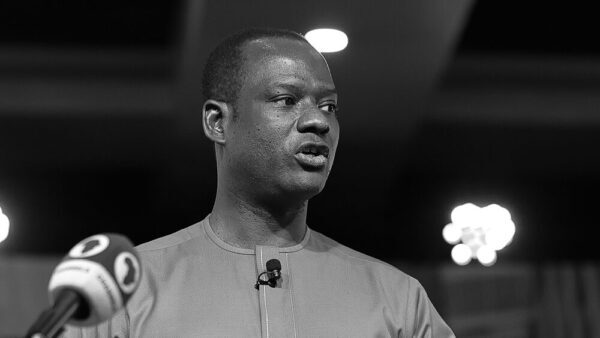
Nigeria’s Finance Minister and the Coordinating Minister of the Economy, Taiwo Oyedele, on Wednesday said the country is fortunate to have President Bola Tinubu at the helm of affairs at a time of economic challenges and global uncertainty.
Mr Oyedele made the remark on Wednesday on the sidelines of the World Bank/International Monetary Fund (IMF) meetings in Bangkok, Thailand, where he praised the president for his willingness to implement difficult economic reforms and his understanding of economic and monetary policy issues.
“I say to myself every time that Nigeria is lucky to have a leader like Mr President,” the minister said.
“A leader that says ‘I’ll do the right thing, even when it’s not popular’. There are so very few of them, and our president is not saying it; he’s doing it, he’s doing it even with pre-election (concerns),” he added.
Since assuming office in May 2023, the Tinubu administration has introduced a series of economic reforms, the impact of which international institutions like the World Bank and the IMF have acknowledged
The reforms include the removal of costly petrol subsidies, which had been a major drain on public finance for years, the unification of the foreign exchange rates and the sharp devaluation of the naira to attract foreign capital.


Although abolishing fuel subsidies has boosted government revenue and is seen as an investor-friendly move, it has triggered a cost-of-living crisis and spurred inflationary pressures.
Reforms in the foreign exchange market have helped increase accretion to external reserves, which stood at $55.1 billion as of 9 October, its peak level in over 18 years.
The banking sector also underwent a recapitalisation exercise that ended in March and helped Nigerian banks raise N4.7 trillion in new capital.
According to the Central Bank of Nigeria, the recapitalisation strengthened banks’ capital adequacy ratios, keeping the sector above international Basel benchmarks.
Mr Oyedele said President Tinubu possesses two attributes uncommon among leaders, notably those of democratic governments.
READ ALSO: AFC appoints Cardoso as board chairman
The first is his willingness to do what he considers right, even when the decision is unpopular or politically difficult.
“I remember at least three issues that were discussed with him recently, and on my own I would offer to say ‘maybe we wait until after the election’. And his question is always, ‘Is it the right thing to do?’ Yes, yes, it is. Why do we have to wait?” Mr Oyedele said.
“Number two attribute is that our President gets it. It’s not easy to understand issues to do with the economy, finance, monetary policy, like respect for the independence of the monetary authority. For Mr President, it’s 100 per cent,” he added.
The minister added that the president’s position on such matters has made it unnecessary for officials to discuss the issue with him repeatedly.
“We don’t even talk about it. So, I feel like we are so blessed, we cannot afford to wait even one minute,” he said.
Discover more from Premium Times Nigeria
Subscribe to get the latest posts sent to your email.

Ricursive Intelligence founders Anna Goldie and Azalia Mirhoseini believe more efficient AI chip design could help solve the compute crisis. The founders took the stage at TechCrunch Disrupt on Wednesday to detail how their startup is developing AI that can design chips, learn from each iteration, and improve subsequent designs, all with the goal of automating and accelerating the chip design process.
“There is this understanding that in the next five years we are going to have at least 10,000x more demand for compute, and that’s somewhat potentially conservative,” Goldie said on stage. “So we don’t want to build 10,000 times more data centers. We think that we need to help by making chips that are more efficient, that use the bandwidth in those data centers more efficiently, that use the wafers and fabs more efficiently, because even if we make [data centers] in space or something, I don’t know, you won’t see the sun anymore.”
While some may be scared by the thought of AI designing its own chips, Goldie argues that letting AI handle chip design will allow humans can focus on developing applications and exploring new possibilities that can expand what they can accomplish with computing.

“I think the way everything is shifting is that humans come bring their great ideas and creative thoughts, and execution is handled by AI,” Goldie said. “And this is happening in chip design, software development, and other places. And that’s something that recursive does for chip design.”
The founders say AI is challenging traditional chip design methods by discovering unconventional layouts that can outperform traditional ones. For example, AlphaChip, the AI system the founders previously developed, produced a circular, “donut-shaped” arrangement of chip components that initially surprised engineers but ultimately proved to be successful.
They explained that they are optimizing entire chips rather than following the traditional approach of partitioning them into dozens of smaller blocks. This approach allows AI to create intricate patterns, including wave-like designs, which the pair said they plan to share more about in the future.
The founders also argued that AI-designed chips will make it possible to create all sorts of chips that might not have been possible before.
“If it takes six months or a year or two years to design a new chip, then you really have to be extremely selective about the chips that you design,” Goldie said. “But if you can design a chip in like a week, and then say for manufacturing, you can design custom chips for all sorts of different types of applications in like space and AR, VR, and you biological computing, and it makes sense financially to do that, and we can be more energy efficient.”
When you purchase through links in our articles, we may earn a small commission. This doesn’t affect our editorial independence.
-
Business4 days ago
Veritas Kapital CEO Nwakuche Joins Coal City University Governing Council
-

 News2 days ago
Meta releases its first frontier model, Muse Wonder
-
News4 days ago
2027: INEC publishes final names of governorship candidates across states [FULL LIST]
-
News3 days ago
EuroMatch NPFL: ‘We Never Gave Up!’ — Fidelis Ilechukwu Hails Rangers’ Fighting Spirit, Reacts to Two Penalties Against Barau FC