News
Plateau: Kunga community Marks International Day of Peace in Style

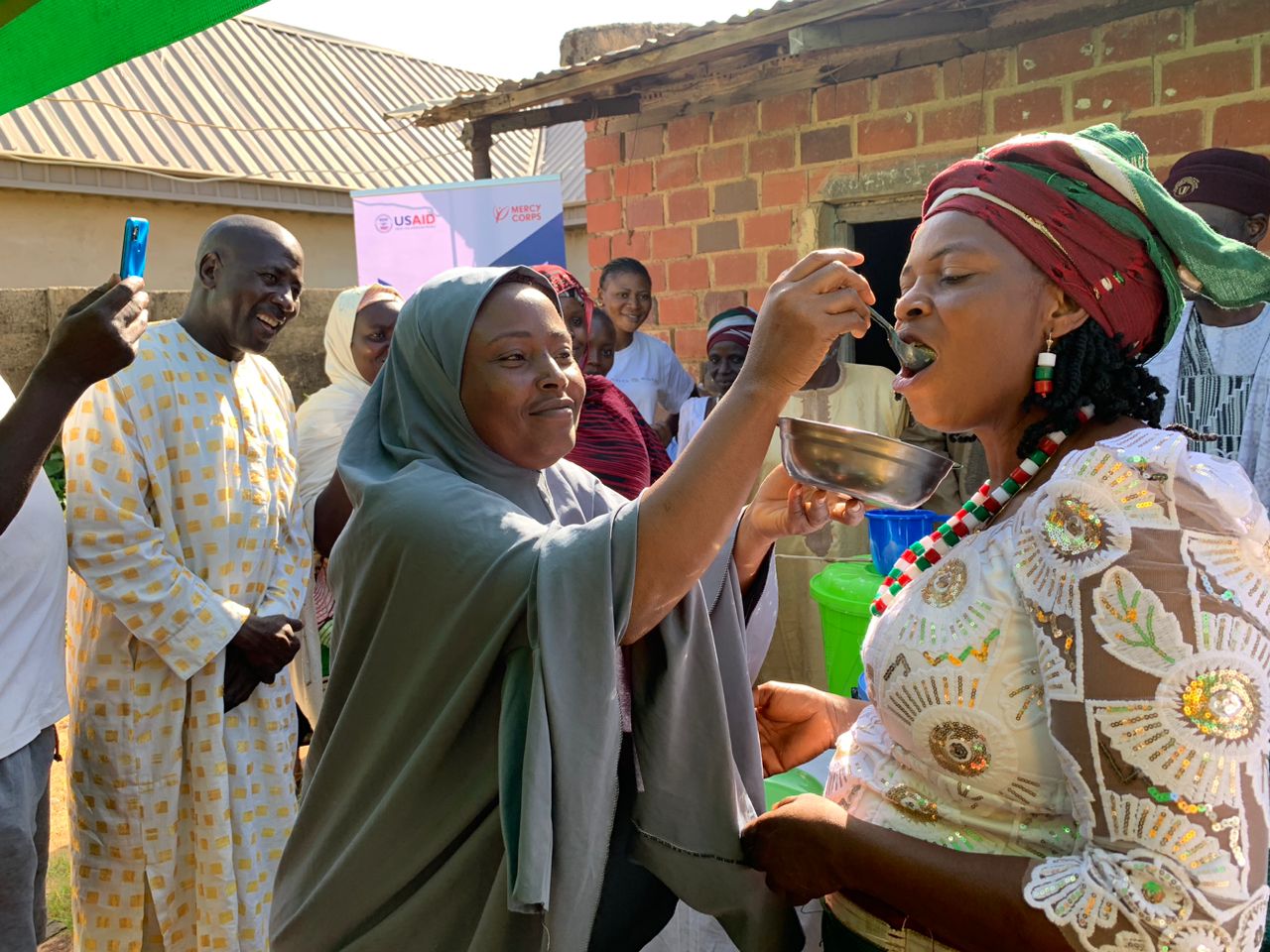
In a remarkable display of harmony and unity, the Kunga community, also known as Rigizah, in Jos North Local Government Area of Plateau State celebrated the International Day of Peace 2023 on Thursday, September 21 as Members of the Anaguta, Fulani, and Hausa communities came together to engage in constructive dialogue on common interests and issues aimed at fostering social cohesion and understanding.
This special event was organized by members of the Kunga community under the Peace Action for Rapid and Transformative Nigerian Early Response (PARTNER) Project, funded by USAID and led by Mercy Corps in collaboration with the West Africa Network for Peace (WANEP) Nigeria. The PARTNER Project is a multi-consortium intervention aimed at promoting peace, preventing violence, and building resilience in Nigerian communities.
Peace Action for Rapid and Transformative Nigerian Early Response (PARTNER) Project, founded in partnership with the United States Agency for International Development (USAID) and the West Africa Network for Peace (WANEP).


Comrade Luka Inuwa Agudu, the Youth Leader of the Anaguta Youth Movement (AYM) Rigizah Branch and the PARTNER Project Coordinator for the Kunga/Naraguta Committee, addressed the media during the townhall meeting. He emphasized the importance of discussing ways to achieve sustainable peace and unity in the community. He acknowledged the community’s ongoing recovery from the significant impact of the 2021 Jos crisis and credited the PARTNER Project with contributing to the restoration of relative peace.


Divisional Police Officer DSP Saidu Osephasr, represented by Admin Officer Ahmadu Rogo, stressed the necessity of cooperation and unity for peaceful coexistence within any community. He pledged to collaborate with local vigilantes and stakeholders to address insecurity in the area. He urged community members to report any concerns promptly and encouraged vigilance to identify potential intruders.
Addressing the gathering, His Royal Highness Pozoh Luka Daku Wariya, the District Head of Rigizah District, expressed appreciation for the program’s timely intervention. He also called attention to the pressing issue of youth involvement in drug-related activities and requested urgent police intervention. Additionally, he appealed to the PARTNER Project organizers to ensure that the progress and peace achieved would be sustained beyond the intervention phase.
Annah Luka, the Women Leader of the Anaguta community, emphasized the crucial role played by women in promoting peace and harmony within society. She noted the positive impact of women’s gatherings and interactions on families and the nation as a whole, highlighting the visible improvements in community interaction during the peace program.


Manji Mangrock the Early Warning Early Response Technical Adviser on the PARTNER Project encouraged community members to continue to commit effort and time in fostering peace as they will be beneficiaries in the long run.
Chuwang Hope Taye, the Team Lead for Research Coordination and Partnership at the Plateau Peace Building Agency (PPBA), explained that the PARTNER Project’s objective is to establish community structures, such as the Community Reconciliation Committee (CRC), in conflicting communities. These structures help mediate and negotiate conflicts at the community level before they escalate to criminal cases involving security forces.
“The PPBA will continue to support communities who are desirous of fostering peace and unity through interactions and cultural exchanges that would lead to mutual respect and tolerance. We commend our partner West Africa Network for Peace, WANEP and the Plateau State government for the support and also the Kunga community for taking the initiative to organize the townhall meeting which shows the beging of a lasting and sustainable peace” She added.

The highlight of the program was a display of various cuisines and delicacies from the Anaguta, Fulani, and Hausa communities, officially opened by their representatives, along with the District Head, and other stakeholders, symbolizing peaceful coexistence.


The event saw the participation of various stakeholders, including traditional institutions, religious leaders, the Neighborhood Watch, hunters, the police, and other community members, demonstrating a collective commitment to building a harmonious and peaceful community.




A member of the African Democratic Congress, ADC, National Executive Committee, Aliyu Gantsa, has rejected his 12-month suspension by the party's leadership in Buji Local Government Area of Jigawa State, describing the decision as unconstitutional and invalid.
Speaking in reaction to the development, Gantsa insisted that the ward executives lacked the constitutional authority to suspend him from the party.
Gantsa accused the Jigawa State leadership of the party of orchestrating the suspension in an attempt to weaken his political influence within the ADC.
"I am a member of the National Executive Committee of the ADC. Ward executives have no constitutional grounds or authority to suspend me. Their decision violates the party's constitution and is therefore invalid," he said.
He maintained that he remained a legitimate and active member of the ADC despite the suspension announced by the party's executives at ward level.
Gantsa also vowed to challenge the decision through the appropriate channels provided by the party's constitution.
DAILY POST reports that the ADC leadership in Buji Local Government Area had announced Gantsa's suspension for 12 months over alleged anti-party activities.
According to the statement, the suspension took effect on October 19, 2026, and would last until October 19, 2027.
The party accused Gantsa of violating its rules, creating divisions among members and openly supporting a candidate who lost the party's primary election.

Amnesty International has condemned the arrest, detention and four-year prison sentence handed to 23-year-old journalist Farida Isiak in Kaduna State, describing the case as vindictive and an attempt to silence press freedom.
The organisation said the journalist’s arrest and subsequent sentencing were linked to her attempt to expose alleged police misconduct involving her parents.
Isiak, a reporter with Nagarta Radio in Kaduna, was reportedly arrested at about 10pm on Monday, October 20, by police officers under the command of the Divisional Police Officer of Mararaban Jos, Usman Adamu.
According to Amnesty International, the incident began with a disagreement between Isiak’s mother and a neighbour over a ₦100 change during a charcoal sale.
The organisation alleged that police officers initially arrested her mother and later detained her father when he went to seek her release, using their detention to compel the journalist to report to the police station.
When Isiak arrived, officers allegedly accused her of defamation over a Facebook post criticising their treatment of her parents.
Amnesty International said she deleted the post and apologised in an attempt to secure her parents’ release, but the police allegedly continued to detain her before taking her to a Sharia Court in Kawo.
The court subsequently sentenced her to four years in prison or a fine of ₦1.75 million on a defamation charge.
Describing the proceedings as a sham trial, Amnesty International said the court failed to address the alleged police misconduct that triggered the incident.
“The arrest, detention, and hasty sentencing of Farida Isiak are a flagrant abuse of power by the police and weaponisation of the judicial system to silence free speech and intimidate journalists,” the organisation said.
It added that detaining the journalist’s parents to compel her to surrender to the police was an unlawful tactic that violated the rule of law.
“Demanding accountability for police actions is a constitutional right,” Amnesty International said.
The human rights organisation called on the Kaduna State Police Command and Nigerian judicial authorities to secure Isiak’s immediate release, drop the charges against her and cancel the fine imposed by the court.
It also urged the Nigeria Police Force to launch a full and independent investigation into the conduct of the officers involved in the alleged unlawful detention of the journalist’s family.
Amnesty International further called on Nigerian authorities to stop using defamation charges and the judicial system to harass journalists and restrict press freedom.
The organisation warned that the case raises concerns about the protection of freedom of expression and the ability of journalists to hold public institutions accountable without fear of intimidation or retaliation.
Amnesty condemns four-year jail sentence for Kaduna journalist Farida Isiak
-

 News3 days ago
Euromatch NPFL: Matchday 9 results
-
News3 days ago
No agenda, no rush, no leaving San Francisco: Benchmark’s partners on investing in a frenzied market
-
News3 days ago
Amazon to fund 12 small nuclear reactors at former Indiana coal plant
-
News4 days ago
Meta removes language that raised scraping and AI training concerns