
Health
Diphtheria: Jos North steps up surveillance as Plateau intensifies response

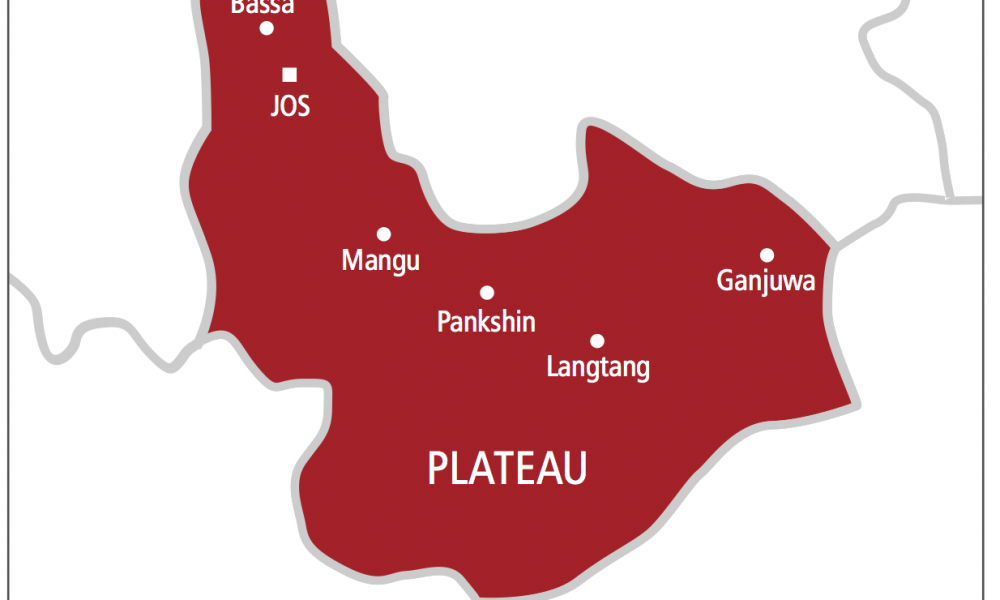

The Jos North Local Government has intensified disease surveillance and community sensitisation as health authorities work to contain a diphtheria outbreak in Plateau State.
The council’s chairman, John Christopher, on Saturday handed over motorcycles to the local government’s health directorate to strengthen field surveillance, contact tracing and community outreach across the area.
The development is expected to enable health workers to reach communities more quickly, conduct follow-up visits, collect samples and identify suspected cases, particularly in areas that are difficult to access.
The intervention comes amid reported diphtheria cases in the area, where 117 suspected cases and 15 deaths had been recorded as of 1 September, according to health authorities.
Plateau State has also reported suspected cases in Jos South, Bassa and Wase local government areas.

The state government has ordered the temporary closure of public and private primary and secondary schools from Monday as part of measures to contain the spread of the disease.
In Jos North, the council has been working with the state Ministry of Health to strengthen surveillance, case management and community mobilisation.
Mr Christopher said the additional logistics were necessary to ensure that health workers could respond promptly to suspected cases.
“For us, the health and safety of our people remain a priority. Diphtheria spreads fast, and we cannot afford delays,” he said during the handover.
“These motorcycles will help you reach every corner. Be proactive, be professional and make sure no community is left behind.”
The director of health of the council, Martha Kummiap, said the motorcycles would improve the directorate’s ability to conduct regular field visits and trace people who may have been exposed.
“This will change how we work. We can now do daily visits, trace contacts faster and get suspected cases to the health facility before it’s too late,” Ms Kummiap said.
She said the collaboration with the state Ministry of Health had also provided training and supplies to support health workers involved in the outbreak response.
The council said it had commenced radio sensitisation and community outreach to educate residents about diphtheria and measures to reduce transmission.
READ ALSO: Jos University Teaching Hospital’s psychiatric facility stretched as mental health cases rise
Diphtheria is a vaccine-preventable bacterial disease that can spread through respiratory droplets and close contact. It can cause serious complications and death when treatment is delayed.
Health authorities have urged parents and caregivers to ensure that children receive routine vaccinations and advised residents to seek medical attention promptly when symptoms such as sore throat, fever or difficulty breathing occur.
Mr Christopher also urged residents to cooperate with health workers during surveillance and contact-tracing activities.
“We are custodians of our communities. If we keep our drainages clean, if we report early, if we support the health teams when they come around, we will defeat this,” he said.
The council said it would continue working with the Plateau State Ministry of Health and other partners to strengthen surveillance and response until the outbreak is contained.
Discover more from Premium Times Nigeria
Subscribe to get the latest posts sent to your email.






Plateau State has an estimated 11,000 tuberculosis (TB) cases in 2026, with 2,047 patients identified between July and September, according to a state health official.
The cases were disclosed by Yohanna Bot, the monitoring and evaluation officer of the Plateau State Tuberculosis and Leprosy Control Programme, at a media advocacy meeting on community-led monitoring of health services in Jos.
Mr Bot said the estimated burden was based on a TB prevalence rate of 219 cases per 100,000 people, warning that the disease remained a major public health challenge in the state.
“From our quarterly survey, we discovered that between July and September, 2,047 patients were identified and placed on treatment,” he said.
He added that the identified patients were receiving treatment at health facilities across the state.
Tuberculosis is an infectious disease that primarily affects the lungs and spreads through the air when an infected person coughs, sneezes or speaks.

Mr Bot identified malnutrition, advanced age, weakened immunity, overcrowding and HIV infection as factors that could increase the risk of contracting the disease or developing severe illness.
He also expressed concern over stigma and misconceptions surrounding TB, saying some residents attributed the disease to spiritual or ritual causes rather than seeking medical attention.
According to him, such beliefs discourage people from undergoing early diagnosis and starting treatment promptly.
Insecurity, displacement worsen TB risks
Mr Bot said insecurity and displacement were complicating efforts to detect and manage tuberculosis, particularly in Mangu, Jos South and Barkin Ladi local government areas.
He said displacement had led to the establishment of camps for internally displaced persons (IDPs), where overcrowded living conditions could facilitate the spread of the disease.
To address the challenge, he said the state programme was prioritising community outreach and active screening in IDP camps and correctional centres to identify people with TB and link them to treatment.
Mr Bot said patients who received effective treatment could become much less infectious after starting therapy, although the timing depended on their clinical condition and response to treatment.
He, however, raised concerns about shortages of anti-TB medicines, attributing the gaps in availability partly to disruptions in the supply chain and the programme’s dependence on international support, particularly funding from the Global Fund.
He called for increased public awareness to address stigma and misconceptions and urged residents with symptoms suggestive of TB to seek medical evaluation at health facilities.
Community monitoring targets healthcare gaps
Peter Ezekiel, the Plateau State programme officer of the Global Fund AIDS, Tuberculosis and Malaria Integrated Community-Led Monitoring Project, said Nigeria continued to face a significant burden of tuberculosis, HIV and malaria.
He said community-led monitoring was designed to involve residents and other stakeholders in identifying gaps in healthcare delivery and supporting interventions to improve access to essential services.
According to him, the approach helps communities identify barriers such as discrimination, stigma and gender-related challenges while advocating better infrastructure and increased domestic funding for healthcare.
Mr Ezekiel said the initiative had supported infrastructure rehabilitation, service improvements and stronger community participation in Plateau State.
He listed the rehabilitation and re-piping of toilet facilities at the Primary Health Centre in Rantya, Jos South, among the interventions carried out since June.
He said community stakeholders had also donated a scanning machine and 10 iron-framed chairs to the Primary Health Centre in Gangare, Jos North, as well as a blood pressure monitoring device to the facility in Dogon Agogo.
Other interventions included the provision of hospital bed mattresses to the Primary Health Centre in Pushit, Mangu, and tuberculosis sputum collection cups to the COCIN Rehabilitation Centre in Mangu.
Mr Ezekiel said community members had also provided 500 copies of patient enrolment forms to support healthcare delivery.
In Lamingo, he said residents mobilised resources to engage security personnel to protect night-shift workers and property at the local primary healthcare centre, with an agreed monthly payment of N15,000.
He said the interventions had improved infection prevention, patients’ experiences and healthcare delivery.
Mr Ezekiel called for stronger collaboration among communities, government agencies and health partners, alongside adequate funding for primary healthcare and greater accountability in the management of health resources.
READ ALSO: PT Health Watch: What you should know about Tuberculosis, why it persists
He also urged the expansion of national and state health insurance programmes to cover vulnerable people, particularly low-income earners.
Official highlights role of community monitoring
Yakubu Izang, the director of disease control and immunisation at the Plateau State Primary Health Care Board, said community-led monitoring was important for identifying healthcare delivery problems that might otherwise go unnoticed by government agencies.
He said the approach enabled communities and public officials to work together to identify challenges and develop solutions to improve access to healthcare services.
Discover more from Premium Times Nigeria
Subscribe to get the latest posts sent to your email.

Health workers in Katsina State have suspended their seven-day warning strike following talks with Governor Dikko Radda over outstanding salary adjustments and welfare demands.
The suspension took effect on Sunday, 18 October, according to a circular reportedly issued by the Assembly of Healthcare Professionals (AHCP).
The development was announced in a newsflash attributed to the governor’s Chief Press Secretary, Ibrahim Mohammed, and also reported by Katsina Times.
The circular, dated 17 October and attributed to the assembly’s chairman, Ibrahim Balange, directed members to resume clinical and administrative duties across public health facilities following a meeting with the governor on 16 October.
The assembly comprises the Medical and Health Workers Union of Nigeria (MHWUN), the National Association of Nigerian Nurses and Midwives (NANNM), and the National Union of Allied Health Professionals (NUAHP).
According to the statement, the governor committed to reopening negotiations over the workers’ outstanding demands, including salary adjustments, allowances and career progression.
However, the announcement did not establish whether the government had agreed to the workers’ proposed salary adjustments or when outstanding payments would be made.
Government’s commitments
The statement attributed to Mr Kaula said the government agreed to reopen negotiations through a technical roundtable.
The commitments include a review and implementation of the Consolidated Health Salary Structure (CONHESS) in accordance with applicable government circulars, alongside a comprehensive review of hazard, call duty and shift duty allowances.
The government also reportedly agreed to address the skipping of CONHESS grade level 10 for eligible officers, in line with the applicable scheme of service.
A joint technical committee is expected to be established with defined terms of reference and a timeline for addressing the outstanding issues.
However, neither the statement nor the reported circular specified when the committee would begin work or when the proposed adjustments would be implemented.
The assembly reportedly commended Mr Radda for intervening in the dispute and thanked its members for their cooperation during the industrial action.
How the dispute began
The suspension follows months of disagreement between health workers and the Katsina State Government over salary disparities and allowances.
As PREMIUM TIMES reported on 15 October, the assembly declared the warning strike after a seven-day notice issued on 7 October expired without a satisfactory resolution.
Mr Balange said the dispute dated back to 2024, when the government indicated plans to review health workers’ remuneration in line with what their counterparts receive in federal health institutions.
A committee established to examine the complaints subsequently submitted recommendations in March 2025, but the union said the government failed to implement them.
According to the union, the state’s Office of Public Service Reform initially offered workers 10 per cent of the salary difference between state and federal health professionals.
The government later increased the offer to 15 per cent, but the workers rejected it as inadequate.
Mr Balange said the assembly had sought full implementation of the applicable federal salary structure and allowances but was willing to accept 75 per cent as a compromise.
The disagreement eventually led to the warning strike, which began on 14 October.
Patients affected by strike
The industrial action disrupted services at public hospitals, leaving patients and caregivers uncertain about access to treatment.
A PREMIUM TIMES report published on Sunday documented disruptions at Turai Yar’Adua Maternal and Child Hospital in Katsina.
During a visit to the hospital on Saturday, only a few patients were seen around the surgical ward.
Caregivers expressed concern over the disruption, including difficulties accessing treatment for patients requiring medical attention.
The state Head of Service, Masa’ud Banye, had confirmed that government officials were engaging the unions to resolve the disagreement.
Although the assembly has now directed its members to return to work, the extent to which normal services have resumed across affected hospitals has not been independently established.
What remains unresolved
The suspension ends the immediate industrial action but leaves questions about the implementation of the government’s commitments.
The reported agreement does not clarify whether the government has withdrawn its earlier 15 per cent offer, accepted the union’s proposed 75 per cent compromise or agreed to another salary adjustment.
It also provides no specific date for settling outstanding allowances or completing negotiations.
The workers are seeking improved remuneration and allowances comparable to those available to their counterparts in federal health institutions.
For now, the reported agreement provides a basis for renewed negotiations, while the resolution of the underlying dispute depends on whether the government and unions reach an implementable settlement.
Discover more from Premium Times Nigeria
Subscribe to get the latest posts sent to your email.
-
News2 days ago
NUCAP: Nigeria targets 20 million people with 3,700 telecom towers – Technology Times
-

 News3 days ago
Gunmen storm Plateau mining site, kill two persons
-
News3 days ago
Nigeria needs stronger collaboration ‘to shape internet governance’ – Technology Times
-
Business2 days ago
NCC Launches Internet Governance Working Group to Sustain Stakeholder Dialogue