Health
Donor cuts, govt inaction negatively impact HIV patients in Rivers, Akwa Ibom


This is the final part of a three-part series. You can read the first part here and the second part here.

Long before the gradual withdrawal of international HIV funding exposed the fragility of Nigeria’s HIV response, Akwa Ibom and Rivers states had enacted laws intended to prevent such a crisis.
The laws recognised that donor assistance would not last forever and envisaged a future in which governors provided political leadership, governments financed programmes from domestic resources, local councils coordinated community interventions, and legal protections encouraged people living with HIV to seek treatment without fear of discrimination.
On paper, the laws offered a blueprint for sustainability. However, a PREMIUM TIMES investigation found little publicly available evidence that several of the statutory mechanisms operated as intended during the period under review, even as donor-supported community services began disappearing in both states.
The findings raise a critical question: if institutions specifically created to sustain the HIV response are not fully functional before donors leave, what happens when external funding eventually disappears?
The council that should lead HIV response
In Akwa Ibom, the HIV/AIDS Control Agency Law establishes the State Council on HIV/AIDS as the highest policy-making body responsible for coordinating the state’s HIV response.

Its composition reflects the importance attached to the epidemic. The governor chairs the council, while the deputy governor serves as vice-chairperson. Other members include the Secretary to the State Government, the Head of Service, commissioners from key ministries and the Director-General of the State Agency for the Control of AIDS (SACA).

Under the law, the council is responsible for providing political leadership, mobilising funding, coordinating partnerships, reviewing implementation of the state’s HIV strategic plan and ensuring that the response remains effective.
The law requires the council to meet at least once every quarter.
Yet, despite repeated requests, the Akwa Ibom government did not provide PREMIUM TIMES with records showing how many statutory meetings were held between January 2023 and June 2026, the resolutions reached at those meetings, or actions taken to prepare the state for declining international donor support.
PREMIUM TIMES also reviewed official government websites, social media pages, publications, press releases and other publicly available records but found no evidence of quarterly council meetings on HIV during the period.
When asked whether the statutory meetings had taken place, Commissioner for Health Ekem Emmanuel said Governor Umo Eno “holds meetings on HIV/AIDS” but referred questions about the number of meetings and records of deliberations to the State Agency for the Control of AIDS.
The commissioner later said he could not be expected to keep track of such meetings.
“You honestly think I will be keeping count of the meetings? I was not the Commissioner for Health in 2023,” he said.
On 7 July, PREMIUM TIMES sent a detailed 12-point enquiry to the agency’s Programme Manager, Enobong Akpan, seeking records of council meetings, budget releases, implementation of the HIV law and the state’s preparedness for shrinking donor support.
Mr Akpan acknowledged receiving the enquiry and initially promised to respond after returning to Akwa Ibom from an official meeting. Despite repeated reminders, he did not respond to the questions.
Missing grassroots structures
Akwa Ibom’s HIV law extends beyond state-level governance. It establishes Local Action Committees on HIV/AIDS across all 31 local government areas, with council chairpersons expected to lead HIV coordination at the local level.
The committees are designed to mobilise communities, coordinate prevention and treatment activities, strengthen awareness campaigns and receive financial support through local government budgets.
Effectively, they are intended to ensure that the HIV response reaches communities long before patients arrive at hospitals or clinics.
However, interviews conducted by PREMIUM TIMES with officials of the Network of People Living with HIV/AIDS in Nigeria (NEPWHAN) in Akwa Ibom, community advocates and local government stakeholders found no evidence that the committees were actively performing those statutory roles.
“We have tried engaging local governments, particularly in areas with high HIV prevalence, but the response has been poor,” Elizabeth Udo, Akwa Ibom State Coordinator of NEPWHAN, told PREMIUM TIMES.

PREMIUM TIMES also could not independently identify recent HIV interventions directly implemented by any of the state’s 31 local governments under the framework created by the law.
Scrutiny of local government spending is further complicated by the 31 councils’ failure to publish their budgets and other fiscal documents, a practice PREMIUM TIMES previously reported to violate the state’s fiscal responsibility law.
The situation in Rivers is similarly unclear.

The Rivers State Agency for the Control of AIDS Law establishes governance structures intended to sustain political commitment, mobilise domestic financing and coordinate the HIV response through a Governor’s Committee on AIDS, a State Council on HIV/AIDS and Local Government Action Committees.
Those institutions were expected to become increasingly important as donor support declined.
However, when PREMIUM TIMES requested records on 7 July showing whether the statutory structures remained functional during the donor transition period, the Rivers State Agency for the Control of AIDS did not respond.
Its Programme Manager, Naaziga Francis, initially indicated that he preferred an in-person interview. But when a PREMIUM TIMES reporter travelled to the agency’s office in Port Harcourt, Mr Francis declined to answer the questions.
“I am just a civil servant. Those questions you have asked will have political consequences,” he said.
PREMIUM TIMES also visited the Rivers State Ministry of Health. Officials explained that the prolonged political crisis in the state meant no commissioner had been appointed, while the permanent secretary had retired.
Repeated telephone calls, text messages and WhatsApp messages sent to the state’s Commissioner for Information, Honour Sirawoo, were not answered before publication.
Law still waiting for assent
Beyond questions about governance and financing, another layer of protection remains incomplete.
Across Nigeria, fear of discrimination continues to discourage some people from testing for HIV, disclosing their status or remaining in treatment.
Although the National HIV and AIDS Anti-Discrimination Act prohib
Akwa Ibom has attempted to enact such legislation for years.
The State House of Assembly first passed an HIV Anti-Stigma Bill in 2021. Despite repeated calls for then-Governor Udom Emmanuel to sign it, the bill lapsed after failing to receive gubernatorial assent before the Assembly completed its tenure.
Lawmakers passed the legislation again in September 2024, but nearly two years later, it still awaits the governor’s assent.
For people like Grace, Mercy, Victoria and Peter, whose experiences are at the centre of this investigation, the delay represents more than legislative bureaucracy. They say it prolongs an environment in which people living with HIV continue to experience discrimination in workplaces, families and communities.
Ms Udo said NEPWHAN members continue to report workplace discrimination, family rejection, denial of inheritance and gender-based violence linked to their HIV status.
“The government should urgently assent to the anti-stigma law,” she said.
“We should not continue relying on the United States alone for HIV response while neglecting the legal protections that encourage people to seek treatment without fear.”
Rivers State has yet to enact a similar anti-stigma law, although its annual budgets have included provisions for the legislative process.
According to Lawyers Alert, a legal and human rights organisation that provides legal services to vulnerable populations, including people living with HIV, the absence of enforceable state legislation weakens both public health and human rights protections.
Its Legal Adviser, Peace Okesola, said fear of discrimination discourages some people from taking HIV tests, disclosing their status, commencing treatment early or remaining in care.
“The enactment and implementation of HIV anti-stigma laws are not merely legislative exercises; they are essential public health and human rights interventions,” the organisation told PREMIUM TIMES.
Assembly promises oversight
The Chairman of the Akwa Ibom House of Assembly Committee on Health, Moses Essien, told PREMIUM TIMES that the legislature had fulfilled its constitutional responsibility by appropriating funds for the HIV response.
“The House of Assembly has exercised its constitutional power by making adequate financial appropriations in the budget for HIV/AIDS,” he said.
“Release of funds is for the appropriate agency to apply for.”
He said lawmakers had not received any formal report indicating that approved funds were withheld.
Regarding concerns about whether the State Council on HIV/AIDS had met as required by law, Mr Essien said the committee would engage the State Agency for the Control of AIDS later this year.
“We will surely direct adherence to regulations covering the agency,” he said.
On the unsigned HIV Anti-Stigma Bill, Mr Essien, who sponsored the legislation, said he recently reminded Deputy Governor Akon Eyakenyi to bring it to the governor’s attention.
He disagreed with suggestions that the Local Action Committees on HIV/AIDS were inactive.
“I won’t subscribe to the committee’s inactivity because I am aware of steps taken by SACA regarding the functionality of all committees,” he said.
He added that Akwa Ibom had established a Local Resource Mobilisation Committee, headed by former Speaker Sam Ikon, to explore domestic financing options as donor support declines.
“As an Assembly that is concerned with the welfare of our people, we will make more budgetary provisions for HIV/AIDS in the next budget,” he added.
Beyond budgets, behind every statistic
The unanswered questions at the heart of this investigation extend beyond government paperwork.
Why were HIV appropriations identified by PREMIUM TIMES not reflected in available budget implementation records? Have the statutory governance structures established under state laws been operating as required? What concrete measures have Rivers and Akwa Ibom taken to sustain HIV services as donor funding declines? And how will the governments finance community-based interventions that patients and advocates say have disappeared?
For people living with HIV, these are not abstract questions of governance.
They determine whether a missed clinic appointment triggers a follow-up phone call, whether medicines reach patients who are too afraid to be seen at HIV clinics, whether newly diagnosed adolescents find support instead of isolation, and whether decades of progress against one of Nigeria’s most persistent public health challenges can survive a changing funding landscape.
Across the three parts of this investigation, PREMIUM TIMES found a widening gap between the structures established to sustain the HIV response and the experiences of people who depend on them.
Budgets reviewed by PREMIUM TIMES show that funds were appropriated. Laws enacted by both states created institutions intended to provide political leadership, sustainable financing and community coordination. Government officials insist efforts are being made.
Yet critical questions about implementation, accountability and preparedness remain unanswered.
Grace’s family still remembers a woman who fought to preserve her dignity until she believed the system created to protect her had failed her.
Her story, and those of countless others, point to the human cost of that uncertainty. Behind every unaccounted-for appropriation, delayed anti-stigma law and unanswered question about statutory institutions are people whose survival depends not only on antiretroviral medicines, but also on governments fulfilling the responsibilities they have already written into law.
Editor’s Note: *The names marked with asterisks have been changed to protect the privacy and identities of vulnerable individuals featured in this report.
This reporting was supported by the Centre for Journalism Innovation and Development (CJID).
Discover more from Premium Times Nigeria
Subscribe to get the latest posts sent to your email.



High blood pressure during pregnancy can put both the mother and baby at risk, if not detected and properly managed.
Pregnancy-induced hypertension (PIH) is high blood pressure that develops during pregnancy, usually after the first half of pregnancy. It can also progress to more severe hypertensive disorders, including pre-eclampsia.
A 2024 study, titled: “Prevalence and determinants of hypertensive disorders of pregnancy in Nigeria: a multi-centre study,” involving 71,758 women across 54 referral-level health facilities in Nigeria found that 6.4 per cent had hypertensive disorders of pregnancy.
Gestational hypertension accounted for 49.8 per cent of the cases, while pre-eclampsia and eclampsia accounted for 9.5 per cent and seven per cent respectively.
Speaking with PT Health Watch, Lewis Aituma, a Consultant Obstetrician and Gynaecologist, University of Benin Teaching Hospital, said pregnancy-induced hypertension is a major contributor to poor pregnancy outcomes for both mother and child.
Causes of PIH
Mr Aituma said there is no known single cause of the condition, but several factors can increase a woman’s risk.

He listed previous PIH, first pregnancy, advanced maternal age, diabetes, kidney disease, a long interval between pregnancies, family history of hypertension, multiple pregnancy and obesity among the risk factors.
The Nigerian study also found that women above 35 years, women who had never given birth, women with several previous births and those with a previous caesarean section or miscarriage had increased odds of developing hypertensive disorders of pregnancy.
Watch out for warning signs
Mr Aituma advised pregnant women to have their blood pressure checked routinely and watch for rising values.
He said women should also report persistent headaches, blurred vision, a feeling of abnormal heartbeat, chest pain and rapidly increasing swelling of the legs.
“Such symptoms should warrant an emergency presentation to the Obstetrician for expert evaluation and management,” he said.
However, some women with pregnancy-related hypertension may have no obvious symptoms, making regular antenatal checks important.
The World Health Organisation (WHO) recommends monitoring blood pressure during pregnancy because early detection and treatment of hypertensive disorders can help prevent serious complications.
How it affects mother, baby
When PIH is not identified and properly managed, Mr Aituma said it can progress to pre-eclampsia and cause serious complications for the mother, including eclampsia, seizures, stroke and kidney failure.
For the baby, he said it can increase the risk of premature birth, poor fetal growth, fetal death and premature separation of the placenta.
The Nigerian study found that 11.9 per cent of pregnancies affected by hypertensive disorders ended in stillbirth, while 3.7 per cent of women with the disorders died.
The researchers concluded that hypertensive disorders of pregnancy remain an important health concern in Nigeria.
WHO also identifies preterm birth, restricted fetal growth, placental abruption and maternal or fetal death among possible complications of severe hypertensive disorders in pregnancy.
Managing the condition
Mr Aituma said treatment depends on the severity of the condition and how far the pregnancy has progressed.
“For less severe forms, effort will be geared to blood pressure control and prevention of complications till the pregnancy is delivered,” he said.
He explained that where the pregnancy is still early, doctors may try to safely prolong it, while at later gestational ages, “the emphasis is to conduct a delivery.”
For severe cases, the priority is to control the woman’s blood pressure, prevent seizures and deliver the baby when necessary.
WHO also recommends close monitoring, blood pressure treatment and timely delivery where required, depending on the severity of the condition and gestational age.
READ ALSO: Pregnant woman allegedly dies at Ondo fake medical facility
Reducing the risk
Mr Aituma said maintaining a healthy weight, exercising, making appropriate lifestyle changes and attending regular antenatal appointments can help reduce the risk of complications.
He also advised pregnant women to monitor their blood pressure regularly and report any concerning symptoms promptly.
“Overall, prognosis is good in early diseases. Women should watch out for common symptoms in pregnancy and report the same promptly to their Obstetrician for action, Mr Aituma noted.
Discover more from Premium Times Nigeria
Subscribe to get the latest posts sent to your email.
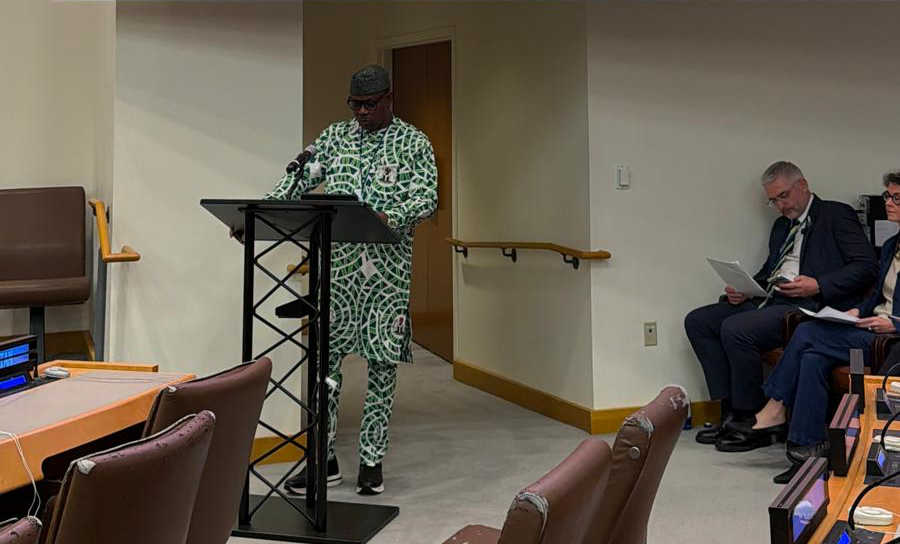
Nigeria has called for a more equitable global pandemic preparedness system, urging increased financing, technology transfer and stronger manufacturing capacity in Africa to enable developing countries to respond effectively to future health emergencies.
The Minister of State for Health and Social Welfare, Iziaq Salako, made the call while delivering Nigeria’s national statement on behalf of President Bola Tinubu at a high-level meeting on Pandemic Prevention, Preparedness and Response (PPPR) at the United Nations Headquarters in New York.
The meeting was held on the sidelines of the 81st United Nations General Assembly.
Mr Salako said effective pandemic preparedness must begin with strong public health systems capable of preventing, detecting and responding to health threats before they become emergencies.
“Prevention is preparedness and the strength of everyday public health systems determines how effectively nations detect threats early, respond rapidly, and maintain essential services during crises,” he said.
He said Nigeria was strengthening its legal and institutional frameworks, expanding digital disease surveillance, institutionalising the 7-1-7 approach, enhancing genomic sequencing capacity and improving multi-hazard preparedness.
The 7-1-7 approach requires countries to aim to detect a suspected public health threat within seven days, notify the relevant authorities within one day and complete the initial response within seven days.
Greater equity
Mr Salako said equity must remain central to the global PPPR agenda, particularly in ensuring that countries that provide access to pathogens receive fair and timely benefits from the development of vaccines, diagnostics and therapeutics.
He called for sustainable and rapidly accessible financing for low- and middle-income countries, alongside technology transfer and stronger domestic manufacturing capacity, particularly in Africa.
Nigeria’s priorities, he said, include stronger national ownership, governance and legal preparedness; prevention-focused health systems; integrated and resilient One Health systems; equitable access to financing and African manufacturing; and greater regional and global solidarity and accountability.
“National ownership and global solidarity must advance together,” he said.
Mr Salako said Nigeria was also advancing the One Health approach, strengthening antimicrobial resistance (AMR) governance and infection prevention and control programmes, and expanding emergency workforce capacity at national and sub-national levels.
The country’s public health laboratory network now covers all 36 states, while Public Health Emergency Operations Centres support responses to outbreaks including Lassa fever, cholera, diphtheria and meningitis, he said.
ALSO READ: Africa’s health-for-all agenda derailed by pandemic, financing gap – Report
Nigeria’s Joint External Evaluation score also improved from 39 per cent in 2017 to 54 per cent in 2023.
In addition, the World Bank’s $250 million Health Security Programme is supporting health security capacity at federal and state levels under a One Health approach, Mr Salako said.
Nigeria to host global AMR meeting
Mr Salako said Nigeria also wanted antimicrobial resistance to remain firmly embedded in the global pandemic preparedness agenda, describing it as “both a current public health threat and a multiplier of pandemic risks”.
Against this background, he announced that Nigeria would host the fifth Global High-Level Ministerial Conference on Antimicrobial Resistance in December 2026.
The conference will be the first edition to be held in Africa and will provide an opportunity to accelerate measurable One Health action and advance the priorities of low- and middle-income countries, he said.
Mr Salako also stressed the importance of involving communities in pandemic preparedness, saying public trust could not be built only after an outbreak had begun.
He called for sustained investment in risk communication and community engagement, social listening, community hygiene and infodemic management between emergencies.
He said Nigeria remained committed to strengthening national and regional capacity to prevent, detect and respond to public health threats, while supporting a global pandemic preparedness framework that is equitable, sustainable and accountable.
Discover more from Premium Times Nigeria
Subscribe to get the latest posts sent to your email.
-

 Featured4 days ago
PLATEAU STATE: IS THERE PEACE, OR ONLY THE ABSENCE OF VIOLENCE?
-
Business4 days ago
Shettima Urges African Leaders to Process Minerals Locally
-
News4 days ago
Commercial drivers demand complete ban of VIO in Plateau
-
News4 days ago
Akpabio Says Tinubu Remains in Charge Despite Extended Stay Abroad