
News
Peace Agency Hosts July Forum to Address Violent Extremism, Youth Engagement in Plateau State

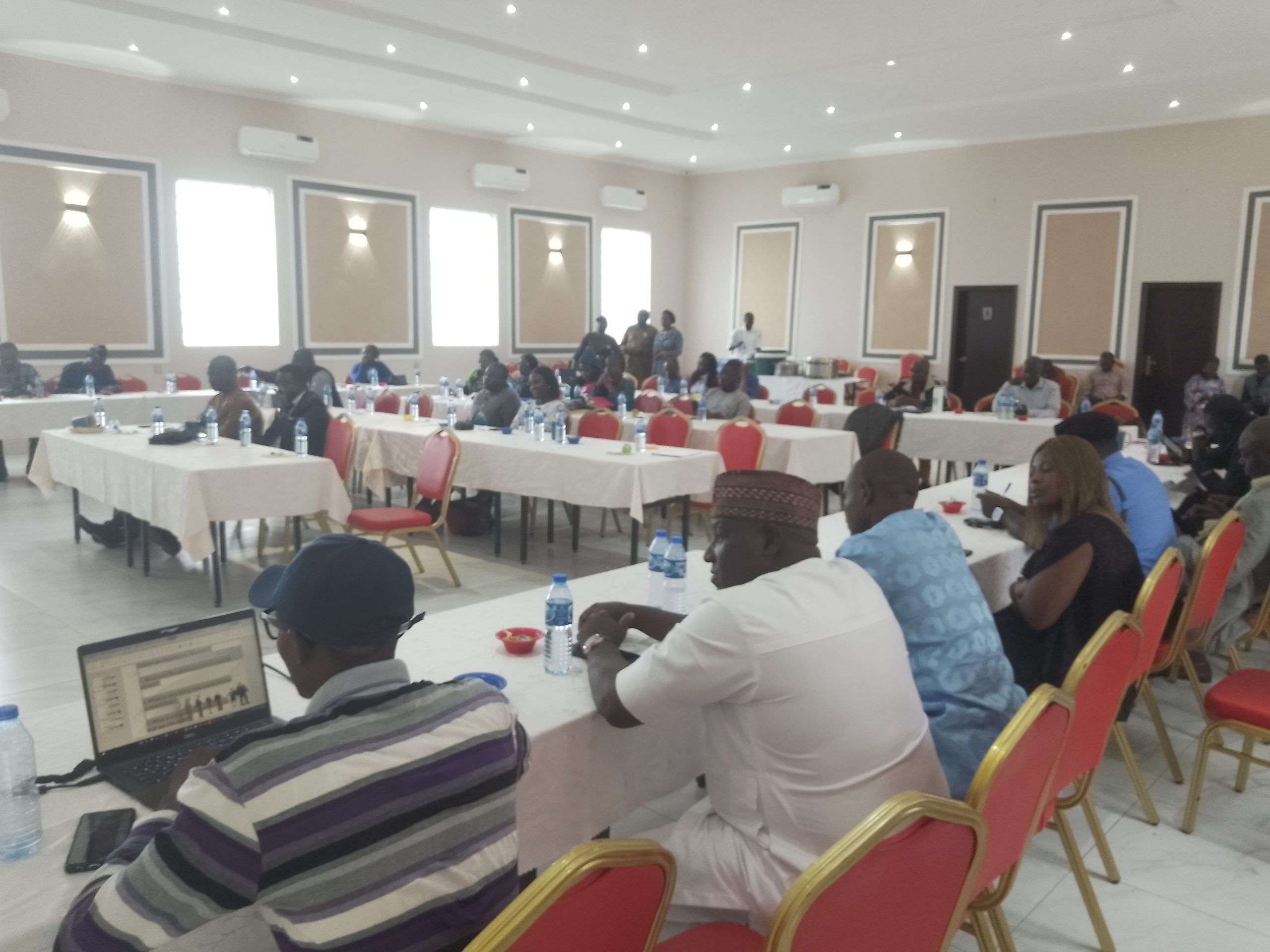
In its continued effort to promote peace and counter violent extremism, the Plateau State Peace Building Agency (PPBA) on Thursday, July 31, 2025, convened the July edition of the Plateau Peace Architectural Forum at Fox Hotel, Jos. Themed “Preventing Violent Extremism in Plateau State: Strengthening Community Resilience and Coordinated Action,” the forum brought together peace activists, civil society organizations (CSOs), security agents, youth groups, and members of the Plateau State House of Assembly, among others.
The Director-General of PPBA, Dr. Julie G. Sanda, in her opening remarks, explained that the decision to focus on violent extremism was informed by recurring discussions from previous forums that revealed a shift in the nature of violence in the state.
“Last month, we began to notice a change in the dynamics of conflict on the Plateau. It wasn’t just communal clashes or religious tensions. We observed emerging patterns of banditry and ideological narratives that point to violent extremism,” Dr. Sanda said.
“We believe that peacebuilding is a multi-stakeholder process, and we need a shared understanding of these new realities if our responses are to be effective. Today’s conversation is about deepening that understanding and contextualizing Nigeria’s national plan on preventing violent extremism (PVE) for Plateau State,” she added.
Dr. Sanda also stressed the strategic inclusion of youth in the discussions, describing them as both potential victims and powerful agents for change.
“The focus on youth is deliberate. Often, they are labeled as perpetrators, but they also hold the power to lead positive transformation. We must provide them with platforms to be heard and to shape peace strategies,” she noted.
Delivering the keynote address, Mr. Boniface Anthony, Program Manager at the Justice Development and Peace Commission (JDPC), urged participants to rethink community responses to violent extremism.
“Violent extremism in Nigeria has evolved beyond global terrorist linkages to local drivers—land disputes, identity crises, marginalization, and political manipulation,” he said.
“Narratives that justify violence are often rooted in historical grievances and amplified by inequality, weak governance, and lack of accountability. We must dismantle these harmful stories by strengthening local peace structures,” he emphasized.
The event featured goodwill messages from various stakeholders. Nanmak D. Bali, President of the Plateau Peace Practitioners Network (PPPN), applauded PPBA for sustaining the monthly forum and called on stakeholders to take more decisive action.
“We’ve spent decades discussing the same issues. It’s time to ask ourselves: what can we do differently? We need innovation in peace practice,” he said.
Hon. Nandak Nisky, a member of the Plateau State House of Assembly, highlighted the need for communal trust and deeper relationships among stakeholders, stating that effective peacebuilding begins with knowing the people you work with.
Also speaking, Geraldine Ako of GIZ emphasized inclusive partnerships and encouraged participants to remain open to new ideas.
“No idea is too small. What we need is the willingness to implement those ideas and trust the process of collaboration,” she said.
The representative of PAVE Network, Judith Nendelmwa Remson, delivered a technical presentation on “Understanding the National Action Plan on Preventing Violent Extremism”, emphasizing that localization is key.
“We are plagued by identity-based tensions, weak institutions, and distrust. We can change this by localizing the national action plan through trust-building, youth engagement, rule of law, and community dialogue,” she said.
Another presentation was delivered by Peter Choji, Security Desk Officer, who discussed violent extremism in the context of Kanam Local Government Area. He clarified misleading reports about a recent incident in Kukawa, noting that the fatalities were not local vigilantes but rather militias who clashed with criminal elements.
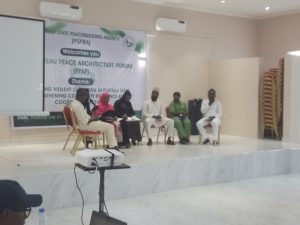
A panel discussion followed, moderated by Avizavi Christopher of the PPBA, and featured young peace advocates and researchers such as Mubarak Usman Ibrahim, Nafisat Abdulazeez, Hope Chuwang, Zang Apollos, Shepherd Lander, and Panan Gongden.
The panel highlighted:
- Early signs of youth radicalization, including aggressive behavior, hatred narratives in schools, and declining parental guidance.
- Drivers of extremism, such as unresolved grievances, teacher influence, land grabbing, and social injustices.
- The role of youth in rebuilding trust, stressing forgiveness, community-based actions, and deliberate peace education.
- Gaps in existing peace efforts, with a call for practical implementation beyond repeated dialogue.
Participants were also grouped to brainstorm and propose localized solutions to counter violent extremism in their communities. Manji Mangrock of WANEP emphasized the importance of community justice systems and improving trust in institutions.
“When people lose trust in the justice system, they become vulnerable to manipulation. We must work to restore that trust if peace is to return,” he asserted.
Closing the event, PPBA’s Director of Programs, Nantip Joseph Laktam, reaffirmed the agency’s commitment to sustaining the conversation and translating discussions into tangible action.
“This forum is not an end but a step in a longer journey. Each edition builds on the last, and the next will continue the momentum. Our goal is to create practical solutions that respond to the unique challenges facing Plateau communities,” Laktam said.
The Plateau Peace Architectural Forum is a monthly dialogue platform designed to foster collaboration among diverse actors in the peacebuilding ecosystem, and this edition marked another milestone in advancing inclusive and proactive strategies for long-term stability in Plateau State.







Martha Kandawa-Schulz, Namibia’s Cartagena Protocol National Focal Point, died in Yerevan, Armenia, while participating in the ongoing United Nations Biodiversity Conference (CBD COP17).
Ms Kandawa-Schulz, a professor, died on 23 October, according to a statement the Convention on Biological Diversity (CBD) Secretariat issued Sunday evening.
She was serving as Co-Chair of the Contact Group on Risk Assessment and Risk Management of Living Modified Organisms at the conference.
In a message to delegates, the Secretariat described her as a highly respected colleague whose dedication, expertise, and leadership contributed significantly to the Convention and its Protocols, as well as to the global biosafety community.
It said her commitment and collegiality had earned her the respect and appreciation of colleagues who had the privilege of working with her.
The Secretariat extended its condolences to her family, friends, colleagues, and the Government and people of Namibia.


It also expressed sympathy to the African Group and others mourning her death.
“The Presidency and the Secretariat are working closely together to support her family and the Namibian delegation on site, and to facilitate the necessary arrangements,” the statement said.
The Secretariat also announced that a book of condolences would be available to delegates from 13:00 on Monday at Entrance 2, near the Asia-Pacific Room, for those wishing to pay their respects.
It urged delegates to honour Ms Kandawa-Schulz’s memory and recognise her contributions to the shared objectives of the Convention.
ALSO READ: CBD COP17: Nigeria, six others each win $50,000 grant for biodiversity projects
The circumstances surrounding her death were not stated, although reports indicate that she collapsed during her engagement in the working group meeting on Friday.
CBD COP17 is taking place in Yerevan, Armenia, bringing together governments and other stakeholders to deliberate on global biodiversity conservation and the implementation of the Convention and its associated protocols.
Government representatives, delegates, scientists, civil society representatives and researchers, among others, from nearly 196 countries are participating in the conference.
Discover more from Premium Times Nigeria
Subscribe to get the latest posts sent to your email.

From discovering new books and organizing your reading list to tracking your reading goal and sharing recommendations, book apps make it easier to maintain reading as a hobby. There are numerous apps on the market that promise to do just that, so we’ve compiled a list of some of the best ones to help you pick the right one for you. Whether you’re an occasional reader or a dedicated bookworm, these apps can help you make the most of your reading journey.
Some of the apps on this list are somewhat new, while others have been around for a few years. Amazon-owned Goodreads, which is arguably the most popular book-related app, isn’t included in this list because we’re focusing on newer, lesser-known platforms.
Fable

Fable is a reading app that combines book tracking with a social platform. It lets you organize reading lists, set reading goals, track streaks, write reviews, and join virtual book clubs. You also get personalized book recommendations and the chance to discuss what you’re reading with other readers.
The app differs from others on this list because it puts reading and community at the forefront of the platform, which makes it a great option for people who like staying motivated to read by being part of a community and discussing their reads.
Fable is free to download on iOS and Android, but also offers a Fable Plus subscription tier that unlocks additional features like custom goals and advanced analytics for a monthly fee of $5.99.
Bookshelf

Bookshelf is a reading app designed to help people organize their libraries, discover new books, and remember more of what they read. The app positions itself as an alternative to Goodreads, and combines traditional reading logs with AI-powered recommendations and tools.
You can create custom shelves, set reading goals, receive reminders, save favorite quotes, and access AI-generated book summaries, key insights, and thematic analyses to recall the books you’ve read and get a deeper understanding of them.
Bookshelf is free to download on iOS, but offers a $6.99 monthly fee to unlock premium features like unlimited collections and enhanced analytics.
Pagebound

Pagebound is a book app that lets readers track their books, create lists, set goals, and discuss individual titles in dedicated forums. Instead of having to join an actual book club group, users can post reactions and thoughts to connect with others reading the same title.
You don’t have to worry about spoilers for the end of the book, as conversations are organized based on reading progress, allowing readers to share theories and thoughts as they read. The app is a great option for people who want to discuss their reads with others without having to commit to a scheduled book club.
Pagebound is free to download on iOS and Android and offers a $9.99 monthly subscription for added features like profile customization.
StoryGraph

StoryGraph is a reading app that lets users track their reading, discover new books, and access detailed reading statistics and personalized recommendations. Users can set reading goals, join reading challenges, and find new titles based on their preferred moods, themes, genres, and pacing.
The app is ideal for readers who want to better understand their reading habits and discover books that match their current interests. Its recommendation system doesn’t solely rely on what’s popular or trending, and instead caters to exactly what readers are looking for.
StoryGraph is free to use on iOS and Android, but also offers a paid subscription called StoryGraph Plus that costs $4.99 per month and unlocks custom charts, additional statistics, and more.
Margins

Margins is a great option for mood readers, as it offers mood-based discovery alongside a more focused reading experience. It helps users find their next read based on how they feel in the moment by searching for specific vibes, such as “books like 1920s Paris.” Users can also track their reading goals.
The app also lets users customize their virtual library by choosing book covers that match their aesthetic and organizing their shelves in different ways, including by color. For users who enjoy a more immersive experience, Margins offers a built-in “Reading Time” meditation timer that blocks social media apps.
When you purchase through links in our articles, we may earn a small commission. This doesn’t affect our editorial independence.
-

 News3 days ago
Obi, Kwankwaso to hold Middle Belt Youth, Village Hall Meeting in Jos
-
News3 days ago
Handball President Jibril Saidu Ojih Explains Reasons Behind Introduction Of Transfer Fees For Nigerian Players
-
News4 days ago
Lotus Bank flags dta privacy risks from unapproved workplace AI tools – Technology Times
-
Entertainment3 days ago
FOGMMON PLATEAU CONGRATULATES EJIDIKE UGOCHUKWU (𝙈𝙞𝙣𝙨𝙩𝙧𝙚𝙡 𝙅𝙞𝙙) ON HIS APPOINTMENT AS NATIONAL PRESIDENT


