News
Over 300 Middle Belt Leaders Pass Vote of Confidence in Governor Mutfwang

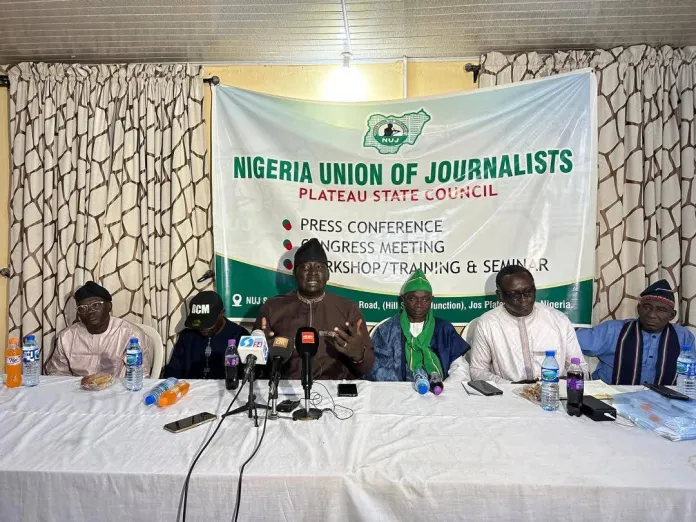
Jos, Plateau State – Leaders representing over 300 ethnic nationalities from across the Middle Belt have unanimously passed a vote of confidence in Plateau State Governor, Barr. Caleb Mutfwang, and his deputy, Ngo Josephine Piyo, citing their commitment to peace, security, infrastructural development, and inclusive governance.
The endorsement came during a review meeting of Middle Belt ethnic nationalities on the Plateau, convened by Hon. Daniel Kwada, Special Adviser to the Governor on Middle Belt Ethnic Nationalities Affairs. The meeting brought together diverse groups including the Gongola People’s Forum, Southern Kaduna communities, and representatives from Nasarawa, Benue, Kebbi, Borno, Taraba, and Gombe states.

Hon. Kwada described Governor Mutfwang as “a new political leader in the Middle Belt” who carries everyone along regardless of tribe, religion, or political affiliation. “His projects and inclusive approach cut across all 17 local government areas of Plateau State,” he said.
Professor Abraham Dogo, Plateau State President of the Southern Kaduna People’s Union (SOKAPU), who announced the endorsement, noted that the governor has stabilized human and capital development in the state beyond expectations. He commended the unprecedented creation of a Senior Special Assistant on Middle Belt Ethnic Nationalities Affairs, urging other governors to emulate the gesture.

Reverend Dr. Ahuche Peter Zakka from Kebbi State lauded the governor’s moral consciousness and inclusive appointments, while Dr. Emmanuel Anonduko, Secretary of the Gongola People’s Forum, praised his unity-driven governance. Anonduko pledged the group’s mobilization for voter registration ahead of the 2027 elections in support of the governor’s re-election bid.
Similarly, Solomon Sukukum, Secretary of the Conference of Autochthonous Ethnic Community Development Associations (CONAECDA), commended the governor for fostering unity and giving Middle Belt nationalities a voice. Mr. Richard Audu, leader of the Nasarawa State Indigenous People in Plateau (NASITOP), cited the governor’s unwavering commitment to welfare, security, youth empowerment, and agricultural development as reasons for their endorsement.


Key achievements under the Mutfwang administration highlighted by the leaders include:
- Peace and Security: Stabilizing communities and addressing insecurity across the state.
- Infrastructural Development: Expanding roads, utilities, and public services in all 17 LGAs.
- Inclusive Governance: Ensuring diverse ethnic representation in decision-making processes.
The leaders pledged to continue supporting the governor’s policies and development agenda to sustain progress across Plateau and the wider Middle Belt.


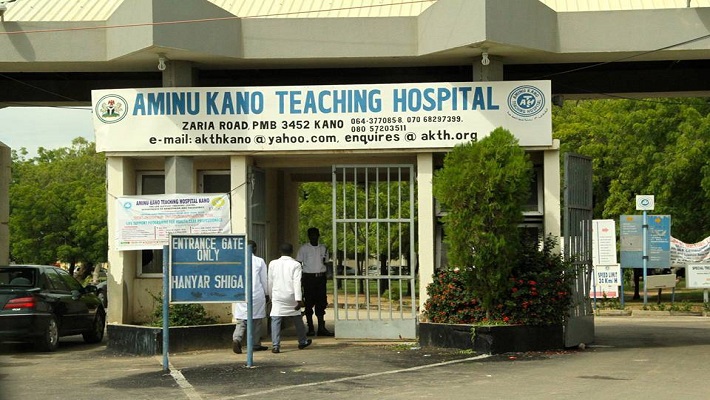
The Aminu Kano Teaching Hospital (AKTH) has recorded a major milestone with the introduction of In-Vitro Fertilisation (IVF) service provision to restore hopes of childless couples.
The milestone was recorded by a team of the hospital’s assisted reproductive health technology and others.
The Chief Consultant Gynaecologist and IVF Specialist at AKTH, Dr Ibrahim Rais, disclosed this in a video shared on the hospital’s official Facebook page.
Mr Rais said the team collected eggs from two women, while semen samples were also collected from their husbands for the next stage of the IVF procedure.
“Today marks a great milestone in the history of AKTH and the IVF service provision in the institution.
“The hospital’s Chief Medical Director, CMD, Abdulrahman Sheshe and his team has been working assiduously and today we have achieved this great milestone of the first egg collection in this institution.
“We have collected eggs from two women and also collected semen samples from their husbands. The eggs collected will be fertilised with their husbands’ sperm and we hope to achieve success.
“We are going to continue the service provision with three more patients and then we cap it up on Sunday with the last patient,” he said.
Mr Rais said commencement of the service would bring the service close to the population and restore hope among couples suffering from infertility.
“It is also important to note that starting IVF services in AKTH has been a very important development because the center will form one of points for service provision to the teeming population needing IVF services.
“It will form a centre of excellence for training in the field of Obstetric and Gynaecologist and Reproductive medicine.
“We have extracted more than a dozen eggs for now. Embryologists are working assiduously to ensure that there is fertilisation by sperm of the patients that had the procedure.
“We will go on to get more eggs that will generate more embryos and translate to potential more Nigerians,” Mr Rais said.
Similarly, the hospital in a statement on its official handle, said the milestone was achieved through the collaborative efforts of AKTH staff, specialist reproductive health experts from Jos and Abuja, and two embryologists.
It described the development as a significant step towards expanding advanced fertility services and bringing hope closer to residents.
Meanwhile, the hospital congratulated the the AKTH team for attaining the feat.
(NAN)

-

 News2 days ago
Gagdi Appreciates Appointment as Deputy Director, Security and Intelligence of 2027 Presidential Campaign Council
-
News3 days ago
Tesla, Uber, and Waymo all get the OK to operate thousands of robotaxis in Nevada
-
Health3 days ago
FEC approves N540bn to upgrade National Hospital, build cancer centre
-
Health3 days ago
Expert warns against practices that can cause condom failure