Connect with us

News

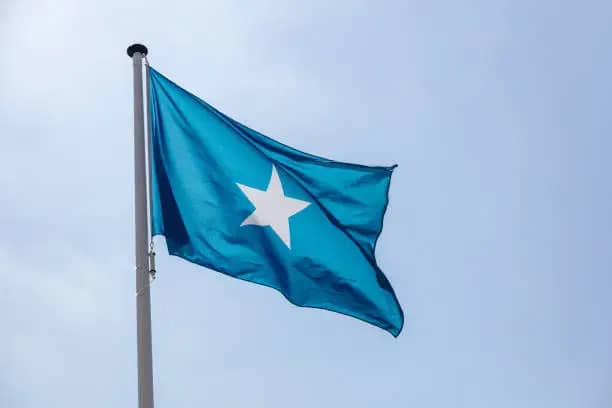
Nutrition Security and economic development in Somalia

info

Published

on

IMG 20230420 WA0054

A food-secured and economically viable country is one whose citizens are nourished and empowered to create wealth. In Africa, wealth creation is majorly from agriculture although efforts have been intensified to develop other equally important sectors like intra-Africa trade and others.


Even in Somalia which is having security and climate challenges, agriculture (in all its forms) by small-holder farmers still contributes to efforts in food security for nutrition and economic development.


Recall that repeated drought, floods, and insecurity have engendered citizens’ malnutrition and under-development. Somalia has been ranked with the highest rate of malnutrition in the world and a higher percentage of citizens suffer from some degree of malnutrition.


Over the years, pastoralists and crop farmers have suffered massive losses and require urgent and strategic assistance to recover and save the country from further starvation and economic losses.


But the Country’s President, Hassan Mohamud in a recent meeting in Rome spoke on the importance of food security to Somalia’s sustainable development and assured of his administration’s commitment to ensuring food security as he acknowledged, “Food security is national security and an engine for socio-economic development and progress.”


A citizen, Ali Osman said, “Farmers can give us food to eat and be nourished, with improved livestock and crop farming, Somalia gains. The livestock will provide meat and hides which we can export for income. Somali farmers are resilient, we have not stopped working even with the challenges. We can only eat what we get.


“The farmers can be organized into groups and empowered with skills, input, vaccines for the animals and funds to improve the businesses. If criminality is minimized, Somalia would have enough for the citizens and for exports which means the citizens would be nourished and the economy developed.”


An anonymous citizen agreed that “Investments made to ensure nutrition is not a waste, malnutrition compromises productivity. Many Somalis do not think much about malnutrition and how that affects productivity, stakeholders should create awareness on the dangers of malnutrition and the effects on productivity and wealth creation.”


“Since Somalia is a signatory to many nutrition-related agreements such as Scaling Up Nutrition, SUN, efforts could be intensified to ensure nutrition. The multisectoral nutrition strategy 2019-2024 could be a guide. The African Day for school feeding on March 1 and Africa Food Security and Nutrition Day on October 3 channels to improve school feeding and sensitize citizens about nutrition and food security.”


However, the AU through the African Regional Nutrition Strategy (2015-2025) has prioritized ending malnutrition in 2025 because the menace is averse to the AU vision of having a prosperous Africa by 2063.


The AU Commission’s Commissioner for Health and Social Development, H.E Minata Cessouma reiterated at a recent event that “…it is imperative for all AU member-States to make reducing malnutrition a priority…”


To ensure economic development in Somalia, the AU had before now supported the livestock sector which is a major contributor to the country’s economy. The African Union-Inter-African Bureau for Animal Resources, AU-IBAR had provided support by reinforcing animal health services to enhance the quality, access and sustainability of animal health services in the country as well as support training for stakeholders in the sector to ensure disease prevention and control.


AU-IBAR also assisted in the compilation of animal health data to support policy formulation and facilitate information sharing within the continent.


The AU has continued to inspire creative solutions to food crises. About a year ago, the AU and Nutrition International signed a memorandum of understanding (MoU), toward a shared vision to end hunger, poverty and malnutrition in Africa. The partners agreed to among other things, “work together in several areas, including nutrition advocacy and in tracking the progress made by member states in the implementation of the 2014 Malabo Declaration on Nutrition security to achieve inclusive economic growth and sustainable development in Africa.”


Speaking on the efforts at ensuring nutrition and economic development in Somalia, an Independent Researcher, Shuaib Hussein stated, “The government has taken some steps to address the issue, including creating a National Food Security and Nutrition Policy and establishing a Food Security and Nutrition Analysis Unit. They have also worked with international organizations to provide emergency food assistance…


“The challenges of food shortage, violent conflicts, famine, drought, and malnutrition have had a significant impact on the economy of Somalia. These challenges have resulted in low levels of food production, leading to an increased dependency on humanitarian assistance and food imports. The environmental degradation and negative effects of climate change have compromised the food systems, further contributing to low productivity.


“Food nutrition and security in Somalia highlight the unresponsive food market system, with trade distortions and inefficient logistics raising food prices to the grave detriment of poor consumers. Episodes of rapid food price inflation are implicated in the reversal of nutritional improvements in recent years, further adding to the economic challenges.


“Overall, the challenges of food shortage, violent conflicts, famine, drought, and malnutrition have had a detrimental effect on the economy of Somalia, limiting opportunities for growth and development.”


What can help:


The Researcher stressed, “The government of Somalia should strengthen legal frameworks related to food security and nutrition, including policies related to agriculture, livestock, fisheries, and land use. Increased investment in agriculture and livestock can help boost food production and improve livelihoods for rural communities.


“Improved access to clean water is critical for improving health outcomes and reducing the risk of waterborne diseases. Educating communities about proper nutrition can help improve dietary diversity and reduce the risk of malnutrition. Social protection programmes such as cash transfers, food vouchers, and school feeding programmes can help vulnerable households access food during times of crisis.


“Addressing the chronic issue of malnutrition and food insecurity in Somalia will require a multi-faceted approach that involves addressing underlying causes such as poverty, conflict, climate change impacts, and weak governance structures. It is vital to prioritize investing in infrastructure, education, and social protection programmes, to ensure that vulnerable households can access food and improve their livelihoods…


“This underscores the extent of the economic losses that insecurity and malnutrition have inflicted on the country, disrupting agricultural production and trade while also leading to displacement and loss of livelihoods. By investing in food security and nutrition, Somalia can boost productivity, reduce healthcare costs, and increase human capital development, which will contribute to the country’s overall economic development.”


He concluded that “Having well-nourished citizens is essential for a country’s economic growth and development. Well-nourished individuals are more productive, healthier, and able to invest in their future. Hunger and malnutrition can lead to developmental delays, stunted growth, and reduced cognitive function, which can negatively impact a person’s ability to work and learn.


“This, in turn, can lead to reduced productivity and lower earning potential. Investing in food security and nutrition can have significant economic benefits for a country. It can improve productivity, reduce healthcare costs, and increase human capital development.


“Well-nourished individuals are better equipped to participate in the workforce, which can lead to increased income and economic growth. They are also less likely to require expensive medical treatment, which can reduce healthcare costs for individuals and governments.


“Furthermore, nutrition education can lead to healthier dietary choices, which can reduce healthcare costs related to chronic illnesses such as diabetes and heart disease. Having well-nourished citizens is critical for a country’s economic success. It is imperative that governments prioritize food security and nutrition as a means of promoting economic growth and development.”


End.


This article was developed with support from the African Union through the African Union Agenda 2063 Pitch Zone Awards, a partnership with the African Women in Media.

Continue Reading
Click to comment

Leave a Reply

Your email address will not be published. Required fields are marked *

News

2026 FIFA World Cup: Tani Oluwaseyi Carries Nigerian Presence as Canada Thrash Qatar 6-0

info

Published

on

By

20260619 022709.jpg

Nigeria may have missed out on the FIFA World Cup, but the country’s presence is still being felt through players of Nigerian descent competing for other nations.

READ ALSO: Onyah Favour Caps Breakthrough Season with First Team All-American Honors at NCAA Championships

One of those players is Tani Oluwaseyi, who was part of a historic night as Canada dismantled Qatar 6-0 to register their first-ever FIFA World Cup victory.

Canada were dominant from the opening whistle at BC Place and took the lead in the 17th minute when veteran striker Cyle Larin found the back of the net once again.

The Canadians doubled their advantage in the 29th minute through Jonathan David, before Qatar’s task became even more difficult two minutes later after Homam Elamin was shown a red card, reducing the Asian side to 10 men.

Jonathan David grabbed his second goal in first-half stoppage time after reacting quickest to a rebound following a saved header from Larin, sending Canada into the break with a comfortable 3-0 lead.

Canada’s momentum continued after halftime despite concerns over midfielder Ismaël Koné, who suffered an injury following a challenge from Assim Madibo. The Qatari midfielder was sent off, leaving his side with just nine men.

Inspired by their dominance, Canada extended their advantage in the 64th minute when Nathan Saliba curled home a brilliant free-kick, with players dedicating the goal to the injured Koné.

For Nigerian fans, the spotlight then shifted to Tani Oluwaseyi.

The Nigerian-born striker was introduced in the 71st minute by head coach Jesse Marsch, replacing Ali Ahmed as Canada continued their march toward a memorable victory.

Just four minutes later, Canada made it 5-0 after pressure from substitute Jacob Shaffelburg forced a Qatar defensive error.

Jonathan David then completed his hat-trick in second-half stoppage time to seal an emphatic 6-0 triumph.

While Nigeria’s absence from the World Cup remains a disappointment, Oluwaseyi’s participation offers a reminder of the country’s enormous football influence beyond its borders.

Though he did not get on the scoresheet, the forward proudly represented Nigeria’s football heritage on the biggest stage, giving supporters back home a player to rally behind.

Canada’s victory was not only historic; it also showcased how players with Nigerian roots continue to shape international football, even when the Super Eagles themselves are not part of the tournament.

Continue Reading

Business

Senate Clears Customs of ₦62.2BN Under-remittance Allegation

info

Published

on

By

Images 1 1.jpeg

BY JAMES OBIOMA—The Senate Public Accounts Committee (SPAC) has officially cleared the Nigeria Customs Service (NCS) of a N62.2 billion under-remittance allegation originally raised by the Office of the Auditor-General of the Federation in its 2019 audit report.

The clearance followed an investigative session on Tuesday, 16 June 2026, during which the Comptroller-General of Customs, Adewale Adeniyi, successfully defended the Service by proving that the alleged shortfall was a misclassification of revenue by auditors.

The original query, read by a representative of the Auditor-General under the direction of SPAC Chairman, Senator Ibrahim Dankwambo, had alleged that out of N691.242 billion generated by Customs in 2017, only N629.23 billion reached the Federation Account, leaving a balance of N62.2 billion.

Defending the Service’s financial integrity, CG Adeniyi explained that the multi-billion naira deficit was completely non-existent.

“The under-remittance of N62.2 billion levelled against Customs in the 2019 audit report was wrongly arrived at through misclassification of levies collected,” Adeniyi stated. “While most of the levies are to be collected and remitted into the federation account, others like the ones on local production of wheat, textiles and wines, etc do not go into the federation account, the totality of which accounted for the alleged unremitted N62.2 billion.”

Following identical, convincing clarifications on the first three major queries, a member of the committee, Senator Babangida Hussaini, wondered why the issues had not been ironed out sooner. He noted that as a former civil servant, such straightforward technicalities should have been resolved at the preliminary audit level rather than escalating to a full Senate investigation.

The post Senate Clears Customs of ₦62.2BN Under-remittance Allegation appeared first on Business Today NG.

Continue Reading

Trending