Connect with us

Sport

NPFL 2022/2023 Preview: Plateau United, Enyimba in heavyweight clash, Double header in Jos

editor

Published

on

NPFL

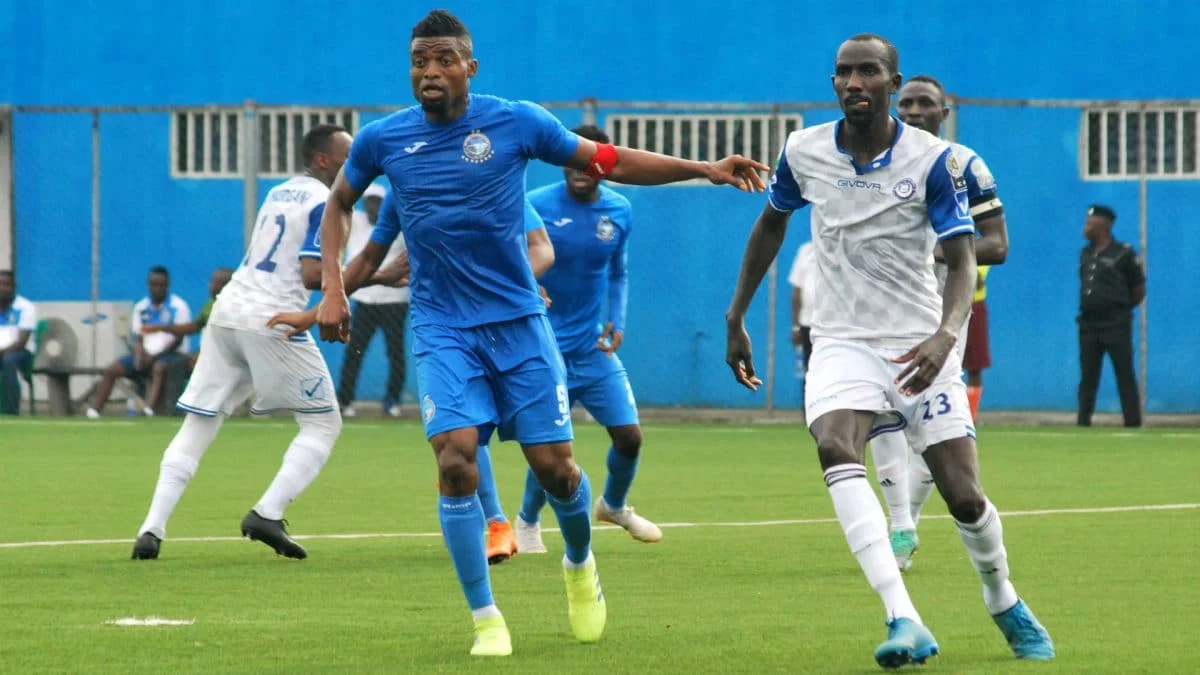
The action continues as the 2022/2023 Nigeria Premier Football League (NPFL) season promises another round of scintillating football action this weekend with a doubleheader in Jos and a crunchy North East derby in Maiduguri the pick of the encounters.

Nasarawa United and Plateau United are two of eleven teams in search of their first wins this season. Both sides will be involved in the doubleheader scheduled for the Zaria Road Stadium in Jos on Sunday.

Nasarawa United with zero points from their first two games will face an equally winless Akwa United in the day’s first game at 2pm before Stadium landlords Plateau United slug it out with Enyimba at 4pm.

Surprise group leaders Bendel Insurance have a trip to Ibadan to face Kwara United who are gradually coming around as the draw specialists. Having being held 0-0 in Ibadan by Gombe United on Match Day 1, the Harmony Warriors again battled stadium owners Shooting Stars to the same 0-0 score-line on Thursday. They now go in search of their first goal and win of the season against Monday Odigie’s Insurance on Sunday.

Group A’s final game for the weekend is a North Eastern derby which pits El-Kanemi Warriors against Gombe United in Maiduguri. El-Kanemi enjoyed a successful return of NPFL football to Maiduguri on Thursday, seeing off Nasarawa United and they have a chance to make it two home wins on the bounce against Gombe who have neither scored nor won after two matches.

A tantalising South West derby between Remo Stars and Shooting Stars which will see Gbenga Ogunbote return to Ikenne-Remo for the first time since he left the club in the summer has been moved to Wednesday.

Group B

Group’s surprise leaders Abia Warriors have a chance to make it three wins out of three when they host Lobi Stars in Umuahia on Sunday. Warriors head coach Erasmus Onuh has engineered a best possible start for the modest side but their quality will be put to a great test by Lobi who are coming off a win over Rangers in midweek.

The group’s other front runners Rivers United and Niger Tornadoes have a meeting in Port Harcourt on Tuesday. Tornadoes’ defence is yet to be breached this term but that will come under serious scrutiny when they face defending champions Rivers United who are fiery at home.

Rangers International will be looking for their first point of the season when Sunshine Stars come calling to Awka with Abdu Maikaba already feeling some early pressure as fans of the Flying Antelopes grow unhappy with their disastrous start.

At the Samson Siasia Stadium in Yenagoa, two winless sides Bayelsa United and Wikki Tourists also come toe-to-toe looking for early-season redemption. While United have a point from their first home game, Wikki have none having lost their opening two matches.

Doma United are still grappling with life among the big boys and the newly promoted side will host Dakkada FC at the Pantami Stadium as they go in search of their first win of the season against Dakkada who have four points out of a possible six.

FULL MATCH DAY 3 FIXTURES (All Sunday, 4pm except otherwise stated)

Group A

Nasarawa United vs Akwa United – 2pm
Plateau United vs Enyimba FC
Kwara United vs Bendel Insurance
Remo Stars FC vs Shooting Stars – Wednesday
El-Kanemi Warriors vs Gombe United

Group B

Rangers Int’l vs Sunshine Stars
Abia Warriors vs Lobi Stars
Bayelsa United vs Wikki Tourists
Doma United vs Dakkada FC
Rivers United vs Niger Tornadoes – Tuesday


Continue Reading
Click to comment

Leave a Reply

Your email address will not be published. Required fields are marked *

News

FROM AFRICA’S GIANTS TO FOOTBALL’S BACK DOOR: HOW DID NIGERIA GET HERE?

info

Published

on

By

WhatsApp Image 2026 08 07 at 7.23.47 AM.jpeg

The Super Falcons are fighting for a World Cup route. The Super Eagles are watching another World Cup from home. The question is no longer who should resign—it is whether anyone is prepared to confront what has gone wrong.

There was a time when Nigeria entered African football competitions with a certain expectation.

Not arrogance.

Not entitlement.

Expectation.

The expectation that Nigeria would be there.

The expectation that Nigerian teams would qualify.

The expectation that Nigeria’s enormous pool of football talent would eventually produce another generation capable of competing with anybody on the continent and beyond.

Today, that confidence is becoming harder to defend.

Nigeria is still a football powerhouse by reputation.

But increasingly, the results are forcing us to ask whether the reputation has outlived the system that created it.

And that is the uncomfortable conversation we need to have.

THE SUPER FALCONS ARE NOT OUT. BUT WHY ARE WE CELEBRATING THE PLAY-OFF?

The Super Falcons remain alive in the race for the 2027 FIFA Women’s World Cup.

But after losing 1–0 to Cameroon in the WAFCON quarter-final on August 9, Nigeria now has to take another route.

The Falcons will face South Africa in a playoff, with the outcome determining whether Nigeria advances to the FIFA Women’s World Cup Play-Off Tournament.

That means the door is still open.

The players deserve our support.

They deserve encouragement.

They deserve the opportunity to fight for the country.

But there is also a question Nigerians should be allowed to ask without being accused of attacking the players:

How did the most successful women’s national team in Africa arrive at a point where qualification itself has become a prolonged struggle?

Nigeria has won the Women’s Africa Cup of Nations 10 times.

The Super Falcons have appeared at every Women’s World Cup from 1991 through 2023.

Yet the current qualification structure means that, after failing to reach the WAFCON semi-finals, Nigeria must now fight South Africa for another opportunity to reach the global play-off route.

This should not be used to insult the players.

It should be used to examine the system.

AND THE SUPER EAGLES?

The men’s national team has already provided an even more painful warning.

Nigeria failed to qualify for the 2026 FIFA World Cup.

Not merely because of one bad night.

Nigeria finished behind South Africa in the qualifying group and eventually entered the African playoff route. The Super Eagles defeated Gabon before losing the final to DR Congo on penalties after a 1–1 draw. DR Congo subsequently won the intercontinental playoff and qualified for the World Cup.

Nigeria will therefore miss the World Cup for the second consecutive edition.

And remember what makes this particularly difficult to explain:

The 2026 World Cup has expanded to 48 teams.

Africa has more opportunities than before.

Yet Nigeria is still not going.

That should make every serious football stakeholder uncomfortable.

Not because Nigeria must qualify for every tournament forever.

Football does not work that way.

But because repeated failure across different levels begins to look less like bad luck and more like a pattern.

LOOK AT THE YOUTH TEAMS

This is where the conversation becomes even more disturbing.

The senior teams cannot be separated from what happens underneath them.

Nigeria’s men’s U-17 team missed the 2023 FIFA U-17 World Cup.

It then missed the 2025 FIFA U-17 World Cup.

And in 2026, Nigeria failed to qualify for the CAF U-17 Africa Cup of Nations after losing to Ghana in the WAFU B semi-final.

Nigeria therefore did not even make the continental tournament from which the 2026 U-17 World Cup places were allocated. CAF’s final 2026 U-17 AFCON field included Ghana and Côte d’Ivoire from WAFU B—not Nigeria.

Think about what that means.

Nigeria once built a global reputation partly through its youth football.

Now, at the same age category that helped establish Nigeria as a football power, we are increasingly fighting simply to enter the room.

That is not a one-match problem.

That is a development problem.

THE LIST IS BECOMING TOO LONG

Look at the recent record.

2023 — Nigeria fail to qualify for the Men’s U-23 AFCON, consequently missing the 2024 Olympic men’s football tournament.

2023 — Golden Eaglets fail to qualify for the FIFA U-17 World Cup.

2025 — Nigeria fail to qualify for the FIFA U-17 World Cup.

2026 — Nigeria fail to qualify for the Men’s U-17 AFCON and therefore the FIFA U-17 World Cup.

2026 — Super Eagles fail to qualify for the FIFA World Cup.

2026 — Super Falcons fail to reach the WAFCON semi-finals and must now use a playoff route to keep their 2027 World Cup hopes alive.

That is not a single failure.

It is a pattern across age groups and across genders.

And patterns demand structural questions.

THIS IS WHERE ITALY SHOULD MAKE US THINK

Italy is one of the greatest football nations in history.

Four World Cup titles.

A European Championship.

One of the world’s most famous domestic leagues.

Some of the biggest clubs and football brands on the planet.

Yet Italy failed to qualify for the 2018 World Cup.

Then 2022.

Then 2026.

Three consecutive World Cups without Italy.

In March 2026, Italy’s latest attempt ended in Bosnia and Herzegovina, where the Azzurri drew 1–1 before losing 4–1 on penalties.

But look at what happened afterwards.

Italy did not simply spend all its energy asking:

“Who should we blame for losing this match?”

The Italian Football Federation published a report examining the health of the entire football system.

And some of the numbers were shocking.

The FIGC report said only 1.9% of Serie A minutes were being played by U21 players eligible for Italy.

Only two Italian academies—Atalanta and Juventus—appeared in the world’s top 50 youth academies measured by ten-year revenue from homegrown-player sales.

The report also identified structural problems involving youth development, league organisation, refereeing, stadiums, governance and the relationship between the federation, leagues and other football institutions.

That is the lesson.

Italy’s problem was not simply:

“We lost the match.”

The question became:

“What is happening inside the football system that keeps producing this outcome?”

That is exactly the question Nigeria should be asking.

ITALY’S FAILURE WAS A WARNING. NIGERIA SHOULD HEAR IT.

There is a dangerous temptation in Nigerian football to treat every failure as an isolated event.

Lose a qualifier?

Blame the coach.

Miss a tournament?

Blame the players.

Fail to develop young players?

Blame the generation.

Poor league?

Blame the clubs.

Poor facilities?

Blame government.

Poor refereeing?

Blame the referees.

Players leave for Europe?

Celebrate their success abroad.

Then wait for the next national-team assignment.

And repeat the cycle.

But eventually the excuses become more exhausting than the failures.

Because if the same problems keep appearing across different coaches, different players, different competitions and different administrations, then perhaps the problem is bigger than any individual.

WE HAVE BECOME TOO COMFORTABLE WITH THE WORD “POTENTIAL”

Nigeria has potential.

Nigeria has talent.

Nigeria has population.

Nigeria has football history.

Nigeria has passionate supporters.

Nigeria has players in major European leagues.

Nigeria has academies.

Nigeria has coaches.

Nigeria has former internationals.

Nigeria has football administrators.

Nigeria has facilities.

Nigeria has sponsors.

Nigeria has government sports agencies.

Nigeria has the NFF.

Nigeria has everything required to build a serious football industry.

So why does the output increasingly look unstable?

That is the uncomfortable question.

Because talent alone does not produce football nations.

Systems do.

THE DIASPORA CANNOT BE THE DEVELOPMENT PLAN

There is nothing wrong with Nigerian players developing abroad.

In fact, it is a strength that Nigerian footballers can succeed in England, Italy, Spain, France, Germany and elsewhere.

But we should be careful.

If the solution to every problem is:

“Let’s find another Nigerian player abroad,”

then we are not developing Nigerian football.

We are developing a scouting network for the rest of the world.

The domestic league should be producing players.

The academies should be producing players.

Schools should be producing players.

Coaches should be developing players.

Sports science should be developing players.

Competitions should be developing players.

And the national teams should be the final expression of that system.

Not the emergency repair shop.

WHAT ARE WE ACTUALLY BUILDING?

This is where the debate about coaching courses, refereeing programmes, infrastructure and football administration must become serious.

Yes, CAF coaching courses matter.

Yes, referee development matters.

Yes, FIFA Goal Project pitches matter.

Yes, hostels matter.

Yes, hosting WAFU competitions matters.

Yes, international football programmes matter.

Yes, bringing CAF events to Nigeria matters.

But development cannot be measured by the number of ceremonies we hold.

It must be measured by what those investments produce.

How many qualified coaches are actually working regularly?

How many young referees are progressing?

How many properly managed academies exist?

How many Nigerian clubs can develop and retain talent?

How many players are making a sustainable living in the domestic game?

How many youth teams are consistently qualifying?

How many Nigerian clubs are competing deep into CAF competitions?

How many players are graduating from the Nigerian league directly into elite international football?

Those are the numbers that should matter.

THIS IS NOT A CALL FOR SOMEBODY TO RESIGN

And this is important.

The point of this conversation should not be to start another campaign demanding that one person resign.

Nigeria has done that before.

A coach leaves.

Another coach arrives.

An administrator leaves.

Another administrator arrives.

A new committee is announced.

A new technical adviser is appointed.

A new plan is launched.

Then three years later, we are having the same conversation.

That is not reform.

Reform is when the system changes enough that the next generation does not inherit the same problem.

Italy’s experience is instructive precisely because its post-failure discussion has gone beyond the scoreboard.

Its federation identified youth development, player pathways, league structures, governance, refereeing and infrastructure as interconnected issues.

That is the conversation Nigeria needs.

SO, WHAT SHOULD PEOPLE DO?

Perhaps the most important question is not:

“Who should resign?”

It is:

“Who is responsible for fixing what?”

The NFF should be able to publish measurable football-development targets.

The leagues should be judged by the quality and commercial strength of their competitions.

Clubs should be required to demonstrate genuine youth-development structures.

Government should be judged by the facilities and policies it actually delivers—not by announcements.

Coaches should be judged not only by trophies but by player development.

Academies should be judged by the quality of players they produce.

Refereeing should be judged by professional standards and development pathways.

And national teams should be judged by both results and the strength of the pipeline producing the players.

Most importantly, Nigerians should demand data.

Not slogans.

Not photographs.

Not speeches.

Data.

How many licensed coaches?

How many active academies?

How many registered youth players?

How many professional contracts?

How many domestic players moving abroad?

How many clubs meeting professional licensing standards?

How many young players receiving consistent competitive minutes?

How many coaches are employed full-time?

How many referees are moving through the development pathway?

What is the annual investment in grassroots football?

What has improved compared with five years ago?

That is how serious football nations measure themselves.

THE SUPER FALCONS ARE STILL FIGHTING. SO SHOULD WE.

The Super Falcons have not been eliminated from the 2027 World Cup race.

They now have another battle ahead against South Africa.

They deserve our support.

But supporting the players does not mean refusing to ask difficult questions.

In fact, supporting them means asking those questions.

Because the players should not have to carry the entire weight of Nigerian football on their shoulders.

The national teams cannot permanently compensate for weaknesses in the domestic system.

At some point, the system itself must become strong.

NIGERIA DOES NOT NEED ANOTHER BLAME GAME. IT NEEDS A FOOTBALL AUDIT.

Perhaps this is the moment to stop asking:

“Who caused this?”

And start asking:

“What exactly is broken?”

Where is the player pathway?

Where is the professional league?

Where is the youth structure?

Where is the coaching pipeline?

Where is the referee pathway?

Where is the commercial model?

Where is the data?

Where is the accountability?

Where is the long-term plan?

And who is responsible for each part?

Italy discovered that a football giant can remain a football giant in reputation while its underlying system begins to deteriorate.

Nigeria should not wait for three consecutive World Cup failures before taking the warning seriously.

Because the most dangerous thing about Nigerian football today is not that we lost a match.

It is that we are becoming accustomed to needing another chance.

Another playoff.

Another qualification route.

Another rescue.

Another miracle.

Another generation of players to save us.

And another explanation when it fails.

THE QUESTION IS NO LONGER WHETHER NIGERIA HAS TALENT.

THE QUESTION IS WHETHER NIGERIA HAS BUILT A SYSTEM WORTHY OF THAT TALENT.

Because a football nation should not live permanently on its history.

And Nigeria’s history is too great to become an excuse for its present.

The trophies tell us what Nigeria once was.

The qualification struggles are telling us what Nigeria has become.

What we do next will determine what Nigeria becomes.

Continue Reading

News

WE WIN TROPHIES, BUT OUR ATHLETES CANNOT BUILD LIVES: THE DISTURBING TRUTH ABOUT NIGERIAN SPORTS

info

Published

on

By

IMG 20260809 WA0001.jpg

Nigeria has become remarkably good at celebrating sporting victories—and remarkably poor at building the system that makes those victories sustainable.

Every time Nigerian athletes win a continental trophy, qualify for a major tournament or stand on a podium wearing the green and white, we celebrate them as national heroes.

And rightly so.

But when the celebrations end and the cameras disappear, another reality begins.

A reality that is rarely discussed.

How does the Nigerian athlete survive?

Why must a Nigerian athlete leave Nigeria before his or her talent can become a genuine profession?

Why is it that a young Nigerian can spend years training, sacrificing, competing and representing the country, yet still be unable to say with confidence:

“I am a professional athlete, and this is how I make my living.”

That is the question Nigeria must answer.

Because this is no longer simply about qualification for international competitions.

It is about whether Nigeria has actually built a sports industry.

THE SUPER FALCONS PARADOX

Consider Nigerian women’s football.

The Super Falcons are the most successful women’s national team in Africa.

Nigeria has won the Women’s Africa Cup of Nations 10 times, more than any other country. The Falcons reclaimed the continental title in 2025 after defeating Morocco 3–2 in the final.

That record should be the foundation of one of the strongest women’s football industries on the continent.

But the contradiction remains.

Nigeria can produce a national team capable of dominating Africa, yet many of the players who deliver those victories have had to build their professional careers outside Nigeria.

And before anybody misreads the argument, Nigerian clubs have made continental progress. Bayelsa Queens reached the CAF Women’s Champions League semi-final in 2022, while Edo Queens reached the semi-final in 2024.

The issue is not that Nigerian clubs are incapable of competing.

The issue is that the domestic system has not yet become strong enough, consistent enough and commercially viable enough to provide a professional career for the large pool of talent Nigeria produces.

That distinction is critical.

Because a country cannot claim to have built a football industry simply because it occasionally produces exceptional clubs or exceptional players.

The question is whether the average talented player can survive and progress through the system.

BOXING: WHEN A BOXER NEEDS A SECOND JOB TO SURVIVE

And this problem becomes even more disturbing when we leave football.

Listen to what Nigerian boxers themselves have been saying about the realities of the sport.

The message is painful:

If you want to become somebody through boxing in Nigeria, boxing alone may not be enough to feed you.

Some boxers have described a reality in which they have to take up additional work simply to survive.

Imagine that.

A boxer wakes up early, trains, sacrifices his body, competes and dreams of representing Nigeria—but still has to find another job because being a boxer does not provide a reliable livelihood.

At what point do we stop calling that a sporting career and start calling it a survival struggle?

Nigeria officially has institutions responsible for developing boxing. The Nigeria Boxing Federation says its mission includes athlete development, national competitions, professional standards and the creation of sustainable opportunities. It has also introduced professional licensing structures.

But the existence of a federation, a competition or a licence does not automatically create a professional industry.

A professional sport needs much more:

Regular competitions.

Reliable contracts.

Promoters.

Managers.

Broadcasting.

Sponsors.

Prize money.

Medical protection.

Insurance.

Athlete welfare.

Career pathways.

Retirement planning.

And a commercial audience.

Without those things, telling a boxer to “be professional” is almost meaningless.

VOLLEYBALL HAS THE SAME STORY

The same problem exists in volleyball.

You can find a talented Nigerian volleyball player who trains for years, represents a state or national side and competes when there is a championship.

But then what?

Where is the year-round professional structure?

Where is the league system that allows the player to wake up and know:

“I am employed as a volleyball player.”

Where is the reliable salary?

Where is the long-term contract?

Where is the sports insurance?

Where is the commercial sponsorship?

Where is the pathway from youth volleyball to professional volleyball?

Too often, the athlete’s economic existence becomes dependent on competition.

There is a tournament, so there is activity.

There is a national assignment, so there is attention.

There is an African championship, so everybody suddenly remembers the athletes.

Then the competition ends.

And the athlete returns to uncertainty.

That is not how a modern professional sporting industry should function.

SPORT SHOULD BE A PROFESSION—NOT A SEASONAL EMERGENCY

This may be the most important point in the entire debate.

Nobody tells a lawyer:

“Wait until there is a case before you can earn money.”

Nobody tells a teacher:

“You will only be paid when there is an examination.”

Nobody tells an engineer:

“You can only make money when there is a construction project.”

But Nigerian athletes are too often trapped in a system where their economic value becomes visible only when a competition arrives.

They are athletes during the championship.

They become invisible after it.

That is the structural problem.

Sport must become a profession in Nigeria.

Not merely something young people do until they get a scholarship abroad.

Not merely something athletes do for a state government.

Not merely something people participate in because they love their country.

A person should be able to say:

“I am a boxer.”

“I am a volleyball player.”

“I am a footballer.”

And that statement should have the same economic seriousness as saying:

“I am an accountant.”

“I am a lawyer.”

“I am an engineer.”

That is what professionalism means.

WHY ARE WE EXPORTING OUR BEST ATHLETES?

This is where the Nigerian situation becomes particularly painful.

Other countries have learned that sport can be an industry.

They build leagues.

They attract sponsors.

They sell broadcasting rights.

They develop academies.

They create professional contracts.

They attract foreign athletes.

They build sporting brands.

And when their athletes become successful, the country benefits economically from the ecosystem around them.

Nigeria, meanwhile, often develops the raw talent and then watches that talent leave.

The athlete goes abroad.

The professional development happens abroad.

The better facilities are abroad.

The better contracts are abroad.

The better exposure is abroad.

And sometimes, even the athlete’s sporting identity becomes stronger abroad than it ever was at home.

Then when Nigeria needs a national team, we call them back.

We are essentially asking other countries and foreign leagues to develop our athletes, while we celebrate the finished product when it returns to represent Nigeria.

There is something deeply wrong with that model.

AND THEN WE BLAME THE ATHLETE

When an athlete changes allegiance, refuses an invitation, chooses another country, or decides to pursue a career elsewhere, the immediate reaction is often anger.

“Why doesn’t he want to represent Nigeria?”

“Why did she choose another country?”

“Why are our athletes abandoning us?”

But perhaps we should ask a different question.

What did we build that would make them want to stay?

Patriotism is powerful.

But patriotism cannot pay rent.

Patriotism cannot replace medical insurance.

Patriotism cannot feed an athlete’s family.

Patriotism cannot build a career.

Patriotism can inspire an athlete to wear the green and white.

Professionalism is what makes it possible to build a life around wearing it.

NIGERIA HAS THE TALENT. THAT IS NOT THE PROBLEM.

For decades, Nigerians have been told that the problem is lack of talent.

That argument is becoming increasingly difficult to defend.

Nigeria has produced Olympic champions, world champions, African champions and elite footballers.

Our athletes continue to perform despite the weaknesses around them.

Sometimes, they succeed in spite of the system rather than because of it.

And that distinction matters.

A country should not have to depend on extraordinary individuals to compensate for ordinary institutional failure.

We should be asking:

How many talented children never become elite athletes because their families cannot afford the journey?

How many promising footballers abandon the sport because they cannot earn enough to survive?

How many boxers work additional jobs because boxing cannot support them?

How many volleyball players wait for competitions because there is no reliable professional league?

How many athletes leave Nigeria because there is no credible career pathway at home?

How many coaches, physiotherapists, scouts, analysts, agents and sports administrators could build careers if Nigeria developed a real sports economy?

And perhaps the biggest question:

How much sporting wealth is Nigeria exporting because it has failed to build a sports economy at home?

GOVERNMENT CANNOT DO EVERYTHING—BUT IT CANNOT DO NOTHING

This should not become another simplistic exercise in blaming government for everything.

Government is not a football club.

Government cannot personally run every boxing gym, volleyball club or football academy.

Private investors, sponsors, broadcasters, clubs, federations, promoters, agents and sports entrepreneurs all have responsibilities.

But government has an enormous responsibility to create the environment in which those people can operate.

That means:

Functional facilities.

Reliable competition calendars.

Transparent sports administration.

Youth development.

Grassroots programmes.

Professional league structures.

Athlete contracts.

Medical and insurance systems.

Commercial sponsorship.

Broadcasting opportunities.

Proper sports governance.

And, most importantly, a system in which athletes are treated as professionals rather than people who should simply be grateful for the opportunity to represent Nigeria.

The National Sports Commission and other government bodies have increasingly spoken about turning sports into an economic sector.

That is the right direction.

But Nigerians have heard promises before.

The real test is not another policy document.

The real test is simple:

Can an 18-year-old Nigerian athlete enter the sporting system today and see a credible economic future?

THE LEAGUES SHOULD BE THE FACTORIES

Nigeria often focuses on national teams because national teams are politically and emotionally convenient.

When the Super Falcons win, everyone celebrates.

When the Super Eagles qualify, everyone celebrates.

When D’Tigress dominate Africa, everyone celebrates.

When an athlete wins a medal, politicians rush to take photographs.

But national teams should not be the beginning and end of sports development.

They should be the product of a healthy domestic system.

The league should discover the player.

The academy should develop the player.

The club should employ the player.

The federation should regulate and grow the sport.

The sponsor should see commercial value.

The broadcaster should see an audience.

The fan should see quality.

And the athlete should see a career.

If that chain is broken, national-team success becomes a temporary miracle rather than evidence of a functioning industry.

STOP CELEBRATING THE SYMPTOM AND START FIXING THE SYSTEM

There is something deeply contradictory about a country that can produce the most successful women’s national team in African football history while struggling to create a domestic environment where many of those players can build sustainable careers.

There is something wrong when a boxer has to consider another job simply to survive.

There is something wrong when a volleyball player can represent the country but cannot confidently build a livelihood from volleyball at home.

There is something wrong when athletes are celebrated as heroes after winning medals but become invisible when they need training, salaries, facilities, insurance and career development.

There is something wrong when the country proudly says:

“Our athletes are the best in Africa.”

But cannot confidently say:

“Our athletes can make a good living in Nigeria.”

That is the conversation Nigeria needs.

Not another blame game.

Not another award ceremony.

Not another promise after a tournament.

Not another photograph with a trophy.

WE NEED TO BUILD THE INDUSTRY.

Because the ultimate measure of sporting development should not be how loudly a country celebrates its champions.

It should be whether the next generation can look at those champions and believe:

“I can do this too.”

And more importantly:

“I can build my entire life around this career without having to leave Nigeria.”

Until that becomes true, every trophy Nigeria wins should come with an uncomfortable question:

IF NIGERIA HAS THE TALENT TO CONQUER AFRICA, WHY CAN’T NIGERIA BUILD A SPORTS INDUSTRY STRONG ENOUGH TO KEEP ITS ATHLETES AT HOME?

Continue Reading

Trending