Sport
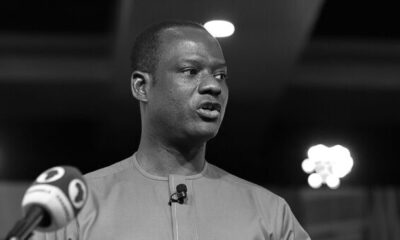
Aliyu Zubairu Set to Replace Mangut as Plateau United Technical Adviser








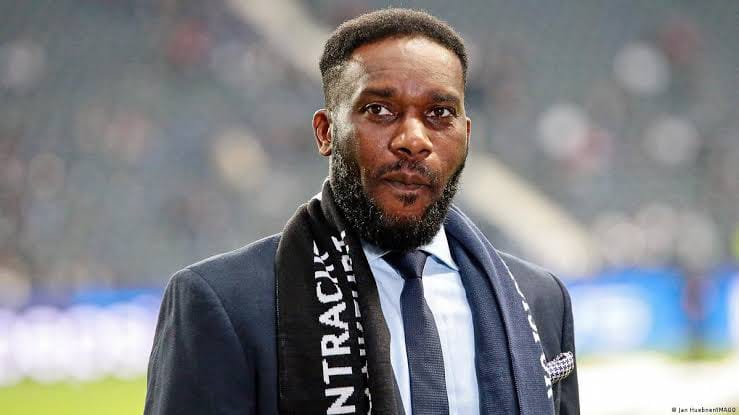
Super Eagles legend Austin ‘Jay-Jay’ Okocha has backed Kylian Mbappé to win the 2026 Ballon d’Or, believing the Real Madrid forward has done enough to earn football’s biggest individual prize.
Okocha admits that this year’s race is more exciting than ever, with Bayern Munich striker Harry Kane, Barcelona’s Lamine Yamal and several Paris Saint-Germain players also in contention. However, the former Nigerian international believes Mbappé’s goal-scoring record gives him a strong case for the award.
Despite acknowledging the strong competition, the former Paris Saint-Germain playmaker made his preference clear, pointing to Mbappé’s scoring achievements in three major competitions.
“I think Mbappé deserves it for having been the top scorer in the World Cup (10 goals), the Champions League (15) and the Spanish league (25),” he added.
Kane, however, has also enjoyed an outstanding season. The England captain scored 73 goals for Bayern Munich and the national team during the 2025–26 campaign, strengthening his position among the leading candidates for the award.
The debate is therefore about more than choosing between two prolific strikers. While Mbappé’s numbers across major competitions have impressed Okocha, Kane’s remarkable goal return has also given him a strong argument.
The 2026 Ballon d’Or ceremony is scheduled for October 26 in London, where the winner will be announced.
With several players making convincing cases, the final decision promises to attract plenty of attention from football fans.
For Okocha, though, Mbappé has already done enough to stand out from the competition.
News
EuroMatch NPFL: ‘We Never Gave Up!’ — Fidelis Ilechukwu Hails Rangers’ Fighting Spirit, Reacts to Two Penalties Against Barau FC



Rangers International Technical Adviser Fidelis Ilechukwu has praised his players’ resilience and fighting spirit after the Flying Antelopes battled back to secure a dramatic 2-2 away draw against Barau FC in Kano during Matchday 8 of the EuroMatch Nigeria Premier Football League (NPFL).
The experienced tactician described the encounter as an important lesson in determination, insisting that his players demonstrated the character required to compete under difficult circumstances.
Read Also: EuroMatch NPFL: ‘Our Defending Is Very Disturbing’ — Salisu Yusuf Admits Shooting Stars Were Outplayed by Kun Khalifat
Rangers appeared destined for defeat after surrendering their first-half advantage, but a stoppage-time equaliser ensured the Enugu-based club returned home with a valuable point.
Speaking during his post-match assessment, Ilechukwu expressed satisfaction with his team’s refusal to surrender despite the challenges encountered during the game, Sports247 gathered.
“It’s a great game. Today teaches us that we don’t have to give up. When we were a goal down, we rallied together and got a point away from home,” Ilechukwu said.
Rangers took the lead in the 38th minute through Ifeanyi Okechukwu, putting the visitors in a promising position heading into the interval.
However, Barau FC responded strongly after the restart, with Joseph Atule converting a penalty in the 56th minute to restore parity.
The hosts completed their turnaround in the 68th minute when Aliyu Sugau converted another spot-kick, putting Rangers under pressure as the contest approached its closing stages.
With time running out, Rangers continued searching for an equaliser, and their persistence eventually paid off.
Chidiebere Nwobodo emerged as the visitors’ hero, scoring in the third minute of stoppage time to rescue a point and deny Barau FC a home victory.
Ilechukwu Reacts to Controversial Penalty Decisions
The two penalties awarded to Barau FC became a major talking point following the encounter.
However, Ilechukwu declined to directly criticise the officiating, acknowledging that the referee had the authority to make decisions during the match.
“I’m not the referee. It’s not my duty, but the referee has the final say on the penalties awarded to the home team,” he explained.
His response reflected a measured approach to the decisions, with the Rangers boss choosing instead to focus on his players’ determination to recover from a difficult situation
Beyond the result, Ilechukwu revealed that Rangers’ continental commitments and the absence of several important players had affected his team’s preparations.
According to the technical adviser, injuries and fatigue prevented some key members of the squad from travelling for the encounter.
“We have to face continental games. Some of our top players couldn’t be here because of injuries and fatigue, but the players available tried their best to secure an away draw,” he said.
The demanding schedule has placed additional pressure on the Rangers squad, making rotation and player recovery important considerations as the season progresses. Nevertheless, Ilechukwu was encouraged by the commitment displayed by those who featured against Barau FC.
Although Rangers were unable to secure maximum points, the dramatic nature of their comeback provided encouragement for the technical crew.
Recovering from a 2-1 deficit to claim a draw in stoppage time demonstrated the determination Ilechukwu wants his players to maintain throughout the campaign.
For Barau FC, the result represented a missed opportunity to secure all three points after overturning Rangers’ early advantage.
For the Flying Antelopes, however, the encounter reinforced the importance of persistence, particularly when facing difficult away assignments.
Ilechukwu’s message was unmistakable: regardless of injuries, fixture congestion or controversial decisions, Rangers must continue fighting until the final whistle.
-

 Business3 days ago
Communications Ministry made ₦345.5 million duplicate payment for Abuja ICT Park project
-
News3 days ago
LumenUs helps automate tedious paperwork in times of grief
-
Business4 days ago
Fuel subsidy would cost Nigeria over N20trn yearly — Minister
-
News3 days ago
Inside INEC’s AI and cybersecurity plans to secure Nigeria’s 2027 Elections – Technology Times