News
Nigeria’s CNII protection faces enforcement, legal gaps, experts warn – Technology Times

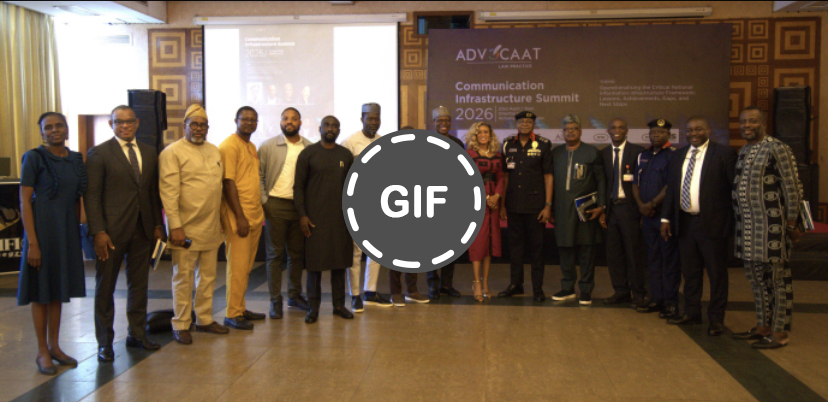
Nigeria’s drive to secure its Critical National Information Infrastructure (CNII) is coming under renewed scrutiny, as industry and policy stakeholders warn that weak enforcement, limited legal backing, and low public awareness are undermining efforts to protect the country’s digital backbone.
At a communications infrastructure summit convened on Thursday in Lagos by Advocaat Law Practice, experts say that while Nigeria has made policy advances in safeguarding telecoms and digital assets, implementation remains inconsistent and, in some cases, ineffective.


“For anyone to access a base station and remove components, that individual must have a good understanding of the environment and equipment. That points to a failure in awareness and protection systems,” he says.
Enforcement gaps threaten CNII gains
Benito Eze, Assistant Commandant General of the Nigeria Security and Civil Defence Corps (NSCDC), says infrastructure protection efforts must extend beyond policy pronouncements to operational execution.
“The assignment of infrastructure protection should be all-encompassing. There is lack of collaboration and issues around training—training to meet modern threats and the challenges in protecting digital infrastructure,” he says.
His remarks highlight systemic gaps, including weak inter-agency coordination, evolving threat vectors, and insufficient capacity building among enforcement personnel.
Stakeholders at the summit identify vandalism and sabotage of telecoms infrastructure as persistent risks, often enabled by insider knowledge and low public awareness of the consequences.
Eze calls for grassroots advocacy to bridge this gap.
“What I will suggest is grassroots advocacy to enable Nigerian citizens to understand the impact of damaging this infrastructure,” he says.
He adds that the technical nature of telecoms infrastructure attacks suggests that perpetrators often possess operational knowledge of network environments.
“For anyone to access a base station and remove components, that individual must have a good understanding of the environment and equipment. That points to a failure in awareness and protection systems,” he says.
Legal experts are also questioning the robustness of Nigeria’s current CNII framework. Rotimi Akapo, Partner and Head of the Telecommunications, Media and Technology (TMT) practice at Advocaat Law Practice, argues that enforcement remains the weakest link.
He raises concerns over whether vandals are being effectively prosecuted and whether existing penalties are strong enough to deter future attacks.
“What we’re looking at here is an executive order. In the hierarchy of laws, an executive order is not on the same level as a statutory instrument—it is a subsidiary instrument,” Akapo says. “We can definitely do a lot better to meet global standards.”
According to him, Nigeria’s reliance on executive directives to drive CNII protection leaves critical gaps when compared to jurisdictions with stronger statutory frameworks.
Akapo also points to fragmented institutional coordination as a structural weakness. Despite the involvement of multiple agencies, ranging from regulators to security bodies, collaboration remains limited and often siloed.
“Are these institutions working effectively together? Do they need a unified framework to ensure implementation and enforcement are no longer fragmented?” he queries.
The lack of a harmonised operational model, stakeholders say, continues to dilute the impact of existing policies.
CNII framework: progress and limitations
The summit, themed “Operationalising the Critical National Information Infrastructure Framework: Lessons, Achievements, Gaps and Next Steps,” reviews Nigeria’s progress in protecting critical digital assets while identifying persistent implementation challenges.
Nigeria’s CNII framework is designed to identify and secure systems, networks, and infrastructure whose disruption could significantly impact national security, economic stability, and public safety.
Momentum for the framework increased following the Federal Government’s 2024 executive order designating telecommunications infrastructure as critical national infrastructure. The move builds on provisions of the Cybercrimes (Prohibition, Prevention, etc.) Act, which criminalises attacks, vandalism, and unauthorised access to digital systems.
Under the CNII designation, it is illegal to damage or interfere with telecoms infrastructure, with penalties including fines and imprisonment. The framework also mandates collaboration among government agencies, operators, and security institutions.
High stakes for Nigeria’s digital economy
Stakeholders say that while the CNII designation marks a significant policy milestone, its effectiveness will depend on enforcement, legal strengthening, and coordinated execution.
Telecoms infrastructure vandalism has long disrupted service delivery, increased operating costs for network providers, and degraded connectivity for millions of Nigerians.
As Nigeria deepens its digital transformation agenda, experts warn that failure to close enforcement and coordination gaps could expose critical systems to continued risk—undermining both national security and the growth of the digital economy.
Stay ahead with real-time reports, breaking news, and exclusive insights delivered directly to your phone. Don’t settle for outdated information. Join TECHNOLOGYTIMES NEWS on WhatsApp for 24/7 updates.
Join Our Whatsapp Channel

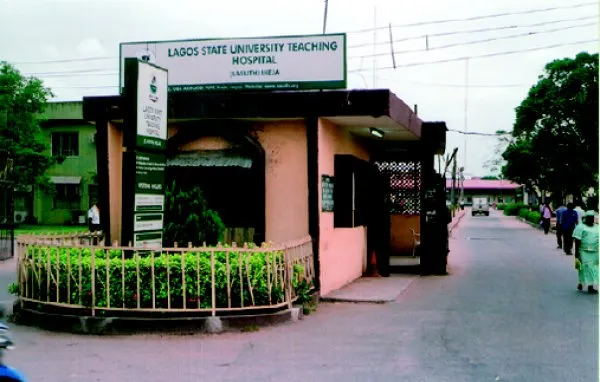

The Nigerian Association of Resident Doctors (NARD) has backed the ongoing strike by resident doctors at the Lagos State University Teaching Hospital (LASUTH).
NARD in a press release issued on 12 September and signed by its President, Mohammad Suleiman, called on Governor Babajide Sanwo-Olu and the Lagos State Ministry of Health to intervene.
NARD said it is in “full solidarity” with the Association of Resident Doctors, Lagos State University Teaching Hospital (LASUTH-ARD), and supported its demands.
It noted that the unresolved welfare concerns had disrupted medical services at the tertiary hospital.
It called on the state government to address the doctors’ grievances and “avert a prolonged crisis” that could affect healthcare delivery in Lagos.

Doctors’ demands
According to NARD, the unresolved issues include the non-payment of specialist allowance for Grade Level 14 resident doctors, also known as Senior Registrars 1 (SR1).
The association also cited outstanding salary shortfalls and advancement arrears, as well as 25 months of arrears arising from the delayed implementation of the revised Professional Allowance Table.
NARD further raised concerns about discrepancies in recent salary payments, calling for the immediate release of full salary breakdowns to ensure transparency.
The association said, the concerns persisted despite previous acknowledgements and agreements with the state government.
“Our colleagues at LASUTH have shown immense patience and dedication, but the persistent failure to honour agreements leaves them with no choice,” NARD said.
It urged the government to meet the demands and restore normal medical operations.
Background
The latest strike followed earlier disagreements between LASUTH resident doctors and the Lagos State government over welfare and remuneration.
LASUTH-ARD had embarked on a three-day warning strike from 15 to 17 June 2026, citing concerns including the implementation of the Professional Allowance Table, payment of specialist allowance to Grade Level 14 resident doctors, salary shortfalls and advancement arrears.
The doctors also demanded the resumption of construction of resident doctors’ quarters within LASUTH.
Following the warning strike, the doctors said several meetings were held with government officials, with assurances that the specialist allowance for SR1 doctors would be incorporated into the Professional Allowance Table.
LASUTH-ARD also said the issue was discussed with Governor Sanwo-Olu during a meeting on 17 July.
However, the doctors later said the specialist allowance was not reflected in the August salaries of affected members, prompting further disagreement with the government.
In August, LASUTH-ARD gave the Lagos State government a seven-day ultimatum to resolve the issues, warning that failure to do so could lead to further industrial action.
ALSO READ: NMA warns of wider health crisis as LASUTH doctors’ strike enters second day
The association demanded the implementation and payment of the specialist allowance, payment of outstanding arrears and settlement of salary shortfalls and advancement arrears.
NARD warns against escalation
NARD said the Lagos State government must treat the industrial action with urgency to prevent further escalation.
The association called on Governor Sanwo-Olu and the state Ministry of Health to intervene directly and resolve the outstanding issues.
It said continued delays could threaten patient care and stability in the state’s health system.
“NARD stands shoulder-to-shoulder with LASUTH-ARD until the issue is fully resolved,” the association said.
The doctors’ association urged the government to address the grievances and restore normal medical operations across the health system.
Discover more from Premium Times Nigeria
Subscribe to get the latest posts sent to your email.
-

 Featured4 days ago
Children Are Suffering in Silence: Plateau Child Protection Network Rates Abuse Crisis 9/10
-
Business4 days ago
CBN disowns purported $46 billion grant approval
-
Business2 days ago
FG settles severance benefits for 2,100 former Nigeria Airways workers after two decades
-
News3 days ago
Mecka AI nears $500M valuation in Sequoia-led deal amid rush for robot training data