News
Nigerians are to blame for poverty, corruption, insecurity in country: Senator Ningi


Senator representing Bauchi Central, Abdul Ningi, has faulted Nigerians over their failure to demand accountability from leaders and challenge them to stop killings and kidnappings across the country.
In a Channels TV interview on Thursday, Mr Ningi said, “Nigeria is not helpless. We still have those with ideas. The problem is that people have not come to realise that they push the government to do what they want. People lament, then go back and watch. People must challenge and talk to our faces that we’re not doing the right thing.”
Mr Ningi’s statement came amid escalating killings, especially in Borno, Plateau, Bauchi, Benue, Niger, Sokoto, Kebbi, Kwara and Kano.
He stated, “I look at politics as part and parcel of what is aiding this thing because a lot of us, myself included, have contracted our time in politicking rather than providing the much-needed security for our people.
“It is a failure of leadership. I am also included, and there is no regret in saying I am also involved. It is a complete failure of leadership. We must take responsibility that we haven’t been there for the people. We must admit that to show that we’re set to make a serious change.”
The lawmaker stressed the need for more effective strategies to ensure the safety of lives and property across the country.
“When the matter is discussed in the National Assembly, we lament and task the security agencies. And I say, why don’t we look at another option and devise something new? There would be more problems if we don’t look backwards and forward and come up with clear solutions,” he explained.

Health
Half of approved diagnostics for Africa’s priority epidemic diseases unavailable at primary healthcare level – Report
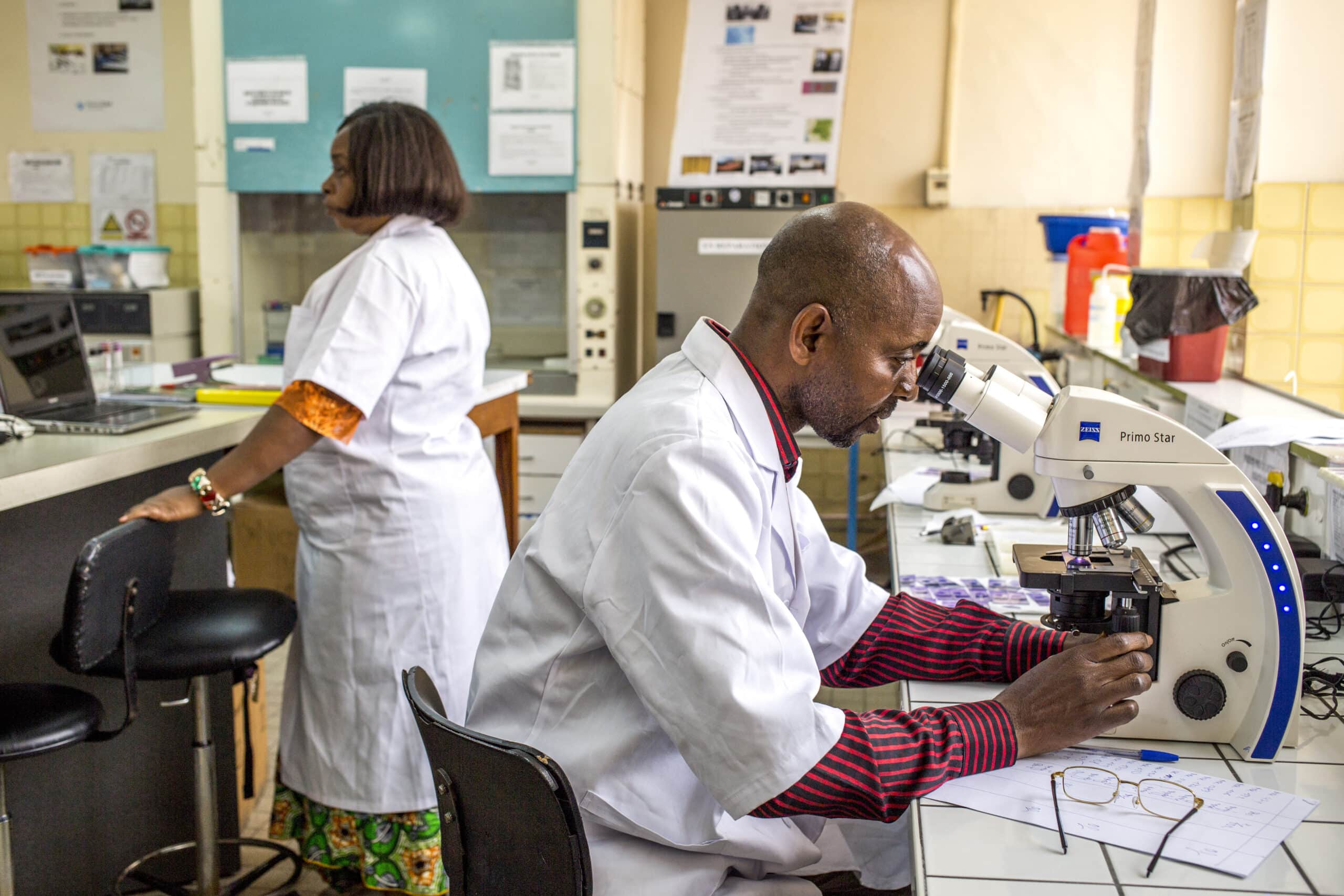

A new report has revealed that about half of the approved diagnostic tests for six epidemic-prone diseases prioritised by the Africa Centres for Disease Control and Prevention (Africa CDC) cannot be used in most primary healthcare facilities across Africa because they require laboratory infrastructure that is often unavailable.
The report found that 50 per cent of approved diagnostics for Mpox, dengue, cholera, bacterial meningitis, malaria and Ebola depend on laboratory facilities beyond the reach of many frontline health centres.
For Ebola alone, 88 per cent of approved diagnostic tests require laboratory infrastructure.
It also found that funding for diagnostic research and development has steadily declined since 2015, despite Africa’s continued vulnerability to infectious disease outbreaks.

Findings come months after the 2026 Bundibugyo ebolavirus outbreak, during which health authorities initially failed to detect the virus because available diagnostic tests were designed to identify the Zaire strain of Ebola.

The mismatch delayed confirmation of the outbreak by 10 days, highlighting the consequences of gaps in Africa’s diagnostic preparedness.
The report, titled Diagnostics Deficit: Funding, Access, and Preparedness Gaps in African Health Systems, was launched by global health organisations PATH and Impact Global Health ahead of the African Union Extraordinary Health Summit in Accra, Ghana.
Rapid diagnostic tests play a critical role in identifying outbreaks early, guiding treatment and helping health authorities contain the spread of infectious diseases. However, limited access to these tools, particularly in primary healthcare centres where many patients first seek treatment, continues to weaken disease surveillance and emergency response across the continent.
Uneven progress
The report examined six diseases selected from Africa CDC’s priority list for their epidemic and outbreak potential: mpox, dengue, cholera, bacterial meningitis, malaria, and Ebola. Measles, although also on the priority list, was excluded because comparable G-FINDER funding data were unavailable.
Researchers identified 577 approved diagnostic products across six diseases, with another 59 still under development.
However, innovation remains heavily concentrated in just two diseases. Dengue and mpox account for 84 per cent of all approved and pipeline diagnostic products, while cholera and bacterial meningitis, both identified by Africa CDC as major outbreak and antimicrobial resistance threats, have only seven approved or pipeline products each.
Despite a growing number of diagnostic products, access remains a major challenge. Of the 577 approved diagnostics, 288 require clinical laboratory infrastructure, limiting their use in PHC facilities.
While 83 per cent of malaria diagnostics can be deployed at the PHC level, most approved diagnostics for Ebola and mpox remain laboratory dependent, restricting their use in frontline health facilities.
Further review showed that investment in diagnostic research and development has continued to decline. Using G-FINDER data, the analysis found that annual funding for six diseases has fallen by nearly $4 million (approx. ₦6 billion depending on exchange rates) since 2015, dropping from almost $55 million to less than $26 million in 2024.
It warned that funding typically rises during major outbreaks before falling sharply once emergencies subside, a cycle that leaves African countries inadequately prepared for future epidemics.

Experts’ concerns
Commenting on the findings, Sabastine Wakdok, Director of Research at Impact Global Health, said a steady decline in funding reflects a diagnostic research system struggling to keep pace with Africa’s growing outbreak risks.
Mr Wakdok said investment in research and development for diagnostics targeting six priority diseases has continued to fall despite rising disease incidence across the continent.
He noted that funding often increases during outbreaks but drops sharply once the immediate crisis passes, leaving African countries inadequately prepared for future epidemics.
“Diagnostic R&D investment for six Africa CDC priority diseases has fallen nearly $4 million annually since 2015. More troubling, this decline persists despite rising disease incidence and outbreak risk,” he said.
He added that the continent was not receiving the sustained investment needed for epidemic-prone diseases, warning that outbreak-driven funding cycles leave Africa “perpetually underprepared.”
Also commenting, PATH’s Senior Director for the Centre for Advocacy and Policy, Bernard Aryeetey, said the challenge goes beyond developing new diagnostic technologies to ensuring they reach the people and health facilities that need them most.
Mr Aryeetey stressed that the availability of diagnostic tools alone is not enough if they cannot be accessed during outbreaks or integrated into frontline health systems.
“It is not solely whether diagnostics exist, but also whether they can reach clinics and surveillance systems when they are most needed, especially during outbreaks,” he said.
He warned that unless barriers relating to access, affordability, deployment and manufacturing readiness are addressed, people will continue to die needlessly even when effective diagnostic tools are available.
READ ALSO: PT Health Watch: Why high cholesterol is easy to miss but dangerous to ignore
Recommendations
To address identified gaps, the report called for sustained domestic and international investment in diagnostic research, arguing that emergency-driven funding alone cannot build resilient health systems.
It urged African governments to increase national financing for diagnostics while encouraging global health donors to provide predictable, long-term support.
Authors also recommended that Africa CDC make diagnostics a central pillar of the continent’s health security strategy and called on researchers and manufacturers to prioritise developing diagnostic tools for use in PHC facilities, rather than relying mainly on technologies that require sophisticated laboratory infrastructure.
To improve access across the continent, the report urged the African Medicines Agency to harmonise regulatory approval processes so that diagnostic tests approved in one African country can be recognised more easily in others.
It also highlighted Africa’s growing manufacturing capacity, noting that facilities across the continent can collectively produce more than 500 million diagnostic units annually.
However, weak demand, fragmented regulation, financing constraints and limited ecosystem support continue to prevent manufacturers from operating at scale.
The report concluded that although Africa has expanded its diagnostic pipeline in recent years, improving access, affordability, manufacturing capacity, and deployment will be critical to strengthening the continent’s preparedness for future disease outbreaks.

The Leader of INRI Evangelical Spiritual Church, Primate Elijah Ayodele, has warned the ruling All Progressives Congress (APC) that it could lose control of nine states in the 2027 governorship elections if the party and its governors fail to strengthen their political structures ahead of the polls.
Ayodele gave the warning in a statement released by his media aide, Osho Oluwatosin.
The minister said the APC should not assume that its current dominance in many states would automatically translate into victory in the next general election.
According to the cleric, the political landscape ahead of 2027 will be more challenging than previous elections, with technology expected to play a major role in shaping the outcome.
“APC cannot sweep the whole states in the coming election; it’s not possible, there will be some things that will happen in the process of the election. The election will be complicated in some ways, and technology will be one of the ways,” Ayodele said.

He identified Sokoto, Benue, Plateau, Kano, Kaduna, Yobe, Adamawa, Niger and Nasarawa as the states where the ruling party must work harder to retain power.
“Any governor who doesn’t stand well will lose, and APC must work very hard in the following states if they want to win: Sokoto, Benue, Plateau, Kano, Kaduna, Yobe, Adamawa, Niger, Nasarawa. APC must watch these states well,” he added.
Ayodele further cautioned that the APC should not take any of the states for granted, warning that the opposition was positioning itself to make significant gains.
“These states are not certain for APC governorship candidates to win and retain; they must work extraordinarily hard if they want to get it otherwise, it will be swept away from them,” he said.
The APC emerged from the 2023 governorship elections as the party with the highest number of governors, winning states including Lagos, Kogi, Imo, Ogun, Sokoto, Cross River, Niger, Jigawa and Yobe. However, the political atmosphere has changed considerably since then, with defections, internal party disputes and the emergence of new alliances expected to reshape the battle for many states in 2027.
Some of the states listed by Ayodele are already regarded as highly competitive. Kano, for instance, remains one of Nigeria’s biggest political prizes because of its large voting population. The APC lost the 2023 governorship election in the state, and although the state’s governor is a now a member of the APC, it is believed that Kano will remain one of the toughest battlegrounds in the next election.
Plateau and Benue have also witnessed political competition recently, while Sokoto, Kaduna, Adamawa, Nasarawa and Niger have all experienced closely fought elections that suggest no party can safely assume victory in 2027.
Political observers have also noted that even states traditionally considered APC strongholds may no longer be guaranteed victories. During the 2023 general elections, the party retained the governorship in Lagos, but lost the presidential vote in the state to Labour Party candidate Peter Obi.
Analysts say the outcome of the 2027 elections will depend not only on incumbency but also on candidate selection, party unity, campaign organisation, voter turnout and the strength of opposition parties.
-

 News3 days ago
WAFCON 2026: Oshoala Wants Bigger Crowds, Charges CAF on Awareness as Super Falcons Chase Record 11th African Title in Morocco
-
News3 days ago
Plateau sets 2027 agenda for improved healthcare delivery
-
News3 days ago
Why the first GPU financiers are turning to inference chips in a $400 million deal
-
News3 days ago
2027: Why we endorsed Tinubu – APGA