Connect with us

News

Nigeria targets Almajiri reform with digital education initiative, NITDA says – Technology Times

info

Published

on

1776668752 admin ajax.png

The Federal Government is advancing plans to integrate digital education into Nigeria’s Almajiri system, in a move to address the country’s rising population of out-of-school children through technology-driven learning and skills development.

The initiative is being driven through a collaboration between the National Information Technology Development Agency (NITDA) and the National Commission for Almajiri and Out-of-School Children’s Education (NCAOOSCE), following a recent high-level engagement at NITDA headquarters in Abuja, according to a statement by the tech agency, NITDA.

Muhammad Sani Idris, Executive Secretary of NCAOOSCE, says the Almajiri system is facing deep-rooted structural challenges affecting children’s welfare and access to education.

According to him, these challenges include parental abdication of responsibility, widespread street begging, vulnerability to exploitation, and the growing number of out-of-school children across the country.

Idris called for stronger institutional collaboration to reposition the system through digital education and structured skills acquisition.

“He requested NITDA’s collaboration to transform the system through digital education and skills acquisition,” the Commission says in a statement.

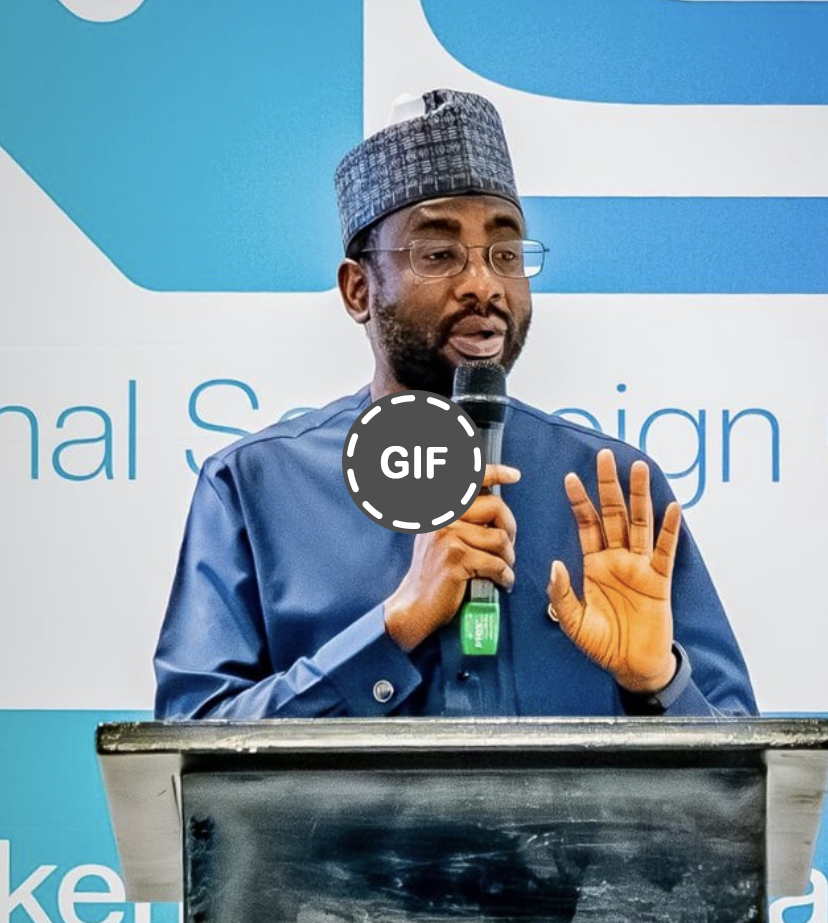
In response, Kashifu Inuwa, Director-General of NITDA, proposed the deployment of the agency’s Digital Literacy for All initiative through existing Almajiri structures.

The strategy, according to Inuwa, will leverage members of the National Youth Service Corps (NYSC) as digital literacy champions, integrate technology training into Almajiri learning centres, and establish digital hubs to deliver basic to advanced digital skills.

Both agencies say the framework is designed to bridge learning gaps and expand access to modern competencies for vulnerable children who are currently outside the formal education system.

They also reaffirmed their commitment to using technology as a tool for inclusive education and national development, announcing the establishment of a joint implementation committee to coordinate the rollout of the programme.

The collaboration reflects a broader shift in Nigeria’s education policy, where digital literacy is increasingly being positioned as a strategic instrument for tackling exclusion and youth vulnerability.

Nigeria continues to grapple with one of the largest out-of-school children populations globally, driven by poverty, insecurity in parts of Northern Nigeria, and systemic barriers to formal education. The Almajiri system, historically rooted in traditional Islamic learning, has in recent years become associated with street begging and heightened child vulnerability, particularly in urban centres.

The proposed intervention signals a transition from welfare-based responses to a more structured, skills-driven model, where technology serves as both an educational platform and an empowerment tool.

However, stakeholders acknowledge that implementation will require addressing key constraints, including funding, infrastructure readiness, training capacity, and connectivity challenges in underserved communities.

The newly constituted joint committee is expected to define operational guidelines, deployment frameworks, and scale-up pathways for the initiative.

Stay ahead with real-time reports, breaking news, and exclusive insights delivered directly to your phone. Don’t settle for outdated information. Join TECHNOLOGYTIMES NEWS on WhatsApp for 24/7 updates.

Join Our Whatsapp Channel

Continue Reading
Click to comment

Leave a Reply

Your email address will not be published. Required fields are marked *

Business

Pastor Arrested Over Alleged Defilement of Minor in Karshi

info

Published

on

By

1776284932 images 2.jpeg

BY SUNDAY SAMUEL—Nasarawa State Police Command  attached to Karshi Divisional Headquarters have arrested one Pastor Asonye Isaiah, 37, of Rock of Love and Adoration Ground, Old Karsh I, Abuja, for allegedly defiling a 16-year-old girl in Nasarawa State.

According to statement released by SP Ramhan Nansel, Police Public Relations Officer, via the commands official X account that the arrest followed a complaint lodged at the Division on 18th April, 2026, at about 2000hrs.

Preliminary investigation revealed that the suspect deceived the victim’s aunt, claiming her niece was “

possessed” and required cleansing at a river. He instead took the victim to a hotel in New Karshi, where he allegedly had unlawful carnal knowledge of her twice. He further threatened to kill her if she disclosed the incident.

The crime came to light after the victim’s guardian observed unusual changes in her behaviour and questioned her. The victim was immediately taken for medical examination, which confirmed penile penetration.

Upon interrogation, the suspect confessed to the offence and pleaded for leniency.

The Commissioner of Police, CP Shetima Jauro Mohammed, has directed that the case be transferred to the State Criminal Investigation Department, Lafia, for comprehensive investigation and prosecution.

He assured that justice will be served and urged members of the public to exercise caution regarding places of worship they attend and individuals who parade themselves as clerics.

The post Pastor Arrested Over Alleged Defilement of Minor in Karshi appeared first on Business Today NG.

Continue Reading

News

OpenAI’s existential questions | TechCrunch

info

Published

on

By

GettyImages 2266645295.jpg

OpenAI has been all over the news recently, whether that news is about acquisitions, competition with Anthropic, or bigger debates about AI’s impact on society.

On the latest episode of TechCrunch’s Equity podcast, Kirsten Korosec, Sean O’Kane, and I did our best to round up all the latest OpenAI news. While the company’s latest acquisitions seem to be classic acqui-hires, Sean suggested they also address “two big existential problems that OpenAI is trying to solve right now.”

First, with the team behind personal finance startup Hiro, the company may be hoping to  come up with a product that has “more hooks than just a chatbot, and maybe something worth paying more for.” And with new media startup TBPN, OpenAI could be looking to “better shape its image in the public eye, which lately has not been great.”

Read a preview of our conversation, edited for length and clarity below.

Anthony: [We have] two deals that are worth mentioning, one is that OpenAI acquired this personal finance startup called Hiro. And that comes after another deal that was literally announced when we were recording our last episode of Equity, so we didn’t get to talk about it: OpenAI had also acquired TBPN — a business talk show, like a new media company.

And I think both of these deals are pretty small compared to the scale of OpenAI. These are not things that people expect to really change the course of their business or anything like that, but they’re interesting because it suggests that there’s still this [attitude of,] “Let’s try out different things.”

Especially [with] the TBPN deal […] particularly at this time when it feels like OpenAI, from all the reporting we’re reading, is also trying to really refocus on making ChatGPT and its GPT models really competitive in an enterprise context with programmers.

Techcrunch event

San Francisco, CA
|
October 13-15, 2026

Is running a tech talk show, should that really be on the to-do list?

Kirsten: No, this should not be on the to-do list. That’s it. 

I do want to mention Hiro because to me, that’s an interesting one, because Julie Bort, our venture editor, super talented, she wrote about this and was I think the first to write about it. She dug in a little bit and basically this looks like an acqui-hire. The company is folding. They basically said, “By this date, you won’t be able to access this anymore.”

This is a personal finance startup. And they only launched two years ago. So this absolutely is about getting talent on board. So I’m very curious to see if OpenAI is going to be just absorbing them into the ether at OpenAI, or if they’re actually interested in some sort of personal finance product that they want to work on. To me, it’s not really clear.

Sean: I think you look at both of these as acqui-hires to a certain extent. I mean, the TBPN acquisition, allegedly they are going to retain their editorial independence on the show that they make every day. And all respect to those guys who’ve put that out there and gotten it off the ground so quickly and grown it into what it has become.

I think any person who follows the media should have a healthy dose of skepticism that when you acquire something like that and you put the people who make the show under the org of the public policy people and comms or marketing adjacent people higher up at the company making the acquisition, that you could have good questions about whether or not saying “editorial independence” is enough. It’s not an incantation that just works.

But you know, what’s interesting to me about these two, while they are similar in their acqui-hire-ness, I think they both represent two major problems that OpenAI is facing.

One is Hiro. OpenAI has a very successful product in ChatGPT. As far as whether or not that will actually ever make them enough money to become a sustainable business that’s not raising the largest private rounds in the world, ever, to keep things going, is a big question. And they also seem to be struggling to keep up on the enterprise side of things where the real money seems to be, so bringing in a team like this seems like taking a shot at, “What else can we do?” 

The guy who founded Hiro seems to have a serial entrepreneur streak of creating consumer apps, and so this seems to me like a bet on them being able to come up with something else that may have more hooks than just a chatbot, and maybe something worth paying more for.

And then TBPN is an acquisition made to help better represent what the company does and better shape its image in the public eye, which lately has not been great and certainly is under more questions now than just a few weeks ago, because Ronan Farrow just led a report at The New Yorker that dropped suspiciously right around the time that this and a couple other announcements from OpenAI came out last week. 

I think those are two big existential problems that OpenAI is trying to solve right now.

Kirsten: So the thing that you didn’t say is, there’s Anthropic kind of looming in — not in the shadows, I mean, they’re very much taking up a lot of space here — but they’re having a lot of success on the enterprise side of things.

It feels like these guys are competitors and they also feel like very different companies in a lot of ways. Anthony, I’m wondering if you see them as direct competition to OpenAI? Or [are they] just finding their stride in enterprise and in a way, these two companies are clearly going to coexist and they’re really not directly competing with each other — maybe on talent, but not necessarily as we initially thought of them?

Anthony: I think they’re directly competing with each other. There’s definitely a scenario where if AI as an industry, as a technology, is as successful as its proponents hope for, they could both be very successful companies, they could just be the one and two. And the success of one does not necessarily mean that the other will just fade into obscurity. 

And again, none of this is official, but there’s just been a lot of reporting around how it seems like OpenAI, more than anyone, is obsessed with and upset about Anthropic’s rise. 

Our reporter Lucas [Ropek], he did a great piece over the weekend about the HumanX conference, where he was talking to everyone there and they’re sort of like, “Yeah, ChatGPT is fine, too,” but like they were all about Claude Code. And I think that is exactly what OpenAI is worried about.

Because again, in theory, there could be many other opportunities for generative AI, but it feels like the big growth area, the area where the most money is and where they could at least see a path to having a sustainable business in the future, is in these enterprise and coding tools.

Continue Reading

Trending