Business
NCAA fines Saudi Airlines ₦6 million for alleged violations


The Nigerian Civil Aviation Authority (NCAA) has imposed a ₦6 million fine on Saudi Airlines for what it described as consumer-protection-related violations.
Michael Achimugu, Director of Public Affairs and Consumer Protection at the NCAA, disclosed this on Friday.
Mr Achimugu stated that the sanction became necessary after the airline failed to resolve several outstanding consumer issues, despite repeated interventions by the regulator and an extended period granted for compliance.
According to him, the NCAA had previously stepped in to support the airline in managing a situation at the Nnamdi Azikiwe International Airport in Abuja a few months ago that could have escalated into violence.
He noted that the authority had also given Saudi Airlines additional time to address pending complaints and comply with the regulator’s determinations, but the airline failed to meet its obligations.

“The Nigeria Civil Aviation Authority has sanctioned Saudi Airlines to the tune of ₦6 million for consumer protection-related infractions,” Mr Achimugu said.
He explained that the enforcement action was taken to ensure compliance with Part 19 of the Nigeria Civil Aviation Regulations (Nig. CARs) 2023, which outlines the rights of air passengers and the responsibilities of airlines operating in the country.
The NCAA expressed hope that the sanction would encourage the airline to improve its operations in Nigeria and strengthen its commitment to passenger welfare.
Mr Achimugu emphasised that passengers travelling to and from Nigeria deserve to be treated fairly and with respect by all airlines operating in the country.
READ ALSO: NCAA Championships: Ogazi shatters records, Ajayi strikes gold as Nigerians shine in Eugene
He added that while the authority would continue to support Saudi Airlines and other carriers to operate efficiently, it would not hesitate to enforce regulatory standards where necessary to protect consumers.
Saudi Airlines had yet to respond to the NCAA’s sanctions as of the time of filing this report.







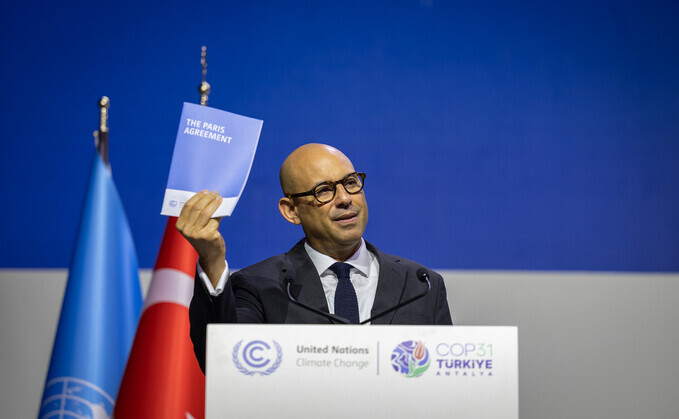
The executive secretary of UN Climate Change, Simon Stiell, told the ministers at COP31 that climate finance must be redesigned to lift developing countries out of a cycle of debt and disaster, adding that meeting a headline figure will not do it.
“Meeting a financial target does not always meet countries’ needs. To do that, we need to look at how finance is delivered,” Mr Stiell said on Friday at the opening of a high-level ministerial dialogue on climate finance in Antalya, Turkey.
Countries agreed at COP29 that developed nations would lead in providing $300 billion a year by 2035, as part of a wider effort to raise $1.3 trillion annually from all sources.
Mr Stiell said the roadmap for reaching those sums “must become reality”, but that the terms of the money mattered as much as the amount.
“Many developing countries are trapped in a downward loop of debt, disaster, and devastating capital costs,” he said. “The threat of floods, fires, storms and droughts hangs over them, pushing up the price of borrowing even before disaster strikes.”
He stated that the terms of finance should reflect each country’s debt position.

“Private finance, loans and guarantees are essential to achieving our collective goals. But grant-based and highly concessional finance will remain critical, particularly for Least Developed Countries, Small Island Developing States and other very vulnerable economies,” he said.
According to him, broader action on debt is also needed to prevent countries from being forced to choose between repayments and resilience.
International climate finance for developing countries reached about $137 billion in 2024, and almost 70 per cent of it came in the form of loans, according to a UN Women flagship report released on Tuesday in Antalya.
Countries in sub-Saharan Africa paid more than twice as much in external debt service between 2021 and 2023 as they received in climate finance, according to an analysis published by the Heinrich Böll Foundation.
The analysis found that interest payments consumed more than 10 per cent of government revenue in 27 African countries in 2024.
The chair of the African Group of Negotiators, Nana Antwi-Boasiako Amoah, has said that a transition could not be called just if poorer countries have to “mortgage their futures” to pay for it.
The group lost a bid on Monday for a separate agenda item on tripling adaptation finance. It now wants the target prioritised in the summit’s cover decision.
Nigeria is not on the UN’s list of least developed countries, which places it among the states the UN climate chief expects to rely more on loans, guarantees and private capital.
It needs about $337 billion between 2026 and 2035 to implement its climate commitments, according to the National Council on Climate Change.
Omotenioye Majekodunmi, the agency’s director-general, said more than 80 per cent of that will have to come from private investment, commercial debt, and international carbon finance.
About $2.5 billion a year went to climate action in Nigeria in 2021 and 2022, counting domestic and international sources, according to the Climate Policy Initiative’s tracking.
The dialogue was the last in a series that began in 2013, and its conclusions will go to COP32 in Ethiopia next year, Mr Stiell said.
Discover more from Premium Times Nigeria
Subscribe to get the latest posts sent to your email.
-

 News2 days ago
UNIJOS Appoints Patricia Lar as First Female Vice-Chancellor
-
News3 days ago
NiYA: Nigeria Awards ₦49m grants to 17 young entrepreneurs – Technology Times
-
News4 days ago
NPFL Matchday 12 Roundup: Rangers Edge Kwara United, Bendel Snatch Late Winner as Inter Lagos Rescue Derby Point
-
News4 days ago
N10m reward to councillors not for vote-buying – Wike