News
Kano Hosts Launch of ‘The Alternative’: A New Dawn for Nigerian Leadership


In a bold bid to address Nigeria’s democratic challenges, Otunba Segun Showunmi, convener of the National Opposition Movement Coalition (NOMC), has launched “The Alternative”—a platform to galvanize grassroots participation in the selection of future leaders. Speaking at the North West Regional Town Hall meeting in Kano State on Thursday, the former Ogun State governorship aspirant called for a reorientation of democracy to empower ordinary Nigerians.
Showunmi decried the erosion of ideological clarity in Nigerian politics, criticizing the current system as a “cult of human personality” rather than an avenue for national service. “Political parties have abandoned ideologies, becoming vehicles for individuals, not ideas,” he lamented. He warned that this instability undermines governance and leaves Nigerians increasingly disillusioned.
Highlighting the urgent need for reform, Showunmi called for a shift from tribal and religious politics to addressing critical issues like poverty, inflation, and unemployment. “Our democracy risks becoming a conversation about tribe and religion rather than national service and governance,” he said.
“The Alternative” seeks to rally citizens through town hall meetings, focus groups, and dialogues to identify a consensus candidate for the presidency—someone who embodies competence and integrity. The movement has already gained momentum with town halls held in Jos, Bauchi, and Kano.
Showunmi also criticized the influence of money in politics, denouncing vote-buying as a betrayal of democracy. “Nigerians must reject politicians who exploit economic hardship to buy votes. Democracy belongs to the people, and they must protect it,” he urged.
Prominent stakeholders echoed his call for reform. Hon. Jafaar Sani Bello emphasized prioritizing competence over ethnicity in leadership selection. Hajiya Khadija Dahiru urged women to take an active role in shaping Nigeria’s future, while Hon. Aminu Ashiru Kwalam advocated for deliberate vigilance in the electoral process.


As the 2027 elections approach, “The Alternative” has sparked a vital conversation about reclaiming democracy and ensuring governance serves all Nigerians. Whether this ambitious movement will achieve its goals remains to be seen, but its message resonates deeply with a nation yearning for change.

Federal Capital Territory, FCT, Minister Nyesom Wike has taunted the 2027 presidential candidate of the Nigeria Democratic Congress, NDC, Peter Obi, saying the former Anambra State governor can only win the coming election on social media.
Speaking at a stakeholders’ town hall meeting in Bonny Local Government Area of Rivers State on Saturday, Wike said he would vote for Obi if the election were to choose a social media president but insisted that the NDC candidate could not govern Nigeria.
“Truly speaking, I give Obi president of social media. If you were voting for the president of social media, I would vote for him,” he said.
Wike also described Obi as a stingy politician whom the country's economy cannot be entrusted to.
DAILY POST reports that the Minister, who is heading the All Progressives Congress, APC, presidential campaign in Abuja and Rivers has always criticized Obi and other candidates.
He had also expressed confidence that President Bola Tinubu would be re-elected in the January 16 election, dismissing the chances of the opposition.
‘I will vote for Peter Obi as social media president’ – Wike taunts NDC candidate
News
Injury Heartbreak for Aruna Quadri! Nigerian Star Retires Against Egypt’s Elbeiali in ITTF Africa Championships Round of 16

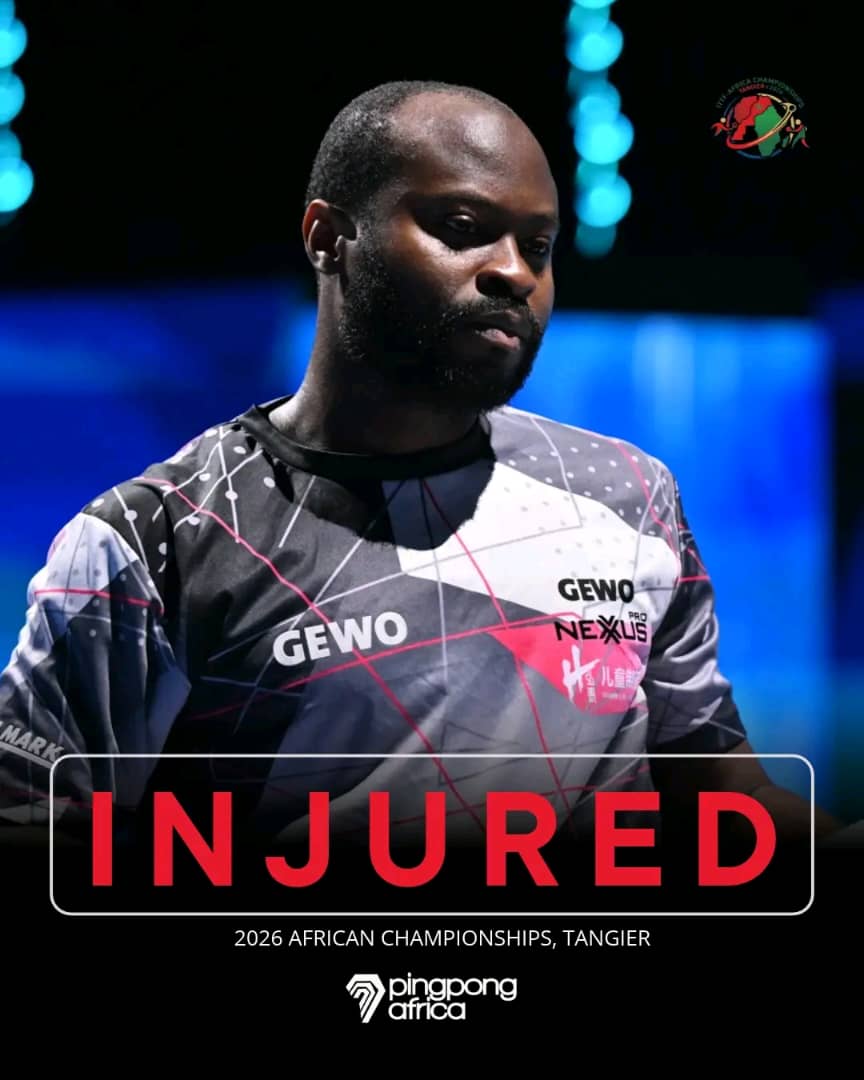
Nigeria’s table tennis star Aruna Quadri suffered a heartbreaking exit from the 2026 ITTF Africa Senior Championships in Tangier, Morocco, after an injury forced him to retire during his men’s singles Round of 16 encounter against Egypt’s Mohamed Elbeiali.
Sports247 reports that the highly anticipated contest ended prematurely after Aruna, who had been battling his Egyptian opponent in a closely contested match, became unable to continue despite attempting to play through the discomfort.
The setback brought an unfortunate conclusion to the Nigerian’s campaign, ending his hopes of progressing to the quarterfinals. The encounter had been evenly balanced, with both players winning a game apiece before the injury disrupted proceedings.
With the match tied at 1-1 and the third game locked at 10-10, Aruna experienced physical discomfort that required medical attention. The Nigerian star requested a medical timeout before returning to the table in an attempt to continue the contest.
However, Elbeiali eventually secured the third game to establish a 2-1 advantage. Despite Aruna’s determination to remain competitive, the injury continued to affect his participation.
The Nigerian ultimately retired from the encounter, handing Elbeiali passage into the quarterfinals.
Aruna had entered the Round of 16 following victory over an Angolan opponent, keeping alive his ambition of challenging for another continental title. His meeting with Elbeiali represented an important test against a familiar Egyptian opponent.
However, the injury prevented the Nigerian from completing the contest and competing for a place among the tournament’s final eight players. The retirement was particularly disappointing considering how closely matched both players had been before the interruption.
The setback shifts attention towards Aruna’s recovery, with the extent of the injury yet to be established. For the experienced Nigerian international, regaining full fitness will be essential before returning to competitive action.
Aruna remains one of Nigeria’s most accomplished table tennis players, having represented the country at major international tournaments and established himself among Africa’s leading competitors.
His unexpected withdrawal represents a disappointing development for Nigerian table tennis supporters who had hoped to see him progress further in Tangier.
Although his campaign ended earlier than anticipated, Aruna’s determination to continue after receiving medical attention demonstrated his competitive spirit. The immediate priority will now be his recovery and a safe return to the table.
-

 News2 days ago
Obi, Kwankwaso to hold Middle Belt Youth, Village Hall Meeting in Jos
-
News4 days ago
Blacksmith hits unicorn valuation after Sequoia leads Series C
-
News3 days ago
Handball President Jibril Saidu Ojih Explains Reasons Behind Introduction Of Transfer Fees For Nigerian Players
-
News3 days ago
Lotus Bank flags dta privacy risks from unapproved workplace AI tools – Technology Times