Connect with us

News

Jos Market: The Controversy between Plateau State and Jaiz Bank

info

Published

on

Jos Plateau Market Jaiz Bank www.mathewtegha.com

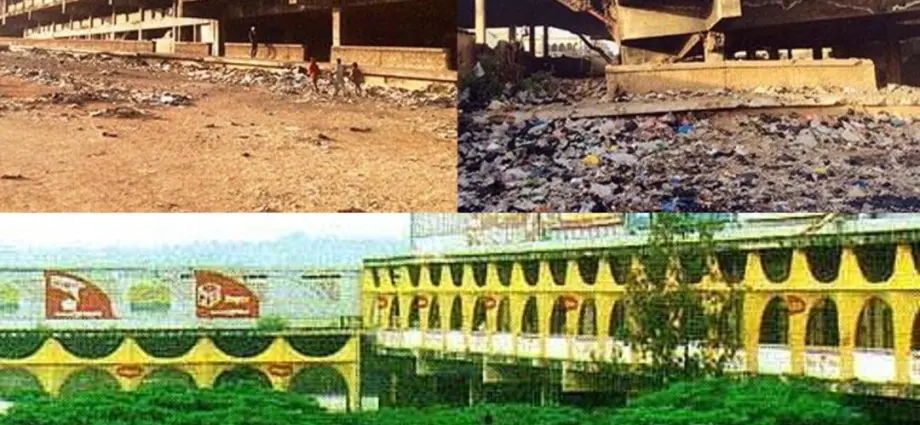
There has been so much uproar unleashed on the national scene concerning the sponsorship of the rebuilding of Jos Main Market, Plateau State by Interest-free Jaiz Bank. Jaiz is the first Islamic Bank to start operation in Nigeria. This might be the reason its operations are still unclear in Nigeria.

Jaiz means permissible, admissible, proper, right. lawful, legal, just, valid, authorized, allowable, permitted, possible. Of course, these terms are subject to interpretation by whoever. Jaiz Bank has been operational in Nigeria since 2012 under Islamic Banking. Though the Bank’s strategic business focus is mainly on retail banking, Jaiz nevertheless offers corporate and commercial banking services.

Jaiz Bank Plc is therefore a financial services institution providing Islamic non-interest banking services for retail, commercial and corporate sectors in Nigeria. Please note that Islamic banking is an interest free banking system and is governed by the principles laid down by Islamic Sharia’h.

Countries such as Malaysia, Indonesia, Bangladesh, Jordan, Egypt and Turkey operate their financial institutions based on interest-free principles alongside conventional banks. Meanwhile, Islamic Banking operates in about 70 countries of the world and providing services to interested customers.

It is interesting to note that even in Saudi Arabian banking market, only four among the 12 local licensed banks are considered to be pure Islamic banks or fully-fledged sharia–compliant Banks. Interest Rate in Saudi Arabia averaged 3.48 percent from 1992 until 2022, reaching an all-time high of 7 percent in May of 2000.

Jaiz Bank is a financial institution in Nigeria operating under Islamic Banking Principles. Though none-interest by design, it is however not a humanitarian Bank or “soup kitchen.” There are rules of course. You cannot walk into the bank cup-in hand and expect to walk out with wads of naira notes or dollars without terms or collaterals.

Jaiz has a variety of loans available to customers to leverage on but the one in contention in Plateau state now seems to be the Project Financing/Constructing Loan. Under this option, you make a request, and they will agree to construct and sell the project to you at a cost-plus profit margin.

This is where the controversy on interest free-ness of Islamic banking comes into question. Infact, many Islamic scholars and intellectuals have kicked and are still kicking against the concept of interest-free banking. Scholars like Shiekh Assim Al Hakeem and Shaykh Haitham Al Haddad are known to have asserted that as long as there is profit making in the system, then the Interest-Free claim is an oxymoron. Shaykh Haitham, in particular, feels that Islamic Banking is heavily influenced by ideology rather than the need to help the poor. In the first place, the business must be profitable and with good credit history to attract the Bank’s loans.

The truth is that Islamic banking is about advancing Islamic objectives. And Jaiz Bank is unashamedly committed to being:
• 100% Shari’ah compliant
• Highly ethical, with best practice corporate governance and sound risk management framework.
• Proactive and innovative towards customer’s needs
• Best-practice operations and functional framework
• Customer-Centric
• Socially responsible
• Fair to all Stakeholders
The Bank also shows on its website that it will not be
• Religious bias
• Offer all things to all people
• Mediocre performer
• Imitate other banks
• Sacrifice Shari’ah principles for profit
Jaiz is a non-interest Bank but makes profit. The institution was founded in 2003, as Jaiz International Plc. On 11 November 2011, Jaiz International received a license from the Central Bank of Nigeria,to operate as a regional bank. On 6 January 2012, the institution commenced business as Jaiz Bank Plc in offices and branches in Abuja, Kaduna and Kano under the chairmanship of Alhaji (Dr) Umaru Abdul Mutallab(CON).

All members of the Board of Directors of Jaiz Bank are Muslims though people of other religious persuasions can patronize the Bank as customers.

The Non-Interest Bank, which offers almost all the services of conventional banks actually says on its website that it is an alternative financial service offering that is open to all, irrespective of race or religion based on the ethical principles of fairness, transparency and objectivity.

The catch here is that Islamic Banks do not give or receive interest, nor finance anything that is harmful to the society like alcohol, tobacco, gambling etc.

These objectives seemingly look harmless. However, on the Jos Market controversy, many people are picking holes in the sharing arrangement of the market stalls (60 for Jaiz and 40 % for Plateau) for a period of 40 years. I suspect that the controversy is not really about the stalls but the hidden charges – the fear of an Islamic agenda considering the sharia-compliance of the Bank. In a state which is about 95 % Christians, such concerns might, no doubt, influence business transactions.

The Plateau State Government and Jaiz Bank did not do their due diligence as well as effective strategy on upstream communication, especially stakeholder engagement/consultation at the inception of the loan. It therefore seems like negotiation by stealth as well as forcing a crunch of razor blades down the throats of Plateau people who are already upbeat on so many fronts and issues. Actually, a recent research conducted by some Islamic scholars based in Turkey and Malaysia has so far shown that there are still negative perceptions and skepticism about Islamic Banking among non-Muslims in Nigeria.

In this age of enlightenment, who can allay the fears of Plateau people on the hidden consequences of this financial transaction with Jaiz Bank which operates under the Islamic interest-free banking principles?

Please, quickly step forward for recognition.

Continue Reading
Click to comment

Leave a Reply

Your email address will not be published. Required fields are marked *

Health

Nigeria responds with emergency funds as Ebola death toll rises in DRC

info

Published

on

By

42625 IMG 20230222 WA0006 002 1 e1763073106309.jpg

MTN ADVERT

The Ebola outbreak in the Democratic Republic of Congo (DRC) is escalating rapidly, with 89 deaths recorded in the past week alone, according to the Africa Centres for Disease Control and Prevention (Africa CDC).

Jean Kaseya, the Director-General of the Africa CDC, warned that the latest figures have heightened concerns over growing community transmission and the limited capacity of treatment centres, many of which are operating at 95 per cent bed occupancy.

Speaking during an online media briefing, Mr Kaseya noted that health authorities must simultaneously expand treatment capacity and strengthen early case detection to curb virus transmission. “Authorities must build more treatment capacity while detecting cases sooner. Early detection prevents patients from needing hospital admission,” he said.

According to Africa CDC data, Bunia, Gwampara, Mugwalu, and Nyankunde remain the epicentres of the outbreak, while Katwa, Beni, and Butembo in North Kivu continue to record active transmission. Community spread remains a primary concern; five health zones in Ituri Province and one in North Kivu account for over 85 per cent of confirmed infections. Mr Kaseya noted that only about 30 per cent of newly confirmed cases were identified from known contacts, highlighting the difficulty of contact tracing in conflict-ridden areas.

A Growing Regional Threat

The ongoing outbreak, caused by the Bundibugyo strain of the Ebola virus, presents significant challenges, as there is currently no licensed vaccine or specific treatment for this variant.

PT WHATSAPP CHANNEL

The World Health Organisation (WHO) has declared the outbreak a Public Health Emergency of International Concern (PHEIC). Tedros Ghebreyesus, the WHO Director-General, has warned that ongoing violence and humanitarian crises in the Ituri and North Kivu provinces are severely impeding response efforts, as health workers face insecurity and community mistrust.

The WHO, in collaboration with the Africa CDC, has requested $518 million for a joint continental preparedness and response plan. While pledges have reached $910 million, only 13 per cent has been released as actual funding, leaving a significant gap that experts warn could cause the outbreak to expand further.

Nigeria’s Response and Preparedness

Although Nigeria has recorded no confirmed case of Ebola, the federal government has intensified surveillance and emergency response measures due to the high risk of importation.

To bolster national readiness, President Bola Tinubu recently inaugurated a Presidential Task Force on Ebola Virus Disease Preparedness, chaired by the Chief of Staff to the President, Femi Gbajabiamila. The government has also authorised the release of ₦10 billion in emergency intervention funding to strengthen the operational capacity of the Nigeria Centre for Disease Control and Prevention (NCDC) and support critical public health emergency response activities.

Furthermore, the Federal Ministry of Health and Social Welfare has approved the disbursement of State Outbreak Investigation and Response Funds (S-OIRF), providing ₦21.2 million to each state through the NCDC Gateway of the Basic Health Care Provision Fund (BHCPF). The Coordinating Minister of Health and Social Welfare, Muhammad Pate, has directed all beneficiary states to manage these funds transparently and return them within six months.

Heightened Surveillance

The NCDC has conducted dynamic risk assessments, classifying the risk of Ebola importation into Nigeria as “high” due to international travel, regional population movement, and porous borders. Consequently, surveillance at airports, seaports, and land borders has been significantly tightened.

Jide Idris, the Director-General of the NCDC, emphasised that Nigeria is building on the lessons learned from the 2014 Ebola containment effort. “As I speak, there is currently no confirmed case of Ebola Virus Disease in Nigeria. However, we have intensified preparedness activities nationwide to ensure Nigeria remains ready to rapidly detect, investigate, contain, and respond to any potential importation,” he said.

The NCDC has completed readiness assessments in 549 health facilities across 32 states and the Federal Capital Territory, as well as evaluations of 17 designated treatment centres.

READ ALSO: DRC Ebola outbreak tops 1,000 cases as death toll reaches 277- WHO

Public Advisory

The NCDC has urged Nigerians to remain calm and avoid spreading misinformation. The agency clarified that Ebola is not an airborne disease and urged the public to rely only on updates from official health authorities.

Citizens are advised to:

Maintain regular hand hygiene.
Avoid contact with the blood or bodily fluids of sick persons.
Refrain from handling sick or dead animals or bushmeat from unknown sources.
Promptly report any unusual illnesses to the nearest health facility.
For further information and technical guidance, members of the public are encouraged to visit the official ministry website: www.health.gov.ng.


Continue Reading

Business

Amotekun Frees Pastor, Seven Others from Kidnappers

info

Published

on

By

IMG 7457.jpeg

Personnel of the Amotekun security outfit have freed eight individuals who were held captive by suspected kidnappers in Ondo State after a coordinated rescue mission.

Several of those rescued were reportedly abducted from the Ilado area of Akure North Local Government Area.

Among the survivors is Fagbonmire Durojaiye, a cleric and educator affiliated with the Redeemed Christian Church of God (RCCG), where he serves in a pastoral role.

Reports indicate that the abductors initially demanded ₦30 million as payment for the captives’ freedom before the victims were eventually recovered.

The post Amotekun Frees Pastor, Seven Others from Kidnappers appeared first on Business Today NG.

Continue Reading

Trending