News
Intrigues as Igbo group backs Plateau native for Reps Speaker, Gagdi






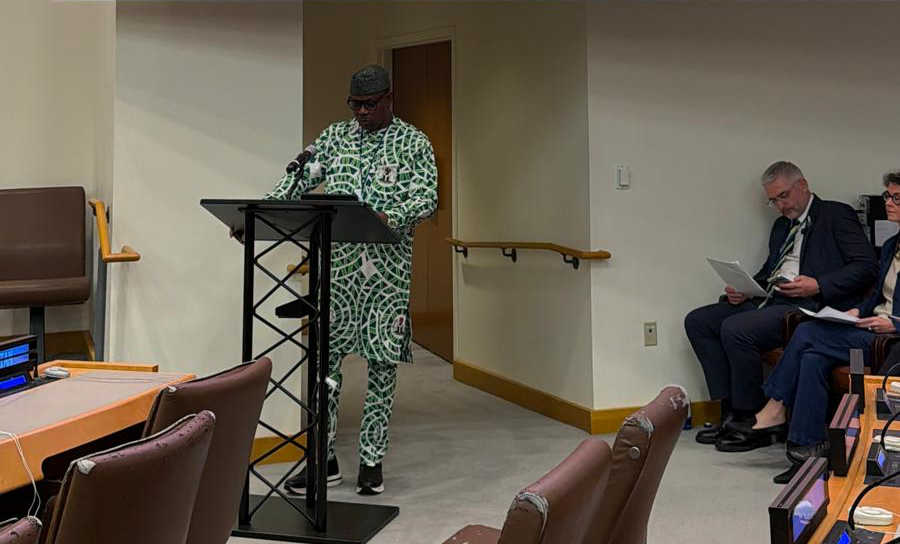
Nigeria has called for a more equitable global pandemic preparedness system, urging increased financing, technology transfer and stronger manufacturing capacity in Africa to enable developing countries to respond effectively to future health emergencies.
The Minister of State for Health and Social Welfare, Iziaq Salako, made the call while delivering Nigeria’s national statement on behalf of President Bola Tinubu at a high-level meeting on Pandemic Prevention, Preparedness and Response (PPPR) at the United Nations Headquarters in New York.
The meeting was held on the sidelines of the 81st United Nations General Assembly.
Mr Salako said effective pandemic preparedness must begin with strong public health systems capable of preventing, detecting and responding to health threats before they become emergencies.
“Prevention is preparedness and the strength of everyday public health systems determines how effectively nations detect threats early, respond rapidly, and maintain essential services during crises,” he said.
He said Nigeria was strengthening its legal and institutional frameworks, expanding digital disease surveillance, institutionalising the 7-1-7 approach, enhancing genomic sequencing capacity and improving multi-hazard preparedness.


The 7-1-7 approach requires countries to aim to detect a suspected public health threat within seven days, notify the relevant authorities within one day and complete the initial response within seven days.
Greater equity
Mr Salako said equity must remain central to the global PPPR agenda, particularly in ensuring that countries that provide access to pathogens receive fair and timely benefits from the development of vaccines, diagnostics and therapeutics.
He called for sustainable and rapidly accessible financing for low- and middle-income countries, alongside technology transfer and stronger domestic manufacturing capacity, particularly in Africa.
Nigeria’s priorities, he said, include stronger national ownership, governance and legal preparedness; prevention-focused health systems; integrated and resilient One Health systems; equitable access to financing and African manufacturing; and greater regional and global solidarity and accountability.
“National ownership and global solidarity must advance together,” he said.
Mr Salako said Nigeria was also advancing the One Health approach, strengthening antimicrobial resistance (AMR) governance and infection prevention and control programmes, and expanding emergency workforce capacity at national and sub-national levels.
The country’s public health laboratory network now covers all 36 states, while Public Health Emergency Operations Centres support responses to outbreaks including Lassa fever, cholera, diphtheria and meningitis, he said.
ALSO READ: Africa’s health-for-all agenda derailed by pandemic, financing gap – Report
Nigeria’s Joint External Evaluation score also improved from 39 per cent in 2017 to 54 per cent in 2023.
In addition, the World Bank’s $250 million Health Security Programme is supporting health security capacity at federal and state levels under a One Health approach, Mr Salako said.
Nigeria to host global AMR meeting
Mr Salako said Nigeria also wanted antimicrobial resistance to remain firmly embedded in the global pandemic preparedness agenda, describing it as “both a current public health threat and a multiplier of pandemic risks”.
Against this background, he announced that Nigeria would host the fifth Global High-Level Ministerial Conference on Antimicrobial Resistance in December 2026.
The conference will be the first edition to be held in Africa and will provide an opportunity to accelerate measurable One Health action and advance the priorities of low- and middle-income countries, he said.
Mr Salako also stressed the importance of involving communities in pandemic preparedness, saying public trust could not be built only after an outbreak had begun.
He called for sustained investment in risk communication and community engagement, social listening, community hygiene and infodemic management between emergencies.
He said Nigeria remained committed to strengthening national and regional capacity to prevent, detect and respond to public health threats, while supporting a global pandemic preparedness framework that is equitable, sustainable and accountable.
Discover more from Premium Times Nigeria
Subscribe to get the latest posts sent to your email.
-

 Featured3 days ago
PLATEAU STATE: IS THERE PEACE, OR ONLY THE ABSENCE OF VIOLENCE?
-
Business4 days ago
General Business to Drive 72% of Mutual Benefits Assurance’s Projected ₦96.82bn GWP
-
News4 days ago
Plateau Killings: Rotjimwa Yilyok Urges Security Agencies to Intensify Action
-
Business3 days ago
Shettima Urges African Leaders to Process Minerals Locally