Business
FCCPC Backs Lagos Govt on Estimated Billing Enforcement Measures

The Federal Competition and Consumer Protection Commission (FCCPC) has commended the Lagos State Electricity Regulatory Commission (LASERC) for recent consumer focused reforms aimed at stopping estimated billing within the Lagos electricity market.
The Commission particularly welcomed LASERC’s position in the 2025 Lagos Electricity Market Report supporting the enforcement of existing legal provisions relating to electricity supply without meters, alongside the phased rollout of universal smart metering across Lagos State.
LASERC is pursuing a broad reform programme aimed at strengthening consumer protection and improving electricity market performance in Lagos. The measures include the phased enforcement of compulsory metering from 2026, feeder by feeder deployment of universal smart meters, tighter oversight of distribution companies, improved complaint resolution standards and enforcement action against non-compliant operators.
The Executive Vice Chairman and Chief Executive Officer of the FCCPC, Mr. Tunji Bello, described the initiative as an important step toward improving billing transparency and reinforcing consumer confidence in the electricity sector.
“Estimated billing remains one of the leading sources of consumer complaints within Nigeria’s power sector. Measures that accelerate metering and improve billing transparency are important to consumer protection and overall market accountability,” he said.
The post FCCPC Backs Lagos Govt on Estimated Billing Enforcement Measures appeared first on Business Today NG.








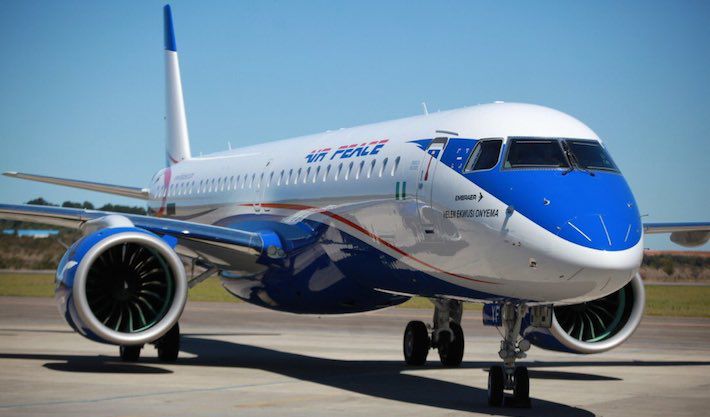
Air Peace has said it will introduce London-Owerri flight connections from 15 December, improving international travel access to Nigeria’s South-east.
The airline said the service would connect passengers travelling from London through Gatwick and Heathrow airports to Owerri.
Its Lead, Corporate Communications, Efeoghene Osifo-Whiskey, disclosed this in a statement on Monday in Lagos.
He said the service would provide greater convenience for families and other Nigerians in the diaspora travelling to Imo and neighbouring states.
Mr Osifo-Whiskey attributed the development to collaboration between the Imo State Government and the Federal Government.
He acknowledged the roles of Governor Hope Uzodimma of Imo State and the Minister of Aviation and Aerospace Development, Festus Keyamo.


He said their efforts secured approval for international operations at the Sam Mbakwe International Cargo Airport, Owerri.
According to him, passengers would travel aboard the airline’s Boeing 777 wide-body aircraft, featuring spacious cabins and comfortable seating.
He said onboard meals would include Nigerian and international cuisines, catering to passengers’ diverse preferences.
The airline also highlighted its baggage allowances for passengers travelling on the new service.
Economy Class passengers would be entitled to two checked bags weighing 23kg each, while Business Class passengers would enjoy two 32kg bags.
Mr Osifo-Whiskey added that passengers booking eligible Business Class tickets would receive complimentary chauffeur-driven airport transfers in London.
READ ALSO: Ibom Air violates audit law, fails to submit accounts for seven years
He said the premium service would also include other benefits designed to improve passengers’ travel experience.
According to him, the new connection would ease journeys for South-east residents previously required to make additional travel arrangements.
Air Peace said the initiative formed part of its broader strategy to expand connectivity across its international and domestic networks.
It added that the expansion would strengthen links between Nigerian cities and international destinations.
(NAN)
Discover more from Premium Times Nigeria
Subscribe to get the latest posts sent to your email.
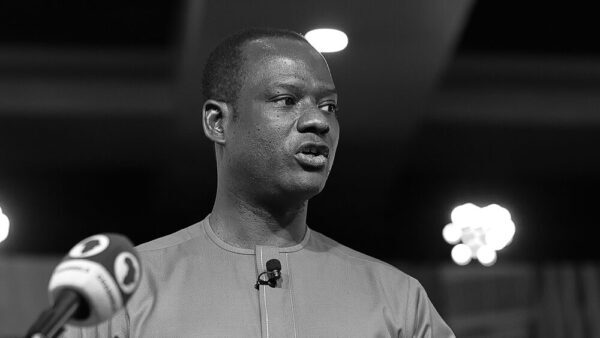
Nigeria’s economy recorded further improvements in the second quarter of 2026, but the developments have not yet translated into sufficient relief for households and businesses.
The Minister of Finance and Coordinating Minister of the Economy, Taiwo Oyedele, revealed the economic update on Monday at the National Economic Council (NEC)’s 162nd meeting.
Stanley Nkwocha, the Senior Special Assistant to the President on Media and Communications in the Office of the Vice President, disclosed the meeting’s proceedings in a statement on Monday.
At the meeting, Mr Oyedele said Nigeria’s economic indicators continue to improve, with real Gross Domestic Product growing by 4.43 per cent in the second quarter of 2026, compared with 4.23 per cent in the corresponding period of 2025.
He also noted that headline inflation declined for the fifth consecutive month to 14.06 per cent in October 2026, its lowest level since September 2020.
Additionally, Nigeria’s external reserves stood at $54.87 billion as of 12 November.
According to the minister, Nigeria’s trade surplus increased from N10.2 trillion in the first half of 2025 to N20.1 trillion in the corresponding period of 2026.
He added that net revenue distributed through the Federation Account Allocation Committee rose by 44 per cent, from N15.2 trillion in 2024 to N21.9 trillion in 2025.
Change in livelihoods
However, Mr Oyedele observed that improving economic indicators have yet to translate sufficiently into relief for households and businesses, particularly in food prices and employment.
“Oyedele, however, observed that the improving economic indicators had yet to translate sufficiently into relief for households and businesses, particularly in the areas of food prices, electricity costs, access to affordable credit and employment,” the statement read.
He noted that food inflation remained elevated at 19.13 per cent in October, while high lending rates and energy costs continued to place pressure on businesses and household incomes.
Strong institutions
Earlier, in his opening remarks, the Chairman of the Council and Vice President, Kashim Shettima, said Nigeria’s economic future and the lasting success of President Bola Tinubu‘s reforms depended on building strong institutions.
He noted that ministries and the 36 states of the federation must consider the people affected by government policies as they carry out their responsibilities.
“While His Excellency, President Bola Ahmed Tinubu, GCFR, makes the difficult reforms to stabilise the economy, we must all participate in establishing institutions capable of sustaining the benefits of those reforms,” the VP said.
According to Mr Shettima, to benefit from the economic reforms, ministries and states must settle practical responsibilities without losing sight of the people affected.
“To achieve this, we must cooperate. We must allow a sound practice in one jurisdiction to inform decisions elsewhere, while respecting the differences in capacity and circumstance across the country. The quality of our cooperation will shape the inheritance we leave,” he stated.
Mr Shettima urged Council members to consider Nigerians who would depend on the decisions they make years from now.
READ ALSO: Nigeria’s economy grows over 4% in 2026 Tinubu
Reforms
Since assuming office in May 2023, Mr Tinubu’s administration has introduced several economic reforms aimed at stabilising the economy, improving government revenue and attracting investment.
These include removing the petrol subsidy, unifying the foreign exchange market, implementing tighter monetary policy, ending deficit financing by the Central Bank of Nigeria (CBN), and reforming the tax system.
The administration has completed banks’ recapitalisation exercise to strengthen the sector, implemented the Electricity Act 2023 to encourage state participation in electricity generation and distribution, and introduced initiatives to expand access to student loans and consumer credit.
Although thr policies have been hailed as bold and decisive by international development agencies, many Nigerians have been impacted by the ripple effects through elevated prices of petrol and other essential goods and services.
Discover more from Premium Times Nigeria
Subscribe to get the latest posts sent to your email.
-

 Events2 days ago
Plateau Govt, CAN Strengthen Unity Through 2026 Christmas Carols and Praise Festival
-
Business4 days ago
FCMB Group’s profit jumps 86% on strong top-line growth
-
Health1 day ago
WHO Reports 26.3 Million People Living with HIV in Africa
-
News4 days ago
2027: Don't retaliate against opposition – Akpabio tells APC supporters