Connect with us

News

Governor Mutfwang Outlines Achievements and Vision for Plateau State’s Revival and Prosperity

info

Published

on

IMG 20240601 WA0004

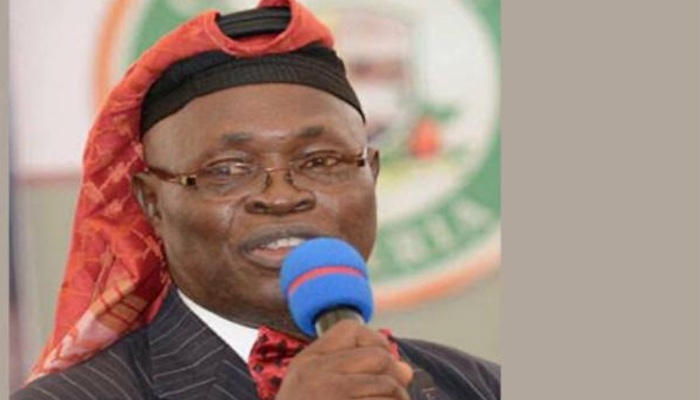
In  a recent media parley held in Jos, Governor Caleb Mutfwang reaffirmed his unwavering commitment to transforming Plateau State into a beacon of prosperity and stability. Addressing journalists, Mutfwang outlined his administration’s extensive efforts to rebuild and lay a solid foundation for the state’s future, emphasizing that the ultimate goal is to make Plateau better than it was found.


“We have no other agenda than to make Plateau better than we met it,” the governor stated. “We are focused on rebuilding the foundations that have been destroyed and laying new ones for the future Plateau we aspire towards.”


Governor Mutfwang acknowledged the stark realities reflected in various indices. “Whether it’s the poverty index or educational performance, Plateau State is below average,” he said, noting the state’s position of 29th out of 36 in several key metrics. “This should not be our story. Plateau’s story can be better, and we are determined to make it so.”


The governor expressed gratitude to the people of Plateau for their support and appreciation of his administration’s efforts. “We are not relaxing,” he assured. “We are determined to do more than what people have seen. We want to build a safe, peaceful, resilient, and prosperous Plateau that will become the pride of Nigeria.”


In discussing the security challenges, Governor Mutfwang highlighted the obstacles posed by the federal structure of Nigeria’s security apparatus. He emphasized that despite being the chief security officers of their states, governors do not command troops directly. “Directives have to come from Abuja, which complicates the response to local security challenges,” he explained.


Reflecting on the recent history, Mutfwang recalled the terror unleashed on Mangu and Bokkos three weeks before his inauguration. Despite efforts to contain the violence, sporadic attacks continued, culminating in the tragic events of December 24-26. “It’s a painful episode I cannot forget,” he lamented. However, he praised the support from President Tinubu and the vice president, which led to increased military engagement.


Mutfwang emphasized the importance of community resilience and intra- and inter-community relations in reducing criminal activities. “Today, we can say there is relative peace on the Plateau,” he noted, while cautioning that more work remains. “We will continue to bring out strategies to contain and forestall challenges.”


Governor Mutfwang detailed his administration’s ambitious plans for economic development, focusing on agriculture, tourism, and mining.


The governor announced the division of Plateau State into three agricultural zones, each specializing in different crops such as rice, yam, palm oil, Irish potatoes, maize, and fonio (acha). He stressed the importance of meeting international standards in food production to boost exports. “We are committed to reducing post-harvest losses and enhancing marketing opportunities through initiatives like the Plateau Commodities Market Company.”


Mutfwang highlighted the state’s rich tourism potential, mentioning sites like Wase Rock, Pandam Game Reserve, Asop Falls, Jos Wildlife Park, and the Jos Museum. He outlined plans to revive these attractions through private sector partnerships. “We aim to make tourism a significant economic driver,” he said, adding that the revival of the Jos Wildlife Park is a legacy project.


Describing mining as another crucial sector, Mutfwang noted that the mineral wealth of Plateau State remains largely untapped. “We need to create an enabling environment for investors,” he said, emphasizing the importance of benefiting the local population and tackling illegal mining activities.


Governor Mutfwang also addressed transportation, revealing the revitalization of the transport sector and the introduction of CNG metro buses. He mentioned ongoing efforts to improve urban transportation and the recent successful launch of a train service. “We are also pursuing the dualization of major roads and seeking federal cooperation to enhance connectivity.”


Mrs. Ayuku Pwaspo, the first female elected Chairman of the Nigeria Union of Journalists (NUJ) Plateau State Council, commended Governor Mutfwang for his transformative agenda. She appreciated his media-friendly disposition and the administration’s achievements, particularly in road infrastructure, urban renewal, and security.


“We congratulate you on the first-year anniversary of your administration and commend your efforts to turn around the fortunes of the state,” Pwaspo said. She also highlighted the need for continued support to state-owned media organizations and the completion of the NUJ House project, which will serve as a revenue source for the council.


Governor Mutfwang concluded by reaffirming his vision for a self-sufficient and prosperous Plateau State. “We aim to build an economy that is sustainable beyond oil revenue,” he stated, outlining plans for an agro-processing zone funded by the African Development Bank and the potential transformation of the state’s airport into a cargo hub for exports.


“We have made significant progress, but we still have a long way to go,” he said. “With continued support and concerted efforts, I believe we will realize not just the Nigeria of our dreams, but Plateau will be a major contributor to making that dream a reality.”


As Plateau State moves forward under Governor Mutfwang’s leadership, the focus remains on security, economic development, and community engagement, with the ultimate goal of creating a better future for all Plateau citizens.

Continue Reading
1 Comment

1 Comment

  1. Francis Luka Davwang

    Francis Luka Davwang

    July 16, 2024 at 9:48 pm

    Our Governor Mutfwang is doing well. We are praying for him with the whole of our hearts. God will protect him and give him more wisdom!

Leave a Reply

Cancel reply

Your email address will not be published. Required fields are marked *

News

Uber wants to turn its millions of drivers into a sensor grid for self-driving companies

info

Published

on

By

GettyImages 2259104536.jpg

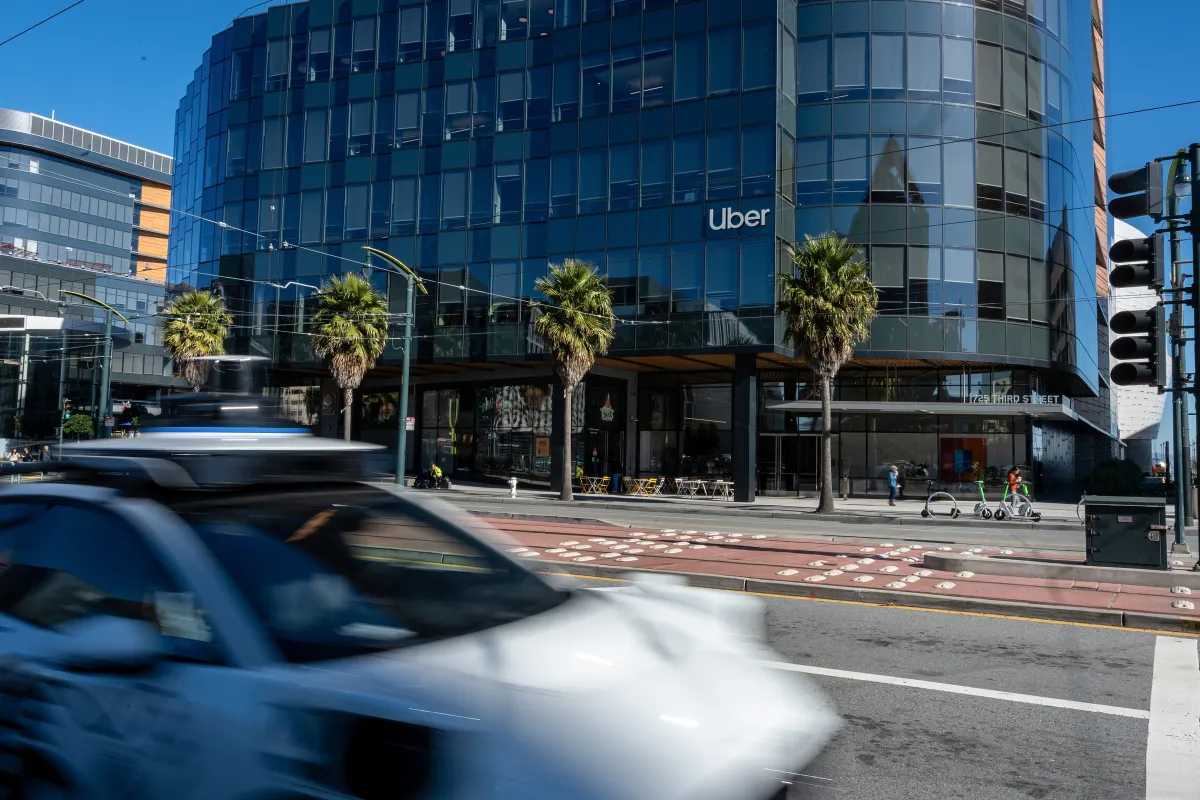
Uber has a long-term ambition that goes well beyond shuttling passengers: the company eventually wants to outfit its human drivers’ cars with sensors to soak up real-world data for autonomous vehicle (AV) companies — and potentially other companies training AI models on physical-world scenarios.

Praveen Neppalli Naga, Uber’s chief technology officer, revealed the plan in an interview at TechCrunch’s StrictlyVC event in San Francisco on Thursday night, describing it as a natural extension of a nascent program the company announced in late January called AV Labs.

“That is the direction we want to go eventually,” Naga said of equipping human drivers’ vehicles. “But first we need to get the understanding of the sensor kits and how they all work. There are some regulations — we have to make sure every state has [clarity on] what sensors mean, and what sharing it means.”

For now, AV Labs relies on a small, dedicated fleet of sensor-equipped cars that Uber operates itself, separate from its driver network. But the ambition is clearly much larger. Uber has millions of drivers globally, and if even a fraction of those cars could be transformed into rolling data-collection platforms, the scale of what Uber could offer the AV industry would dwarf what any individual AV company could assemble on its own.

The insight driving the program, Naga said, is that the limiting factor for AV development is no longer the underlying technology. “The bottleneck is data,” he said. “[Companies like Waymo] need to go around and collect the data, collect different scenarios. You may be able to say: in San Francisco, ‘At this school intersection, I want some data at this time of day so I can train my models.’ The problem for all these companies is access to that data, because they don’t have the capital to deploy the cars and go collect all this information.”

Becoming the data layer for the entire AV ecosystem is a pretty smart play, particularly considering Uber years ago abandoned its own ambitions to build self-driving cars (a move that co-founder Travis Kalanick has publicly lamented as a big mistake). Indeed, many industry observers have wondered if, without its own self-driving cars, Uber might one day be rendered irrelevant as AVs increasingly spring up around the globe.

The company currently has partnerships with 25 AV companies — including Wayve, which operates in London — and is building what Naga described as an “AV cloud”: a library of labeled sensor data that partner companies can query and use to train their models. Partners, which Uber plans to more aggressively invest in directly, can also use the system to run their trained models in “shadow mode” against real Uber trips, simulating how an AV would have performed without actually putting one on the road.

Techcrunch event

San Francisco, CA
|
October 13-15, 2026

“Our goal is not to make money out of this data,” Naga said. “We want to democratize it.”

Given the obvious commercial value of what Uber is building, that positioning may not last long. The company has already made equity investments in numerous AV players, and its ability to offer proprietary training data at scale could give it significant leverage over a sector that right now depends on Uber’s ride marketplace to reach customers.

When you purchase through links in our articles, we may earn a small commission. This doesn’t affect our editorial independence.

Continue Reading

News

MURIC alleges religious bias in airport chapel project, relief distribution

info

Published

on

By

MURICs Executive Director Professor Ishaq Akintola.jpeg

The Muslim Rights Concern (MURIC) has accused the Federal Government of favouritism over the planned construction of a N25 billion ecumenical chapel at the Nnamdi Azikiwe International Airport.

In a statement issued on Friday, MURIC’s Executive Director, Ishaq Akintola, said the project reportedly being undertaken alongside the Christian Association of Nigeria, CAN,raises concerns about equitable treatment of religious groups in the country.

The group also criticised what it described as uneven distribution of relief funds, citing the reported allocation of N2 billion to victims of violence in Plateau State without similar interventions in other affected states, including Borno, Sokoto, Zamfara, Kebbi and Kwara.

MURIC further questioned reports that N1.2 billion was shared among the 19 northern states ahead of the Eid al-Kabir celebration, describing the figure as disproportionate when compared to the Plateau intervention.

“How can only one state be given N2 billion while all the 19 states in the North are asked to share N1.2 billion? But is it right to treat Muslims like second class citizens, animal farm?” the statement read.

The organisation also called on the federal government to provide clarity on plans for Muslim religious infrastructure, urging authorities to ensure parity.

“So we must ask federal government to tell Nigerians when land of equal size will be given to the Muslims to build their grand national mosque. Of course federal government must not forget the N25 billion cooling off somewhere in the Central Bank which will accompany the land allocation for Muslims,” the group added.

MURIC urged the government to uphold fairness and inclusivity in its policies, warning that perceived imbalance could heighten religious sensitivities.

As of the time of filing this report, there has been no official response from the federal government or CAN regarding the allegations.

Continue Reading

Trending