News
Families of Accident Victims Petition IGP Over Alleged Release of Drunk Driver in Jos







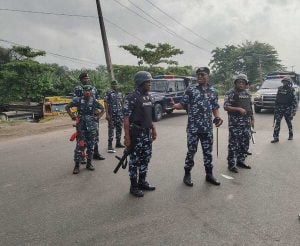
The Presidency says the proposed constitutional amendment to establish state police in Nigeria has received approval from 24 of the 36 State Houses of Assembly.
This implies that the bill has met the two-thirds threshold required for constitutional alteration.
Chief of Staff to the President and Chairman of the Presidential Working Group on the National Policing Bill, Femi Gbajabiamila, disclosed this in a statement on Friday, October 23, 2026.
The statement said the approval fulfilled the constitutional requirement for the Constitution (Sixth Alteration) Bill, 2026, which seeks to establish a dual policing system comprising the Federal Police Service and state police services.
Politics Nigeria reports that the working group said the amendment could now be returned to the National Assembly for transmission to President Bola Tinubu for assent.
“In line with Section 9 of the Constitution, the amendment can now be returned to the National Assembly for transmission to Mr President for assent,” the statement read.
The group commended the state assemblies for approving the amendment and the National Assembly for passing the bill through both chambers.
It added that the proposed constitutional change would provide the legal backing for the policing framework contained in the draft National Policing Bill, 2026.
According to the statement, the draft bills are undergoing legislative drafting review and validation at the Federal Ministry of Justice and are expected to be returned on or before Friday, October 30.
The working group said it would give the bills final consideration before presenting them to President Tinubu.
It also urged stakeholders to support the transition to a dual policing system, which it said was aimed at improving public safety across the country.
The 24 states that have approved the constitutional amendment are Adamawa, Akwa Ibom, Anambra, Bayelsa, Benue, Cross River, Delta, Edo, Ekiti, Enugu, Gombe, Imo, Kaduna, Kebbi, Kwara, Nasarawa, Ogun, Osun, Oyo, Plateau, Rivers, Taraba, Yobe and Zamfara.
It was recalled that the development follows the transmission of the Constitution (Sixth Alteration) Bill, 2026, to the 36 State Houses of Assembly by the National Assembly on September 16 for consideration and approval.
The state assemblies were given an expected administrative timeframe of 30 days to communicate their decisions.
On October 9, Senate Committee on Media and Public Affairs Chairman Yemi Adaramodu disclosed that only four states — Edo, Oyo, Osun and Rivers — had approved the amendment at that time.
The latest update indicates that the number of approving states has since risen to 24.
Earlier, on October 15, Gbajabiamila said the National Policing Bill was about 90 per cent ready and would be transmitted to the National Assembly after further consultations and legislative drafting work.
Speaking to journalists after a steering committee meeting at the State House in Abuja, he said the working group was addressing observations raised by state governors before finalising the proposed legislation.
“The National Policing Bill is more or less ready for transmission to the National Assembly. We will probably have one more meeting after this to cross the t’s and dot the i’s and make sure every area is covered. So, we are 90% ready,” he said.
He added that the governors had raised one or two observations and expressed confidence that the bill would be ready shortly.
Gbajabiamila also described the proposed legislation as the most consequential bill of the Tinubu administration so far, noting that the working group’s steering committee began deliberations on August 3.
Addressing concerns that some state assemblies might delay approval of the constitutional amendment, he said there was a national consensus on the need for the proposed changes.
“I see no reason why anyone will want to have a rethink on it,” he said.
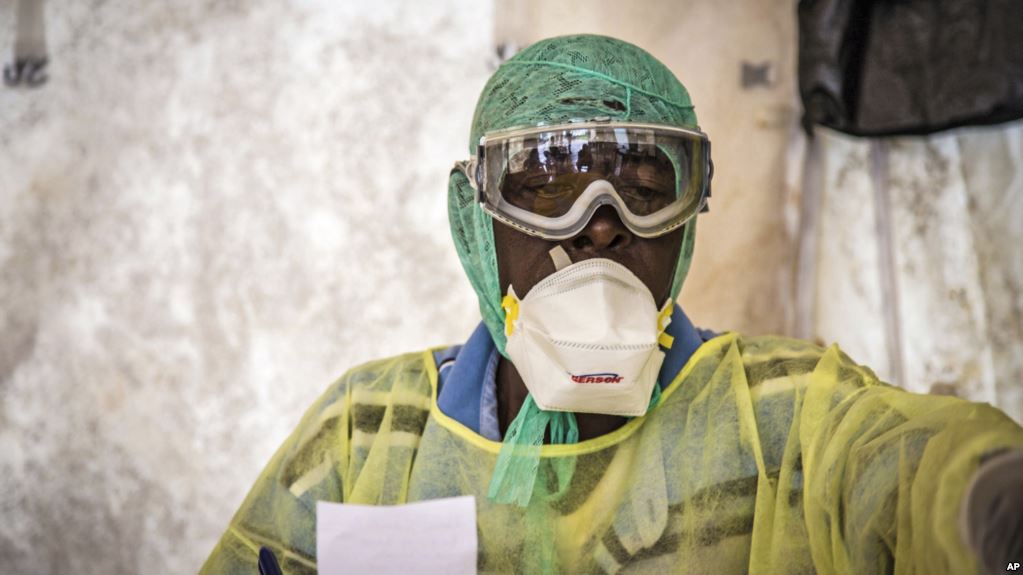
Nigeria’s first confirmed Ebola patient in more than a decade is believed to have contracted the virus while travelling in Uganda, although health authorities are yet to establish the source of her infection.
According to a report by Reuters, the Swiss Federal Department of Foreign Affairs told the newspaper in an emailed statement on Thursday that the patient, a Ugandan-born woman married to a Swiss diplomat based in Abuja, has been receiving treatment at a private clinic in the Nigerian capital for about a week.
According to Reuters, the statement said the woman was believed to have contracted the virus during a visit to Uganda about two weeks earlier. Her husband, who travelled with her, is in isolation but has not developed symptoms.
However, the World Health Organisation (WHO) and the Africa Centres for Disease Control and Prevention (Africa CDC) said they had not received verified information that the woman travelled to the Democratic Republic of the Congo (DRC), where the current Ebola outbreak began.
Conflicting travel accounts
According to Reuters, Ugandan authorities had earlier said the woman travelled to eastern DRC before transiting through Uganda.
However, Africa CDC official Wessam Mankoula said on Thursday that there was no validated information confirming that the patient had travelled to the DRC.


Mr Mankoula said Nigeria and Uganda were exchanging information to reconstruct her travel history and identify the possible source of infection.
WHO representative to Nigeria Pavel Ursu said the information received by the agency indicated that the woman had been in Uganda from 16 September and returned to Abuja on 3 October.
The WHO official said the information available to the agency did not establish that she had travelled outside Uganda.
Patrick Otim, a WHO emergency response manager, also said the source of the infection remained unknown as investigators worked to establish the patient’s movements before she became ill.
One area of investigation is the health facilities the woman visited in Abuja after developing symptoms and before she was hospitalised, including the possibility of exposure to other people during that period, he said.
Meanwhile, the Ugandan government said that the country had no active Ebola cases.
Uganda recorded 20 Ebola cases between May and June, most of them linked to infections imported from the DRC. The WHO declared the country’s outbreak over in August after 42 days without a new confirmed case.
Nigeria’s response
The uncertainty surrounding the woman’s travel history comes as Nigeria works to prevent further transmission following confirmation of the imported infection on 20 October.
As PREMIUM TIMES reported, the patient is a 42-year-old woman who lives in Abuja and recently travelled to Uganda. She developed symptoms on 6 October, three days after returning to Nigeria, and initially sought treatment at a private hospital, believing she had malaria.
She later visited another private hospital, where she was admitted on 11 October after her condition failed to improve. Her infection was subsequently confirmed through laboratory testing.
PREMIUM TIMES also reported that health authorities had identified 44 people who might have been exposed to the patient, including healthcare workers, patients, caregivers and travel contacts.
The government has begun contact tracing and is working with international partners to establish the woman’s movements and identify anyone who may have been exposed.
The WHO has urged Nigerians to remain calm, explaining that one confirmed imported case does not, by itself, mean the country is experiencing an Ebola ‘outbreak’. The agency is supporting Nigeria with case investigation, laboratory testing, contact tracing and infection prevention measures.
Regional outbreak
Nigeria’s case comes amid an Ebola outbreak that was declared in the DRC in May and has spread to other African countries, raising concerns about cross-border transmission.
The outbreak is caused by the Bundibugyo virus, a species of Ebola virus for which there is currently no licensed vaccine.
Kenya has also reported cases linked to the movement of the virus across borders, adding to concerns about the challenges of tracing infections among international travellers.
Ebola spreads through direct contact with the blood or other bodily fluids of an infected person, or with contaminated materials. Symptoms may include fever, headache, weakness, vomiting and diarrhoea.
Discover more from Premium Times Nigeria
Subscribe to get the latest posts sent to your email.
-

 News4 days ago
Amazon to fund 12 small nuclear reactors at former Indiana coal plant
-
News4 days ago
Mamdani says feds have abdicated on AI, urges New Yorkers to push back
-
News3 days ago
Meta’s Muse hits 10M U.S. downloads in 40 days, a milestone reached by only 11 other apps
-
Business3 days ago
How Your Side Hustle Income Ends Up in Your RSA