Business
Six in 10 Nigerian domestic flights delayed in August — Report

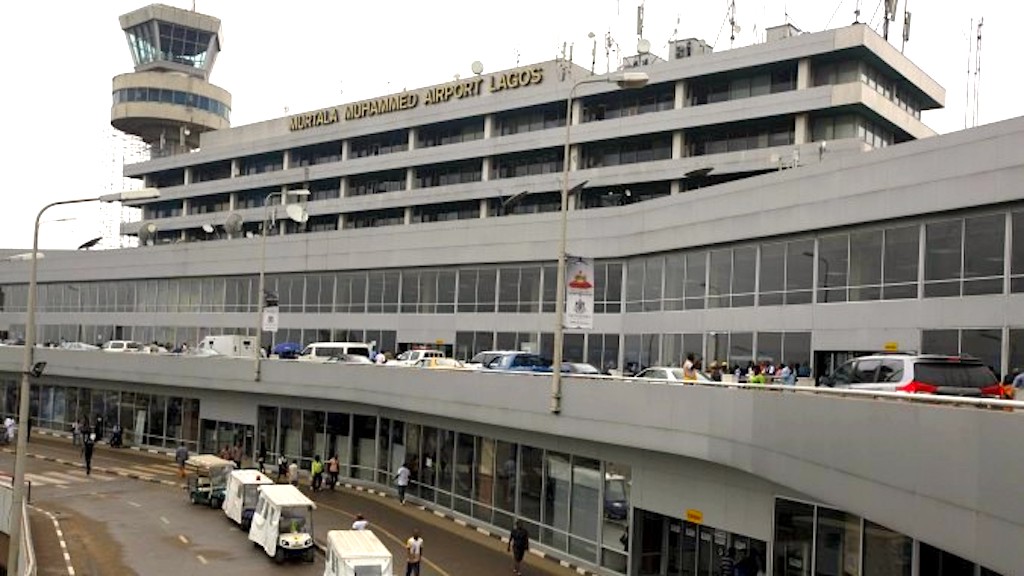

Nearly six in every 10 domestic flights operated by Nigerian airlines in August were delayed, according to a new report released by the Nigeria Civil Aviation Authority (NCAA), highlighting the difficulties faced by air travellers across the country.
The NCAA recorded 7,961 domestic flights during the month, of which 4,765 were delayed. Put simply, about 60 per cent of the flights did not leave at their scheduled times.
The regulator also recorded 36 cancelled flights during the month.
The figures were released days after the NCAA warned airlines over recurring flight delays, crew shortages and other operational problems, urging carriers to ensure their schedules match the aircraft and crew available to them.
Although the overall number of delays was high, most involved relatively short waiting periods.

The NCAA said 2,801 flights were delayed between 16 minutes and one hour. Another 1,322 flights were delayed by between one and two hours.
However, the disruption became more serious for hundreds of flights. A total of 407 flights were delayed by between two and three hours, while 235 flights were delayed for three hours or more.
In other words, more than 600 flights kept passengers waiting for at least two hours during the month.
The figures also show that the problem was spread across several airlines, although some carriers recorded significantly more delays than others.
Air Peace records highest number of delays
Air Peace recorded the highest number of delayed flights, with 1,330 delays from 1,864 flights operated in August; roughly seven out of every 10 Air Peace flights were delayed during the month.
Of its delayed flights, 666 were delayed by between 16 minutes and one hour, 400 by between one and two hours, 156 by between two and three hours, and 108 by three hours or more.
The airline also recorded seven cancellations.
United Nigeria Airlines recorded the second-highest number of delays, with 943 delayed flights out of 1,231 operations.
Its figures show that 442 flights were delayed by between 16 minutes and one hour, 344 by between one and two hours, 116 by between two and three hours, and 41 by three hours or more.
United Nigeria also recorded the highest number of cancellations, with eight flights cancelled during the month.
Enugu Air followed with 582 delayed flights from 878 operations, including 343 delays of between 16 minutes and one hour and 46 delays lasting three hours or more. The airline recorded four cancellations.
Meanwhile, Value Jet recorded 435 delays across 767 flights, while Ibom Air recorded 254 delays across 560 flights.
Aero recorded 246 delays from 469 flights, while Rano Air had 216 delays from 503 operations.
Max Air recorded 204 delays from 336 flights, while Arik had 188 delays from 301 operations.
Other airlines recorded lower numbers of delayed flights. Overland had 139 delays from 239 flights, Green Africa recorded 114 from 226 flights, Binani had 22 from 57 flights, XE Jet recorded 40 from 127 flights, and UMZA Air had 52 delays from 403 operations.
The NCAA recorded no flight operation for NGEagle during the month.
NCAA demands better planning
The figures come against the backdrop of renewed pressure from the aviation regulator for airlines to improve their handling of flight disruptions.
During separate meetings with Air Peace and Max Air at the NCAA headquarters in Abuja on 10 September, the Director-General of Civil Aviation, Chris Najomo, questioned the effectiveness of the operational buffers being maintained by airlines in view of recurring delays and cancellations.
While acknowledging that factors such as weather, diversions and airport restrictions could affect flight operations, Mr Najomo stressed the need for airlines to plan and maintain effective contingency arrangements.
He also called for better communication with passengers whenever disruptions occur.
At the meeting, the Chief Operating Officer of Air Peace, Oluwatoyin Olajide, said the airline had 20 aircraft, with five on ground and 15 serviceable. The airline said it deliberately operated between 80 and 85 flights daily to maintain a buffer against disruptions.
She attributed some of its recent operational problems to technical issues, including bird-strike damage, shortages of aircraft components and a cracked windshield, as well as weather and airport restrictions.
ALSO READ: Airlines resume flights after aviation unions temporarily suspend industrial action
The General Manager, Ground Operations/Business Development of Max Air, Raymond Omadiagbe, said the airline had three Boeing 737 aircraft available for domestic operations and that all three were serviceable. However, he said only two were being operated because of crew limitations.
The airline added that it had reduced its schedule to match the resources available to it and had also stopped late-night Kano operations following passenger feedback.
Both airlines identified pilot retention as one of the challenges affecting their operations.
The NCAA said it was supporting training-bond arrangements and considering measures to facilitate foreign crew validation, while stressing the importance of proper licence verification and simulator checks.
Mr Najomo said the regulator would continue to support airlines but expected operators to maintain realistic schedules, comply with aviation regulations and improve passenger care.
Discover more from Premium Times Nigeria
Subscribe to get the latest posts sent to your email.








The Federal Government of Nigeria commissioned a three-megawatt hybrid mini-grid project and a Renewable Energy Workshop and Training Centre at Yakubu Gowon University (formerly University of Abuja) on Wednesday.
The project was commissioned under Phase 2 of the Energising Education Programme (EEP), which encompasses seven universities and two teaching hospitals, including institutions in Maiduguri and Calabar. The initiative is currently in the implementation stage of Phase 3.
The Yakubu Gowon University installation features a 3.3 MWp solar array with 3MW of AC output capacity and 2 MWh of battery storage to support critical loads after solar hours. It also includes a dedicated grid connection to serve non-critical demand outside daylight periods.
Speaking at the commissioning ceremony, the Minister of Power, Joseph Tegbe, praised the Rural Electrification Agency (REA) Board, led by Ayodele Fayose, and its management, headed by Abba Abubakar Aliyu, for their leadership in driving sustained investments to improve Nigerians’ lives.
The minister commended the project, noting that it will benefit 58,726 students and that its 388 streetlights will enhance campus illumination and security.
He further observed that electrifying the university will strengthen research, reduce reliance on diesel generators, and ease pressure on institutional budgets.

“This connection between infrastructure and human capability is central to President Bola Ahmed Tinubu’s Renewed Hope Agenda. Under his leadership, investment in electricity is being directed towards services and productive activities that improve people’s lives.”
“This sustained investment is a testament to this administration’s constancy of purpose. Continuing a national programme through successive phases, bringing projects to completion, and preparing the next phase reflects the discipline that development requires. For the young people who depend on these institutions, that continuity matters. It means that the commitment to their future remains active beyond any single project or ceremony,” he said.
Addressing the sustainability of the facility, the Minister urged students to take ownership of the infrastructure and report any acts of vandalism.
He also disclosed that the government is establishing a national call centre to receive and resolve electricity complaints nationwide.
“The promise of this investment now places a responsibility on all of us to preserve it. I expect the student community to support our ongoing efforts to stem the tide of vandalism. I therefore charge all of you to report any such act whenever you see it, not just on this solar system, but on other power assets such as transformers and transmission towers.”
“My office is working on a call centre where electricity complaints across the country can be lodged and resolved. This initiative will provide sustainable job opportunities for our youth nationwide. In addition, we plan to provide a dedicated channel where vandalism of critical assets can be reported for immediate action and remediation. We are also working through a joint team of the Nigeria Police Force, the Nigeria Security and Civil Defence Corps, and the EFCC to curb the vandalism of electricity assets across the country,” the Minister added.
In his remarks, the Managing Director of the REA, Abba Aliyu, stated that the true value of the EEP lies not merely in megawatts but in functional laboratories, reduced budgetary pressure, and safer learning environments.
He charged the University governing council to ensure the project remains productive and beneficial to the University community long after the commissioning.
“Over the years, the EEP has taught us that when you build, you have to think about what happens five years from now and whether the investment will continue to create value into the future.”
“The Renewable Asset Management Company (RAMCO) is our solution. We must now become rigorous about asking how we protect and preserve the value of what we have built. RAMCO addresses this sustainability challenge. It recognises that building and managing infrastructure are two distinct responsibilities, and that modern renewable energy is decentralised. The Federal Government has created a platform to manage, monitor, maintain and optimise assets over time. RAMCO cannot survive alone; it requires the support of all stakeholders in shared stewardship. The ultimate value of this project will depend not only on what we have installed, but on how well it is sustained,” the REA MD said.
Mr Aliyu added that beyond the mini-grid, the agency established a Renewable Energy Workshop and Training Centre (WTC) to build local technical capacity.
READ ALSO: UPDATED: Tinubu renames University of Abuja after Yakubu Gowon
He encouraged the university to turn the facility into a research hub for distributed energy resources, challenging the institution to pioneer new academic courses, drive technological innovation, and push the technical boundaries of the installation.
He also revealed that the EEP has so far delivered over 100MW of power across 22 federal institutions and university teaching hospitals, while thanking the Minister for his continuous support in ensuring energy investments deliver tangible benefits to Nigerians.
Also speaking, the Vice-Chancellor of Yakubu Gowon University, Akinwunmi Fawehinmi, emphasised that the institution cannot effectively teach, conduct research, or provide a conducive learning environment without reliable electricity.
He praised the Federal Government for its coordinated intervention, stating that the project directly addresses the university’s energy needs, and pledged that the management will ensure the facility is fully utilised and meticulously maintained.
Commending the REA leadership, the Chairman of the Senate Committee on Power, Enyinnaya Abaribe, hailed Abba Aliyu for the project, noting that it is critical to improving the quality of education nationwide.
He also applauded the establishment of RAMCO, stating that sustainability is key to ensuring that projects continue to benefit Nigerians long after commissioning.
Discover more from Premium Times Nigeria
Subscribe to get the latest posts sent to your email.

Dangote Petroleum Refinery has opened its initial public offer to investors. Here are the key details.
1. The company is seeking about ₦2.15 trillion
The offer comprises 4.1 billion ordinary shares priced at ₦525 each. If fully subscribed, it will raise approximately ₦2.15 trillion.
2. The offer runs for one month
The IPO opened on September 14, 2026, and is scheduled to close on October 13, 2026.
3. Investors can start with ₦5,250
The minimum subscription is 10 shares. At ₦525 per share, eligible investors can participate with ₦5,250.
4. The IPO will broaden ownership of the refinery
Aliko Dangote described the transaction as an “IPO for the people.” Its low entry point is intended to give Nigerians across different income and professional groups an opportunity to own shares in the business.
5. The transaction could reshape Nigeria’s capital market
FCMB Group Chief Executive Ladi Balogun said the offer could strengthen the Nigerian Exchange and support its ambition to become Africa’s largest and most relevant capital market.
The transaction may also encourage other large African companies to raise capital and list their shares in Nigeria.
6. FCMB Group is participating in the transaction through three operating companies:
FCMB Capital Markets is a joint issuing house. CSL Stockbrokers is the stockbroker to the issue. First City Monument Bank is a receiving bank and distribution agent.
7. Qualified Investors and High Net Worth Individuals purchasing 50,000 shares and more, with a working stockbroking account should fill out the investor subscription form and credit their account of choice, sending both to FCMB Capital Markets at the following email address: [email protected]
8. Interested Retail investors with an FCMB bank account can subscribe to the DPRP IPO by following these steps: Log in to the FCMB Mobile App or visit website
Follow the prompts to the Dangote IPO subscription portal.
READ ALSO: Bamboo, Cowrywise down due to Dangote Refinery IPO subscription traffic
Select if you have a CSCS/CHN number.
If yes, fill in the number and follow the instructions.
If not, follow the prompts to open a trading account with CSL Stockbrokers, after which a code will be generated for you.
Ensure your FCMB bank account is sufficiently funded to cover your subscription and authorize the direct debit.
Investors without an FCMB bank account who want to participate in the DPRP IPO can visit the CSL portal to open a stockbroking account. Instructions for opening a bank account are available online.
Discover more from Premium Times Nigeria
Subscribe to get the latest posts sent to your email.
-

 News8 hours ago
Nigeria Takes on the World! Chess Stars Begin 2026 Olympiad Battle in Samarkand
-
News4 days ago
Automattic confirms Mullenweg has returned as CEO after attempted ouster by board
-
News1 day ago
Felix Arome Assumes Office as Director-General of Front Line Alliance Network
-
News4 days ago
APC: Stop manufacturing figures, attaching to my proposal – Atiku to Tinubu’s aide, Ogra