Business
NNPC activates multiple pathways to transform Nigeria into global gas hub —Official


The Nigerian National Petroleum Company Limited (NNPC Ltd.) has reiterated its commitment to activating multiple pathways to transform Nigeria into a global gas hub.
According to a statement issued by NNPC’s Chief Corporate Communications Officer, Andy Odeh, the company’s Executive Vice President, Gas, Power & New Energy, Olalekan Ogunleye, disclosed this while speaking at the 2026 Gas Technology & Exhibition Conference (GASTECH) in Bangkok, Thailand, on Monday.
Mr Ogunleye spoke during a panel session themed, “The New LNG Order: Leadership Strategies for Energy Security and Growth.”
He said Nigeria was leveraging its more than 215 trillion cubic feet (tcf) of proven gas reserves to drive domestic industrialisation and expand its export market as geopolitical tensions, conflicts and other factors continue to affect global energy supply and demand.
“Gas development and monetisation from Nigeria’s standpoint is a purely commercial play. NNPC Ltd. is implementing a Gas Master Plan (GMP) engineered as a gap-to-potential tool to move Nigeria from a 215tcf reserves position to above 600tcf,” Mr Ogunleye said.

Gas production targets
According to the statement, Mr Ogunleye said NNPC’s strategy is anchored on stronger coordination under the Petroleum Industry Act (PIA), the Decade of Gas Framework and the Gas Master Plan.
He said the near-term targets are to increase Nigeria’s national gas production to 10 billion standard cubic feet per day (Bcf/d) by 2027 and 12 Bcf/d by 2030.
In January, NNPC unveiled its Gas Master Plan (GMP) 2026, aimed at driving industrialisation and strengthening Nigeria’s energy security.
At the launch, NNPC’s Group Chief Executive Officer, Bayo Ojulari, said Nigeria had about 210 trillion cubic feet (Tcf) of proven gas reserves, with an upside potential of up to 600 Tcf.
He described the resource base as one of the world’s most significant hydrocarbon endowments, saying its development was supported by the Petroleum Industry Act 2021 and the Federal Government’s gas-focused energy transition agenda.
Mr Ojulari said the plan was designed to exceed the presidential mandate of raising national gas production to 10 Bcf/d by 2027 and 12 Bcf/d by 2030.
According to him, the plan is expected to catalyse more than $60 billion in investments across the oil and gas value chain by 2030.
He said the plan prioritises cost optimisation, operational excellence and the systematic conversion of gas resources from 3P to bankable 2P reserves.
The plan also seeks to strengthen gas supply to power generation, Compressed Natural Gas (CNG), Liquefied Petroleum Gas (LPG), Mini-LNG and other critical industrial off-takers.
Mr Ojulari said NNPC adopted a collaborative and investor-centric approach in developing the GMP 2026, with input from industry stakeholders, partners and investors.
LNG expansion
At GASTECH, Mr Ogunleye said Nigeria was already a reliable global gas supplier and was pursuing a major expansion of its LNG capacity.
He cited the Nigeria LNG project’s Trains 1-6, which have a combined production capacity of 22 million tonnes per annum (MTPA) and have exported more than 6,000 LNG cargoes since 1999.
He also cited Train 7, which is scheduled for completion in 2027, as part of the country’s ongoing LNG expansion.
READ ALSO: Audit Reports: Reps panel vows to make NNPC, oil marketers account for ₦432bn debt
Mr Ogunleye said Nigeria’s geographical position, which gives it access to both the Atlantic Basin and Asian markets, further strengthens its position as a strategic global gas supplier.
He said this advantage, combined with the country’s substantial gas reserves and renewed national focus on gas development, provides a strong basis for expanding the industry.
According to him, domestic gas utilisation and exports are not mutually exclusive, as Nigeria is pursuing a dual pathway that uses exports to generate foreign exchange while expanding domestic gas use to create jobs, strengthen energy security and improve economic wellbeing.
Mr Ogunleye said Nigeria had also de-risked new LNG projects through a robust legal and regulatory framework backed by attractive fiscal incentives.
“With continued efforts towards stable security, competitive gas pricing and assured gas supply, there is no better time for investors and financiers to participate in the development of Nigeria’s LNG projects confidently,” he said.
GASTECH is a major global conference and exhibition focused on natural gas, LNG, hydrogen and low-carbon solutions.
The 54th edition brings together about 50,000 participants from more than 150 countries, including energy experts, chief executives, policymakers, investors and technology leaders, to discuss energy security, LNG supply, infrastructure investment and decarbonisation.
Discover more from Premium Times Nigeria
Subscribe to get the latest posts sent to your email.
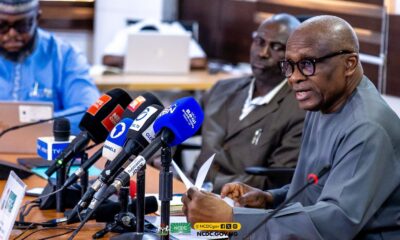



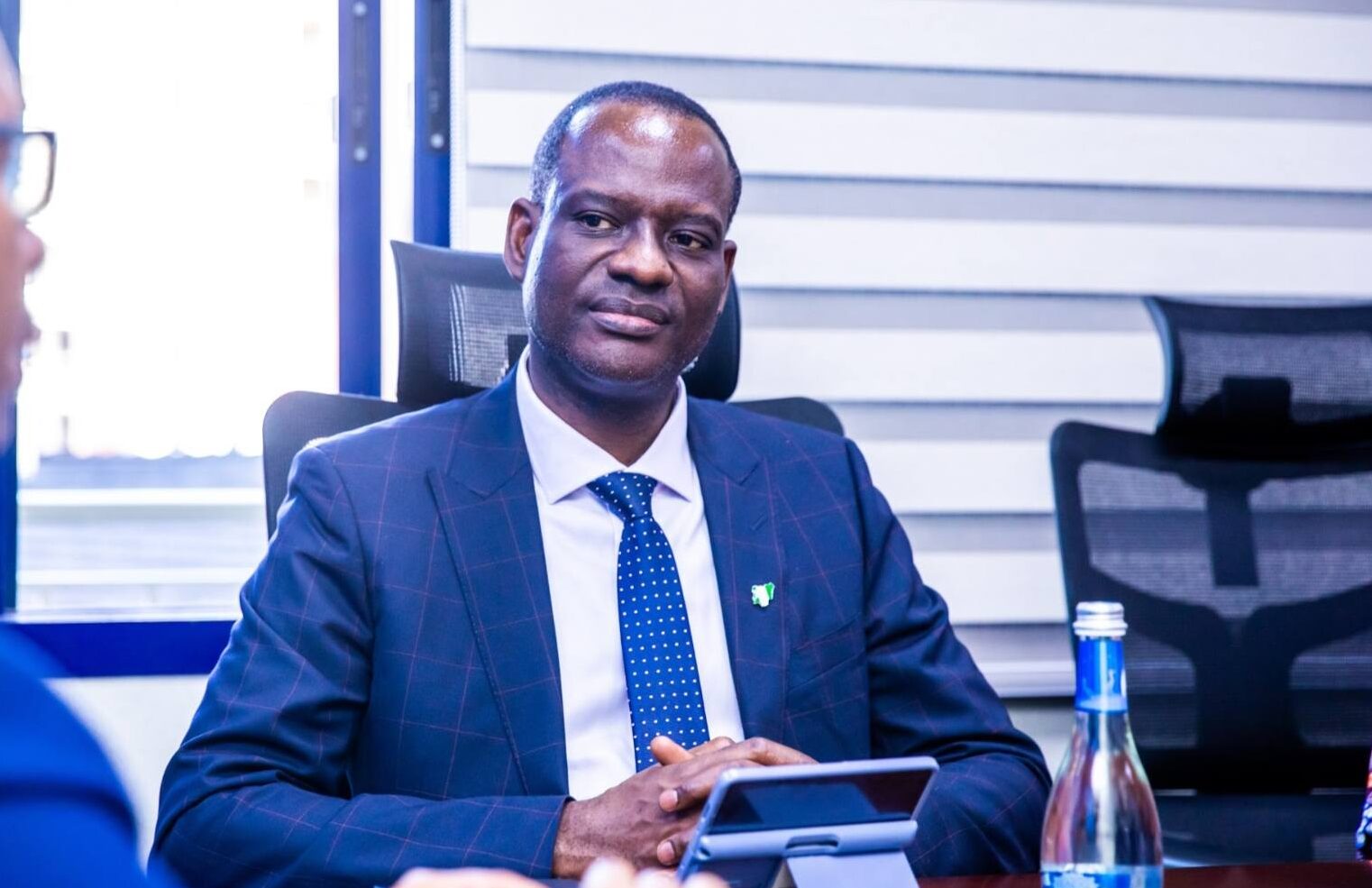
The federal government is considering legislation to prevent successive administrations from reversing key economic reforms, as it seeks to establish a national policy framework to guide decisions on taxation, subsidies, trade and industrial development.
The Minister of Finance and Coordinating Minister of the Economy, Taiwo Oyedele, said the proposed framework would establish economic principles to guide successive governments, regardless of changes in political leadership.
He spoke on Monday at the 32nd Nigerian Economic Summit in Abuja, where he presented the draft of Nigeria Economic Policy Framework for public consultation.
“We now need to lock it in, in institutions, in law, as well as policy framework, so that it can be enduring,” he said during a panel session.
The proposal comes as President Bola Tinubu’s administration continues to defend its economic reforms, including the removal of petrol subsidies and changes to the foreign exchange system.
The government says the reforms are necessary to address economic distortions and improve long-term stability. However, their effects on household purchasing power and business costs have remained a subject of public debate.

Mr Oyedele said inconsistent economic policies had discouraged investment and undermined previous reforms, arguing that Nigeria needed a lasting approach to economic decision-making.
“Policy uncertainty is an invisible tax on enterprise. And unlike most taxes, it generates no revenue for government; it only destroys value and discourages investment,” he said.
He said the government was considering whether key provisions of the proposed framework should be backed by law, stressing that the document remained a draft and had not been approved as government policy.
Public consultation
According to Mr Oyedele, the consultation process will run until 27 November, after which the framework is expected to proceed to the Federal Executive Council for approval and the National Economic Council for endorsement.
The draft is built around stability, productivity, enterprise, capital, people, markets and institutions. It proposes common principles to guide economic decisions across government.
One of its key proposals is to require Policy Impact Assessments before major economic interventions. These assessments would set out the problem a proposed measure seeks to address, the evidence supporting it, its likely costs and beneficiaries, and the conditions under which it should end.
The assessments would cover interventions such as tax changes, tariff adjustments, regulatory restrictions and incentives.
The framework also proposes an annual National Economic Scorecard to measure whether economic growth is improving living conditions. Suggested indicators include real wages, productive employment and poverty levels.
The government says these measures would make economic decisions more transparent and allow Nigerians to assess policies by their outcomes rather than announcements alone.
The Ministry of Finance has published the consultation document on its website and invited businesses, professional groups, researchers and other stakeholders to submit recommendations.
No return to fuel subsidy
Mr Oyedele defended the removal of petrol subsidies, saying the artificial suppression of prices had distorted the economy and created costs that became increasingly difficult to manage.
He argued that government policy should focus on raising household incomes rather than keeping prices below levels that could be sustained by the market.
“Let’s not suppress prices. Let’s focus on raising income,” he said.
The minister also questioned Nigeria’s industrial protection policies, citing locally assembled vehicles that he said contained only about five per cent local content despite benefiting from tariffs and levies of up to 60 per cent.
He argued that protection for domestic industries should be temporary and tied to measurable performance, rather than shielding businesses indefinitely from competition. He also called for improvements in electricity supply, logistics and other infrastructure to lower production costs.
Mr Oyedele said the government was targeting inflation in the low single digits before the end of 2027, with the aim of creating conditions for single-digit interest rates. He did not provide a specific timeline for achieving lower borrowing costs.
He also cited student loans, pension payments, wage adjustments and subsidised credit for small businesses as interventions under the government’s broader economic programme.
He urged wealthy Nigerians to meet their tax obligations, warning that inadequate government revenue could worsen inflation, borrowing costs and pressure on the naira.
Tinubu administration defends reforms
The Minister of Budget and Economic Planning, Abubakar Bagudu, backed the call for policy consistency, saying President Tinubu had directed government officials to sustain the reforms despite concerns about their immediate effects on households.
“There will be no return to subsidy. There will be no return to those distortions,” Mr Bagudu said.
He said the Federal Government had reached agreements with state governments on better coordination of fiscal and monetary policies, infrastructure development, security and domestic production.
Mr Bagudu also said more than $6 billion had been mobilised from the World Bank and other development partners to support household resilience and economic opportunities.
Anambra State Governor, Charles Soludo, cautioned against abandoning macroeconomic stability, saying sustained policy discipline was necessary to achieve meaningful growth.
“The macroeconomic framework, the stability that is back, must never be taken for granted,” he said.
However, Mr Soludo argued that economic growth of about four per cent remained insufficient to deliver rapid poverty reduction and create enough jobs, calling for higher investment and faster expansion.
Calls for stronger productivity
Oxford University Professor of Economic Policy, Stefan Dercon, stressed the importance of controlling inflation and improving electricity supply, logistics and port operations to support economic growth.
He cautioned against indefinite protection for domestic industries.
“You can’t keep on protecting in the same way,” he said.
Chema Triki, co-founder and managing director of Growth Teams, said Nigeria needed to develop new productive capabilities and diversify exports rather than depend excessively on its domestic market.
She pointed to the country’s limited export diversification as a reason for strengthening industrial competitiveness.
READ ALSO: What African countries, others can learn from Nigeria’s economic reforms – Minister
Omoboyede Olusanya, group managing director of Flour Mills of Nigeria, called for lower interest rates, reliable infrastructure and improved agricultural productivity to reduce manufacturing costs.
He said expensive financing discouraged long-term investment, while poor logistics and unstable supplies of agricultural commodities weakened domestic industries.
Lagos State Governor, Babajide Sanwo-Olu, highlighted investments in ports, transport corridors, rail infrastructure and food logistics as measures to improve productivity and reduce the cost of doing business.
The Chairman of the Nigerian Economic Summit Group, Olaniyi Yusuf, urged the government to ensure that economic reforms translated into affordable living costs, productive employment and measurable improvements in household welfare.
The Minister of State for Budget and Economic Planning, Doris Uzoka-Anite, said the National Development Plan 2026–2030 would prioritise industrialisation, infrastructure, investment mobilisation, human capital development and stronger institutions.
She said the plan aimed to accelerate economic growth, create jobs and reduce poverty through better coordination of government policies, budgets and investment programmes.
The proposed Nigeria Economic Policy Framework is expected to undergo further consultation before formal consideration by the relevant government institutions.
Discover more from Premium Times Nigeria
Subscribe to get the latest posts sent to your email.
-

 News3 days ago
Troops rescued 70 abductees, recovered N10 million ransom: DHQ
-
News3 days ago
Plateau Activates Ebola Preparedness Measures, Urges Residents to Observe Safety Guidelines
-
Business3 days ago
CBN grants JP Morgan approval-in-principle to set up merchant bank
-
Business3 days ago
REA Ends 16 Years of Darkness in Two Kano Communities