News
DuckDuckGo makes its ‘no-AI’ search engine easier to access as its traffic booms

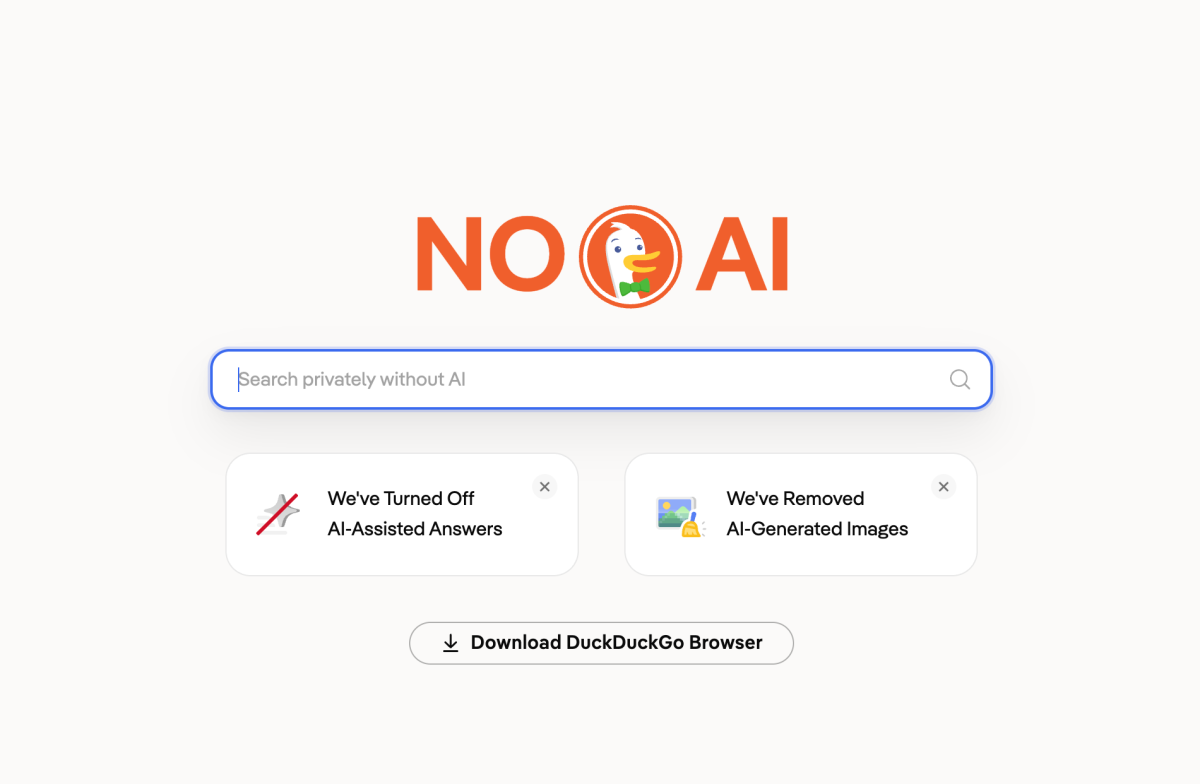
As its traffic continues to climb, alternative search engine DuckDuckGo is leaning into anti-AI sentiment with the launch of new browser extensions that allow users to set its no-AI search experience, noai.duckduckgo.com, as their default search engine.
Once enabled, users will be directed to DuckDuckGo’s AI-free search page, where there are no AI-assisted answers, no chat prompts, and fewer AI images in the search results, the company claims. The extensions are currently available for Chrome and Firefox users. Meanwhile, people who have switched to the DuckDuckGo web browser already have their AI settings preserved, even if they clear their browser history.
The company says the extensions are meant to help people have a consistent AI-free search experience — something that’s harder to come by these days, especially after Google announced its AI-first revamp of its search engine at its developer conference earlier in May.

Since then, traffic to DuckDuckGo has been booming. Last week, the company noted that web visits to its no-AI search page were up nearly 30% week-over-week, and its U.S. app installs were also up 18.1% week-over-week, with U.S. iOS app installs peaking at 69.9% week-over-week growth.
Those trends followed news that Google was overhauling its search box in the biggest change to its search engine in more than 25 years. Now, instead of returning links at the top of the page, Google will favor sending users into AI-generated search overviews, which are becoming more interactive experiences capable of creating visualizations, charts, graphs, or even mini apps, as needed. Follow-up questions from AI Overviews will push users into an AI Mode chat experience. The traditional “10 blue links” that defined Google in its earlier days are more of an afterthought, appearing below all this AI-fueled productivity.
But not everyone is on board with having AI made the default, which is why some are making the move to alternative search engines like DuckDuckGo, Kagi, and others.
DuckDuckGo says traffic to its no-AI search page was up threefold on Thursday, May 28, 2026 — a new high-water mark since Google’s search announcement — and the numbers are still climbing. The growth is not coming in spurts either, the company points out. Instead, visits are averaging roughly 84% above the baseline, suggesting a more sustained shift.
In addition to the new “no AI” search Chrome and Firefox extensions, DuckDuckGo will soon update its original DuckDuckGo Privacy Essentials extensions for Chrome, Firefox, Edge, and Opera to offer controls for AI search settings, as well.
It’s worth noting that DuckDuckGo isn’t an anti-AI company. The company still offers its own AI chatbot with access to many popular models, and a subscription plan that provides access to the latest models and other tools, like a VPN service, identity theft restoration, and personal information removal services.
When you purchase through links in our articles, we may earn a small commission. This doesn’t affect our editorial independence.








-

 News3 days ago
2027: El-Rufai’s detention could hurt APC, generate sympathy – SEDSAC director, other analysts express views
-
News3 days ago
Nigerians warned as AI creates new sextortion threat – Technology Times
-
News2 days ago
Lucid Motors’ EV output falls to lowest level in almost 2 years
-
Health3 days ago
Nigerian drugmaker Fidson selected to manufacture generic influenza antiviral under global licence