News
‘That’s hopelessness’ – Peter Obi knocks Tinubu’s Renewed Hope Agenda

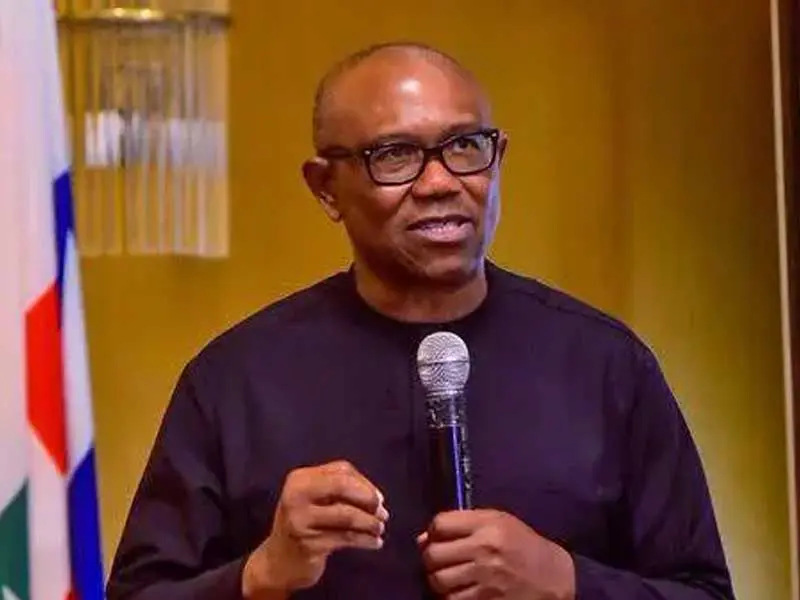




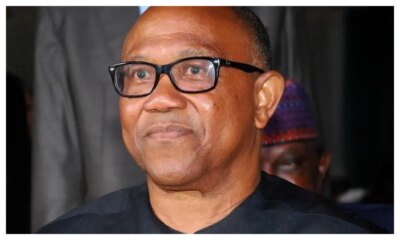


The Minister of State for Health and Social Welfare, Iziaq Salako, and other stakeholders at the 8th Nigeria Pharma Manufacturers Expo, organised by the Pharmaceutical Manufacturers Group of the Manufacturers Association of Nigeria (PMG-MAN).
Keywords: pharmaceutical manufacturing, Iziaq Salako, medicine security, local production, healthcare value chain, pharmaceuticals, PVAC
The federal government is targeting at least 70 per cent local production of essential healthcare products by 2030 as part of efforts to strengthen medicine security and reduce the country’s dependence on imports.
The Minister of State for Health and Social Welfare, Iziaq Salako, disclosed this on Monday in Lagos while declaring open the 8th Nigeria Pharma Manufacturers Expo, organised by the Pharmaceutical Manufacturers Group of the Manufacturers Association of Nigeria (PMG-MAN).
The expo, themed “Regional Manufacturing: Advancing Africa’s Pharma and Life-Science Sovereignty through Localisation,” brought together stakeholders in Nigeria’s pharmaceutical and life-sciences sector.
$2bn financing, tariff relief for drug makers
Mr Salako said the government’s Presidential Initiative to Unlock the Healthcare Value Chain (PVAC) had secured about $2 billion in financing commitments at single-digit interest rates, with about 50 Nigerian health firms in advanced discussions for funding.


He said the government was also using fiscal measures to support local pharmaceutical manufacturing, noting that 87 local manufacturers were benefiting from a presidential executive order granting zero tariffs on pharmaceutical machinery, active pharmaceutical ingredients (APIs) and excipients across almost 1,000 Harmonised System codes.
According to him, the measures are intended to strengthen domestic manufacturing and build greater resilience into Nigeria’s healthcare supply chain.
From imports to domestic capacity
Speaking further, Mr Salako said disruptions during the COVID-19 pandemic had exposed the risks associated with dependence on global supply chains and underscored the need for Nigeria and other African countries to develop domestic capacity to produce medicines, vaccines, diagnostics and other essential health technologies.
“Our conversation can no longer be limited to whether we can access medicines when global supply chains are functioning,” he said.
Mr Salako described medicine security as an issue of national resilience and sovereignty, saying Nigeria needed to develop capacity across the pharmaceutical value chain rather than concentrate on final-product assembly.
He said ongoing government efforts include expanding local production of APIs, vaccines, biologics, diagnostics and other health commodities.
Mr Salako also cited the operationalisation of the National Institute for Pharmaceutical Research and Development (NIPRD) API Capacity Building and Concept Production Centre, development of commercial API manufacturing capacity and efforts to localise production of HIV, hepatitis and syphilis diagnostic products.
He said Nigeria must also increase investment in research and development and harness its phytomedicinal resources to deepen pharmaceutical manufacturing.
Predictable market for local manufacturers
Mr Salako said the establishment of Medipool, Nigeria’s national Group Purchasing Organisation for essential medicines and medical commodities, would help create predictable demand for locally manufactured products.
He said the organisation would aggregate procurement, negotiate bulk purchases and improve supply-chain efficiency.
READ ALSO: FG seeks action on harmful gender norms to improve adolescent health
In addition, he also urged pharmaceutical manufacturers, researchers, investors and development partners to explore regional markets under the African Continental Free Trade Area (AfCFTA).
He said Nigeria’s pharmaceutical manufacturing ambitions would depend on sustained investment, innovation, regulatory alignment and access to larger regional markets.
Mr Salako said stronger collaboration among government, manufacturers, researchers, investors and development partners would be necessary to build a more resilient pharmaceutical manufacturing ecosystem in Nigeria and across Africa.
Discover more from Premium Times Nigeria
Subscribe to get the latest posts sent to your email.

Bureau of African Affairs [Credit: U.S. Department of State: Bureau of African Affairs Via Facebook]
The United States has commended Nigeria’s response to a series of attacks against Christians in the country, vowing to support efforts to protect them from genocide.
In a social media post on Monday, the Bureau of African Affairs said it would continue to work with President Bola Tinubu’s administration to protect Christians in the Middle Belt.
“The United States commends Nigeria’s strong response to the latest attacks from Fulani militant groups. We will continue to work with the Nigerian government to protect Christians in the Middle Belt,” it said.
It urged Nigeria to maintain the momentum and defend the Barkin Ladi communities in particular.
This came shortly after a series of terrorist attacks in Plateau and other North-Central states, which have suffered repeated attacks by jihadist groups.
Peoples Gazette had documented how gunmen killed residents and others in several communities across Plateau and neighbouring states in the Middle Belt.

We have recently deactivated our website’s comment provider in favour of other channels of distribution and commentary. We encourage you to join the conversation on our stories via our Facebook, Twitter and other social media pages.
-

 News3 days ago
Crusoe abandons $1.25B plan to use Boom turbines at AI data centers
-
News3 days ago
Alex Otti should be campaigning for Peter Obi not backing Tinubu – NDC
-
News3 days ago
I created an interactive digital avatar of myself — and you can talk to it
-
News3 days ago
At Meta Connect, the company’s smart glasses were everywhere