News
Plateau Govt Shuts Down Schools, Gives Reasons


The Plateau State Government has ordered the immediate temporary closure of all public and private primary and secondary schools across the state following suspected cases of diphtheria reported in four Local Government Areas.
Politics Nigeria reports that the directive, which takes effect from Monday, September 7, 2026, will remain in force indefinitely, with the government expected to announce a new date for the resumption of academic activities.
This was disclosed in a statement issued on Saturday by the Commissioner for Information and Communication, Joyce Lohya Ramnap.
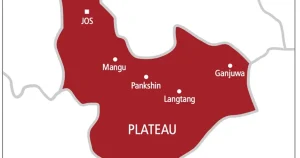
The government said suspected diphtheria cases had been recorded in Jos North, Wase, Jos South and Bassa Local Government Areas, prompting the authorities to take precautionary measures to prevent further spread of the disease.
According to the statement, the directive applies to both public and private schools, including institutions that had already resumed academic activities.
School proprietors, administrators and teachers were directed to comply immediately, while parents and guardians were advised to keep their children and wards at home throughout the period of the closure.
The government explained that the measure was intended to safeguard pupils, students and members of staff amid concerns over the suspected infections.
“Further information on the resumption of academic activities will be communicated to the public in due course,” the statement said.
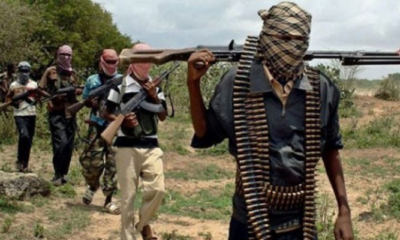
Meanwhile, tension has also been reported in Mangu Local Government Area following an attack on two residents returning from mining activities between Gaude and Mangu Halle.
One person was killed while another sustained gunshot injuries after suspected armed militia members attacked the victims at about 8:10pm on Thursday.
According to counter-insurgency publication Zagazola Makama, troops of Sector 8, Sub-Sector 81, deployed at Gyambwas, responded to a distress call and moved to the scene.
The troops reportedly found one of the victims, identified as Lanyet Bala, with a gunshot wound to his leg, while the attackers had fled.
A subsequent search-and-rescue operation was launched for the second victim, identified as Kwonan.
His remains were later discovered within the general area, according to the report.
Bala was evacuated to Allah Nakowa Hospital in Mangu for medical treatment.
The troops have since commenced offensive operations in the area and launched a manhunt for the fleeing attackers.
In another related development, the Berom Youth Moulders-Association (BYM) has condemned fresh attacks by suspected armed Fulani terrorists in Rim and Wereng communities in Riyom Local Government Area of Plateau State, which reportedly claimed the lives of two youths.
The victims were identified as 39-year-old Joel Bwede and 22-year-old Justice Dadong.
In a statement issued by its Publicity Secretary, Rwang Tengwong, the association expressed concern over what it described as the growing frequency of attacks and the loss of human lives in the state.
The BYM said it was particularly disturbed that victims of recurring violence were increasingly being reduced to statistics in reports of killings.
“Each casualty represents a family shattered, dreams cut short, and a community left traumatised,” the association said.
It warned that the persistent attacks must not be allowed to become the new normal in Plateau State, while calling on the Federal and state governments, as well as security agencies, to intensify efforts to protect residents and their property.
“The protection of lives and property is a primary responsibility of government, as expressly provided under Section 14(2)(b) of the Constitution of the Federal Republic of Nigeria,” the association said.
The group demanded increased security presence in vulnerable communities, improved intelligence gathering and rapid-response mechanisms to prevent further attacks.
It also called for the immediate investigation of the killings and the arrest and prosecution of those found responsible.
The BYM expressed condolences to the families of Bwede and Dadong and the people of Rim, while urging residents to remain calm and cooperate with security agencies as efforts to restore security in the affected communities continue.







News
“I SAW CHAMPIONS IN MOROCCO, TONIGHT THE WORLD HAS SEEN THEM!” — SSA Adeboye Celebrates Flamingos’ Historic World Cup Victory

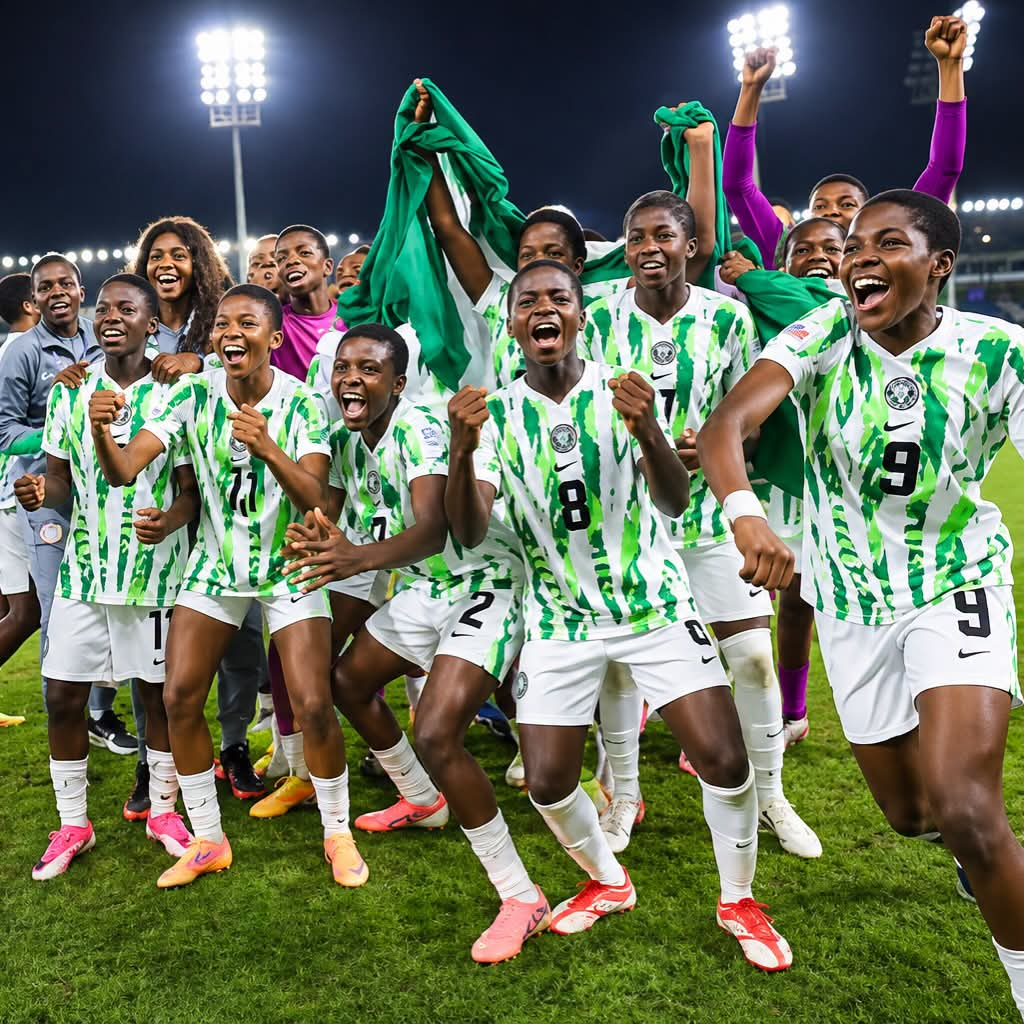
There are victories that bring celebrations, and there are victories that change the story of a nation. For Nigeria’s Flamingos, Saturday night’s triumph over Japan in Morocco belongs firmly to the latter.
And for the Senior Special Assistant to the President on Grassroots Sports Development, Hon. Adeyinka Anthony Adeboye, who travelled to Morocco to support the girls, the historic achievement carries a particularly personal meaning.
The Presidential aide was full of emotion following Nigeria’s 2-1 victory over Japan in the final of the 2026 FIFA U-17 Women’s World Cup in Rabat, a result that crowned the Flamingos Africa’s first champions in the history of the competition.
But rather than dwell solely on the trophy, Adeboye reflected on a moment away from the cameras and the cheering crowds: his encounter with the players in their dressing room during the tournament.
“I remember looking at those girls in Morocco and seeing young Nigerians who were not afraid of anybody. I spoke to them as a father would speak to his daughters. I encouraged them, and I could feel how badly they wanted to make this country proud. Tonight, I am not just celebrating a trophy. I am celebrating those girls and the courage they carried onto that pitch.”
The Flamingos’ journey to the title was anything but straightforward.
Beaten by Poland in their opening match, Hakeem Busari’s side could easily have allowed disappointment to define their campaign. Instead, they turned adversity into motivation, recording six consecutive victories and defeating Japan in a final decided by goals from Awawu Bashiru and Oluebube Umejiaku.
For Adeboye, the manner of the triumph was just as significant as the result.
“What impresses me most is not that they won every match after losing to Poland. It is that they refused to allow one bad day to destroy their dream. That is a lesson many adults can learn from these children. They fell, they stood up, and they kept going until the world had no choice but to recognise them.”
The SSA reserved special praise for Busari, whose handling of the squad he described as an important example of what can happen when young athletes receive the right guidance.
He also celebrated captain Azeezat Oduntan and her teammates, insisting that every member of the squad, whether on the pitch or on the bench, had contributed to a victory that would be remembered for generations.
Adeboye thanked President Bola Ahmed Tinubu for his commitment to sports development and acknowledged the efforts of the National Sports Commission, led by Mallam Shehu Dikko and Hon. Bukola Olopade, as well as the Nigeria Football Federation.
However, the Presidential aide said the greatest tribute Nigeria could pay its new world champions would be to ensure that thousands of other talented children are given similar opportunities.
“The question we must ask ourselves now is simple: how many girls like these are still playing on rough fields in our villages, without boots, without coaches and without anybody to notice them? Imagine what Nigeria could achieve if we deliberately searched for those children and gave them the same chance.”
He said the Flamingos’ success had given added significance to the National Grassroots Sports Development Summit scheduled for November 18–19, 2026, at the Banquet Hall, State House, Presidential Villa, Abuja.
According to him, the summit must help move Nigerian sports away from depending on occasional discoveries towards a system in which talent identification and development become continuous processes.
“We cannot keep waiting for exceptional children to find their own way to the top. We must create the roads that will take them there. That is the responsibility before us, and these girls have reminded us why it matters.”
Then came a final message that captured the personal satisfaction of a man who had watched the young Nigerians pursue their dream on Moroccan soil.
“To my daughters, the Flamingos, I say thank you. Thank you for the joy you have brought to our country. Thank you for proving that a Nigerian girl can stand before the world and refuse to be intimidated. When I saw you in Morocco, I saw champions in the making. Tonight, the whole world has seen what I saw.”
For Adeboye, the trophy will eventually find its place in Nigerian football history.
What must not be allowed to fade, he believes, is the lesson behind it: somewhere in Nigeria, another generation of champions is waiting for its opportunity.
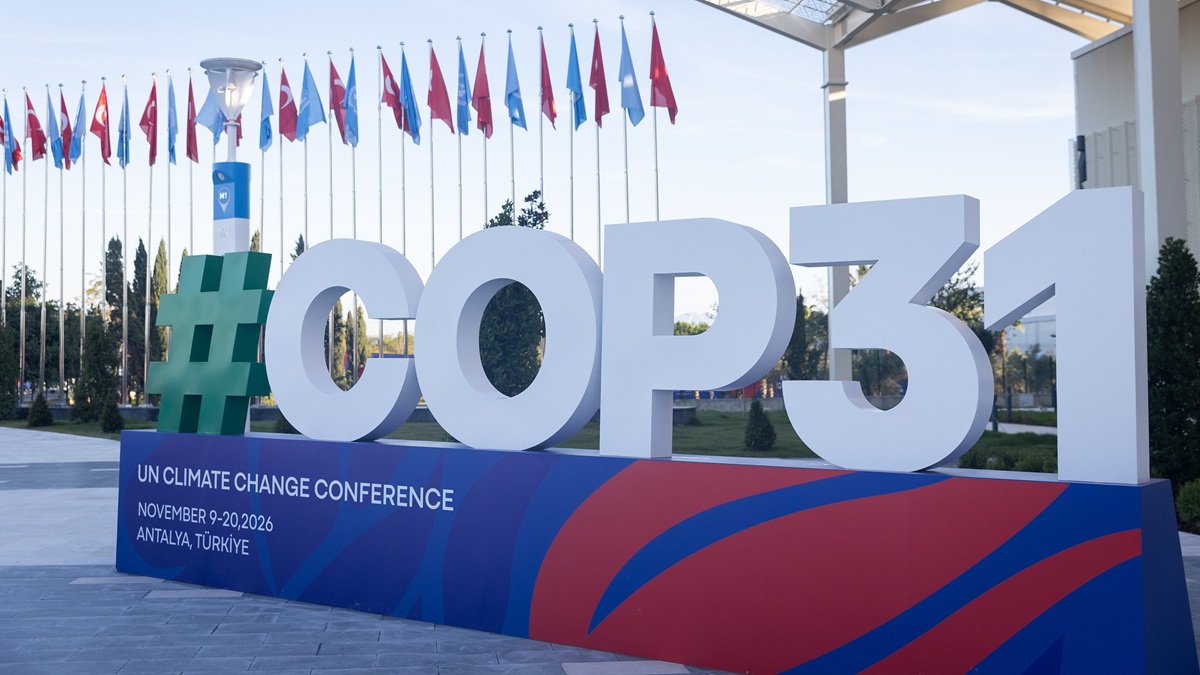
As world leaders prepare to convene in Antalya, Türkiye, for the 31st session of the Conference of the Parties (COP31) to the United Nations Framework Convention on Climate Change (UNFCCC), the African Group of Negotiators (AGN) says it will push for increased climate finance, including an ambitious replenishment of the Green Climate Fund (GCF), among other priorities.
The group said securing adequate and predictable climate finance, particularly grant-based and concessional funding, would be central to Africa’s negotiating priorities at the conference.
This was disclosed by the AGN Chair, Nana Antwi-Boasiako, on the sidelines of the pre-COP31 meetings on Friday.
The AGN is a coalition of climate change negotiators representing all 54 African countries at the UNFCCC and other international environmental negotiations. Nigeria is a member of the group and will negotiate under its umbrella at COP31.
Nigeria’s delegation and technical support is expected to be led by the Nigeria Council on Climate Change Director General, Omotenioye Majekodunmi.
In a speech recorded and published on the AGN’s social media platforms ahead of the formal commencement of COP31, scheduled to hold from 9 to 20 November, Mr Antwi-Boasiako said African countries would seek stronger financial commitments to support the implementation of their climate targets and adaptation plans.


According to him, the continent has made considerable progress in establishing the structures needed to implement the Paris Agreement, but inadequate financing remains a major obstacle.
He cited progress in developing Nationally Determined Contributions (NDCs), carbon market mechanisms under Article 6 of the Paris Agreement, National Adaptation Plans and the Enhanced Transparency Framework.
However, he said many developing countries were struggling to implement their climate commitments because of financial constraints.
“All these issues are structures that are going to support implementation. The key question now is: Where is the money? Where is the financial ambition to help us implement those commitments that we are making as developing countries?” the AGN chair said.
He noted that the group had submitted proposals for agenda items on tripling adaptation finance and replenishing the Green Climate Fund, describing both as critical to advancing climate action across African countries.
He explained that the proposed agenda item on adaptation finance was intended to provide an opportunity to clarify and establish operational arrangements for implementing the decision reached at COP30 in Belém, Brazil, to triple adaptation finance.
The group also wants COP31 to support an ambitious replenishment of the Green Climate Fund next year, describing the facility as particularly important for financing climate action in African countries.
COP31: From consensus to action
COP31 is expected to focus on translating climate commitments into concrete action, with an emphasis on implementation.
The summit will operate under an unusual shared leadership arrangement, with Türkiye hosting the conference while Australia leads the negotiations. Its overarching slogan, “Where Dialogue Becomes Global Action”, reflects the ambition to move beyond climate pledges towards practical implementation.
Beyond the proposed agenda items, the African negotiating bloc is seeking to defend the existing financial obligations of developed countries under the Paris Agreement.
Mr Antwi-Boasiako said Africa was not opposed to expanding the contributor base for climate finance but insisted that such an arrangement must not be used to weaken the obligations of developed countries.
Citing Article 9 of the Paris Agreement, he explained that Article 9.1 establishes the obligation of developed-country parties to provide financial resources to support developing countries, while Article 9.2 provides for contributions from other countries that are in a position to do so.
He argued that developed countries must demonstrate leadership by fulfilling their existing commitments before seeking additional contributions from other countries.
“You cannot abandon your obligations and use something that is not an obligation to replace your obligation,” he said.
The AGN chair disclosed that two policies had recently been adopted at a Green Climate Fund Board meeting ahead of the fund’s next replenishment. One concerns grant-based contributions, while the other addresses the expansion of the contributor base.
The group hopes the replenishment process will demonstrate leadership from developed countries before other countries are encouraged to contribute.
He also identified disagreements between developed and developing countries over climate finance as a major political divide in the negotiations.
While developing countries are demanding credible, predictable and scaled-up grant-based financing, developed countries have cited geopolitical tensions and domestic economic difficulties as constraints on their ability to increase financial contributions.
Mr Antwi-Boasiako, however, questioned the justification for these funding constraints, arguing that developed countries had demonstrated their ability to mobilise substantial resources when other priorities, including energy security, were at stake.
Africa seeks equitable energy transition
The African Group is also seeking progress on the Just Transition Mechanism, insisting that its implementation must reflect the continent’s development realities.
Mr Antwi-Boasiako said the mechanism should go beyond an energy-focused approach to address workers’ welfare, natural resource management, energy poverty and the broader economic implications of the transition.
He warned against an approach that could leave African economies worse off by forcing them to abandon resources they still need for development.
“For the African continent, we think that the transition away from fossil fuels must happen in a more equitable manner. We have a continent that has other challenges. And so we cannot allow our natural resources to be stranded when we need those resources to develop,” he said.
He acknowledged that discussions on the transition away from fossil fuels were continuing but noted that there was no formal negotiated agenda item specifically addressing the issue.
Rather, the discussions were being pursued through a roadmap developed by the COP Presidency outside the formal negotiation process.
The AGN’s position, however, is that countries with higher emissions and greater levels of pollution should lead the transition before other countries follow.
Mr Antwi-Boasiako stressed that the process must be designed to prevent economic hardship in developing countries.
“It is not just energy transition, but transitioning where we are able to make sure that our economies don’t suffer within the transition,” he said.
Climate and trade, other priorities
The African negotiating bloc is also seeking discussions on climate and trade, particularly the implications of unilateral trade measures that could undermine the progress of developing countries.
Mr Antwi-Boasiako said the group was working to secure the adoption of its proposed agenda item to create room for negotiations on the relationship between climate policies and international trade.
He also expressed concern about initiatives introduced under the COP Presidency’s action agenda without adequate consultation with parties.
While the AGN does not oppose initiatives led by the presidency, he said such programmes should not be introduced into formal negotiation texts without proper consultation and party-driven processes.
The group also wants to strengthen the participation of young Africans in climate negotiations through capacity-building programmes that would prepare a new generation of negotiators.
READ ALSO: CBD COP17: Why African countries struggle to mobilise biodiversity funding – AfDB official
COP31 as foundation for COP32
The AGN described COP31 as an important opportunity to strengthen Africa’s negotiating position ahead of COP32, which will be hosted by Ethiopia next year.
Mr Antwi-Boasiako said the group had commenced pre-sessional coordination meetings in Antalya on 1 November, followed by engagements with national focal points and other African delegates.
The group is also engaging other negotiating blocs within the Group of 77 and China to secure broader support for its proposed agenda items ahead of the formal adoption of the COP31 agenda, scheduled for 9 November.
He said Africa’s negotiating strength depended not only on internal coordination but also on building consensus with other developing countries.
The AGN chair cited the continent’s contributions to the establishment of the Green Climate Fund, the Loss and Damage Fund, and the inclusion of adaptation provisions in the Paris Agreement as examples of the group’s influence in international climate negotiations.
The group also called on civil society organisations and the media to help amplify Africa’s priorities throughout the conference.
Mr Antwi-Boasiako said the outcome of COP31 should provide a strong foundation for the continent as it prepares to host the next climate conference.
Discover more from Premium Times Nigeria
Subscribe to get the latest posts sent to your email.
-
News4 days ago
Zenith Tech Fair 2026 puts agentic AI, digital payments and Nigeria’s tech future in spotlight – Technology Times
-

 News4 days ago
Bandits kill 18-year-old vigilante in Plateau
-
News3 days ago
Plateau Govt Hails Council Chairmen as Inspection Tour Reveals Projects Across 17 LGAs
-
Business3 days ago
FG welcomes GIGM’s expansion into digital mobility, urges reliable services