Business
Access Holdings appoints Orimoloye as Access Bank executive director, risk management


Access Holdings Plc has announced the appointment of Ifedayo Orimoloye as Executive Director, Risk Management of its flagship subsidiary, Access Bank Plc.
The company disclosed this in a regulatory filing signed by Sunday Ekwochi, Group Company Secretary, on Friday, saying the appointment followed the approval of the Central Bank of Nigeria (CBN) and would take effect from 21 September.
Commenting on the appointment, Aigboje Aig-Imoukhuede, Group Chairman, Access Holdings Plc, said the appointment will further strengthen the Bank’s risk governance and support its scale to value focus.
“Mr. Orimoloye brings strong global risk management experience and strategic leadership to the Board of Access Bank Plc. His appointment will further strengthen the Bank’s risk governance and support its scale to value focus. We are pleased to welcome him and look forward to his contributions to the Group’s long-term value creation agenda,” he said.
The appointment, the company said, reinforces Access Bank’s commitment to strong governance, prudent risk management and sustainable stakeholder value.
It added that the appointment was made in line with applicable regulatory requirements and the Bank’s corporate governance framework.


Profile
Mr Orimoloye is an internationally recognised risk management executive with over 25 years’ experience across leading financial institutions in Africa, Europe and the United States.
His expertise spans enterprise risk management, capital optimisation, credit governance, regulatory compliance and strategic transformation.
READ ALSO: CBN begins work on new financial inclusion strategy, targets deeper access
He was recently the Group Chief Risk Officer of the African Development Bank, where he oversaw a portfolio exceeding $40 billion and supported the institution’s continued AAA ratings from Moody’s Investors Service, S&P Global Ratings and Fitch Ratings.
He also played key roles in landmark capital and securitisation transactions, including initiatives to expand renewable energy access across Africa.
Mr Orimoloye previously held senior risk leadership positions at Sterling Bank Plc, Ecobank Transnational Incorporated, Wells Fargo Bank, HSBC and Citigroup, where he led risk transformation, portfolio management and governance initiatives across multiple markets.
He holds dual bachelor’s degrees in Economics and Finance, as well as an MBA in Finance from California State University, Hayward.
Discover more from Premium Times Nigeria
Subscribe to get the latest posts sent to your email.





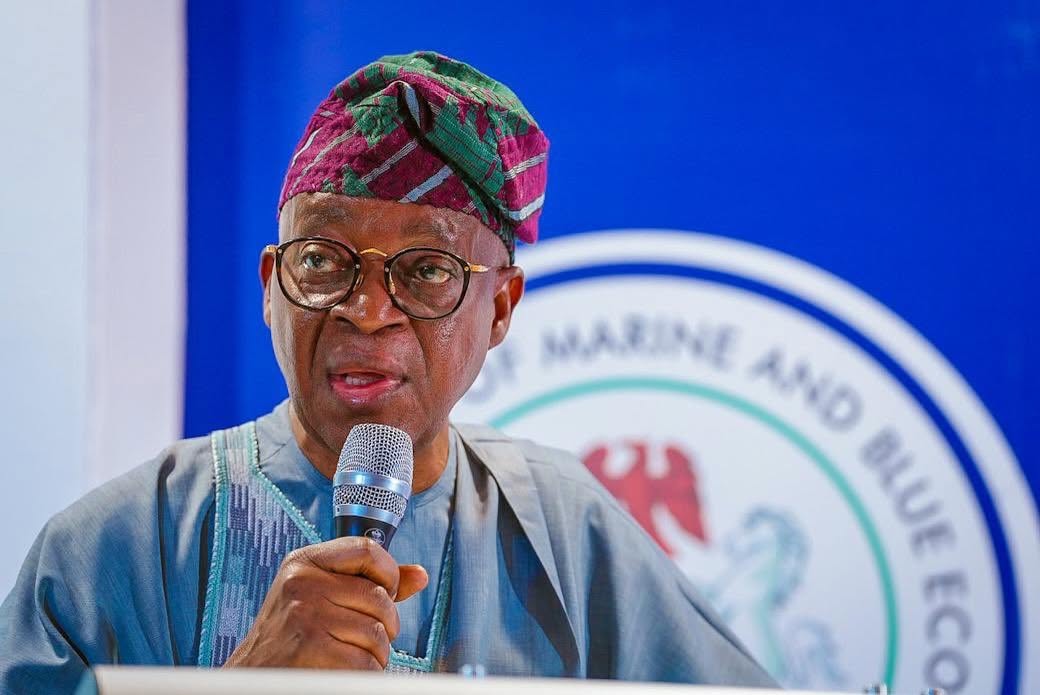
The Nigerian Ports Authority (NPA) has moved to address rail connectivity and logistics challenges affecting inland dry ports as part of efforts to integrate the facilities into the nation’s port system and improve cargo movement across the country.
The move followed a meeting between the NPA management, led by its Managing Director, Abubakar Dantsoho, and the Executive Director of Dala Inland Dry Port, Ahmad Rabiu, alongside representatives of Funtua Inland Dry Port, at the authority’s corporate headquarters in Marina, Lagos.
The engagement came after the Minister of Marine and Blue Economy, Adegboyega Oyetola, directed the transfer of operational oversight of inland dry ports to the NPA.
The discussions focused on strengthening institutional collaboration, addressing infrastructure constraints and improving operational efficiency across Nigeria’s maritime logistics chain.
Speaking during the meeting, Mr Dantsoho stressed the need to upgrade inland dry port infrastructure and technical capacity to complement ongoing modernisation efforts at the nation’s seaports.
He said the facilities must be equipped to handle increasing cargo volumes and support the broader transformation of Nigeria’s maritime sector.
“For our Inland Dry Ports to function at the same velocity as the ongoing modernisation across our seaports, we must proactively upgrade dry port infrastructure and technical capacity,” Mr Dantsoho said.
He explained that the integration of digital platforms, including the Port Community System (PCS) and the National Single Window, into seaport operations must be matched by corresponding improvements at inland dry ports.
“As we integrate digital systems such as the Port Community System (PCS) and the National Single Window in our seaports, the dry ports must deploy modern equipment and advanced technical capabilities to handle larger cargo volumes and bigger vessels coming to our coast,” he added.
Increased private-sector investment
The NPA managing director also called for increased private-sector investment in inland dry port infrastructure, noting that stronger investment would be critical to improving cargo handling capacity and operational efficiency.
He cited APM Terminals’ establishment of an Export Processing Terminal in Northern Nigeria as an example of private-sector participation in the development of inland logistics infrastructure.
ALSO READ: INVESTIGATION: Ganduje embroiled in multi-billion naira Kano dry port ownership scandal
Mr Dantsoho assured stakeholders that efforts to optimise the inland port system were underway and confirmed plans to visit the Dala and Funtua facilities to assess their operational conditions and infrastructure requirements.
Operational oversight
Speaking on behalf of the delegation, Hassan Bello welcomed the transfer of operational oversight to the NPA, expressing appreciation for what he described as a seamless transition.
Mr Bello referenced the gazetted Port Act, which recognises inland dry ports as official ports of origin and destination, while drawing attention to challenges confronting the facilities, particularly inadequate rail connectivity and broader logistics constraints.
Rail access is a critical component of inland dry port operations, as efficient connections to the national rail network can facilitate cargo movement between seaports and inland destinations, potentially reducing pressure on road transport and lowering logistics costs.
The meeting also established a framework for further technical consultations, infrastructure integration and physical planning to identify the requirements for improving operations at the facilities.
The discussions highlighted the need for detailed technical assessments, stakeholder coordination and physical inspections to establish infrastructure priorities and guide subsequent project development.
The planned visits to Dala and Funtua inland dry ports are expected to provide NPA with a clearer understanding of the facilities’ operational challenges and the interventions required to strengthen their roles in cargo distribution, trade facilitation and wider maritime logistics network.
Discover more from Premium Times Nigeria
Subscribe to get the latest posts sent to your email.
-

 Business3 days ago
Communications Ministry made ₦345.5 million duplicate payment for Abuja ICT Park project
-
News3 days ago
LumenUs helps automate tedious paperwork in times of grief
-
Business4 days ago
Fuel subsidy would cost Nigeria over N20trn yearly — Minister
-
News3 days ago
Inside INEC’s AI and cybersecurity plans to secure Nigeria’s 2027 Elections – Technology Times