Connect with us

News

42 community rangers deployed to boost security at Gashaka Gumti National Park

info

Published

on

Community rangers .jpg

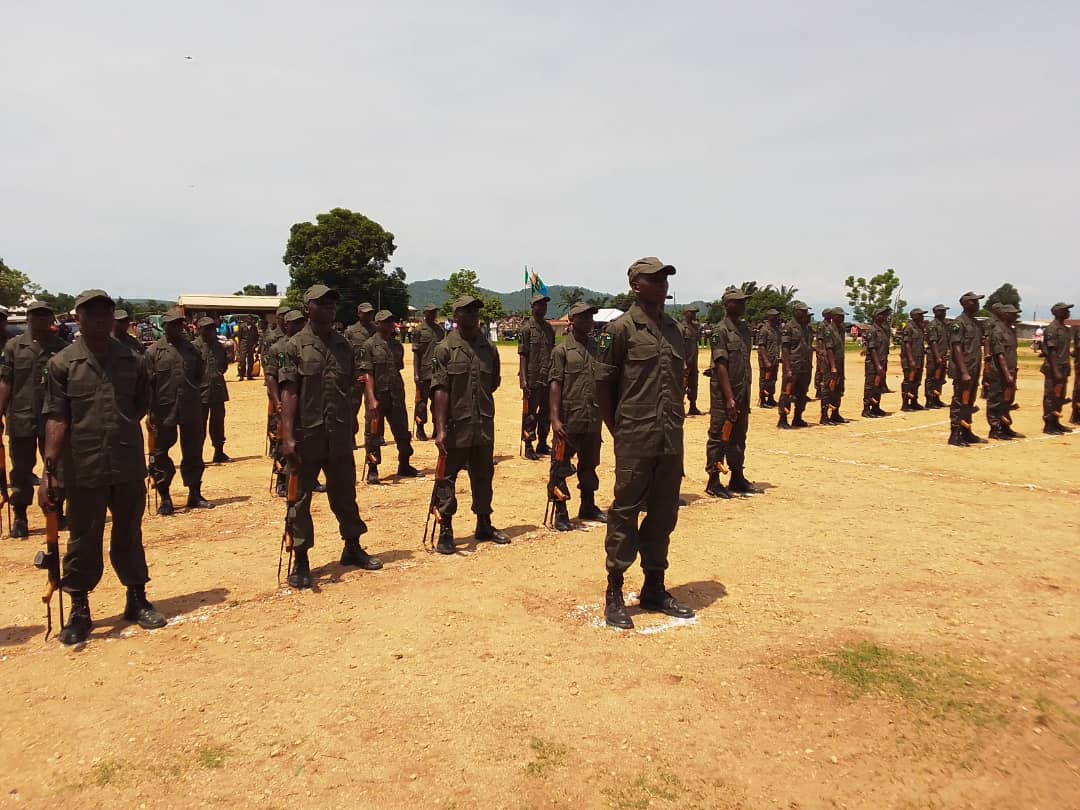
The National Park Service, NPS, has deployed 42 additional volunteer community rangers to strengthen security and conservation efforts at the Gashaka Gumti National Park located across Taraba and Adamawa states.

Speaking during the passing-out parade of the rangers in Serti, headquarters of Gashaka Local Government Area of Taraba state on Tuesday, the Conservator-General of the NPS, Ibrahim Goni, reaffirmed the agency’s commitment to partnerships aimed at promoting biodiversity conservation and sustainable livelihoods across the country.

Represented by George Kagon, Goni said the recruitment initiative was designed to address manpower shortages caused by retirements and other operational losses within the park service.

“By recruiting dedicated youths from host communities, we are not only strengthening park protection but also fostering a sense of shared ownership,” he said.

He commended President Bola Tinubu and the Minister of Environment, Balarabe Lawal, for their support to the service, while also appreciating Taraba State Governor Agbu Kefas and his Adamawa counterpart, Ahmadu Fintiri, for creating an enabling environment for the management of the park.

According to him, the newly recruited rangers underwent intensive training in patrol tactics, wildlife tracking, GPS usage, operational planning, and legal procedures to prepare them for field operations.

Also speaking, the Country Manager of the Africa Nature Investors (ANI) Foundation, Nacha Geoffrey, described Gashaka Gumti as a critical ecological asset and an important watershed for the River Benue that supports millions of Nigerians.

Geoffrey said the deployment marked another major step towards tackling environmental degradation and insecurity threatening the park.

“They are frontline guardians of this vast wilderness and a bridge between conservation authorities and host communities,” he said of the new rangers.

He explained that the recruitment exercise, the fourth since the programme began in 2021, forms part of the strategic partnership between the NPS and ANI Foundation aimed at restoring the park’s ecological integrity and strengthening community participation in conservation efforts.

Geoffrey identified illegal mining, logging, livestock encroachment, and poaching as some of the major threats facing the park, noting that the rangers would play key roles in patrol operations, community engagement, and protection of endangered wildlife species including chimpanzees and leopards.

Despite the rugged terrain of the park, including areas such as Chappal Waddi, he assured the rangers of continued institutional support through the provision of modern equipment, aerial surveillance, and training in first aid and human rights.

Also speaking, the Conservator of the park, D.A. Hamman, said the recruits had received training in conservation law, wildlife monitoring, first aid, and community relations.

“They have walked the ridgelines, tracked the streams, and learned to read the land. They understand that this park is not just forest and mountains, but a vital resource for communities and future generations,” Hamman said.

Traditional rulers from Gashaka, the Mambilla Plateau in Taraba State, and Ganye in Adamawa State commended the initiative, saying improved security had already enabled displaced farmers to return to their communities.

Speaking on behalf of the monarchs, the Lamdo of Gashaka, Alhaji Zuberu Hammagbdo, praised ANI Foundation for its interventions in education, women empowerment, livestock vaccination, and youth development.

“Thousands of cattle have been vaccinated by them,” he said, adding that many of the newly trained rangers were drawn from host communities.
Similarly, the Emir of Ganye, Alhaji Umaru Adamu Sanda, said ANI’s interventions had helped reduce youth unemployment and criminal activities in communities within his emirate.

Chairman of Gashaka Local Government Area, Umar Yusuf, described ANI’s presence as a blessing to both Gashaka and neighbouring Toungo Local Government Area in Adamawa State, assuring the organisation of continued support.

Some of the newly deployed rangers, including Victor and Sadiq, pledged to protect the park and preserve its resources for future generations.

Continue Reading
Click to comment

Leave a Reply

Your email address will not be published. Required fields are marked *

News

IMF: Nigeria ranks among Africa’s biggest potential AI beneficiaries – Technology Times

info

Published

on

Image fx 45.avif

Nigeria is among the five Sub-Saharan African countries best positioned to benefit from the growing adoption of artificial intelligence (AI), according to a new report by the International Monetary Fund (IMF), which says the country has greater potential than most of the region to translate AI into productivity and economic growth.

The IMF, in its report titled Unlocking the Potential: AI in Sub-Saharan Africa, identifies Nigeria alongside South Africa, Mauritius, Botswana and Namibia as the economies expected to record the largest AI-driven productivity gains under current conditions. South Africa is projected to lead the region, followed by Mauritius, with Nigeria ranking among the top performers.

Despite Nigeria’s favourable position, the IMF cautions that the projected gains remain modest compared with advanced economies because of low AI adoption, infrastructure deficits and limited digital preparedness across the region.

“These estimates should be interpreted as a current-conditions diagnostic rather than a forecast of AI’s technological potential. They reflect today’s low adoption, infrastructure gaps, and sectoral structure; they do not capture the full range of gains that could arise from faster diffusion, structural transformation, public sector applications, or AI-enabled innovation,” the report says.

imf-nigeria-among-africa-top-ai-beneficiaries
The IMF says Nigeria is among five Sub-Saharan African countries best positioned to benefit from AI, citing its ICT, finance and professional services sectors.

Image credit: IMF.

“These estimates should be interpreted as a current-conditions diagnostic rather than a forecast of AI’s technological potential. They reflect today’s low adoption, infrastructure gaps, and sectoral structure; they do not capture the full range of gains that could arise from faster diffusion, structural transformation, public sector applications, or AI-enabled innovation,” the report says.

Nigeria among Africa’s AI frontrunners

The IMF attributes Nigeria’s relatively strong outlook to the structure of its economy, which has a larger share of sectors such as information and communication technology (ICT), finance and professional services than many other Sub-Saharan African countries.

These sectors are considered more exposed to AI because they rely heavily on knowledge-intensive and information-processing tasks that can be enhanced or automated using AI technologies.

While agriculture and informal services continue to dominate employment across much of the region, the report notes that job composition in Botswana, Mauritius, Namibia, Nigeria, Seychelles and South Africa more closely resembles that of emerging market economies, placing them in a stronger position to benefit from AI adoption.

According to the IMF, three factors will determine the scale of AI’s economic impact: the proportion of tasks exposed to AI, the rate at which businesses and workers adopt the technology, and the productivity improvements generated through its use.

Productivity gains remain limited

Although Nigeria ranks among the continent’s strongest performers, the IMF projects that productivity gains across Sub-Saharan Africa will remain significantly below those of advanced economies unless governments address critical barriers to AI adoption.

The report estimates that AI will increase productivity across Sub-Saharan Africa by only 0.2% cumulatively over the next decade under current conditions, compared with around 1% in Europe and the Western Hemisphere. When additional AI-related investment is factored in, the technology could contribute an overall cumulative GDP growth effect of about 0.4% over the same period.

The IMF says these projections reflect today’s realities rather than AI’s long-term capabilities.

Infrastructure challenges remain

The report identifies unreliable electricity, limited broadband connectivity, inadequate data centre capacity, shortages of AI skills and constrained investment as the principal obstacles preventing countries from unlocking AI’s full economic potential.

It notes that AI adoption across Sub-Saharan Africa remains below 10%, about two to three times lower than in Europe and the Western Hemisphere, while internet usage and access to reliable electricity also lag global averages.

Human capital also remains a challenge. According to the report, fewer than one-quarter of higher education students in Sub-Saharan Africa study science, technology, engineering and mathematics (STEM) disciplines, while only about 5% of the continent’s AI researchers have reliable access to the high-performance computing needed for advanced AI research.

Greater gains possible

Despite the current constraints, the IMF says the region has significant room to improve if governments accelerate AI adoption and strengthen enabling infrastructure.

“The barriers to AI adoption in Sub-Saharan Africa are real and represent binding constraints at present. But they are barriers, not boundaries features of the current moment. Relax those assumptions, and the numbers could change substantially,” the report says.

The IMF adds that raising AI adoption rates to levels seen in other emerging and advanced economies could more than double the region’s productivity gains over the next decade.

“If current adoption rates were lifted to levels observed in other emerging and advanced economies, productivity gains could more than double, increasing by an additional 0.8 percent over the next decade,” the report says.

Opportunity for Nigeria

For Nigeria, the findings reinforce the country’s growing position as one of Africa’s emerging AI hubs. The report highlights the country’s expanding technology ecosystem and references the Federal Government’s Three Million Technical Talent (3MTT) programme as an important initiative aimed at strengthening digital and technical skills. However, it says investments in electricity, broadband infrastructure, computing capacity and AI talent will be essential for the country to fully capitalise on the technology.

The IMF concludes that while Nigeria is among Africa’s biggest potential AI beneficiaries, translating that potential into measurable economic gains will depend on sustained investments in digital infrastructure, supportive policies and wider adoption of AI across both the public and private sectors.
 

Continue Reading

News

2027: Don’t become catalyst for violence – Gov Abiodun warns police

info

Published

on

Dapo Abiodun 1.jpg

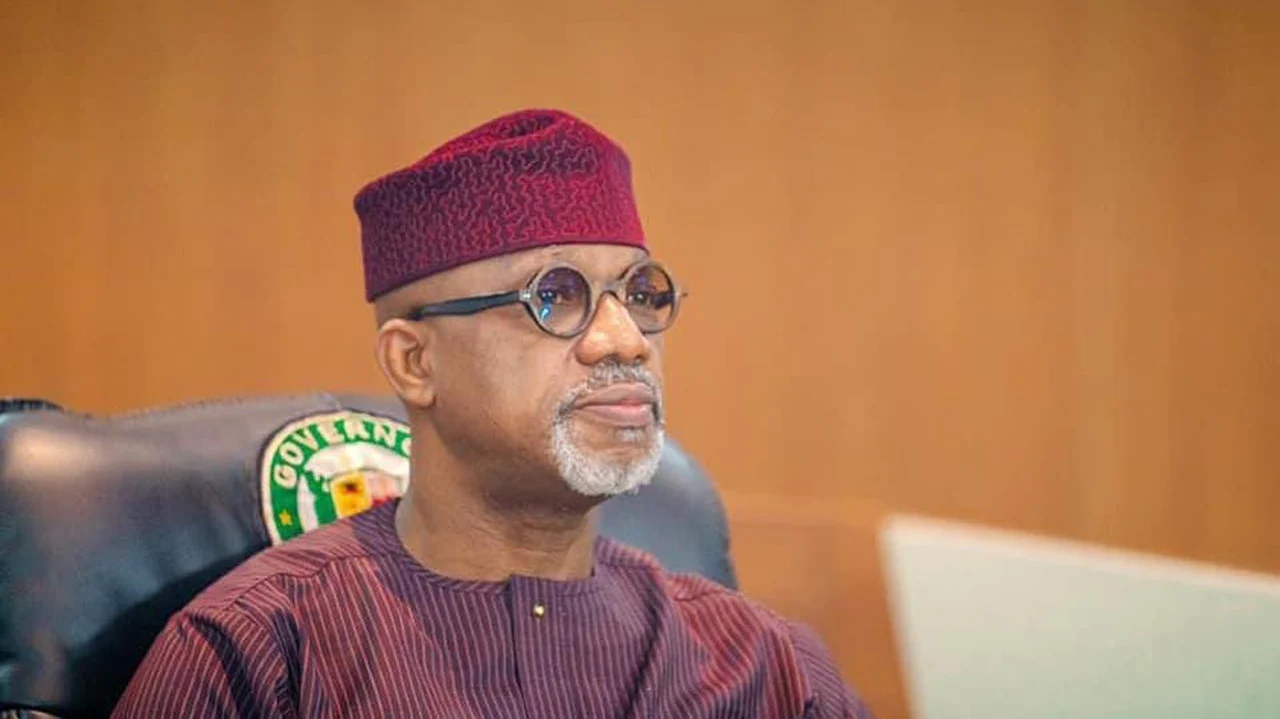
Ogun State Governor, Dapo Abiodun, has warned security operatives not to become catalysts for violence in the 2027 general elections, stressing that they remain a critical component of democracy.

Abiodun gave the warning on Tuesday at a two-day workshop on election security, the law, stakeholders and the media organised by the Ogun State Police Command in collaboration with Development Communication Research Centre Ltd/Gte.

The governor, who was represented by his Special Adviser on Security, AIG Olusola Subair (rted), said the workshop was necessary to equip officers with knowledge of what to do before, during and after elections, noting that election outcomes are sometimes determined by police reports.

“We all need to know that police is a very important component of democracy, and without security, there can be no democracy. That is why the responsibility and the roles to be played by the police is very key in electoral process,” he added.

Recommended

Abiodun cautioned officers against actions that could trigger violence, urging them to leverage the training to ensure peaceful polls in Ogun State.

“We want you to be professional in the conduct of this election, in how you are going to manage and secure this particular election. I want to equally enjoin you that you do not make yourself a catalyst for violence during this election, when you do your work professionally, then people will commend you,” Abiodun stated.

The governor also commended the collaboration among security agencies in the state, which he said has contributed to the peace being experienced, and urged them to remain visible and do what is needful during the elections.

In his welcome address, the State Commissioner of Police, Bode Ojajuni, noted that election security is a shared responsibility, arguing that while security agencies have statutory responsibilities for maintaining public order, the success of those responsibilities depends on the conduct and cooperation of all stakeholders.

He urged political parties, candidates and their supporters to reject violence, intimidation, thuggery, destruction of property and attacks on electoral personnel or facilities.

“Political parties and their supporters must respect the law, election officials must discharge their responsibilities professionally and impartially. Observers and monitors must operate within the limits of their mandates and the media must provide accurate, balanced and responsible information,” he said.

The commissioner of police also appealed to journalists to maintain the highest standards of accuracy, verification, balance and responsible reporting, particularly when dealing with security incidents, allegations of electoral malpractice and other sensitive electoral matters.

Ojajuni reiterated the Force’s commitment to providing a secure environment in which citizens can freely exercise their constitutional right to vote, adding that they will remain professional, impartial and non-partisan.

“We shall remain proactive in identifying threats, responsive to incidents and firm against criminality, while respecting the fundamental rights of citizens. We shall not allow criminal elements to exploit the electoral process to cause violence or undermine public safety,” Ojajuni added.

Delivering his paper, a professional and integrated communication expert, Prof Fassy Yusuf, noted that the success of the 2027 general election in Ogun State depends on how effectively the police leads, coordinates, and partners with state agencies, electoral authorities and civil societies.

Yusuf argued that while INEC is committed to conducting free, fair, credible and inclusive elections, security agencies must secure electoral process with the people and not against them.

Earlier in his address, Bolu Folayan said the workshop was organised to ensure peaceful and credible 2027 general elections in Ogun State, noting that elections do not fail due to lack of laws but failure to understand roles under the law.

Continue Reading

Trending