News
27 Killed in Fresh Attack on Riyom Community, Injuries Reported




The Coordinating Minister of Health and Social Welfare, Muhammad Pate, has said the livestock sector uses more antibiotics than the human health sector.
Mr Pate noted that the responsible use of the drugs in livestock could help reduce the pressure driving antimicrobial resistance (AMR) that can affect humans.
He made the statement on Monday in Abuja at a joint One Health ministerial briefing ahead of the fifth Global High-Level Ministerial Conference on AMR.
Explaining the need for a multi-sectoral approach to AMR, the minister said antimicrobial use in livestock is an important part of the resistance problem.
“The livestock sector uses more antibiotics than the human health sector. So if they are used better, then there’s less pressure for antimicrobial resistance to develop that can affect people,” he said.
Mr Pate said antimicrobial resistance could move between humans, animals and the environment, emphasising the need for collaboration across sectors.


“Much of the zoonotic disease and AMR can come from animal health to humans,” he said, adding that the use of antimicrobials in animal health and human health could have consequences for the wider population.
Prevention before treatment
The minister said efforts to control AMR should not focus only on the treatment of infections but also on preventing diseases that require antimicrobial medicines.
He identified vaccination, hygiene, biosecurity, infection prevention and control, and improved diagnostics as important measures.
“If you can prevent the disease, then you don’t need to use the antimicrobial,” Mr Pate said.
He also urged Nigerians to avoid using antibiotics unnecessarily, noting that not every cough or catarrh requires antibiotic treatment.
“It’s not every cough that needs to use antibiotics. It’s not every catarrh that needs to use antibiotics, please consult a doctor,” he said.
Livestock practices
The Minister of State for Agriculture and Food Security, Aliyu Abdullahi, said AMR also poses a threat to agriculture and food security.
Mr Abdullahi said inappropriate or excessive use of antimicrobials and agrochemicals could undermine disease control, food safety, trade and livelihoods.
According to him, the agriculture sector is prioritising responsible use of antimicrobials, farmer education, extension services, good agricultural practices and biosecurity.
One Health approach
The Minister of Environment, Balarabe Lawal, said AMR cuts across human, animal and environmental health.
READ ALSO: CSOs demand disclosure of JBS $2.5bn Nigeria deal, warn of livestock expansion risks
“Resistance does not respect boundaries. It cuts across sectors. It moves from people to animals, from farms to food, and through water, soil, and waste systems,” Mr Lawal said.
The ministers’ meeting is part of preparations for the fifth Global High-Level Ministerial Conference on AMR, which will be held in Abuja from 6 to 8 December.
The conference is the first global high-level ministerial conference on AMR to be held in Africa, with the theme, “One Healthcare: Advancing global AMR commitments to local action.”
Discover more from Premium Times Nigeria
Subscribe to get the latest posts sent to your email.
News
The Stage Is Set, Nairobi Is Ready! Africa’s Business and Sports Power Players Converge for YORA Summit 2026


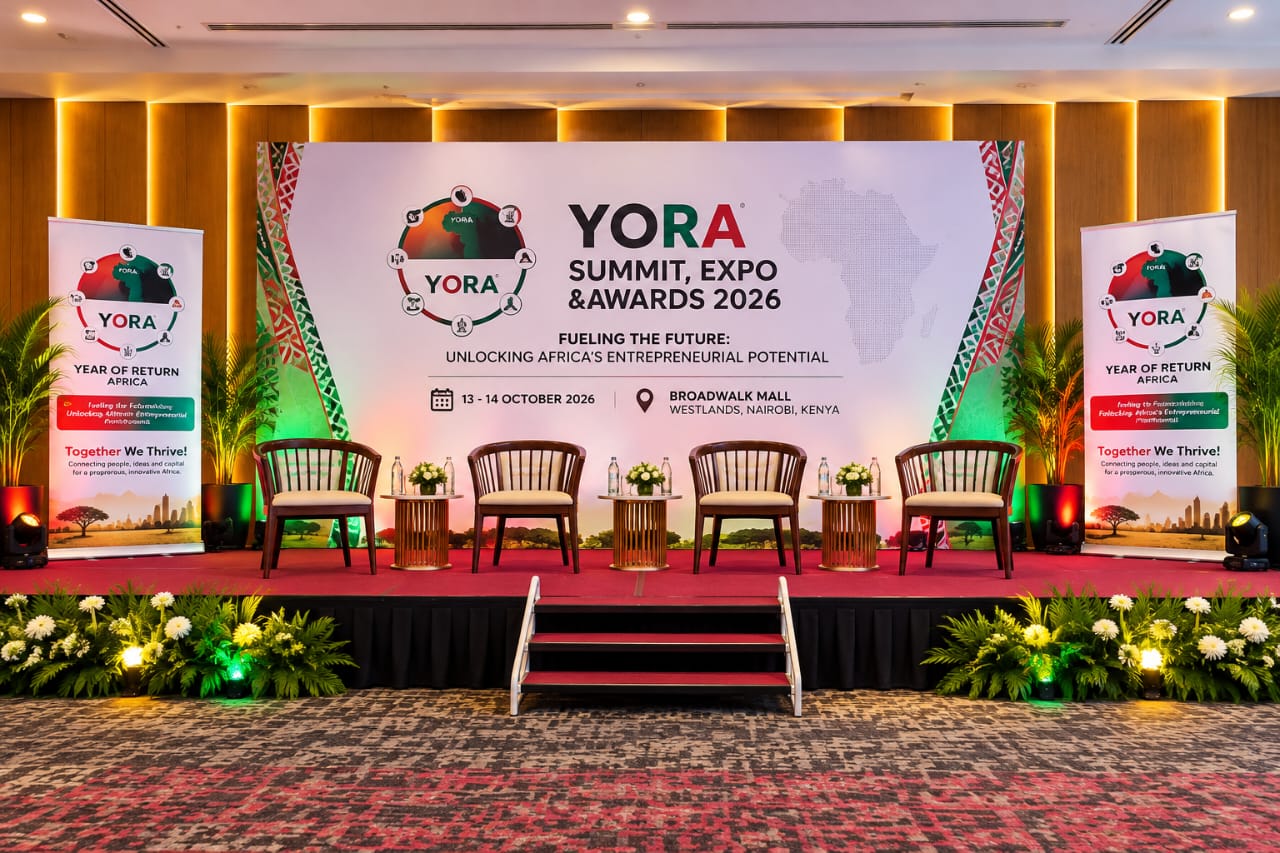
The stage is set, the atmosphere is electric, and Nairobi is ready as Africa’s business leaders, investors, innovators and sports industry stakeholders converge for the highly anticipated Year of Return Africa (YORA) Summit & Expo 2026.
The two-day continental gathering, scheduled for October 13–14 at Broadwalk Mall, Westlands, Nairobi, brings together influential personalities committed to unlocking Africa’s entrepreneurial potential, strengthening international partnerships and transforming promising ideas into sustainable enterprises.
Under the theme “Fueling the Future: Unlocking Africa’s Entrepreneurial Potential,” the summit will explore investment, technology, entrepreneurship, creative industries, media, entertainment and the growing commercial opportunities within African sport.
Among the distinguished speakers are David Mullings, Chairman and CEO of Blue Mahoe Capital; Sudi Wandabusi, Board Chairman of the Kenya Film Commission; Charles Ellison, Founder of B|E Strategy; and Emmanuel Audu-Ohwavborua, Chairman of Emmppek Group.
Adding a strong Nigerian presence to the sports business conversations is Jide-Ojo Jide Olusola, Founder and CEO of 247SportsNetwork Limited, publishers of Sports247.ng, and Media Aide to the Senior Special Assistant to the President on Grassroots Sports Development, Hon. Adeboye Anthony Adeyinka.
With over three decades of media experience, Jide-Ojo is expected to contribute valuable perspectives during the October 14 sports business segment, particularly on transforming African sporting talent into sustainable media properties, commercial opportunities and investment-driven enterprises.
The discussions will examine how African sports organisations can move beyond talent discovery towards ownership of leagues, broadcasting rights, digital platforms, sponsorship assets and intellectual property.
For Nairobi, the summit reinforces the city’s position as a destination for continental business engagement, while providing opportunities for entrepreneurs and investors to forge meaningful connections.
Following the Nairobi programme, YORA activities are scheduled to continue in Kilifi, Kenya, from October 16–17.
As the summit opens, one message resonates across the continent: Africa must not only produce world-class talent but also build and own the businesses that transform that talent into lasting prosperity.
-

 Business4 days ago
Communications Ministry made ₦345.5 million duplicate payment for Abuja ICT Park project
-
News4 days ago
LumenUs helps automate tedious paperwork in times of grief
-
News3 days ago
Inside INEC’s AI and cybersecurity plans to secure Nigeria’s 2027 Elections – Technology Times
-
News3 days ago
EuroMatch NPFL: Ikorodu City Return to Winning Ways as Salami, Ikechukwu Sink Kwara United in Lagos